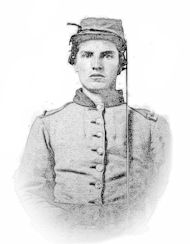
Monday, 18th.—A. M., all quiet; about 12 o’clock put in ditches; don’t know whether Yanks are coming on us or not. 5 P. M. skirmishing on the left; two hundred and forty of 39th missing; twenty-four out of Company F.
Saturday, May 18, 2013

Monday, May 18th.—This morning we had the gratification of a short visit from General Lee. He called and breakfasted with us, while the other passengers in the cars breakfasted at the hotel. We were very glad to see that great and good man look so well and so cheerful. His beard is very long, and painfully gray, which makes him appear much older than he really is. One of the ladies at table, with whom he is closely connected, rallied him on allowing his beard to grow, saying, ” Cousin R., it makes you look too venerable for your years.” He was amused, and pleaded as his excuse the inconvenience of shaving in camp. “Well,” she replied, ” if I were in Cousin Mary’s place (Mrs. L’s) I would allow it to remain now, but I would take it off as soon as the war is over.” He answered, while a shade passed over his bright countenance, “When the war is over, my dear L., she may take my beard off, and my head with it, if she chooses.” This he said as the whistle summoned him to his seat in the cars, not meaning to depress us, or imagining for an instant that we would think of it again; but it proved to us that he knew that the end was not yet, and disappointed us, for after every great victory we cannot help hoping that the Federal Government may be tired of war and bloodshed, rapine and murder, and withdraw its myriads to more innocent pursuits.
Yesterday evening we were agreeably surprised by a call from W. B. C., just recovered from his dreadful wound, received at Fredericksburg last winter. He is an infantry captain of the Stonewall Brigade, and is just returning to his company. Alas! alas! his great Captain has passed away during his absence, which makes his return very sad. He thinks that General Ewell is the man of all others to put in his place, though no man can fill it. General Ewell, he says, is one of General Jackson’s most enthusiastic admirers, believing him to have been almost an inspired man. General E. relates an incident of him, when on their victorious march through the Valley last summer, which is beautifully characteristic of General J. One night, when it was evident that there must be a battle next day, he (General E.) went to General Jackson for his plans. General J. replied that he would give them to him next morning, as they had not yet been formed. General E. felt uneasy and restless, and could not sleep. About midnight he arose, and, passing through the sleeping multitudes, he reached General Jackson’s tent, and was about to raise the curtain to enter it, when his attention was arrested by the voice of prayer. General Jackson was praying fervently for guidance through the coming day. General E. remarked to a friend that he had never before heard a prayer so devout and beautiful; he then, for the first time, felt the desire to be a Christian. He retired to his tent quietly, without disturbing General J., feeling assured that all would be well. The next morning a fight came off, replete with victory. General Ewell was subsequently wounded at the second battle of Manassas, and it is said that he has since become a Christian. God grant that it may be so!
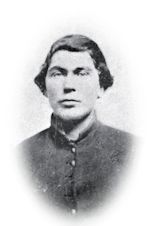
Near Black River, Monday, May 18. Crossed the Black River on bridge built of cotton during the previous night, and marched through a cypress swamp for two miles without any roads. Other troops concentrating from other points as they are crossing in many places. Went in camp very late, after which obliged to ride three or four miles in search of water. Very tired.
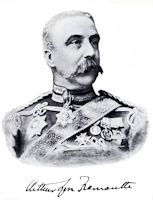
18th May (Monday).—On getting up this morning everything appeared very uncertain, and a thousand contradictory reports and rumours were flying about.
At 8 o’clock I called on Captain Matthews, and told him my earnest desire to get on towards Johnston’s army at all risks. He kindly introduced me to the conductor of a locomotive, who offered to take me to within a few miles of Jackson, if he was not cut of by the enemy, which seemed extremely probable.
At 9 A.M. I seated myself, in company with about twenty soldiers, on the engine, and we started towards Jackson.
On reaching Crystal Springs, half-way to Jackson, we found General Loring’s division crossing the railroad and marching east. It had been defeated, with the loss of most of its artillery, three days before, and was now cut off from General Pemberton.
At 5 P.M. the conductor stopped the engine, and put us out at a spot distant nine miles from Jackson; and as I could procure no shelter, food, or conveyance there, I found myself in a terrible fix.
At this juncture a French boy rode up on horseback, and volunteered to carry my saddlebags as far as Jackson, if I could walk and carry the remainder.
Gladly accepting this unexpected offer, I started with him to walk up the railroad, as he assured me the Yankees really had gone; and during the journey, he gave me a description of their conduct during the short time they had occupied the city.
On arriving within three miles of Jackson, I found the railroad destroyed by the enemy, who, after pulling up the track, had made piles of the sleepers, and then put the rails in layers on the top of these heaps; they had then set fire to the sleepers, which had caused the rails to bend when red hot; the wooden bridges had also been set on fire, and were still smoking.
When within a mile and a half of Jackson I met four men, who stopped and questioned me very suspiciously, but they at length allowed me to proceed, saying that these “were curious times.”
After another mile I reached a mild trench, which was dignified by the name of the fortifications of Jackson. A small fight had taken place there four days previous, when General Johnston had evacuated the city.
When I got inside this trench I came to the spot on which a large body of the Yankees had recently been encamped; they had set fire to a great quantity of stores and arms, which they had been unable to carry away with them, and which were still burning, and were partially destroyed. I observed also great numbers of pikes and pikeheads amongst the debris.
At the entrance to the town the French boy took me to the house of his relatives, and handed me my saddlebags. These French people told me they had been much ill-treated, notwithstanding their French nationality. They showed me their broken furniture, and they assured me that they had been robbed of everything of any value.
I then shouldered my saddlebags, and walked through the smoking and desolate streets towards the Bowmont House Hotel.
I had not proceeded far before a man with long grey hair and an enormous revolver rode up to me, and offered to carry my saddlebags. He then asked me who I was; and after I told him, he thought a few moments, and then said, “Well, sir, you must excuse me, but if you are a British officer, I can’t make out what on earth you are doing at Jackson just now.” I could not but confess that this was rather a natural idea, and that my presence in this burning town must have seemed rather odd, more especially as I was obliged to acknowledge that I was there entirely of my own free will, and for my own amusement.
Mr Smythe, for so this individual was named, then told me, that if I was really the person I represented myself, I should be well treated by all; but that if I could not prove myself to be an English officer, an event would happen which it was not difficult to foresee, and the idea caused a disagreeable sensation about the throat.
Mr Smythe then gave me to understand that I must remain a prisoner for the present. He conducted me to a room in the Bowmont House Hotel, and I found myself speedily surrounded by a group of eager and excited citizens, who had been summoned by Smythe to conduct my examination.
At first they were inclined to be disagreeable. They examined my clothes, and argued as to whether they were of English manufacture. Some, who had been in London, asked me questions about the streets of the metropolis, and about my regiment. One remarked that I was “mighty young for a lootenant-colonel.”
When I suggested that they should treat me with proper respect until I was proved to be a spy, they replied that their city had been brutally pillaged by the Yankees, and that there were many suspicious characters about.
Everything now looked very threatening, and it became evident to me that nothing would relieve the minds of these men so much as a hanging match. I looked in vain for some one to take my part, and I could not even get any person to examine my papers.
At this critical juncture a new character appeared on the scene in the shape of a big heavy man who said to me, “My name is Dr Eussell; I’m an Irishman, and I hate the British Government and the English nation; but if you are really an officer in the Coldstream Guards there is nothing I won’t do for you; you shall come to my house and I will protect you.”
I immediately showed Dr Eussell my passport and letters of introduction to General Johnston and other Confederate officers; he pronounced them genuine, promised to stand by me, and wanted to take me away with him at once.
But observing that the countenances of Smythe and his colleagues did not by any means express satisfaction at this arrangement, I announced my determination to stay where I was until I was released by the military authorities, with whom I demanded an immediate audience.
A very handsome cavalry officer called Captain Yerger, shortly afterwards arrived, who released me at once—asked me to his mother’s house, and promised that I should join a brigade which was to march for General Johnston’s camp on the following morning.
All the citizens seemed to be satisfied by the result of my interview with Captain Yerger, and most of them insisted on shaking hands and “liquoring up,” in horrible whisky.
Smythe, however, was an exception to this rule. He evidently thought he had effected a grand capture, and was not at all satisfied at the turn of affairs. I believe to his dying day he will think I am a spy; but it was explained to me that his house had been burnt down by the Yankees two days before, which had made him unusually venomous.
They told me that Dr Eussell had saved his property from pillage in the following manner:—He had seated himself in his verandah, with a loaded double-barrelled gun on his knees, and when the pillagers approached, he addressed them in the following manner: “No man can die more than once, and I shall never be more ready to die than I am now: there is nothing to prevent your going into this house, except that I shall kill the first two of you who move with this gun. Now then, gentlemen, walk in.” This speech is said to have saved Dr Eussell from further annoyance, and his property from the ruin which overtook his neighbours.
Jackson, the capital of the State of Mississippi, is a place of great importance. Four railroads meet here, and have been destroyed in each direction for a distance of from three to five miles. All the numerous factories have been burnt down by the enemy, who were of course justified in doing so; but during the short space of thirty-six hours, in which General Grant occupied the city, his troops had wantonly pillaged nearly all the private houses. They had gutted all the stores, and destroyed what they could not carry away. All this must have been done under the very eyes of General Grant, whose name was in the book of the Bowmont House Hotel.
I saw the ruins of the Roman Catholic church, the priest’s house, and the principal hotel, which were still smoking, together with many other buildings which could in no way be identified with the Confederate Government. The whole town was a miserable wreck, and presented a deplorable aspect.
Nothing could exceed the intense hatred and fury with which its excited citizens speak of the outrages they have undergone—of their desire for a bloody revenge, and of their hope that the Black Flag might be raised.[1]
I had previously heard the Jacksonians spoken of as not being particularly zealous in the war. Heaven knows General Grant had now converted them into good and earnest rebels.
At 8 P.M. I called at Captain Yerger’s house and found him with General Gist and another officer lying flat on their stomachs poring over a map. Captain Yerger then introduced me to the ladies of his family, who were extremely pretty, very amiable, and highly patriotic.
The house is charming, and, being outside the town, it had by good luck escaped destruction and pillage.
After supper, the ladies played and sang, and I ended an eventful day in a very agreeable manner.
General Gist promised that I should accompany his brigade to-morrow on its march towards General Johnston, and Mrs Yerger insisted that I should pass the night at her house.
In this part of the country the prospects of the Confederacy appeared to be very gloomy. General Joseph Johnston, who commands the whole Western Department, only arrived from Tennessee last Wednesday, and on the following day he found himself obliged to abandon Jackson to an overwhelming Northern army, after making a short fight to enable his baggage to escape.
General Pemberton, who had hitherto held the chief command, is abused by all. He was beaten on Saturday at Baker’s Creek, where he lost the greater part of his artillery. He had retired into Vicksburg, and was now completely shut up there by the victorious Grant.
General Maxey’s brigade, about 5000 strong, was near Brookhaven, and was marching east when I was there. General Loring’s force, cut off from Pemberton, was near Crystal Springs. General Johnston, with about 6000 men, was supposed to be near Canton. General Gist’s troops, about 5500 strong, were close by, having arrived from South Carolina and Georgia, just too late to defend Jackson.
The enemy, under General Grant, in vastly superior force, was pressing Vicksburg very hard, and had now completely invested that fortress.
The great object of the Confederates must, of course, be to unite their scattered forces under so able a general as Johnston, and then relieve Vicksburg.
[1] Since this date, the unfortunate city of Jackson has been again subjected to pillage by the Federals after the capture of Vicksburg.
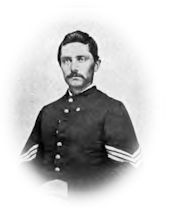
Monday, 18th — A despatch from the front informs us that General Grant has taken the railroad bridge across the Big Black river in the rear of Vicksburg. The troops also took some prisoners. The Eleventh Iowa, accompanied by a gunboat, went on a scout up the Big Black river to destroy a bridge which the rebels had built in the last few days. This river empties into the Mississippi a short distance above our camp.

May 18.—Dr. Hunter has come back, and brought his wife with him.
News has come that there has been a destructive raid in Mississippi, and that the raiders have destroyed Jackson. Mrs. H.’s home is near there, so she is miserable accordingly. The papers are filled with accounts of raids which have taken place all over the Confederacy. Mississippi and North Alabama have suffered from these horrible scourges. The raiders burn houses and destroy provisions of all kinds, and I am told they have positive orders to destroy all farming implements. This is the way they think they will make us submit—ruin the country, and starve us. I have no fear of their succeeding by such fiendish means. There is an overruling Providence who will not permit this long. There is no doubt but we will have great suffering, but it will be of short duration. General Forrest has lately captured four times his own number of these marauders, at Rome, Georgia.
I received a letter from Mr. Davis, father of the young man who died a short time since. Poor man! he had just heard of the death of another son, who was wounded and a prisoner (he was captured at the battle of Murfreesboro), and of two others, who are very sick at Wartrace, where part of our army is at present.
I am told that Breckinridge’s command is now on its way to Mississippi, to join the army at Vicksburg, which is closely besieged. I can not see how it is possible that we are ever going to hold it against the immense power which the enemy are bringing against it.
We have more trials with our domestic arrangements. It seems that the laundresses, for whom transportation was provided, have husbands in the army, and have taken this method of getting to see them without expense. The transportation agent here found out they were at the depot, and what they intended doing. He sent word to Dr. Stout, and Dr. Hunter sent down three of our surgeons to see after them. They brought up two of them to our room; I could scarcely keep from laughing, as they looked like real prisoners of war, and the doctors like their captors. They were very nice looking women; one of them said she had never washed her own clothes, and did n’t see how she was going to wash for any one else. I felt provoked at them for being so dishonest. Dr. Stout has sent orders that they must be kept till they work out the price of their transportation tickets.
Joseph Morton died to-day; he was a member of the Second Arkansas Regiment, and was from Sylvia County, Arkansas.
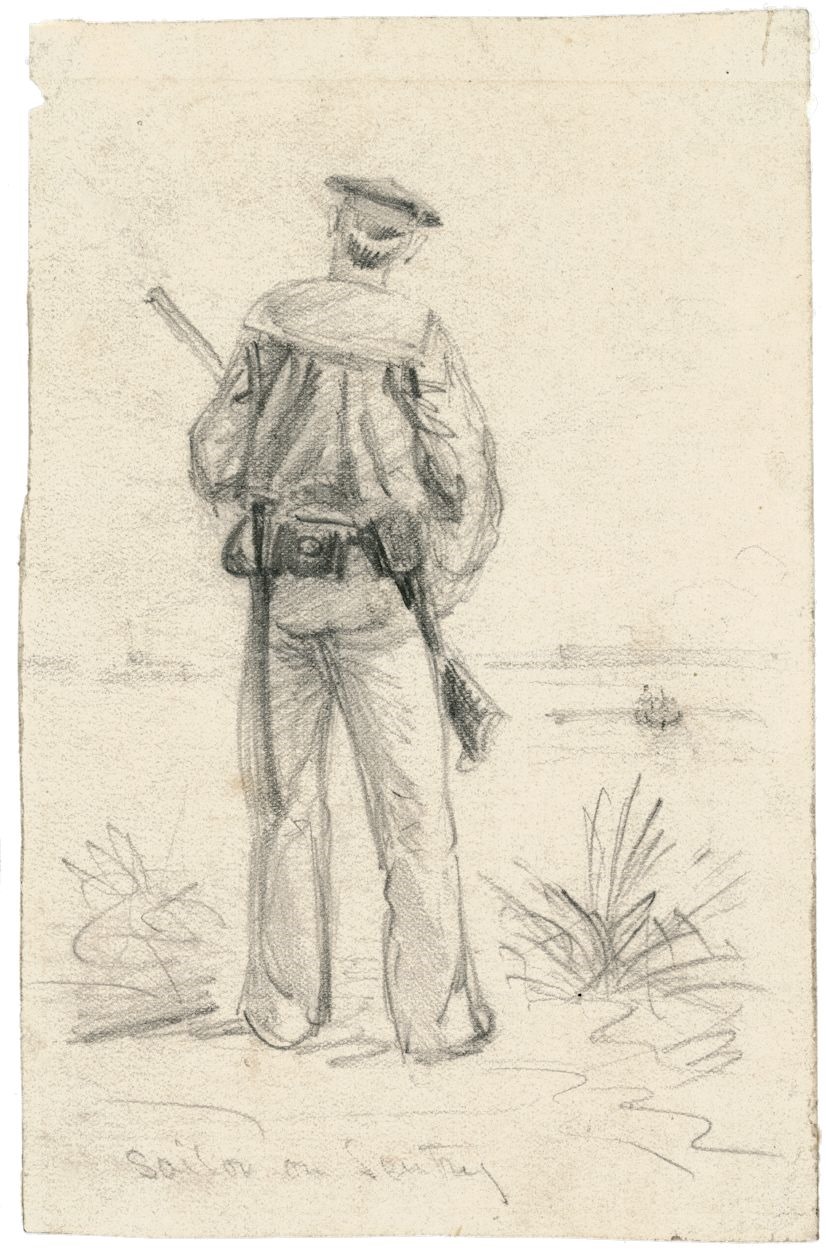
Drawing by Alfred R. Waud; on cream paper : pencil ; 18.3 x 11.7 cm. (sheet).
Library of Congress Prints and Photograph Catalog page.
__________
 Note: This image has been digitally adjusted for fade correction, color, contrast, and saturation enhancement and selected spot removal.
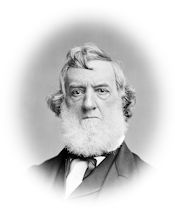
May 18, Monday. Sumner called this evening and read to me a letter he had received from Mr. Cobden and also one from Mr. Bright, — both in good tone and of right feeling. These two men are statesmen and patriots in the true sense of the word, such as do honor to England and give vigor to the Government. They and Sumner have done much to preserve the peace of the two countries.
Senator Doolittle came to see me to-day. Has faith, he says, but fears that General Hooker has no religious faith, laments the infirmities of that officer, and attributes our late misfortune to the want of godliness in the commanding general.
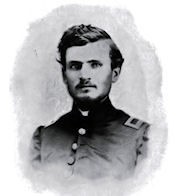
Monday, 18th. Got Victor Hugo and finished it. An interesting and profitable work, a few exceptions. Capt. Hayes and A. B. called a little while. Gave them some pickles and H. bread and butter. In the evening wrote to Fannie. A delightful day. What a blessing, such weather and good health. Thede has a troublesome boil.
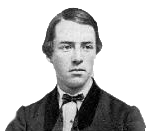
May 18. — Rode down to the Fifth Corps and saw Captain Batchelder, and then went to General Reynolds’s headquarters. The general told me to come over to his headquarters to-morrow. Captain Clapp went clown to the 1st Massachusetts Cavalry in the evening.


