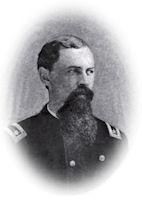
Following the American Civil War Sesquicentennial with day by day writings of the time, currently 1862.

Army Life of an Illinois Soldier, Charles Wright Wills, (8th Illinois Infantry)

Still in Camp near Corinth, Miss., May 15, 1862.

It seems to me that we are a long time in bringing this “muss a la probable” to a focus. What under the sun our Halleck is waiting for we can’t guess. One hour’s march will commence the struggle now and you don’t know how anxious we are for that little trip. Buell and Thomas have both thrown up long lines of earthworks to fall back behind if repulsed, I suppose. We have nothing of that kind in our division. We have all been under marching orders since morning, and Assistant Secretary of War Scott told the colonel last night that the battle would commence to-day—but he lied. Talk is to-night again that Corinth is evacuated. The main body of our army moved up within three miles to-day. My battalion has been out since daylight this morning, but we have been lying at ease near Pope’s headquarters all day waiting for orders. I came back to camp to stay to-night because I had no blanket with me and there was no possibility of any more before morning. Have a sore foot now. My confounded horse fell down with me in a creek the other day, threw me out on the bank in a bunch of blackberry bushes and then crawled out over me, stepped on my foot in the melee by way of showing sympathy, I suppose. It don’t hurt my appetite any and hasn’t put me off duty.

{ 0 comments }

Corinth and Hamburg Road, Miss., May 11, 1862.

You remember that in my last I spoke of a reconnoisance our people made on the 8th inst. On the 9th Beauregard returned it with interest, driving our advance back some two miles and almost scaring this wing of the Eagle. He appeared on our left flank, where I think Pope thought it impossible for him to reach, and drove Paine’s division from the front like a drove of sheep. Tis said that a charge made by the 2d Iowa Cavalry was the salvation of both of Paine’s brigades. The charge, if we hear correctly, was one of the most gallant things of the war. One of our battalions was out yesterday examining our left to see if the Rebels were still there. They found no signs of them, but on their return to camp were fired into by some of General Buford’s artillery, and one man killed by a 6-pound solid shot from Company A. There is almost incessant firing along the front but too light and scattering to forbode an immediate fight of itself, although ‘twould surprise no one to hear of the dance commencing at any hour. Corinth is a tremendously strong place, very difficult to approach, and holding a force that our officers think much superior to our own. This is kept from the army, though I don’t think now that we have more than 80,000 fighting men here. They must have over 100,000, and this conscription act is pouring in reinforcements to them by thousands. But, notwithstanding this, I think the superior discipline of our men will give us a victory when the fight does come. The strongest evidence that I see of Halleck’s weakness is his delaying the battle so long. We are in distance to strike any day; roads splendid, army in better condition every day than it will be the next day, weather becoming too hot for men to endure much longer, and yet we wait. What for, I don’t know, unless ’tis for reinforcements. They say Curtis and Siegel are coming. I hope they’ll get here to-night and finish the thing up to-morrow. The weather is taking the vim out of the men remarkably. To-day there is a good stray breeze, and yet a man can hardly get enough of the rarified stuff they call air here to fill his lungs. Plenty of chestnuts in this country. Plenty of hills and plenty of woods but a great scarcity of about everything else. There is no more soil on the earth here than you’ll find on any Illinois school house floor, and ’tis a question which would grow the best crops.

The colonel is anxious to have the regiment in the battle when it comes off, while your brother thinks if they can do the work without us he won’t be at all angry. I like skirmishing pretty well but am dubious about the fun showing itself so strongly in a battle. I guess I had a dozen shots thrown at me individually on the 8th at from 100 to 450 yards, and I got my return shot nearly every time and some extra ones, but rather think they all got off as well as I did. The carbines are not very correct shooters, and your brother is a ditto, so I have the satisfaction of knowing that I haven’t killed anybody yet.

Near Farmington, Miss., May 8, 1862.

I’ve been within one and a half miles of Corinth to-day. Didn’t see anything especially worthy of mention, but had full rations in the way of leaden bullets whistle. Yea, and larger missiles also. For four days past our battalion has been the advanced picket of Pope’s army, full five miles in advance of the army. We have been skirmishing the whole time, not five minutes passing without more or less shooting. Our picket line was on one side of a long prairie or clearing, from 300 to 450 yards wide, and theirs on the opposite side. With all the firing, the losses on our side was but one horse up to this morning, and we were congratulating ourselves on getting on so well, when the advance of a large reconnoitering party under General Paine came in sight and we were ordered to lead them. Well, it’s all over now, and we’ve had our Maj. Z. Applington killed, several wounded, and horses hurt by bursting shells. It’s all right, I suppose, but damn the general that sent us on a fool’s errand. We’ve a strong old place to take here at Corinth, but guess we’ll make the riffle. The major fell while leading a charge along a road. The timber and brush by the roadside were so thick that we could see nothing until our boys received the volley of musketry, of which one ball reached the major’s brain. The reconnoitering party returned to camp last night, and this morning the Rebels took their turn. They advanced in considerable force, drove our men back some two miles, captured a couple of pieces of cannon, and filled our hospitals pretty well. Our regiment was not in that fight. The Iowa 2d Cavalry suffered badly, ’tis said, in trying to take a Rebel battery.

Lieutenant Herring was wounded by a drunken soldier of the 4th Regular Cavalry yesterday, and Captain Nelson knocked down by the same man. Herring was shot through the arm. A suspender buckle that the ball glanced from saved his life. It’s a little doubtful whether this fight comes off immediately. I think and hope that our folks are going to let them concentrate all their troops here and then make a Waterloo of it. That is, a Waterloo for them, but if they whip us, call out the home-guards and try them again. Weather here almost too warm for comfort in daytime, but deliciously cool after sunset. Apples and peaches are as large as hickory nuts, and blackberries the size of peas. The water is very good. Think will like it as well as Mississippi water after a while. The well water is not as cool though as I have seen it. I have not visited the 8th or 17th yet. They are in a division that forms a reserve (McClernands) and will not fight until the rest of Thomas’s (formerly Grant’s) division have had a chance. Shall go and see them immediately after the battle if I have luck. My health is perfect yet and am in hopes ’twill remain so. My love to inquiring friends, and do not expect to hear from me regularly as the mail only leaves here semi-occasionally. What a change in climate two day’s ride make. Trees all in full leaf, and saw peaches to-day larger than filberts. Summer coats are in demand.

Headquarters 7th Illinois Cavalry Camp, on Hamburg and Corinth Road,

May 3, 1862.

I arrived here yesterday in safety. Stayed in Peoria the Monday night that I started, and was in Cairo at 9 p.m. Wednesday. Woke up Thursday morning on a boat at Paducah and devoted the day to admiring the Tennessee river. Stopped long enough at Fort Henry to get a good view of its well pummeled walls, and not-much-to-brag-of defences. The line of ditching without the works was the best I have ever seen, but the parapet, excepting that of the Fort proper, wasn’t to be compared to our works at Bird’s Point, which are the most inferior of ours that I have seen. The Tennessee runs through a perfect wilderness. There is not a landing on the river up to this point (Hamburg) that can begin with Copperas Creek, and indeed, although I watched closely, I did not see more than three or four points, that of themselves, showed they were boat landings, and those only by the grass being worn off the bank; and I did not see a warehouse on either bank unless, maybe, one at Savannah, where there are also, say four fine dwellings. At no other point did I see more than three houses, and very rarely, even one. Having heard so much of the richness of Middle Tennessee I cannot help talking so long of what ought to be, to it, what the Illinois river would be to us were we without railroads. I reached Hamburg yesterday afternoon (Friday) and started for my regiment, which I learned was five miles out on the Corinth way. I walked out as fast as I could, and reached there to hear that the army had moved on and were probably two miles ahead and yet going. I laid down and slept a couple of hours, borrowed a horse, and after six miles riding found them going into camp. Monstrous hilly country, this, and save a very few clearings, all heavily timbered. Pope’s army has been reinforced considerably since we arrived here. Think he has, say 30 odd thousand men. I think the ball opened just before I commenced this letter. For two days past we have had one batallion out about four miles beyond our present camp holding an important position. They have been within gunshot of the enemy all the time, but so protected that although they skirmished a good deal, but one of ours was wounded. In one little charge our boys made out they killed four and wounded a number of Rebels that they felt of. Pope’s infantry came up to-day in force and relieved them. Paine’s division was advanced and when not more than 40 yards beyond the post our cavalry held, were opened on first by musketry and immediately afterwards by artillery. There was very heavy firing for an half hour, but it has ceased since I commenced this page. Haven’t heard the result. We have orders to move forward to-morrow morning, but although we are so close to the enemy’s position, (not more than three miles) (Infantry, of course, I mean) don’t think our side will commence the attack before Monday morning, when we will see—sure—if they don’t run.

Supper.—Some of our boys have just come in with a lot of overcoats, trinkets, etc., spoils of the afternoon skirmish. They were all Illinois regiments that were engaged. A sergeant has just showed me an overcoat that he stripped off a dead secesh, who with eleven others was lying in one pile. He captured a captain who, after he had thrown down his sword, offered to give him a fist fight. The artillery firing was mostly from Rebel guns at Farmington at a regiment of our boys building a bridge. The Northern Mississippi line runs through our camp. We cannot be far from Iuka Springs, although no one that I’ve seen ever heard of the place. Report has just come that Mitchell has been driven out of Huntsville, and another that Yorktown and 45,000 prisoners are ours. Don’t believe either. Shall write you from Corinth if have luck.

Note: This letter—a document written in 1862—includes terms and topics that may be offensive to many today.  No attempt will be made to censor or edit 19th century material to today’s standards.

On Steamer Henry Clay, off New Madrid, Mo.,

April 16, 1862.

I finished my last in a great hurry, helped strike and load our tents and equipage and started for the levee, confident that we would be off for Memphis, Orleans and intermediate landings, before the world would gain 12 hours at farthest in age. That day over 30 steamers arrived, received their loads of soldiers and departed, all down stream, preceded by six or eight gunboats and 16 mortarboats. Word came at nightfall that there were not enough boats for all and the cavalry would have to wait the morrow and more transports. We lay on the river banks that night, and the next day all the cavalry got off except our brigade of two regiments. Another night on the banks without tents, managed to get transportation for for two battalions, one from each regiment. They started down yesterday at about 10 a.m. and more boats coming we loaded two more battalions, but at 9 p.m. a dispatch boat came up with orders for us to stop loading and await further orders. The same boat turned back all the cavalry of our brigade that had started and landed them at Tiptonsville; we are at 6 this p.m. lying around loose on the bank here awaiting orders. That boat brought up word that our fleet was at Fort Pillow, and the Rebels were going to make a stand there, but that nothing had occurred when she left but some gunboats skirmishing. What the devil we are going to do is more than three men like me can guess. It’s awful confounded dull here. Nothing even half interesting. Saw a cuss, trying to drown himself yesterday, and saw a fellow’s leg taken off last night. These are better than no show at all, but still there’s not much fun about either case. I’m bored considerably by some of my Canton friends wanting me to help them get their niggers out of camp. Now, I don’t care a damn for the darkies, and know that they are better off with their masters 50 times over than with us, but of course you know I couldn’t help to send a runaway nigger back. I’m blamed if I could. I honestly believe that this army has taken 500 niggers away with them. Many men have lost from 15 to 30 each. The owners were pretty well contented while the army stayed here, for all the generals assured them that when we left the negroes would not be allowed to go with us, and they could easily get them back; but they have found out that was a “gull” and they are some bitter on us now. There will be two Indiana regiments left here to guard the country from Island 10 to Tiptonsville, and if you don’t hear of some fun from this quarter after the army all leaves but them, I’m mistaken. They’ll have their hands full if not fuller. We have not been paid yet but probably will be this week. I tell you I can spend money faster here than anywhere I ever was in my life, but of course I don’t do it. Am trying to save up for rainy weather, and the time, if it should come, when I’ll have only one leg to go on or one arm to work with. That Pittseburg battle was one awful affair, but it don’t hurt us any. Grant will whip them the next time completely. Poor John Wallace is gone. He was a much better boy than he had credit for being. We all liked him in the old mess very much. Ike Simonson, of same company, I notice was wounded. He was also in my mess; was from Farmington. There are no rumors in camp to-day. Yesterday it was reported and believed that the Monitor had sunk the Merrimac, that Yorktown was taken, and that another big fight had taken place at Corinth and we held the town. That was very bully but it lacks confirmation. Think it will for sometime yet, but Pope says we’ll come out all right through all three of those trials. It’s just what’s wanted to nip this rebellion up root and all. That’s a rather dubious victory up to date, that Pittsburg affair, but guess it’s all right.

Camp New Madrid, Mo., April 12, 1862.

I have the extreme happiness to inform you that there is at last a hope of my dating the next letter from Memphis or vicinity. Our regiment has for several days been alone at Point Pleasant and we enjoyed it very much. When we are under a general of an infantry division we are run to death or thereabouts, for whenever anything is to be done the cavalry is sure to be called on. Yesterday we were ordered to report here immediately to General Granger, commanding cavalry division which numbers full 4,000. There are two brigades in this division; Colonel Kellogg commands the 1st brigade and therefore is now a brigadier general. There have been about 25 steamboats arrived here since 4 p.m. yesterday and the army will probably commence embarking to-day. It will take full 60 boats to hold us all. The rain has been falling in torrents ever since we started from the Point yesterday, and you can imagine the time we had pitching tents in a cornfield, and yet we are comfortable now as we can wish. I have faith to believe that they (or anybody else) can’t keep me from being comfortable under any circumstances, if my hands are loose and I can walk. I think that Pope’s hurry is caused by his fear that Grant and company will reach Memphis before him. We hardly think that the Rebels will make a stand at Pillow, Randolph or Memphis if the news from Corinth is correct. I’m almost afraid to look over the list of dead that fight was made. Sid. says he is sure Billy Stockdale is killed. We received papers of the 10th last night but are not sure the victory is a complete one yet. I can’t think of the point where the enemy will make another stand if they are perfectly whipped at Corinth.

I know as many people here as in Fulton, almost, and I have yet to hear the first insulting speech or word to me. “What are they going to do with Island No. 10 I wonder; I am afraid that Commander Foote and his gunboats are a humbug.” Aren’t you ashamed of that speech? Damn the New York Tribune. I do believe in McClellan and nearly all the rest of our leaders. If those Tribunes, big and little, were where any regiment in this army could get at them they wouldn’t stand fifteen minutes. McClellan knows his business and we don’t know a thing about it. Now old Pope here is as mean a man as ever lived, curses every man that comes within a hundred yards of him and nobody knows a thing of his designs, but we all have the utmost confidence in him. I’ve never seen him and wouldn’t go in sight of him for a horse, but he’s my man for a’ that.

Orders have just arrived for embarking this p.m. Will be under way down the river to-night. Wish us a pleasant voyage.

April 10.—The Rebels have run and left Island 10, and our boys have taken some 2,000 of them prisoners below here. They passed up on a boat this morning. We will be paid off to-day or to-morrow.

Headquarters 7th Illinois Cavalry,

In a very fine House,

Point Pleasant, Mo., April 7, 1862.

If this isn’t fine your brother is incapable of judging. Cozy brick house, damask curtains, legged bedsteads, splendid tables and chairs, big looking glass, and everything just as fine as a peacock’s tail. I do wish you could have been with me the last two days. They’ve been two of the best days of my life. During the storm of Saturday night, the 5th instant, one of the gunboats ran by “Island 10.” I heard of it early Sunday morning, and got out a pass for Andy Hulit and myself to look for forage, intending, of course, to ride down to the river and watch the gunboat as we knew there’d be fun if she attempted to run below Madrid. We rode up the river about six miles (half way) to a point that extends into the river on our side, and got there just as the boat did. ‘Twas the “Carondelet,” and indeed she looked like an old friend. The sight of her did me more good than any amount of furloughs could. At this point, I spoke of, we have three batteries within a half-mile, and there were two Rebels’ batteries visible right at the water’s edge, opposite. We just got there in time to see the ball open. Besides the two secesh batteries visible, they opened from four others masked by the brush and trees, and hitherto unknown to us. Their six, our three, the gunboats, all firing together made by far the grandest thing I ever witnessed. I suppose there were from 30 to 40 guns used, and at least a half thousand shots fired. Andy and I were on a little rise of ground a couple of hundred yards from our main battery and where we could see every shot fired and its effect. There were lots of shots fell around that battery, but none near enough us to be disagreeable. About an hour’s fighting silenced the Rebel batteries, and that fun was over. Our boat didn’t go over to them at that time, but came into our shore and laid up. She was not struck once, nor was there a man hurt on our side. Andy and I rode out in the country and got our dinners with a friend of mine, and about 3 p.m. started home. We just got back here as the gunboat was preparing to attack the batteries immediately opposite here. She ran down the river on our side, a mile below their guns, and then turning her bow square toward the enemy, started for them and commenced firing. We could see every motion of the Rebel gunners plainly, and they worked like men, until the boat got within about 300 yards of them, when they broke, and I tell you they used their legs to advantage; all but one and he walked away with his arms folded perfectly at ease. There’s an immense sight of enjoyment in witnessing such fights as these. Well, I saw another fight this morning, but ’twas too far off for interest, after what I saw yesterday. Two more gunboats came down last night in the rain and darkness past the island. This fight this morning was commenced by the Carondelet, on a five-gun battery, only four miles below and across from Madrid. She called the Louisville to her aid, and then one walked up on the battery from below and the other from above. It is grand to see these gunboats walk into the enemy. They go at them as though they were going right on land, if the Rebels would stay there. (One hour later, 9 p. m.)

Just as I finished the last period, an artillery captain came dashing up through the door, just from Madrid, and wanted to know where the gunboats were. He said that the Rebel floating battery, that has been lying at Island 10, was floating down and the transports were afraid to try and bring her into land, and he wanted to notify the gunboats so they could catch her. We told him they had gone down to Palmer’s division, six miles below, and away he went. I’ve been out waiting to see her pass, but she hasn’t arrived yet. He said she was not more than three miles above. All such items help to make soldiering interesting. Our three transports have taken 20,000 troops over into Tennessee since 9:30 this a.m. I call that good work. Colonel Kellogg has gone over with Pope to see the battle, if there is any. These Rebels don’t begin to fight a gun equal to our boys, and all the people here say so. I really do not believe they have the “bullet-pluck” that our men show. Our regiment is left here alone in its glory. We’re occupying the town, enjoying life, and having all the fun we want. I killed a mosquito to-night, and it brought up such disagreeable thoughts that I couldn’t eat supper. If they don’t eat my surplus flesh off me, I know I’ll fret myself lean as they increase. The colonel got back yesterday. You ought to have seen him look at the eatables last night, and shaking his head with disgust, go back to his tent without touching a bite. The first camp meal after a furlough I suppose isn’t particularly delightful. There’s no telling whether there’ll be a fight to-morrow or not. We’ll probably not assist if there is. But after the fight is over and the victory won we’ll come in and chase the Rebels until they scatter. The infantry do the heavy, dirty work and get the honor, and we have all the fun and easy times there are going. I’m willing. I’d rather scout and skirmish than anything I know of, and am perfectly willing to let the infants do the heavy fighting, for they only make an artillery target of us when we’re brought on battle fields.

There wouldn’t be much left of my letters if I’d leave out the war gossip! Forty of the Rebels deserted and came to our gunboats to-day. Sergeant Wells, who while over there is a spy, was taken prisoner the other day, escaped to our gunboats. It saved his neck.

April 5, 1862. — One of our boys has just returned from Madrid and says he saw our gunboat Cairo there. She slipped by the batteries at “Island No. 10″ in the storm last night. Mosquitoes here already.

Camp, near Point Pleasant, Mo., April 4, 1862.

I received your last letter within three days after it was mailed, and praised Uncle Sam duly therefor. Our regiment has had a run of bad luck since we’ve been here. Two men killed on the plank road, two wounded at same place, two killed by falling trees in a storm of night of April 1st, and a dozen wounded, and yesterday one drowned while watering his horse in the swamp, and our horses dying off very fast of horse cholera. The latter is a serious thing in a regiment were the men own the horses themselves. For they (or nearly all of them) cannot buy others. Most of them are still owing for the horses they have. The positions of troops and state of the war generally remains the same here as it has been ever since we took Madrid. Main body of our forces at that place. Five regiments here under Plummer and five seven miles further down the river with Palmer. That is as far down as we can go on this side for the swamps. Between here and Madrid we have batteries every three miles and the Rebels have rather more on the opposite side. Both are right on their respective banks and have their flags fluttering their mutual hatred in each others faces. We can see them very plainly without the aid of a glass. The Rebel gunboats lie just below our lower battery and ’tis rumored to-night that several new ones have arrived from Memphis or New Orleans.

This fuss about “Island 10″ I think is all humbug. Don’t believe they have attacked it yet. It don’t sound like Foote’s fighting. Look on the map and see what a nice pen there is between the rivers Tennessee and Mississippi. Don’t it look that if Grant and company can whip them out at Corinth, that we’ll have all the forces at Memphis and intermediate points to “Island 10″ in a bag that they’ll have trouble in getting through? If they run it will be into Arkansas, and they can take nothing with them but what their backs will stand under. Seems to me that the plans of the campaign are grand from the glimpses we can get of them and have been planned by at least a Napoleon. Certain it is we are checkmating them at every point that’s visible. I firmly believe the summer will see the war ended. But it will also see a host of us upended if we have to fight over such ground as this. It is unpleasantly warm already in the sun. It’s 10 p.m. now and plenty warm in my shirt sleeves, with a high wind blowing, too. We had an awful storm here to commence April with. We are camped just in the wood’s edge and the wind struck us after crossing a wide open field and knocked trees down all through our camp; killed First Lieutenant Moore, one private, seriously wounded Captain Webster and a dozen men. During the storm I though of our fleet at “Island 10″ and it made me almost sick. Don’t see how they escaped being blown high and dry out of water.