NOVEMBER 26TH.—The enemy occupy Tybee Island, and threaten Savannah. Vice-President Stephens was in my office to-day, and he too deprecates the passage of so many people to the North, who, from the admission of the journals there, give them information of the condition of our defenses. He thinks our affairs are not now in a prosperous condition, and has serious apprehensions for the fate of Savannah.
November 2011
November 26.—A. J. Clemens passed through Louisville, Ky., on Tuesday, on his way to Washington, to take his seat in Congress as the representative from the Fourth District of Tennessee. Mr. Clemens was compelled to leave his State on the 11th of August to avoid arrest, and since then he has been acting as an Assistant Surgeon in Col. Glider’s regiment.—Baltimore American, December 2.
—A Party of scouts, numbering five hundred men, under command of Col. Looney, returned to Chattanooga, East Tennessee, to-day, from a successful expedition, bringing in their spoils. They captured fourteen horses, and took one hundred Lincoln men prisoners. Some of these miscreants were found concealed in the dens and caves of the mountains. Holloway, the ruffian who killed Col. Anderson, managed to make his escape by clothing himself in female attire. None of the scouts received any injury. —Memphis Appeal.
—The Grand Review of all the Regular Military Forces on the north side of the Potomac took place, in accordance with previous arrangements, about one o’clock to-day, at Washington, D. C.
The several regiments of infantry were commanded by Brigadier-General Sykes, the cavalry by Lieutenant-Colonel Emory, and the batteries of artillery by Colonel H. J. Hunt, the entire body being in command of Brigadier-General Andrew Porter.
Thousands of citizens and sojourners availed themselves of the opportunity to witness the parade. The appearance of the troops, their fine discipline, and general movements, elicited from the vast assemblage a universal expression of praise.—National Intelligencer, Not. 27.
—Gen. Fremont and family, accompanied by Capt. Tracy, of the regular army, and two Secretaries, left St. Louis, Mo., to-day for Washington. He was accompanied to the depot by a large number of citizens, chiefly Germans, and on the east side of the river made a brief speech, regretting his departure, etc.— Chicago Evening Journal, Nov. 26.
—Seven companies of the First regiment Pennsylvania Cavalry, under command of Col. Bayard, made a reconnoissance to-night from Langley to Drainesville, eight miles up the Potomac. They captured a few rebel pickets, and on their return were attacked by a force of the enemy in ambush. A skirmish ensued, in which several of the rebels were killed, wounded, and taken prisoners, and a few of the Federal soldiers wounded. Col. Bayard narrowly escaped death, his horse being shot under him, and two balls passing through his clothes.—(Doc. 193.)
—Commodore Tatnall, with three small steamers and one gunboat, attacked the Federal fleet in Cockspur Roads, Ga. From forty to fifty shots were exchanged. No person was injured. Failing to draw the National fleet under the guns of Fort Pulaski, Commodore Tatnall withdrew.—Richmond. Dispatch, Nov. 28.
—A letter from the Upper Potomac, received in Washington, stated that G. W. Smith, formerly Street Commissioner in the City of New York, was in command of the rebel forces at Leesburg, Va., and in that vicinity.
—Jefferson Davis sent in to the Confederate Congress a Message concerning the secession of Missouri. It was accompanied by a letter from Governor Jackson, and also by an act dissolving the Union with the United States, and an act ratifying the Constitution of the Provisional Government of the Confederate States; also, the convention between the Commissioners of Missouri and the Commissioners of the Confederate States. Congress unanimously ratified the convention entered into between the Hon. R. M. T. Hunter, for the rebel Government, and the Commissioners for Missouri.—Richmond Dispatch.
—A banquet was given to Capt. Wilkes and the officers of the San Jacinto, at the Revere House, in Boston, Mass. Capt, Wilkes made a brief speech, recounting the incidents of the cruise after the rebel Commissioners, and he was followed by Gov. Andrew, Lieut. Fairfax, Chief-Justice Bigelow, and others.
—The Nashville (Tenn.) Courier of this date lays: “We learn that a squad of twelve men were sent to Franklin yesterday, to arrest some Lincolnites who were said to be committing depredations in that neighborhood. They had collected to the number of twelve or fifteen at the house of one of their number, one Bell; and defying, the party fired at them, killing one man, said to be Lee, of Louisville, and wounding one or two more. Our men then charged the house, and set fire to it, burning it and all of the men in it, it is believed, but two, who escaped. A detachment of twenty-five cavalry, under Capt. Morgan, arrived at Franklin to arrest the parties implicated.”
—A reconnoissance was made by a squadron of the Third Pennsylvania regiment, commanded by Captain Bell, in the neighborhood of Vienna, Va. From Vienna they took the right hand road toward Hunter’s Mill, and had gone about a mile and a half when they found themselves hemmed in on three sides by not only a superior force of cavalry, but also of infantry. The discharges of the rebel musketry placed the horses of the National cavalry beyond the control of their riders, the animals having been but recently brought into service, and therefore unaccustomed to such alarms. The officers, after several ineffectual attempts to got their men in line for the purpose of making a charge, ordered a retreat, which was effected in as good order as the peculiar circumstances permitted. The skirmish was brisk, though of short duration, the rebel cavalry firing buckshot from their carbines. The number of rebels killed and wounded is not known. John Beatty, private in Company H, killed a rebel cavalry officer, and captured his horse. The mark on the nddle was D. S. Davis, Ridgeway, North Carolina. Twenty-nine men were reported missing from the Union force.
—The Convention to form a new State out of Western Virginia met in Wheeling. The attendance was unexpectedly full for the opening, thirty-seven counties being represented. John Hale, of Mason, was elected permanent President. There was no business done beyond organizing and administering the oath to the members.— Wheeling Intelligencer, Not. 27.
—In the Louisiana State Senate a joint resolution was introduced, approving of the Government recommendation to the banks to suspend specie payments, and to issue the Confederate States Treasury notes in the place of their bank notes. The resolution also provided for the submission of the question to the popular vote of the people of Louisiana.
A resolution was offered to inquire into the expediency of the assumption by the State of the collection and payment of the Confederate war tax.—The Governor’s Message was sent into both Houses of the Legislature.—Richmond Dispatch, Nov. 28.
—Gen. Halleck issued orders at St. Lewis, Mo., in reference to the wants of the soldiers in his department, directing the appointment of officers to superintend any delinquencies and apply a remedy; also that prisoners sent to head-quarters at St. Louis must be accompanied with a written statement of the charges against them, and the evidence on which the arrests were made.—(Doc. 194.)
—Col. Jennison issued a proclamation to-day to the people in arms against the United States Government in Jackson, Johnson, Lafayette, and Pettis counties, Mo., stating that all who would deliver up their arms, and perform their duties as loyal citizens, would not be held responsible for past acts, and would secure the protection of their lives and property. All, however, who should disregard these propositions, would be treated as traitors, neither their persons nor property being spared.—(Doc. 195.)

25th. Was kept very busy all day with wood.
Monday, 25th—Nothing of importance. Camp life is a big change from life at home. In the army, every man simply obeys orders; he knows his place and keeps it. Our officers generally are kind to the men, especially if a man tries to do his duty.
MONDAY 25
Coldest morning yet. M. down to 32. Went to the Pat office and got my appointment from the Comr after going to a Magistrate and taking the oath, in such cases prescribed by law. Have been engaged in filling out certificates of Lands to purchasers. Nothing new in the military line today or in the “papers” tonight. Doct Barnes was over from the Camp today with his wife. She returns with him being quite enamoured of Camp life. Regts have been moveing all day and Drums beating all the evening.

______
The three diary manuscript volumes, Washington during the Civil War: The Diary of Horatio Nelson Taft, 1861-1865, are available online at The Library of Congress.
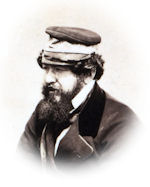
November 25th.—I remarked the other evening that, with all the disorder in Washington, there are no thieves. Next night, as we were sitting in our little symposium, a thirsty soldier knocked at the door for a glass of water. He was brought in and civilly treated. Under the date of the 27th, accordingly, I find it duly entered that “the vagabond who came in for water must have had a confederate, who got into the hall whilst we were attending to his comrade, for yesterday there was a great lamentation over cloaks and great-coats missing from the hall, and as the day wore on the area of plunder was extended. Carl discovers he has been robbed of his best clothes, and Caroline has lost her watch and many petticoats.”
Jane Stuart Woolsey to Joseph Howland in camp.
November 25.
We have been evacuating the British with great zest to-day; good weather, clean streets, and many praises for the 22nd, Charley’s regiment, among other battalions—praises, that is, with the exception of some vile youths of the street, near Stuart’s, who shouted “hurrah for the never go ‘ways!” . . . We had a very interesting meeting of the Bible Society last night, second meeting of the army branch, many excellent speeches; Dr. Roswell Hitchcock, of course, who apropos of the slavery question, said, “Patience; we need not be hurrying matters—that cause, like the soul of old John Brown, is ‘marching on,’ and the chorus is ‘Glory, Hallelujah!’” The allusion was charged with electricity, and the audience responded appropriately. A gentleman, I forget his name, had been to visit the Hatteras rebel prisoners and described the scene; a sad, sorry six hundred as you could well find. He made them an address on repentance (of the gospel sort), and begged them to sing, to “start something”— “Pray, sing my brothers; it will do your hearts good.” So some one began “All hail the power of Jesus’ name.” Then followed “Jesus, lover of my soul,” and last “There is rest for the weary.” He said they sang well, and it was a strange and even touching sight. He said they were comfortably cared for, and he saw a lot of underclothes sent them in a wrapper marked, “from a father and mother whose son (a Union soldier) is in prison in Richmond.” . . .
How are you going to spend your Thanksgiving, and what are you going specially to give thanks for? The question will rather be what to leave out, than what to put in the action de grace. Did you read Governor Andrews’ proclamation? if you didn’t, do! It is like a blast out of one of the old trumpets that blew about the walls of the strong city till they tumbled down. Have you read the Confederate President’s message, in which he has contrived to out-Herod Herod? . . .
Tell the girls to get F. L. Olmsted’s “Cotton Kingdom” if they want anything to read. He labors a little with his conscientiously faithful statistics, but when he breaks into his story his style runs smooth and clear, and there are few prettier pieces of travel-telling than his ride through the pine forests with the filly “Jane,” for instance.
NOVEMBER 25TH.—Yesterday Fort Pickens opened fire on our batteries at Pensacola, but without effect. One of their ships was badly crippled.
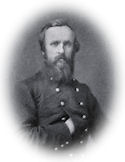
Camp Union, Fayetteville, Virginia,
November 25, 1861.
Dear Mother: — I have just read your letter written at Delaware, and am glad to know you are so happy with Arcena and the other kind friends. You may feel relieved of the anxiety you have had about me.
After several days of severe marching, camping on the ground without tents, once in the rain and once on the snow, we have returned from a fruitless chase after Floyd’s Rebel army, and are now comfortably housed in the deserted dwellings of a beautiful village. We have no reports of any enemy near us and are preparing for winter. We should quarter here if the roads to the head of navigation would allow. As it is we shall probably go to a steamboat landing on the Kanawha. Snow is now three or four inches deep and still falling. We are on high ground — perhaps a thousand feet above the Kanawha River — and twelve miles from Gauley Mountain.
Our troops are very healthy. We have here in my regiment six hundred and sixty-two men of whom only three are seriously ill. Perhaps fifteen others are complaining so as to be excused from guard duty. The fever which took down so many of our men has almost disappeared. . . .
This is a rugged mountain region, with large rushing rivers of pure clear water (we drink it at Cincinnati polluted by the Olentangy and Scioto) and full of the grandest scenery I have ever beheld. I rode yesterday over Cotton Hill and along New River a distance of thirty miles. I was alone most of the day, and could enjoy scenes made still wilder by the wintry storm.
We do not yet hear of any murders by bushwhackers in this part of Virginia, and can go where we choose without apprehension of danger. We meet very few men. The poor women excite our sympathy constantly. A great share of the calamities of war fall on the women. I see women unused to hard labor gathering corn to keep starvation from the door. I am now in command of the post here, and a large part of my time is occupied in hearing tales of distress and trying to soften the ills the armies have brought into this country. Fortunately a very small amount of salt, sugar, coffee, rice, and bacon goes a great ways where all these things are luxuries no longer procurable in the ordinary way. We try to pay for the mischief we do in destroying corn, hay, etc., etc., in this way.
We are well supplied with everything. But clothes are worn out, lost, etc., very rapidly in these rough marches. People disposed to give can’t go amiss in sending shoes, boots, stockings, thick shirts and drawers, mittens or gloves, and blankets. Other knickknacks are of small account.
Give my love to Arcena, Sophia, and to Mrs. Kilbourn.
Affectionately,
R. B. Hayes.
November 25.—Two National gunboats landed troops at Buckingham, on the mainland of South Carolina. General Lee issued orders that no one should leave Charleston without a permit. The greatest activity prevailed in army movements, and “General Lee will dispute every inch of ground with a courage and desperation which will teach the Yankees a severe lesson. They will not be allowed to gain a permanent foothold on the mainland of South Carolina.”— Charleston Courier, November 26.
—Following the retirement of the Union forces, the rebels in Missouri advanced to Lebanon, fifty miles northeast of Springfield.
—Col. Buchanan, with six companies of the Fourth Infantry U. S. A., and the Ninth (Davidson’s) squadron of U. S. Dragoons, arrived in New York from California on the North Star.—National Intelligencer, Nov. 26.
—A Secessionist in Paducah, Ky., by the name of Woolfolk, hung a secession flag out of his window to-day, as some of the National troops were passing by, and hurrahed for Jeff. Davis. The man had done the same thing before on several occasions, and the matter was reported to General Smith, but he refused to interfere. This refusal of General Smith caused great indignation among the troops, and doubts of his loyalty were freely expressed in Paducah.
The matter having been reported to General Wallace, he sent his aide-de-camp with a squad of men to order the traitorous flag to be taken in, and if Woolfolk refused, then to take it in, and erect the Stars and Stripes over his house. Woolfolk, knowing that General Smith was senior officer, refused to obey General Wallace’s order, whereupon Wallace’s aid forcibly took down the rebel flag, and hoisted the Stars and Stripes in its stead.
In the mean time Woolfolk having appealed to General Smith, the latter sent his aid, Lieutenant Price, to order General Wallace to have the Stars and Stripes taken down from Weolfolk’s house. Wallace refused to obey the order, and sent word to Smith that the flag should not be taken down while there was a live man in his brigade. Wallace’s aid said that Woolfolk should sleep under a loyal flag one night, anyhow; Smith’s aid replied he did not consider that any great honor; whereupon Wallace’s aid knocked Smith’s down. General Paine sent Wallace assurances of his cooperation.
As General Smith had nobody but his discomfited Lieutenant to enforce his order, the “old flag still waves.” The occurrence, however, was the subject of an order from Gen. Smith, deprecating the mutinous spirit manifested by the troops under his command.— (Doc. 190.)
—The Ninth New York Cavalry regiment left Albany for the seat of war in Virginia. This regiment was raised in Chautauqua, Cataraugus, and Wyoming counties, and the men are mostly agriculturists.—N. Y. Herald, Nov. 27.
—The affair of the black-flag is thus alluded to by the Charleston Courier of to-day:
War in its best estate is war, and is horrible enough. If we must meet invaders, let us meet them with all the mitigation which invasion affords. To say that no prisoners are to be taken under any circumstances, is only to proclaim a war of extermination, in which both sides will suffer uselessly. The cry of extermination, black-flag, and no quarter, is shouted most vociferously by some who are evading any kind of war. People who fight are willing enough to accept a war of rules, as long as possible; and if they catch thieves and incendiaries, they can readily discriminate against them in, favor of prisoners of war.
—Major Isaac Lynde, Seventh U. S. Infantry, for abandoning his post—Fort Fillmore, New Mexico—on the 27th of July, 1861, and subsequently surrendering his command to an inferior force of insurgents, was, by direction of the President of the United States, dropped from the rolls of the army from this date.— General Orders, No. 102.
—A party of the Ninth Iowa regiment, on a scout, near Pacific City, Mo., overtook a body of rebels who had stolen a herd of cattle, hogs, and sheep from the Union men in the neighborhood, and succeeded in dispersing them, with one killed of the rebels.—Dubuque Times, Dec. 8.
—S. P. Sewell, a Yankee school teacher at Memphis, Tenn., has been arrested by the Committee of Safety as a person inimical to the South.—Nashville (Louisville) Courier, Not. 25.
—Intelligence of the capture and destruction of the rebel privateer Royal Yacht was received at Washington. At midnight of the 7th of November a volunteer expedition left the U. S. frigate Santee for the purpose of capturing the yacht, then lying at the entrance of the harbor of Galveston, Texas. The expedition was under command of Lieut. James E. Jouett, and consisted of the first and second launches, armed with howitzers, with forty men. Lieut John G. Mitchell commanded the second launch. The other officers were Wm. Carter, gunner, and Acting Master’s Mate Charles W. Adams. At three o’clock in the morning the yacht was boarded and captured after a sharp conflict, in which several of the rebels were killed, though some escaped. She was then set on fire, and her gun, a light thirty-two-pounder, was spiked, and before the boats regained the ship the yacht was entirely destroyed. A few stand of arms were captured, also thirteen prisoners, (three of them wounded,) and the yacht’s colors. The officers engaged exhibited great coolness and courage. Henry Garcia, seaman, was killed; and John L. Emerson, coxswain, died of his wounds. Lieut. Jouett, and Wm. Carter, gunner, were wounded; also five men, Edward Conway, Gunner’s Mate; Geo. Bell, Coxswain; Hugh McGregor, Ordinary seaman; Francis Brown, seaman; and Charles Hawkins, seaman.—(Doc. 192.)


