Camp Union, December 23, 1861.
Dearest : — I am so happy to hear today by telegraph that your troubles are over (at least the worst, I hope) and that “mother and son are doing well.” Darling, I love you so much and have felt so anxious about you. The little fellow, I hope, is healthy and strong. It is best it was not a daughter. These are no times for women. . . . What do the boys say? . . . Tell me all about him.
Captain Sperry will take this. I shall time it so as to come about the time that Dr. Joe will leave — say, the 15th to 20th January, unless something occurs to stop it.
I shall send either to you or to Platt five hundred dollars by Captain Sperry. Get all you want — Christmas presents for the boys and all.
Kiss the boy, yes, “all the boys” for me.
Affectionately,
R.
Mrs. Hayes.
Monday, December 23. — Wet, cold, windy; sleet last night. Five companies of the Thirtieth came up last night. Little or no preparations to shelter them — all their field officers gone. A sorry plight.
At dinner today with Captain Sperry and Lieutenant Kennedy, I was handed the following dispatch:
“Cincinnati, December 23, 1861.
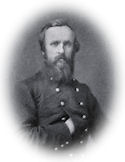
“Lieutenant-Colonel R. B. Hayes, Twenty-third Regiment.
“Wife and boy doing well. Stranger arrived Saturday evening, nine o’clock P. M.
J. T. Webb.”
Good! Very! I preferred a daughter, but in these times when women suffer so much, I am not sure but we ought to rejoice that our girls are boys. What shall I call him? What will Birt say, and Webb, and Babes? “Babes” no longer. He is supplanted by the little stranger. Cold wind and snow-storm, outside. Dear Lucy! I hope she will keep up good heart. I replied by telegraph: “Congratulations and much love to mother and son. All well.”
Fayetteville, Virginia, December 23, 1861.
Dear Uncle : — I have just heard by telegraph of the birth of my fourth son. In these times, boys are to be preferred to girls. Am glad to hear Lucy is doing well. . . .
Yes, we are in winter quarters, most comfortable quarters. I have to myself as nice a room as your large room, papered, carpeted, a box full of wood, and with a wild snow-storm blowing outside to make it more cheerful by contrast. We have had eighteen days of fine weather to get ready in, and are in pretty good condition. We have our telegraph line running down to civilization; get Cincinnati papers irregularly from four to ten days old. I have enjoyed the month here very much. Busy fortifying — not quite ready yet, but a few more days of good weather will put us in readiness for any force. The enemy are disheartened; the masses of the people want to stop. If England does not step in, or some great disaster befall us, we shall conquer the Rebellion beyond doubt, and at no distant period. . . .
I shall go home about the time Dr. Joe starts back here — say the 15th to 20th January, if nothing new occurs to prevent. If you can’t come down to Cincinnati, I shall go to Fremont.
Sincerely,
R. B. Hayes.
S. Birchard.
DECEMBER 23D.—Gen. T. J. Jackson has destroyed a principal dam on the Chesapeake and Ohio Canal. That will give the enemy abundance of trouble. This Gen. Jackson is always doing something to vex the enemy; and I think he is destined to annoy them more.
It is with much apprehension that I see something like a general relaxation of preparation to hurl back the invader. It seems as if the government were waiting for England to do it; and after all, the capture of Slidell and Mason may be the very worst thing that could have happened. Mr. Benjamin, I learn, feels very confident that a rupture between the United States and Great Britain is inevitable. War with England is not to be thought of by Mr. Seward at this juncture, and he will not have it. And we should not rely upon the happening of any such contingency. Some of our officials go so far as to hint that in the event of a war between the United States and Great Britain, and our recognition by the former, it might be good policy for us to stand neutral. The war would certainly be waged on our account, and it would not be consistent with Southern honor and chivalry to retire from the field and leave the friend who interfered in our behalf to fight it out alone. The principal members of our government should possess the highest stamp of character, for never did there exist a purer people.
MONDAY 23
Cold and windy with some snow but not enough to remain on the ground. News from England looks squaly. England is seeking a pretext for engaging in the quarrel on the Side of the rebels. We are likely to have our hands full. Our people are “fighting mad” with England whether the fight comes off now or not. Nothing new from the War. Genl Scott has returned probably on some important business connected with the matter with England. He comes from Paris. I have been home all the evening puting the boys through their lessons, &c.

______
The three diary manuscript volumes, Washington during the Civil War: The Diary of Horatio Nelson Taft, 1861-1865, are available online at The Library of Congress.
December 23.—The prize schooner Charity, captured off Hatteras Inlet, N. C., on the 17th of December, by the steamer Stars and Stripes, was wrecked off Hempstead, L. I. She had been placed in charge of Captain George Ashbury, to be taken to the port of New York.—N. Y. Times, December 29.
—A fight occurred at Joseph Coerson’s house, in Perry County, Ky., between one hundred and eighteen rebels and forty-seven Union men. The rebels were completely routed, with sixteen wounded, and the Union loss nothing.— N. Y. Tribune, December 28.
—Gen. Rosecrans issued an address to the army of Western Virginia, in which, after alluding to their triumphs during the campaign, and their gallantry and devotion to the National cause, he urged them to perfect themselves in all that pertains to drill, instruction, and discipline, and promised to provide for them everything necessary to prepare them for their coming work. He further stated that he should organize boards of examiners, who would rid the service of the disgrace and the soldiers of the incubus of incompetent and worthless officers, who hold the positions and receive the pay without having the will or capacity to perform the duties of their positions.
December 23 — Moved into winter quarters, in a good house in the southeastern suburbs of town, and near a good spring.

Sunday, 22d—It snowed all day, the snow falling in large flakes, and the weather is fast turning colder. I was detailed on camp guard and with my overcoat on walked my beat for two hours at a time. At about 4 o’clock in the afternoon five companies of our regiment received marching orders to go at once, and striking our tents we hastened down to the railroad station on the bank of the river, where we had to stack arms and wait four hours for the train. The weather by this time had turned intensely cold and we were compelled to build fires to keep warm, but no firewood was at hand. The boys spied a lot of canoes stored away for the winter under a warehouse; these we appropriated and had used up forty or fifty of them before our train finally came. When the train did come, we discovered to our dismay that it was made up of stock cars, bedded with straw. We boarded the cars at 8 p. m. and settling ourselves as comfortably as possible, with our rifles in hand started at midnight for California, Missouri.
December (Sunday) 22nd.—Lord Lyons saw Mr. Seward again, but it does not appear that any answer can be expected before Wednesday. All kinds of rumours circulate through the city, and are repeated in an authoritative manner in the New York papers.
SUNDAY 22
It is colder today but rains tonight with a prospect of a long rain. I have not been out to church today but staid at home to keep up fires &c and boil hominy. Went down to Willards, found a great crowd. Met Capt Dexter of the R.I. 1st Regt which came here in June (3 months men). He is not now in the Service. Edd Dickerson came up tonight and spent an hour or two. There is no news of importance but news is hourly expected of a fight in Kentuckey. Almeron Field was here this morning. He is on Mass Ave (his old quarters). It rains steadily tonight.
______
The three diary manuscript volumes, Washington during the Civil War: The Diary of Horatio Nelson Taft, 1861-1865, are available online at The Library of Congress.