Following the American Civil War Sesquicentennial with day by day writings of the time, currently 1863.

January 2012

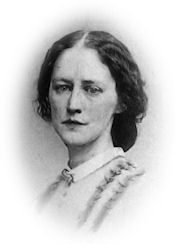
Jane Stuart Woolsey to Joseph Howland.

Saturday Evening, January, ‘62.

I received yesterday from Mr. Stephen Williams thirty dollars, on the part of Mr. Alexander Van Rensselaer, “for a soldiers’ library.” Stephen, good old soul, said, “ Oh! I’ve got this commission; now won’t you help me? I don’t know about libraries; you can consult Howland,” etc., etc. . . . It will buy about forty plain books for a hospital or regiment. Would the 16th or any regiment in the brigade like one? . . .

Lizzie Greene sent a box of flannel shirts to a Connecticut regiment lately, and put a dozen cigars and a paper of tobacco in a pocket in each— “true Christian philanthropy,” William Bond says;— “send them something they ought not to have.” . . . We have been trying to persuade Mother to go down to Washington with Hatty and Charley, and take a look at things, but she is not to be prevailed on, I am afraid. Charley’s lame hand will prevent him from going for a while, but I think he and H. will go on while Carry is in Boston. Carry goes on Wednesday to Mrs. Huntington Wolcott’s and afterwards to Miss Parsons’, (lately engaged to a tall Captain Stackpole in a Massachusetts regiment now at Annapolis, expecting to go up the York river with Burnside’s expedition). Abby saw Mrs. George Betts to-day, who says her husband (in Hawkins’ Zouaves) expects to join the same expedition immediately. Transports are to take them at once from Hatteras to the rendezvous at Fortress Monroe. They have suffered severely at Hatteras; the mortality in George Betts’ regiment has been very great….

Malvina Williams says she hears G. and E. are known in Washington as the “Angels!”

Mr. Prentiss came in just now for a little call, cheery and bright, asking for your photograph to put in a book he had given him for Christmas. So you can send him one. It’s a good book to be in, Mr. Prentiss’ good book. . . .

William Wheeler, who has been very ill with camp fever, writes home that he has received great kindness from Miss Jane Woolsey, meaning G., and “was delighted with her.” I begged his friends not to mention it; it was but little I could do! But tell Georgy. . . .

Would you like three or four dozen more gloves for your men, lonely and cold sentinels, for instance? Spake the wurred. Mr. Gibson sends a lot of London papers all deep-edged with black for the Prince Consort (rest his soul) and their own sins (bad luck to them) I should hope. The “whirligig of time will no doubt bring in its revenges.” . . .

I had a vision of you to-day, as might be a year ago, sitting on the box seat of a sleigh, with a fur cap with ears, and, shall I say it, a roseate nose, visible when you turned around, skirrying over the crusty roads with the blue bloomy hills lifting, and the white fields rolling away, with the wonderful sparkling rime on everything and the heavy snow breaking down the fir-branches. The vision passed, as Cobb would say, and I tried to make another out of your present circumstances and didn’t succeed at all, which proves that your normal state is not warlike.

Young people at home could not be kept on the nervous strain all the time, and an occasional festivity served as a breathing place, though the regular occupation of the family followed hard upon it.
January 4.— Huntersville, a depot for rebel supplies in the mountains, between Huttonsville and Warm Springs, Va., was attacked by the National troops, and all the supplies there were captured and destroyed. The National troops engaged were detachments of the Fifth Ohio, the Second Virginia, and Bradsin’s Cavalry — some seven hundred and forty in all. The rebels had four hundred cavalry and three hundred and fifty infantry. Two miles from Huntersville, the National troops were met by the rebel cavalry, who were driven from point to point, and at last the whole rebel force beat a hasty retreat from the town as the Nationals charged through it —(Doc 4.)

—All the Kentucky banks, located where rebel domination prevails, were consolidated under Henry J. Lyons, formerly of Louisville, as President, who had authority to run them for the Southern Confederacy.—Louisville Journal, January 4.

—Judge Hemphill, ex-Senator in the Congress of the United States, and afterwards a member of the rebel Congress, died in Richmond, Va.

—Gen. Jackson, with a large rebel force, appeared at Bath, Va., where there were but about five hundred Union troops, these being detachments of several regiments. An attack was made by the whole rebel militia, who were twice repulsed by the National volunteers. Subsequently General Jackson’s regulars made an attack in front, at the same time executing a flank movement, when the National troops fell back on Hancock, Va.—(Doc. 5.)

3rd. Received a letter from Fannie. Was busy with wood until dark.

Friday, 3d—Mrs. Hemmenway gave some of the boys permission to have a dance at her home last night. Quite a number of the boys went and they declare that they had a good time. The girls of the locality were there and most of them either smoked or chewed tobacco. They would dance a while, then rest and smoke, but those that chewed did not care to stop.[1]


[1] Craven Lane, a member of Company E, died of lung fever on this day at Jefferson City. He had been with us but a short time and was a very quiet boy.—A. G. D.

Friday, January 3. — Last evening threatened snow but too cold. Today cold and dry. P. M. 4 o’clock began to rain; may rain for a month now.

Charles, an honest-looking contraband — six feet high, stout-built, thirty-six years old, wife sold South five years ago,— came in today from Union, Monroe County. He gives me such items as the following: Footing boots $9 to $10. New boots $18 to $20. Shoes $4 to $4.50. Sugar 25 to 30 [cents a pound], coffee 62½, tea $1.50, soda 62½, pepper 75, bleached domestic 40 to 50 [cents a yard.] Alex Clark [his master], farmer near Union (east of it), Monroe County, one hundred and fifty (?) miles from Fayetteville — fifty miles beyond (?) Newbern. Started Saturday eve at 8 P. M., reached Raleigh next Monday night; crossed New River at Packs Ferry. (Packs a Union man.)

Companies broken up in Rebel army by furloughs, discharges, and sickness. Rich men’s sons get discharges. Patrols put out to keep slaves at home. They tell slaves that the Yankees cut off arms of some negroes to make them worthless and sell the rest in Cuba for twenty-five hundred dollars each to pay cost of war. “No Northern gentlemen fight — only factory men thrown out of employ.” They (the negroes) will fight for the North if they find the Northerners are such as they think them.

Union is a larger and much finer town than Fayetteville. William Erskine, keeper of Salt Sulphur Springs, don’t let Rebels stay in his houses. Suspected to be a Union man. Lewisburg three times as large as Fayetteville. Some Fayetteville people there. People in Greenbrier [County] don’t want to fight any more.

General Augustus Chapman the leading military man in Monroe. Allen T. Capelton, the other mem[ber] of Legislature, Union man, had his property taken by them. Named Joshua Seward, farmer. Henry Woolwine, ditto, for Union, farmer, [living] near Union — three and three and one-half miles off. Dr. Ballard a good Union man (storekeeper) on the road from Giles to Union, twelve miles from Peterstown, also robbed by Floyd. Wm. Ballard and a large connection, all Union men — all in Monroe. Oliver Burns and Andrew Burns contributed largely to the Rebels. John Eckles in Union has a fine brick house — a Rebel colonel. Rebels from towards Lynchburg and Richmond would come by way of Covington, forty-five miles from Union. Landlords of principal hotel Rebels — one at Manassas. Two large, three-story high-school buildings, opposite sides of the street, on the hill this end of town. “Knobs,” or “Calder’s Peak,” three miles from town. A hilly country, but more cleared and better houses than about Fayetteville.

They “press” poor folks’ horses and teams not the rich folks’. Poor folks grumble at being compelled to act as patrols to keep rich men’s negroes from running off. “When I came with my party, eleven of us, in sight of your pickets, I hardly knew what to do. If you were such people as they had told us, we would suffer. Some of the party turned to run. A man with a gun called out halt. I saw through the fence three more with guns. They asked, ‘Who comes there?’ I called out ‘Friends.’ The soldier had his gun raised; he dropped it and said: ‘Boys, these are some more of our colored friends,’ and told us to ‘come on, not to be afraid,’ that we were safe. Oh, I never felt so in my life. I could cry, I was so full of joy. And I found them and the major (Comly) and all I have seen so friendly — such perfect gentlemen, just as we hoped you were, but not as they told us you were.”

Friday January 3rd

Went to the office as usual. About 1/2 past 11 o’clock went with Col Mirrick to the War Department. On our way we passed through the Treasury to the “White House,” went into the East Room and about the House some. At the War Department we found a great crowd, dispatches comeing in and going out all the time. Officers with shoulder straps with Bars and the leaf and with Eagles and with Stars, hurrying to and fro. Many anxious ones waiting for an interview with the Sec’y, lame and sick looking soldiers waiting for their discharge papers to be made out. The Col had business getting the discharge of a soldier from Rose Wayne Co. The officials were obliging and the application was successful. Ed Dickinson called and staid an hour.


______

The three diary manuscript volumes, Washington during the Civil War: The Diary of Horatio Nelson Taft, 1861-1865, are available online at The Library of Congress.

New York, January 3, 1862

Here I am in barracks in New York and under orders for Port Royal, with the thermometer about zero and a small pandemonium all around me. I went out to camp about eight days ago in the dead of winter, and when the strong north wind blew. Sunday we struck our camp and moved for the South. It was n’t a pleasant day, for the Blue Hills looked cold and dreary and snow packed on the deserted camp ground; and while the earth was covered with ice the sky was grey and uncompromising and the wind rough and cold. It was dismal enough I assure you and I was glad enough when we were hurried into the cars. John was the only person to see me off, much to my relief, for I was in the cross and hungry rather than the sentimental mood.

Then came a chapter of accidents. Our Major got drunk before we left and has continued so ever since, and the battalion has taken care of itself. That officer has now disappeared, we hope forever, and at last we have got ourselves comfortably quartered. We are barracked in a German amusement building and grove on 64th street, and our horses are stabled in large sheds not far off, and the room in which I am writing is the parlor and sleeping room of the officers and the headquarters of the battalion. The weather is beastly cold and very windy, and the horses suffer though the men are comfortable. As for me I never was better in my life. The exposure has been pretty severe and the change of life great; but I am always well in the open air and jolly among a crowd of fellows, so no sympathy need be wasted on me. I like it and like it better than I expected. I fall into the life very easily and find my spring experience at the fort of inestimable service. Already I feel as much at home in charge of the guard or the company stables as I ever did in my office. I ‘m sure if I like it so far I shall continue to do so, for we’ve had a pretty rough time, and Caspar Crowninshield says the most disgusting he ever had. But I certainly like it so far and expect to continue to do so.


We are off soon — probably within ten days — for Port Royal. We like the idea fairly, though we would prefer to go to other places. For myself I should prefer to winter at Annapolis, and next to that to be sent to Texas, but as for being cooped up on Hilton Head all winter, I don’t relish the idea much, though as regards climate it will be a pleasant change. As for active service, it’s just impossible. You could n’t get our horses within a mile of firearms, and the drilling task before us is something terrible to contemplate. We are all green, officers, men and horses, and long practice is absolutely necessary. But we can do, I imagine, picket and camp duty. My wants (?) will probably be found on board ship.

January 3 — Sunrise found us on the march in a northwestern direction across the northern portion of Berkeley County. We passed North Mountain depot on the Baltimore and Ohio Railroad, and came through Hedgesville, a small village about eight miles north of Martinsburg, crossed Back Creek this afternoon, and this evening we are camped in a pine thicket in Morgan County.

The weather is cold, disagreeable, and very unfavorable for outing; we have no shelter save some pine brush thrown together on the hog-shed fashion.

This afternoon a company of our cavalry passed us, armed with lances, which consisted of a steel spear about ten inches long mounted on a wooden shaft about eight feet long. These were some of the identical weapons that the saintly martyr, John Brown, had at Harper’s Ferry, to place in the hands of liberated slaves for the purpose of murdering men and women and perhaps children.

And yet, if all accounts be true, there are long-faced men and women in the North to-day who think that they are worshiping the great Jehovah by singing the praises of John Brown. O ye prejudiced, hypocritical souls, if you would have lived a little over eighteen hundred years ago you would have been in the crowd that shouted, ” Crucify Him! Crucify Him!” especially if you would have had a lamb or two to sell.

January.

Dear Girls: I have only been waiting for the New Year to come fairly in and shut the door, before sitting down quietly to wish you all the traditionary compliments of the season. . . . We all spent Christmas day together as usual in London Terrace. . . . The prettiest feature of the season was Mother’s Christmas tree for the children, who were in ecstasies of delight, and insisted even upon perching on the branches to get as near to it as possible. Night before last was devoted to a brilliant little party for the children Hatty and Carry,—a very handsome and successful affair. I did not go, my wardrobe presenting only the alternative of bogy or bride, either black silk or a too dressy white silk, but Robert and I feasted on some of the remains last night, on our roundabout way home from Mr. Everett’s lecture at the Academy of Music, and had a near and satisfactory view of the spun sugar beehives and candy castles surmounted by nougat cherubim, which graced the occasion.

On New-Year’s Day, when everybody was making the compliments of the season, Messrs MASON and SLIDELL were quietly conveyed from Fort Warren and placed on board the British war-steamer Rinaldo, which forthwith put to sea; and if the hurricane which blew the whole night did not send DAVIS’ “ambassadors” to Davy’s locker, they are now on the fair way of completing the voyage which Captain WILKES cut short six weeks ago. It having been decided in the great Council of Trent, that England has a right to the two worthies, the corpora delictorum have been cheerfully yielded up by the Government; and as the “mob,” that dreadful creation of the London Times’ fancy, which it was predicted would sooner see the country smashed than the prisoners given up, has not interposed any obstacle, but, on the contrary, has shown itself most languidly indifferent to their taking off, the strange episode in the history of the times with which the names of MASON and SLIDELL are connected, may be considered as ended.

It is curious to contrast the intense excitement caused by the news of the arrest of the rebel “Ambassadors” with the perfect indifference felt at the announcement of their departure. But there is nothing illogical in the two sentiments. The whole country rejoiced at the arrest of two notorious rebels who had been engaged in plotting their country’s ruin, and were going abroad the more effectually to carry on the work. But it was presently seen that their arrest, on board an English vessel, was an act which concerned England as well as ourselves. Accordingly, with that inquisitive temper that marks the American mind, the whole North organized itself into a vast Court of Inquiry and a thousand Presses canvassed the case in all its bearings in view of International Law. It may be that, under the first excitement of the capture, we were somewhat forgetful of our traditional American policy in the matter of neutral rights, and this led us to look too exclusively into British principles and precedents. But as time passed, and the case opened up more fully, a recollection of our larger and more permanent interests in the great question, and how they would be jeopardized should we insist on justifying the arrest, added to a growing conviction of what Mr. SEWARD has called the “comparative insignificance of the individuals concerned,” operated a marked change in the views of the thoughtful; so that when the policy of the Government was announced, it found the public in a great measure prepared to acquiesce in their decision for the surrender of the prisoners. And if an imperfect appreciation of all the motives that prompted the Administration to take the step it did, left with some a sense of humiliation, it has already wholly disappeared under the influence of Secretary SEWARD’s admirable logic.

The result is that nobody feels the slightest interest in the two wretched traitors, of whom the country is now happily rid. In fact, the more personalities of MASON and SLIDELL have become so overslaughed by theoretic questions of International Law, that a good many people have begun to regard them as a good deal of a myth.