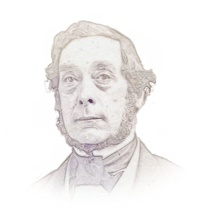
MARCH 13TH.—Nevertheless, I am (temporarily) signing my name to the passports, yet issued by the authority of the Secretary of War. They are filled up and issued by three or four of the Provost Marshal’s clerks, who are governed mainly by my directions, as neither Col. Porter nor the clerks, nor Gen. Winder himself, have the slightest idea of the geography of the country occupied by the enemy. The clerks are all Marylanders, as well as the detectives, and the latter intend to remain here to my great chagrin.
March 2012
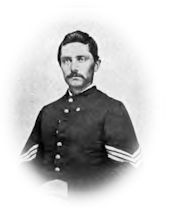
Thursday, 13th—We stopped at Paducah, Kentucky, a short time and then early this morning came up the river to Fort Henry, arriving in the afternoon. There are about twenty transports at this place, loaded with troops. Fort Henry is a dilapidated place. The Tennessee river is very high, the water being out over the banks, and the lowlands are flooded for miles on both sides of the river.
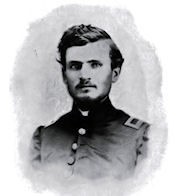
13th. Saw the boys jay-hawking from countryman who had apples, chickens, eggs, etc. They stole half he had. Read a chapter in Beecher’s “Letters to Young Men.”
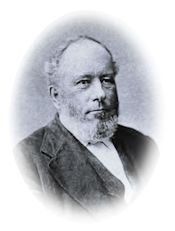 March 13. The morning of the 13th was dark and rainy, and we made preparations to land. It always rains where we go; first at Hatteras, then at Roanoke and now here. I think we are rightly named a water division.
We landed in a mudhole, at the mouth of Slocum’s creek. Before noon the troops were all landed, and the march commenced. The 25th taking the advance, we marched up the river bank about a mile, the gun-boats shelling the woods in advance of us. We then struck into the woods, which presented a novel appearance. There was no undergrowth, but a short grass covered the ground, while masses of long gray moss hung in festoons from the branches of the trees, giving them a weird and sombre appearance. We soon came out to a cart road, or horse path, along which we followed for about a couple of miles, when we came to a deserted cavalry camp. I reckon when they heard the sounds of revelry on the river, there was mountings in hot haste, and they sped away to some safer locality. The clouds now broke and the sun shone out hot, which, together with the mud, made the march a toilsome one. A little further on, we came to the carriage road. Here Foster’s brigade halted, to let Reno’s and Parke’s brigades move past us.
As Parke’s brigade marched past us, we saw at the right of one of the companies in the 5th Rhode Island regiment, marching by the side of the orderly, a lady, dressed in a natty suit, with high boots and jockey hat, surmounted by a big ostrich feather. She was the observed of our whole brigade, and cheer after cheer went up along the line for the pretty woman. Continuing our march a little farther we reached some extensive earthworks, which were abandoned, but for what reason we of course were ignorant. But we reasoned that if they build works like these and then make no effort to hold them, it shows they are weak and have no confidence in their ability to successfully contend against us, and Newbern will fall an easy prey. The deep mud in the road, together with the heat, began to tell on the boys, and many of them were obliged to fall out by the way. Our march began to grow slower, and when about dusk, it commenced raining again, we turned into the woods at the right of the road, where we were to bivouac for the night. Scouting parties and pickets were sent out in order to give notice if anything unusual was about to transpire during the night. Here in the soft mud of the swamp, with the rain pouring down on us, was our hotel. Mrs. Hemans, in her song of the Pilgrims, said,
‘Amidst the storm they sang.”
But there was no song in that swamp; too tired for supper the boys laid themselves down in the mud to sleep, and bitterly thought of the morrow. Stokes and I roomed together between a couple of logs. Taking our rifles and powder between us and covering ourselves closely in the blankets, we were soon fast asleep. But he kept the advantage of me all night, for he is a great fellow to pull blankets, and he came out in the morning all right and dry, while I had been catching the rain. The boys slept well, but woke up cold and wet. There was no time to make a cup of coffee, for we were close on the enemy, and the order was again to the battle. We caught a few hasty mouthfuls of cold meat and hardtack, and quietly fell into our places in line.
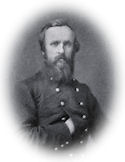
Camp Hayes, Raleigh, Virginia, March 13, 1862.
Dearest : — I came up last night just as the regiment was forming for dress parade. For the first time in months we are all together; health good; ranks very full. Oh! it was a beautiful sight; we had plenty of cheering, music, and our best marching. The men were never in finer condition. You would enjoy seeing the Twenty-third now; well dressed, bravely looking, and soldier-like.
We expect to remain here until a forward movement is made — perhaps two to four weeks, possibly longer. Dr. Joe very well and in good spirits. My new Webby still does finely. It is just daylight. Captain Slocum who left us at Camp Chase, has visited us and goes home this morning. Love to all.
Most affectionately, your
R.
Mrs. Hayes.
Camp Hayes, Raleigh, Virginia, Thursday, [March] 13.— Spent the day arranging quarters, guards, etc., etc. I room with Avery. Messed three meals with Colonel Burgess. Hash — such hash! Colonel Burgess was a venomous Secesh but is now mollified and so strong a Union man that with a body of our troops he attacked a gang of his old Secesh friends at Jumping Branch and killed one of them! Before noon it began to rain. Cleared a little in time for evening parade.
Read confirmation of good news of yesterday. Five, only think, five!! Secesh prisoners captured! Negligence in the Potomac army. A new division and assignment of commands gives great satisfaction to us all. General McClellan no longer acts as Commander-in-Chief. Three great divisions created. General McClellan commands the Potomac, General Halleck the Mississippi, and General Fremont the Mountains (supposed to be our case). General Fremont has a strong hold on the hearts of the people and of the soldiers. We all feel enthusiasm and admiration for him.
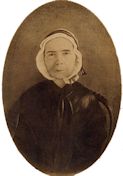 13th.—Our hearts are overwhelmed to-day with our private grief. Our connection, Gen. James McIntosh, has fallen in battle. It was at Pea Ridge, Arkansas, on the 7th, while making a dashing cavalry charge. He had made one in which he was entirely successful, but seeing the enemy reforming, he exclaimed, “We must charge again. My men, who will follow me?” He then dashed off, followed by his whole brigade. The charge succeeded, but the leader fell, shot through the heart. The soldiers returned, bearing his body! My dear J. and her little Bessie are in Louisiana. I groan in heart when I think of her. Oh that I were near her, or that she could come to us! These are the things which are so unbearable in this war. That noble young man, educated at West Point, was Captain in the army, and resigned when his native Georgia seceded. He soon rose to the rank of Brigadier, but has fallen amid the flush of victory, honoured, admired and beloved by men and officers. He has been buried at Fort Smith. The Lord have mercy upon his wife and child! I am thankful that he had no mother to add to the heart-broken mothers of this land. The gallant Texas Ranger, General Ben McCulloch, fell on the same day; he will be sadly missed by the country. In my selfishness I had almost forgotten him, though he doubtless has many to weep in heart-sickness for their loved and lost.
Bishop Meade is desperately ill to-day—his life despaired of.
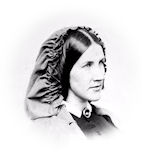
Georgeanna’s Journal.
March 13
While we were cooking some arrowroot in our parlor for a Vermont private, sick in this hotel, Joe came in, back from Fairfax for a ride. The officers had been all over the old battlefield at Bull Run, McDowell crying, and all of them serious enough. The rebel works at Centreville, Joe says, are splendid, as formidable as any of ours about Washington. Their winter quarters were capital log houses, enough to accommodate 100,000 men. The burial ground was near at hand, and not far away a field of hundreds of dead horses. The works at Manassas were very slight, mounted in the most conspicuous places with logs of wood painted black. The rebels had been evacuating for some time, but, at the last, left in a sort of panic, leaving dead bodies lying beside coffins, and quantities of food, clothing and baggage of all kinds, some of it fired.
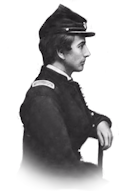
(March 13, 1862)
On the eighth of March the camp was filled with rumors of the withdrawal of the enemy from Centreville and Manassas, and everything was in a state of excitement. The next morning the rumors were confirmed, and we received orders to prepare at once to march. Three days’ cooked rations, sixty rounds of amunition, with blankets rolled, knapsacks, and all superflous clothing to be left behind, in charge of a sergeant and guard detailed for the purpose; these were the instructions transmitted to every regimental commander, and the camps were in a confused state of preparation all day long. Very early on the morning of the tenth the regiments of the brigade formed on their color lines, and after a good deal of delay, filed out on the main road, and headed in the direction of the enemy, the general leading the way in fine shape. We marched all day, arriving near Fairfax court house towards evening, and bivouacked for the night. The following morning the march was continued by Sangster Station to Union Mills, where we learned definitely that the rebel army had fallen back on Gordonsville, abandoning their winter quarters and works of Manassas. There was some hesitation about the future movements of the army for a while, but finally our division was ordered forward, and on the 13th we marched to within two miles of Manassas Junction, and occupied the rebel huts on the extensive plains. During the evening General Stoneman, in command of a brigade of cavalry, came on the field, and announced to the general his intention of making a reconnoisance early in the morning, to find out exactly what had become of the rebel army. He asked the general to detail a regiment of infantry to support his command, and the Fifty-seventh, Colonel Zook, was at once ordered to report to him for that purpose. It commenced raining shortly after we left Camp California and continued, almost without interruption, to this time.
From the number of log houses, field reports, newspapers, and private papers found in them, we are satisfied the enemy’s strength has been greatly overestimated. These plains, so called, are an immense area of perfectly level fields, without a single tree or sign of any living thing about them. The station is in ruins, hospitals and houses all leveled to the ground. A few giant chimneys stand black and gaunt alone, as monuments of the ruin about us. Most of the piles of debris were still smoking, and the desolate, bleak surroundings reminded me of the picture of Smolensk, on the retreat of the Great Napoleon. The deluge of rain, added to the sombreness of the situation, induced many melancholy reflections.
French is in command with two batteries of artillery and a regiment of cavalry added to our regular brigade, the remainder of the army being somewhere in the rear.

_______
Note: This part of the “diary” is more of a recollection than a day by day diary. I am splitting it up for posting on Daily Observations from the Civil War at what appear to be appropriate points; these may differ somewhat from actual historical records.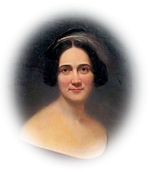
March 13th.—Mr. Chesnut fretting and fuming. From the poor old blind bishop downward everybody is besetting him to let off students, theological and other, from going into the army. One comfort is that the boys will go. Mr. Chesnut answers: “Wait until you have saved your country before you make preachers and scholars. When you have a country, there will be no lack of divines, students, scholars- to adorn and purify it.” He says he is a one-idea man. That idea is to get every possible man into the ranks.
Professor Le Conte¹ is an able auxiliary. He has undertaken to supervise and carry on the powder-making enterprise—the very first attempted in the Confederacy, and Mr. Chesnut is proud of it. It is a brilliant success, thanks to Le Conte.
Mr. Chesnut receives anonymous letters urging him to arrest the Judge as seditious. They say he is a dangerous and disaffected person. His abuse of Jeff Davis and the Council is rabid. Mr. Chesnut laughs and throws the letters into the fire. “Disaffected to Jeff Davis,” says he; “disaffected to the Council, that don’t count. He knows what he is about; he would not injure his country for the world.”
Read Uncle Tom’s Cabin again. These negro women have a chance here that women have nowhere else. They can redeem themselves—the “impropers” can. They can marry decently, and nothing is remembered against these colored ladies. It is not a nice topic, but Mrs. Stowe revels in it. How delightfully Pharisaic a feeling it must be to rise superior and fancy we are so degraded as to defend and like to live with such degraded creatures around us— such men as Legree and his women.
The best way to take negroes to your heart is to get as far away from them as possible. As far as I can see, Southern women do all that missionaries could do to prevent and alleviate evils. The social evil has not been suppressed in old England or in New England, in London or in Boston. People in those places expect more virtue from a plantation African than they can insure in practise among themselves with all their own high moral surroundings— light, education, training, and support. Lady Mary Montagu says, “Only men and women at last.” “Male and female, created he them,” says the Bible. There are cruel, graceful, beautiful mothers of angelic Evas North as well as South, I dare say. The Northern men and women who came here were always hardest, for they expected an African to work and behave as a white man. We do not.
I have often thought from observation truly that perfect beauty hardens the heart, and as to grace, what so graceful as a cat, a tigress, or a panther. Much love, admiration, worship hardens an idol’s heart. It becomes utterly callous and selfish. It expects to receive all and to give nothing. It even likes the excitement of seeing people suffer. I speak now of what I have watched with horror and amazement.
Topsys I have known, but none that were beaten or ill used. Evas are mostly in the heaven of Mrs. Stowe’s imagination. People can’t love things dirty, ugly, and repulsive, simply because they ought to do so, but they can be good to them at a distance; that’s easy. You see, I can not rise very high; I can only judge by what I see.

______
¹ Joseph Le Conte, who afterward arose to much distinction as a geologist and writer of text-books on geology. He died in 1901, while he was connected with the University of California. His work at Columbia was to manufacture, on a large scale, medicines for the Confederate Army, his laboratory being the main source of supply. In Professor Le Conte’s autobiography published in 1903, are several chapters devoted to his life in the South.


