MARCH 3D.—But McClellan would not advance. He could not drag his artillery at this season of the year; and so he is embarking his army, or the greater portion of it, for the Peninsula.
March 2012
Monday, 3d—It is turning a little warmer. There are just a few of the boys in the hospital here and they are well cared for; their bedding is kept nice and clean and their food is well cooked.
3rd. Commenced a letter to Theodore but did not finish. Bathed all over and changed my clothes. Got my washing done and some baking.
Monday March 3d 1862
It has rained all day. Snow all gone and mud again much to the disappointment of all. We heard this morning of the death of the gallant Genl Lander. He was one of the bravest of the Brave and we could have spared almost any of our Brigadiers better than him. He died of wounds rcd at the fight at “Edwards Ferry,” up the river, last fall. The Evacuation of Collumbus K.Y. is officialy anounced. It was the last rebel Strong Hold in K.Y. The papers say nothing about army movements, they are not allowed to. I have been at home all the evening and the boys have staid in the house all day studying their lessons some and amusing themselves drawing &c. “Bud” shows quite a talent for drawing & painting in water colors, but his practice is confined to Houses, Steamboats, Soldiers &c.
______
The three diary manuscript volumes, Washington during the Civil War: The Diary of Horatio Nelson Taft, 1861-1865, are available online at The Library of Congress.
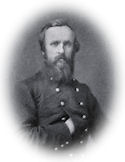
Monday, March 3. — Still raining, some sleet, cold as blazes at night. Ride my new horse, a yellow sorrel of Norman stock; call him Webby.
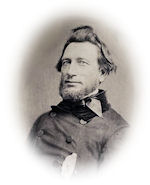
March 3d.—In the way of petty tyranny, it seems another Richmond has entered the field. Last week I was presented by some of my friends with a very pretty sword, as a testimonial of their respect and affection for me. To-day I am informed by General _____ that this cannot be tolerated. All the persecution which he and his satellites have heaped on me, have not been sufficient to alienate the affections of those for whom and with whom I have labored for the good of the regiment; but all those who have had any part in the presentation of that sword are to be punished, and this, too, at a time when all ranks, from Corporals to Major Generals, are receiving like testimonials! But (?) the head of this Brigade having failed to crush a Surgeon, aspires to a personal quarrel with privates and nurses. Magnanimous General! I have received a positive order, to-day, to ascertain the names of all who had any hand in the presentation of the sword, and to report them to headquarters, and I have just as positively refused to stoop to participate in any such dirty work. I leave all the honor to the Brigadier General, and after he has vented his malice on such of the privates as he can get other tools to hunt out for him, he is at liberty to try his hand on me again for this disobedience of his dirty order. The work is worthy of him, and of the tools he employs.
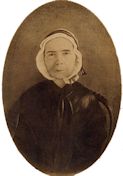
March 3.—Last Friday was the third day appointed by our President as a day of fasting and prayer within nine months. The churches were filled to overflowing, with, I trust, heart-worshippers, and I believe that God, in his great mercy, will direct our Government and our army.
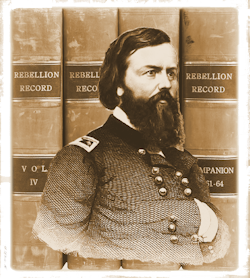
March 3.—The rebel Brig.-Gens. Simon Bolivar Buckner and Lloyd Tilghman, arrived at Boston, Mass., and were immediately sent to Fort Warren, in the harbor. It was not generally known that they were to arrive, but there was a crowd present large enough and noisy enough to make it decidedly unpleasant, both to the prisoners and the officers who had them in charge. They occupied a car situated in the middle of the long train. The crowd pressed round this car as soon as the Generals were discovered, and commenced hissing, groaning and howling in a manner calculated to give the occupants an impression not altogether favorable to the citizens of the “Yankee capital.”
United States Marshal Keyes, Deputy-Sheriff Jones, and Capt. McKim, Assistant United States Quartermaster, went into the car attended by a number of policemen. They soon appeared with the two Generals, and conducted them to the front of the depot, followed by the crowd, which was rapidly swelling in numbers. The prisoners jumped into a hack in waiting there, and were followed by Marshal Keyes and Col. Cutts. Sheriff Jones mounted the box with the driver. As they drove off, the crowd amused itself by groaning vehemently for Jeff. Davis. The hack was driven rapidly to Union Wharf, where the prisoners and officers went on board the steamer May Queen, and started soon after for Fort Warren.
The guard of soldiers did not leave the car in which they had arrived at the depot until the prisoners had been driven off in the hack. When they marched out into the street, some persons in the crowd which still lingered about the place were belligerently inclined. One fellow appealed to his comrade to know if they were going to let “rebels” run loose about the streets; to which appeal one of said comrades made bold to reply that they “warn’t goin’ ter du nuthin’ er that sort.” A policeman made proclamation that the soldiers were good Union men and true, and the crowd thereupon set up a mighty cheer, and poured in compliments upon the soldiers. — Boston Courier, March 5.
—The Richmond Examiner of this date has the following: “The Yankees in Richmond, who have been trading and peddling in the necessities of the war, are showing characteristic acuteness in eluding the draft for military service. Their management is to get some contract from the government, no matter how petty, and then plead the exemption of public contractors. Of course these creatures are close calculators, and are quite willing to take petty contracts, even at losing prices, to save thereby the unpleasantness of fighting, or the cost of obtaining a substitute.
“We can count on our fingers a score of instances of this management, by well-known Yankee merchants and tradesmen in Richmond. We hear of a Yankee dealer effecting the exemption of himself and workmen from military service, by some paltry contract for official upholstery; of another, a coachmaker, getting a contract for haversacks, or some other trifle; and of a third ‘son of the Puritans,’ a bonnet-maker, or manmiliner, notoriously unsound on the Southern question, who has screwed himself into the employment of the government as a travelling agent to purchase leather.”
—The Senate of the United States confirmed Gens. McDowell, Buell, Burnside, McClernand, C. F. Smith, Lew. Wallace, and Sigel, as major generals, and the following as brigadiers: Speed of Tennessee, Col. Logan of Illinois, Col. McArthur of Iowa, Col. Lauman of Iowa, Col. Wallace of Indiana, Col. McCook of Ohio, Col. Berry of Maine, and Col. Ferry of Connecticut
Both Houses of Congress passed the bill giving generals in command of divisions, staffs—one assistant adjutant-general, with the rank of major; one inspector-general, with the rank of major; three aids, with the rank of captains, and making the senior officer in command of artillery the commander of all artillery in the division, and giving him a position on the staff of the general.
— At ten o’clock this morning, the Twenty-seventh, Fifty-second, and Fifty-fifth Illinois regiments, hoisted the Stars and Stripes over the fortifications at Columbus, Ky.
The gunboats Cincinnati, (flag-ship,) Louisville, Carondelet, St. Louis, and Lexington, four mortar-boats in tow of the steamer Lake Erie, and the Twenty-seventh Illinois, Col. Buford, Fifty-second Illinois, Col. Roberts, and Fifty-fifth, Major Sanger, Acting – Colonel, upon the transports Aleck Scott, Illinois, Magill, and Ike Hammett, left Cairo this morning at four o’clock, for Columbus. The fleet arrived at Lucas Bend, about two miles above Columbus, at six o’clock, and was drawn up in line-of-battle order. The drums beat to quarters, and the guns were manned, ready for action. Two tugs were sent in advance, reconnoitring, but failed to provoke a shot from the enemy. Everything about the works was quiet The glasses revealed stragglers on the bluffs and water-batteries, and in a few moments a flag was waved, but its character could not be made out
The fleet gradually neared the town, and lay in the stream off the Belmont battle-field; while scouts were sent out upon tugs toward the rebel works. The tugs approached cautiously until within a quarter of a mile of the batteries, and finding the works deserted, both set off at top speed for the honor of landing first.
The scouts rushed on the double quick to the top of the bluff, and unfurled the Stars and Stripes, saluted by the crews of the gunboats as they steamed up to the town. The transports landed their troops, and Columbus was “occupied.” The works were entirely deserted, and the barracks, or rather rough board and log-cabins, were burned.
An immense amount of coal, stores, and ordnance fell into the hands of the National troops. Many of the rebel cannon were thrown into the river, but six thirty-two – pounders, some howitzers, and an almost innumerable quantity of grape, canister, shell, and round-shot, were found in the batteries. The fortifications were very extensive, and the natural position was almost impregnable.
Columbus was completely deserted, every building was thoroughly ransacked and its contents destroyed by the rebels. The rebels commenced leaving on Thursday last, and finished yesterday.—(Doc. 73.)
— Gen. Banks’s forces occupied Martinsburgh, Va., without opposition. Among the many prisoners taken was Rev. T. J. McNeigh, Chaplain of the Second Virginia infantry. He was captured by company K, Michigan cavalry, Capt Mann, near Perryville.
—The steamer Atlantic sailed from New-York for Port Royal, S. C, with a large cargo of army stores, and about sixty persons, who accompany Mr. Edward L. Pierce, the Government agent in charge of the plantations and contrabands at Port Royal. These persons were all recommended by the National Freedman’s Relief Association, and its auxiliary, the Educational Committee, at Boston. Three fourths of the whole number are men who are to be the superintendents of the abandoned estates, and will direct the labors of the negroes, who are to be employed in such agricultural pursuits as cotton-culture and raising vegetables for their own support and for the use of the army at that point.
Twelve or fifteen of the passengers are ladies, who will become teachers of an industrial school, which will be at once established at Port Royal, under the superintendence of Rev. M. French, of New-York. Mrs. Senator Harlan of Iowa, is among the ladies, and will assist in some department of the work. Rev. Dr. Floy, of the Methodist Episcopal Church of New-York, is passenger by the Atlantic. He goes to Port Royal for the purpose of preparing for missionary efforts among the negroes.
A portion of the superintendents and teachers receive compensation from the associations in New-York and Boston; but some are volunteers. Among the number are men of almost all trades, and some professions. There are several physicians and one or two clergymen.
All the superintendents and teachers were requested to take the oath of allegiance to the United States, previous to going on board the steamer. Twenty-seven gentlemen and four ladies from Boston; twenty-one gentlemen and seven ladies from New-York, and Miss Susan Walker, Mrs. Walter R. Johnson, and Miss Mary Donalson, from Washington and Philadelphia, subscribed to the oath. No man who would not, in case of necessity, fight for his country was permitted to go to Port Royal to assist in the management of the contrabands.—(Doc. 74.)
—Four regiments of rebels, with a four-gun battery, attempted to flank Colonel Geary, near Lovettsville, Va., but were driven off without a skirmish.
—An engagement took place between the National forces, under command of Gen. Pope, and the rebels, about two miles north of New-Madrid, Mo. After a fight of between two and three 1hours, the National forces retired a short distance, having met with a slight loss from the fire of the rebel gunboats.—(Doc. 75.)
—An order, dated at St Louis, Mo., was issued to-day by Maj.-Gen. Halleck, U.S.A., establishing regulations “for the conduct of restored intercourse between the loyal section of the Department of Missouri, and the counties on the Tennessee and Cumberland rivers,” in Tennessee. By it, all vessels running in trade on those rivers, to and from St. Louis, are ordered to take out a special license for that purpose, and be subject to the revenue laws of the United States, and to the regulations and instructions of the Treasury Department. Surveyors and other officers of the customs, or, in their absence, the nearest military commander, were directed to see to the proper execution of the order.
—The town of Fernandina, Fla., surrendered to-day to the United States forces under command of Commodore S. F. Du Pont and Brig. Gen. H. G. Wright. The expedition for its reduction sailed from Port Royal, S. C, on the twenty-seventh of February, and after some delays, owing to the difficult and narrow channels, and frequent reconnoissances, the harbor was entered to-day by the United States steamer Ottawa, Lieutenant Commanding Thomas H. Stevens, and the place found deserted, the rebels being in full retreat, and all the fortifications abandoned. — (Doc. 76.)
Sunday March 2nd/62
Pleasant morning but the ground is covered with snow tonight. Snowed very hard the middle of the day. It has thawed all the time. Went to church with family. Chaplin Marks of the Pa. 42nd Regt held forth, quite an interesting man. The military on both sides of the River are under marching orders and all ready to move. Doct Barnes of the 27th came over yesterday & brought his wife. The 27th is all packed up and ready, stirring times looked for now. The Sick in the camps have been placed in Hospitals. Artillery has been moveing for two or three days past. There is an abundance of it on the Potomac. McClellan depends much upon that arm. There is much excitement in the City and much satisfaction expressed now that the immense army here is to move at last. The force must be crushing to “Secesh.” There cannot be less than 250 thousand men on & near the Potomac in the Union Armies under Genl McClellan.
______
The three diary manuscript volumes, Washington during the Civil War: The Diary of Horatio Nelson Taft, 1861-1865, are available online at The Library of Congress.
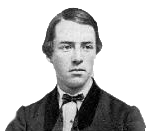
Sunday, March 2. —I went with the general and Mr. Foote to Stockton’s regiment, where we saw them inspected. We then went to Colonel Averell’s[1], where we had a lunch; then to Forts Woodbury and De Kalb, and from there home. A little while before we started for home, it began to snow furiously, and by the time we reached there, the snow was some two inches deep.
[1] William W. Averell, of the cavalry, afterwards brevet major general.


