March 26. — Gen. Curtis, in command of the Army of the South-west, this day issued the following emancipation order: Charles Morton, Hamilton Kennedy, and Alexander Lewis, colored men, formerly slaves, employed in the rebel service, and taken as contraband of war, are hereby confiscated, and, not being needed for the public service, are permitted to pass the pickets of this command northward, without let or hindrance, and are forever emancipated from the service of masters who allowed them to aid in their efforts to break up the Government and the laws of our country.— National Intelligencer, April 3.
—A spirited skirmish took place at the town of Warrensburgh, Mo., between Quantrell’s guerrilla followers and a detachment of Col. Phillips’s Missouri regiment, under the command of Major Emery Foster. Quantrell unexpectedly approached the town with two hundred men, and made a furious attack on the Union troops, who were only sixty in number. The latter made a gallant defence, and having the protection of a thick plank fence around their position, they succeeded, after an obstinate conflict, in repulsing the guerrillas’, and driving them beyond the limits of the town. In the action Major Emery Foster, in command, and Capt Foster, his brother, were wounded, one private was killed, one mortally wounded, since dead, and nine non-commissioned officers and privates were wounded. The rebels sustained a loss of nine men killed and seventeen wounded, and twenty of them lost their horses, which fell into the hands of Foster’s men.—Chicago Journal, March 29.
—This night a band of from five to eight hundred rebels attacked four companies of State militia, at Humonsville, Polk County, Mo. They were completely defeated, with a loss of fifteen killed and a large number wounded. The National loss was none killed, but a number wounded. Among the latter were Captains Stockton and Cosgrove, severely.
—A slight skirmish took place this evening, at McMinnville, Tenn., between a party of Ohio cavalry under the command of Capt. Hastings, and a body of rebels under Capts. McHenry and Bledsloe, in which the latter were compelled to retreat —(Doc. 109.)
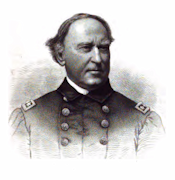 I am now packed and ready for my departure to the mouth of the Mississippi River. The last vessel, the Miami, takes me down. I spent last evening very pleasantly with General Butler. He does not appear to have any very difficult plan of operations, but simply to follow in my wake and hold what I can take. God grant that may be all that we attempt. I have now attained what I have been looking for all my life—a flag—and, having attained it, all that is necessary to complete the scene is a victory. If I die in the attempt, it will only be what every officer has to expect. He who dies in doing his duty to his country, and at peace with his God, has played out the drama of life to the best advantage.
 25th.—This A. M., at 6, weighed anchor, and dropped down to Hampton Roads, and disembarked at what was the little town of Hampton. If there be pleasure in the indulgence of sad reflections, how delightful it would be to have all my friends here, to enjoy them with me to-day. For a few hours, whilst the troops have been disembarking, and transferring the baggage and munitions of war from steamer to transportation wagons, I have been walking the streets of this once beautiful, but now desolate little city. Never before had I a conception of the full import of that word—desolate. Shortly after the battle of Bull Run, the rebels, fearing that we should occupy the town as our winter quarters, abandoned and burned it. This little city, amongst the oldest in America, and now giving evidences of a former beauty, possessed by no other I have seen in the South, they burned!


