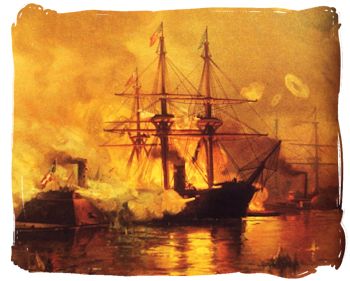
April 16th. The remainder of the vessels, including the Hartford, followed up the river, and anchored at the head of the fleet.
April 2012
April 16th.
Among the many who visited us, in the beginning of 1861, there was Mr. Bradford. I took a dislike to him the first time I ever saw him, and, being accustomed to say just what I pleased to all the other gentlemen, tried it with him. It was at dinner, and for a long while I had the advantage, and though father would sometimes look grave, Gibbes, and all at my end of the table, would scream with laughter. At last Mr. Bradford commenced to retaliate, and my dislike changed into respect for a man who could make an excellent repartee with perfect good-breeding; and after dinner, when the others took their leave, and he asked permission to remain, — during his visit, which lasted until ten o’clock, he had gone over such a variety of subjects, conversing so well upon all, that Miriam and I were so interested that we forgot to have the gas lit!
16th. Morning rainy. Issued ten days’ rations. Major said that the boys of the non-commissioned staff could not go on expedition for lack of transportation. We were already packed up, tent down for the march. Finally to our joy another team came and we loaded, saddled and started. The sky cleared and the ground was nice for marching. After marching 6 or 7 miles we halted for the horses to graze. The grass has started considerably. Encamped on the Drywood Creek, east branch, at sundown. Baggage train being mired on the road, the men bivouacked without tents, without suppers, the distant thunder threatening rain. Our team came, no rain.
April 16.—Mrs. Miller, Mrs. Ogden, and nearly all the ladies from Mobile left for Columbus, Miss. I remained, with Mrs. Glassburn, from Natchez. My brother is here, and I have become so much interested in some of the wounded that I could not leave them. Mrs. Ogden was completely worn out; and it is not much to be wondered at, as she, with the rest of us, has had to sleep in any and every place; and as to making our toilet, that was out of the question. I have not undressed since I came here.
This morning, while the ladies were preparing to leave, as their goods and chattels were all mislaid, much noise prevailed in finding them. I was annoyed, as I knew that many of the wounded were within hearing. I thought that it was not strange that surgeons should prefer to have Sisters of Charity to nurse their sick, for they know how to keep quiet. To add to the noise there were a number of washerwomen who had come from New Orleans. A doctor, who I was informed was Dr. Foard, the medical director, was assigning them to the different places in the hospitals. If Pope had been there, I think that he could have made a few additions to his “Ode to Silence.”
I dislike very much to see some of the ladies go, as they have been very kind to the sufferers, and I know that they will miss them very much. They go to Columbus, Miss., where are a great many of the wounded. I daily witness the same sad scenes—men dying all around me. I do not know who they are, nor have I time to learn.
I6th.—Left camp at 8 this A. M., Gen. Brooks’ Brigade having the advance, with Gen. Hancock’s at a respectful distance in the rear. Then came the third, under General Davidson, and so on. Marched one and a half miles, and halted in line of battle. At the same time, 10 A. M., our artillery (Mott’s Battery) opened fire about a mile in advance of us. This is the first time we have had a near prospect of a general battle, and the effect on the bearing and conduct of our men surprised me. Were they burning with impatience to join their friends in the fight? In trepidation lest the danger approach nearer? Weeping to think how many of us before night must bite the dust? Rejoicing that this fight may terminate the war, and with it our privations, hardships, toils and dangers? Weeping over the fate of friends now falling in the fight? Not a bit of these. For myself, so soon as the firing commenced I rode up to Major ______, and we exchanged an expression of our wishes in case of serious accident to either of us. That arranged, he remarked, “Well, Surgeon, should you be killed it will be only for an hour or two. You will then wake up, (the Major is a Spiritualist) rub your eyes, look around you for the boys, but soon realize your new position.” We parted. I rode along the line of Hancock’s Brigade to see the effect on them. I first came on a group of men talking “horse talk,” and playing with their horses. Whilst I was listening, General H______ rode up, gave some general direction about ambulances, and casually remarked that Mott was having a hard time. I asked, What? He replied laughingly, that his “big French artillerist” had been killed, and that he had several others badly wounded. This Frenchman is said to be the best artillery officer in the service, and thus is his death announced to those for whom he has fought and died. Who knows how many ties of home, of country, of family, he has severed in our cause? I felt hurt, made no reply, but passed on to the 49th Penn. Regiment. Their band were lounging on their drums and horns as listless as personifications of ennui. Along the regimental line were quartettes interestedly engaged in the melancholy occupation of “old sledge.” At the other end of the line the staff officers, including the Chaplain, were lounging around, and seemed to be digging into their brains for something to think about. The Sixth Maine exhibited about the same degree of interest; whilst the 43d New York were amusing their Irish fancies by counting the reports, and now and then exclaiming, “By Jabers, but that shot tould some of your last stories,” and other similar remarks, showing that they had not become quite as much hardened as those around them. Rode back to the head of the line to see if the Brigade Staff realized any more fully the importance of our situation. I, of course, expected to find in Gen. H______ about two hundred and fifty pounds of animated and dignified humanity, surrounded by his staff of well dressed, well mounted officers, dashing from point to point on the field, holding everybody and everything in readiness for the conflict. What an illusion! I found the General stretched upon the dried grass, his elbow on the ground, his head in his hand—that laugh! Why the General nodded so low that a stub of old grass has run into his nose, set it a bleeding, and he sprang up with such an oath as none but he could utter. The scene was so ridiculous that even the common soldiers could not restrain a “guffaw.” Major L_____, a few feet beyond, lies on his stomach so fast asleep as not to be disturbed by the loud guffaw of the soldiers. To such a state of hardened carelessness have we been brought by a few months of constantly disappointed expectations.
In the afternoon moved down into the open field where the artillery fight was going on. Brooks’ Vermont Brigade engaged the enemy, keeping up a sharp fire across the creek, (Warwick). The artillery firing became still more constant. Our sharpshooters picked off their gunners, our batteries dismounted several of their guns, and three Vermont companies dashed across the creek in the face of the enemy’s infantry fire, drove a body of them from their rifle-pits, but were compelled to fall back (not being supported), leaving about twenty of their number dead on the field. We have no better fighting men than this Vermont Brigade, composed of the 2nd, 3rd, 4th, 5th, and 6th Regiments. For the small number engaged this has been one of the most fiercely contested battles of the war. The engagements of artillery and musketry have been terrific.
10 o’clock, P. M.—The warring of the passions, the physical straggles and strifes of the day, are hushed in darkness. Oh, to how many, hushed forever! In the last half hour the firing has ceased. I have walked the round of my regiment, lying on their arms in the open field, to see if any were sick after the fatigues of the day; and having retired into the deep woods alone, and ate a little cold supper, now sit on a litter, bloody, dyed with the blood of the dead, whom it has been all day carrying, (my lantern between my knees) to make this note of the sad occurrences of the day. We attacked the enemy, and have been repulsed.
I have not had time to finish my article, commenced weeks ago, which was to write down the U. S. Sanitary Commission, and I am glad of it, for here again we have been made to feel that the Commission is a power for good. Whilst the officials have been wrangling over the question as to how the hospital stores of the army got lost in the move from the Potomac to the Peninsula, and whilst the soldiers have been suffering for want of them, this Commission has been actively devising means to supply the much needed articles, and, behold! right in the midst of the battle to-day, whilst Generals were inquiring of Surgeons : “Have you the necessary comforts for the wounded?” and whilst Surgeons were anxiously enquiring what they were to do in the absence of them, this Commission drops down amongst us—from some where—their wagons are unloaded, and the wounded made comfortable. That “writing down” article will not spoil by a little more keeping.
Fort Barnard, Va., April 16, 1862.
Dear Mother:
Have just finished signing the pay-rolls; expect to get paid off to-morrow, but not certain.
I am very tired, but the captain says I must write ten lines.
I assure you, mother, I have not tasted anything which I have said I would not touch. No man can induce me to take whiskey, brandy, or gin, or anything of the kind. The captain had a present of some native wine which I have taken, but nothing stronger.
They have got a temperance society; but my word, if I give it, I will stick by.
To see so much drunkeness in camp is enough to make one despise the stuff even as medicine.
No news of importance from this quarter of the globe.
Good-night.
Yours truly,
Leverett Bradley, Jr.
Headquarters Porter’s Div., 3d Army Corps,
Camp No. 5, April 16, 1862.
 Dear Hannah, — The bombardment proper of Yorktown will not begin probably till 5 or 6 days from now, although there are scrimmages taking place every day, either between our gunboats and the rebel batteries or between our artillery and their batteries. To-day we have had both kinds, our artillery in Hamilton’s division having fired continually from early this morning, and being as warmly replied to by the rebels. From a dead or leafless tree behind the general’s tent, a ladder some 75 feet in length has been built, and this we use as a look-out. From this ladder I saw our gunboats and the rebels’ batteries fire at each other, but without any injury to either side. Our fuses were all too short, the shell bursting in the air a mile off from the rebel battery. They fired from a large 105-pound pivot gun, and fired very well, too. The shot, many of them, struck within a few feet of the gunboat.
We came quite a dodge on the rebels a few nights ago. General Porter, who by the way is terribly anxious to get at the rebels, ordered out all our batteries at 2 o’clock A.M., and ordered them to open fire on the encampments of the enemy, which they did with a good will. Just imagine being waked up at that time of night by shot and shell falling into your tent. I only hope they will not open on us from their big pivot gun, for we are just in range of it. Our encampment is quite pretty. We have planted pine trees all around it, and so manage to protect ourselves very well from the heat of the sun which is getting to be quite oppressive. It is the pleasantest and prettiest place of any of the encampments I have seen.
The firing is quite lively now in Hamilton’s division. They are firing at the fort which Martin’s battery attacked on the day of our arrival, and where the 22d Massachusetts Volunteers lost ten men killed and wounded. There are frequently twenty guns fired in a minute, the reports of which we can hear quite plainly as we are only about a mile and a half from them.
I had a fine view of Yorktown and Gloucester Point yesterday. I crossed over a bridge over Creek, which bridge we have just built, and then went out to a point which projects into the river. I was about three quarters of a mile from Yorktown, and could see the rebels at work very plainly; they have two strong water batteries, and above these still stronger ones. The banks are very steep and precipitous here, and afford a fine opportunity to place works. At Gloucester Point on the opposite side, they also have strong batteries, and we could see their men all run when they saw the smoke from one of our gunboats. The shells burst near them, and made them skedaddle some.
General Porter is in very good spirits, although annoyed at the slowness of the engineers. He gets all the ox-hides, ropes, etc., which he can pick up, using them for coverings to the fascines. The general is confident of success, and I think he is right in being so. Our division is in the front and will distinguish itself, I have no doubt. The exact number of our guns is 295, 100 of which are siege guns and mortars, and the rest light artillery. . . .
April 16th. Had a fine night’s sleep, due to the luxury of a soft bed Seth made for me, out of pine needles stripped from the branches; glorious morning; in fact, the weather is enchanting, although yet early spring. After breakfast, sat in the open air in my shirt sleeves at the desk, making various reports and official documents. At two P. M. the regiment was inspected in full marching order and subsequently engaged in battalion drill. Before the drill was over an aide rode up and directed the colonel to strike tents and be ready to march at a moment’s notice; within half an hour we were en route, with the rest of the brigade directly towards the front. We were greatly astonished to find the ground we marched over deserted, the immense number of troops that were in front of us having disappeared. We marched into the batteries and earthworks, stacked arms, and pitched tents just in rear of the works. A few shells came over from the rebel guns, but did not hurt us; one, however, burst so close that my horse reared and plunged and started to run away, directly toward the enemy’s lines. Luckily, I soon had him under control. We all turned in at eight o’clock, expecting lively times at daylight.
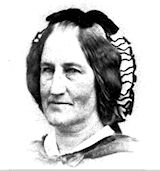 Mother to Georgeanna and Eliza in Alexandria.
Ebbitt House,………………….
Monday Evening, April 15 or 16, 62.
Dear Girls: We have just had a call and salute from Joe’s manservant James, who wished to know if we had any “word for Mrs. Howland in the morning.” What with your three devoted “Mercuries” we seem to keep up a pretty constant intercourse, which is very cheering. . . . I was at my lonely tea this evening when suddenly I heard a sepulchral voice at my shoulder saying, “How is Miss Woolsey, Madam, this evening?” It was “me” young Augustus on his way out from the table behind me, where I had not noticed him. “You seem to be quite alone. I will be happy to take my breakfast with you, if you will permit me!” I was horrorstricken at the idea of having either of your chairs occupied by anyone to whom I should feel called upon to do the agreeable. . . .
I shall be very late unavoidably to-morrow, so that he will eat and go before I get down. This seems to be a favorite little attention with our gentlemen friends here— “taking breakfast with you!” . . . Only think of my missing another call from Mrs. McClellan and her mother. I had ventured out on a stroll by myself, to get my cap, which I didn’t get, and to bring Hatty a tumbler of ice cream, which I did get, and she enjoyed it very much with some fresh ladyfingers. This woman is not to be relied on, the cap was not done, and I shouldn’t wonder if she is taking the pattern instead of clear-starching it. I continued on to the avenue, bought Hatty a pair of gloves, looked in at one or two stores for something extremely pretty and cheap for a spring dress, but was not successful in finding it. The sun was very hot, and I was glad to get back again. . . . How in the world are you all accommodated in that small house? . . . So, after all, you mean to go, if you can, to Fortress Monroe. I am sorry for one thing—you will be so much more inaccessible to your family, almost beyond our reach, as only those belonging to the army will be permitted to go there. Nevertheless, I will make all the enquiries you name, and although my heart will break, will speed you on your way. Plague take this war! Hatty is better, but misses her other two nurses, and I do not believe has any confidence in my cooking; she acknowledges, however, grudgingly, that the beef-tea “tasted good,” and the arrowroot was excellent, though I saw her afterwards pouring in a double quantity of port wine, I having already seasoned it with sherry.

I have seen Mr._______ by particular desire in the parlor,—waylaid him, tied him down and pelted him with questions—as to the facilities, etc., of reaching Fortress Monroe at this present time. He gave no encouragement whatever as to your getting there; said he was quite sure that no passengers were allowed to that point and none on the Baltimore boat. . . . You had better not set your hearts upon such a plan. Would you not be quite as near, and hear as readily, in New York? We should be so glad to have you there with us. But I do not urge anything; all I can say is take care of yourselves, as you are very precious to your
Mother.
April 16.—Abraham Lincoln, President of the United States, signed the bill for the emancipation of the slaves in the District of Columbia, and it became a law.—(Doc. 133.)
—A boat containing a party of the officers and men of the Seventy-fifth regiment of Pennsylvania volunteers, sank at Castleman’s Ferry, on the Shenandoah River, Va., drowning a large portion of the men and officers.—N. Y. Tribune, April 18.
—John H. Winder, Brigadier-General C.S.A., in command of the Department of Henrico, at Richmond, Va., issued the following general order: “From and after this date, the issuance and circulation of individual notes are strictly prohibited. Notes of this character are to be redeemed in bankable funds upon presentation, and must at once be withdrawn from circulation.
“Persons violating this order in any particular, will be considered guilty of a grave offence, and will be subject to arrest and such punishment as may be imposed by a court-martial.”
—The confirmation of the battle of Apache Pass, N. M., was received. The Union loss is one hundred and fifty killed, wounded and missing. The rebels acknowledge their loss to be from three hundred to four hundred killed and wounded. Ninety-three rebels were taken prisoners, thirteen of whom are officers. The National forces captured and burned sixty-four wagons, laden with provisions and ammunition, and killed two hundred mules. The Texans attacked the Union battery four times, the last time coming within forty feet of the guns, but were repulsed with heavy loss.—(Official Despatch.)
—In the United States Senate the resolution calling for information relative to the arrest of Gen. Stone, was taken up, and Mr. McDougall, of California, made a speech on the subject The Confiscation bill was subsequently considered, and Mr. Powell, of Kentucky, addressed the Senate in opposition to its passage.
—A skirmish took place at Savannah, Tenn., between a detachment of Union cavalry and a rebel picket-guard, resulting in the defeat of the rebels, with a loss of five killed and sixty-five wounded.—Chicago Tribune, April 19.
—This day a fight occurred on Wilmington Island, N. C, between a reconnoitring and surveying party of National troops, and a superior force of rebels. A party consisting of about two hundred men, principally from the Eighth Michigan regiment, was despatched from the Federal headquarters, for the purpose of reconnoitring on Wilmington Island, and taking surveys and soundings. One of the companies was under command of Lieut. Wilson. The force landed in the morning from boats, and in the forenoon was surprised by a rebel force, numbering six to eight hundred men, who had come from their batteries on the mainland, with the apparent design of entirely cutting off the National force.
The attack of the rebels was unexpected. They showered upon the Union troops an effective fire, which killed and wounded several, and followed up the advantage, given them by the confusion into which that part of the force nearest them were thrown by the suddenness of the attack, by an immediate advance. The Federal soldiers at once returned the fire, and went gallantly into the fight The advance of the rebels was checked, and after a short stand they retreated, though slowly and in order. No pursuit was attempted, and the rebels recrossed to their batteries. During the engagement the Adjutant of the Eighth Maine regiment was killed, and twelve or thirteen others. The killed and wounded numbered twenty-nine.—(Doc. 140.)
—At London, England, a deputation from the British and Foreign Anti-Slavery Society waited upon Mr. Adams, the American Minister, and presented an address, in which the hope was expressed that the restoration of the Union would be founded upon the abolition of the true cause of the strife.—London Times, April 18.
—Sixty-one of Ashby’s cavalry, including three officers, were captured this morning, and carried into Woodstock, Va. They were at their breakfast, just at daybreak, in a church, and were surrounded by a body of Ringgold’s cavalry, and four companies of infantry, of the Forty-sixth Pennsylvania volunteers, of Gen. Williams’s division, and surrendered without resistance. The affair occurred several miles beyond Columbia Furnace, and within seven miles of Mount Jackson.—N. Y. World, April 17.
A fight occurred at Lee’s Mills, Va., between four companies of the Third regiment of Vermont volunteers and a party of rebel troops under the command of Gen. Howell Cobb. —(Doc. 142.)


