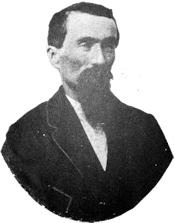
April 5 — On picket. Late this evening we moved camp, and are now quartered in a barn a mile below Mount Jackson. Mount Jackson is a little village on the north side of Mill Creek, seven miles from Edenburg.
April 2012
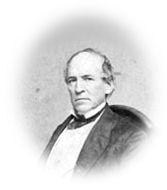
Saturday April 5th 1862
Nothing has occured today worthy of notice. Everyone is looking anxiously for news from three or four different points. From “Buels Army” & Com Foote Ten; from McClellan who is now at Fortress Monroe with a large Army, 130,000; from Genl Burnside in N. Car[o]lina; and from New Orleans & Savannah. A delegation from the North is here holding a sort of Caucus attempting to galvanize the old Democratic Party into life. It moves at the suggestion of old Breckinridge supporters, which gives the matter a bad odor. It will not do to talk of Party till this Rebellion is crushed.
______
The three diary manuscript volumes, Washington during the Civil War: The Diary of Horatio Nelson Taft, 1861-1865, are available online at The Library of Congress.
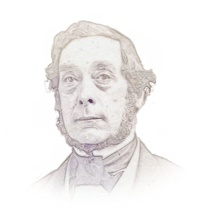
APRIL 5TH.—Newbern, N. C., has fallen into the hands of the enemy! Our men, though opposed by greatly superior numbers, made a brave resistance, and killed and wounded 1000 of the invaders.
The enemy were piloted up the river to Newbern by the same Mr. Dibble to whom I refused a passport, but to whom the Secretary of War granted one.
The press everywhere is commenting on the case of Dibble—but Mordecai still sits at the gate.
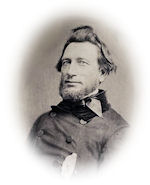
5th.—A day of cooling rain, and warming excitement. Marched three miles, and found the enemy strongly entrenched behind a line of fortifications, on a narrow neck of land between the York and the James Rivers. Artillery duel at long range began about 12 o’clock, in which we had quite a number killed and wounded.
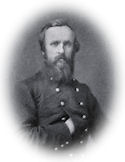
Camp Hayes, Raleigh, Virginia, April 5, 1862. Saturday. — Windy, cloudy, threatening more rain. Captain Haven in command of companies G and K started for the Bragg and Richmond settlement this morning to defend that Union stronghold and to operate if practicable against a force of cavalry and bushwhackers who are reported to be threatening it. They will remain at least three days.
Lieutenant Stevens, Sergeant Deshong, a corporal, and six men started this morning with General Beckley for Fayetteville and probably Wheeling.
Company A came up about 3 P. M. Hardy, well drilled. Camp in Sibley tents in court-house yard in front of my quarters.
Captain Zimmerman with Companies C and E and ten prisoners returned at 4 P. M. Marched fifty miles; burned the residence of Pleasant Lilly. Lieutenant Hastings came in about same time; had protected the election in the Marshes, and marched forty miles.
 Saturday, 5th—We had company drill this morning as usual. Lieutenant Compton took the company out on the drill ground this afternoon for company drill, and he said: “Now, boys, we drill in earnest for an hour, then return to our quarters, put away our rifles, and then to the branch for bathing.” It was warm, but the men all went into it and after a hard drill we had a good wash-off in the branch.[1]
[1] This was the last time that Lieutenant Compton ever drilled our company, for the poor fellow was killed in the battle on the next day, Sunday, a little after noon. He was a fine drillmaster, and kind to his men, especially to those who tried to do their duty.—A. G. D.
Chaplain Hopkins to Eliza.
Alexandria Hospital, April 5th.
My Dear Mrs. Howland: Yesterday was one of the brightest, pleasantest days I have known for a long time. The wards were more inviting, and the men more cordial than usual. All day I seemed to be in the right place at the right time, and by a glad intuition, to discover the avenues which were unfortified and the doors which were unbarred. I have told you this because I am fully convinced that it was owing wholly to the good start that you gave me by that early morning visit. By some skillful adjustment, which I failed to notice at the time, you left me in tune. . . .
Please thank your sister Abby for the bundle of Independents. They were very welcome and I gave them away, each with the charge: “Be sure and read the Rainy Day in Camp.” Did I tell you that I read it after each of my services last Sabbath? and I think that it did more good than all that went before it. The men listened in perfect quiet. I feel sure that, if I could have looked up myself, I should have seen tears in the eyes of more than one who had been “skulking in the rear.”
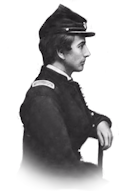
(April 5)
Upon arriving at Alexandria we marched directly on board the transports, which were awaiting us, but lay at the dock until early the next morning, April 4th, when the steamer cast off her lines, and headed down the broad and beautiful Potomac. This was my second experience on board transports, and I could not help contrasting the difference in the situation, between a commissioned officer, and private soldier, wholly to the advantage of the former.
The general and staff, had of course first choice of quarters, then the various officers in order of their rank. This is a situation where rank is especially useful, but there were accommodations for all, and everybody was satisfied. The sail to Fort Monroe was a delightful experience, especially to those of us who were fond of the sea the weather was perfect, the ship roomy, and the company the best in the world. We sat or walked on the quarterdeck, smoked our pipes, talked over the prospects of the coming campaign, and listened to the music of the band.
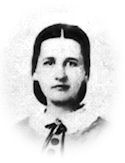
Susan Bradford Eppes, "Through Some Eventful Years"
April 5th, 1862.—Sewing societies were organized long ago and every neighborhood has one. Ours meets first at one house and then at another, and all of us sew steadily all day long. Mother cuts many of the garments and Mrs. Manning helps her, that is, when they meet with us.
Peter and Mac make packing cases and it is astonishing how many garments go forward from the Bradford neighborhood.
I did not know much about sewing at first; at the beginning I made Charley Hopkins two flannel shirts but I am ashamed to say Lulu did most of the sewing. Now I can take any kind of a garment and make it entire, even the buttonholes, though Sister Mag says my button holes “gape.” I mean to improve on them. I have to do my book-keeping early in the morning and sometimes I have to work at night to finish up the day’s work. Since we have been sewing so steadily I have given up my horseback rides. Father does not approve of that. I take a good deal of exercise in other ways, however, and I feel well and strong.
April 5.—The United States gunboat Carondelet, Capt. Walke, arrived at New-Madrid, Mo., this morning at one o’clock, having passed the fortifications at Island Number Ten, and the batteries upon the mainland opposite, and now lies moored safely to the shore, under the guns of the upper fort at New-Madrid.
The Carondelet left the fleet last evening at ten o’clock, during a terrific thunder-storm, and having taken a barge in tow, laden with hay and coal, to serve as a protection from the enemy’s balls, extinguished her lights, put on steam, and rapidly sailed down the river. The first intimation the rebels had of the attempt to run the blockade was the fire which issued from the burning chimney of the gunboat, and immediately thereafter it was greeted with a shower of balls from the infantry stationed at the upper battery, the same which was so effectually spiked a few days since by Col. Roberts.
A signal rocket was then sent up, and in an instant the entire line of batteries were a blaze of flame. Four batteries on the Kentucky shore and on the point of the island fired in quick succession, but the Carondelet passed them all in safety, and, unmindful of the leaden and iron hail which fell around, passed down through the fiery ordeal unhurt; not a man was injured, and excepting a few musket-balls which struck the ironplated sides of the gunboat, she was untouched.
The floating-battery, located three miles below the island, bestowed a parting shower of blazing compliments as the Carondelet glided quietly by. The Hollins ram Manassas did not open fire. The National officers and men acquitted themselves with admirable courage and fidelity. — (Doc. 116.)
—The schooner A. J. Wills, of Philadelphia, was captured by a squad of Government police in Nabb’s Creek, a stream running from Stony Creek, Va. On board the vessel was found a large quantity of provisions designed for the use of the rebels who were captured yesterday in the schooner Resolution.—Baltimore American, April 8.
—The following order was issued from the War Department this day: —
Col. D’Utassy, of the Garibaldi Guard, New York Volunteers, and all the officers of General Blenker’s division who are now under arrest, are hereby released from arrest, and will join their regiments without delay, and resume their respective commands.—New-York Herald, April 6.
A Resolution passed the Wisconsin Assembly this day, tendering to the President of the United States an unqualified approval of his course, from the day of his inauguration to the present time. There was but one vote against it.—Philadelphia Press, April 15.
—That portion of the Army of the Potomac, recently concentrated at Old Point, Va., advanced yesterday, moving in the direction of Yorktown, twenty-four miles distant. The right was assigned to Gen. Morrill’s brigade, of Gen. Porter’s division, two companies of the Third Pennsylvania cavalry, and a portion of Berdan’s sharpshooters acting as skirmishers. Nothing of interest took place until their arrival at Big Bethel, twelve miles distant, where they met the outer pickets of the rebels. The troops were delayed here two hours in reconstructing a bridge which had been destroyed.
The rebels retreated before the advance of the National skirmishers to Howard’s Creek, where they had some abandoned earthworks. Four shots were fired here by the rebels from two field-pieces, which were soon silenced by the Fourth Rhode Island battery, when the rebels beat a hasty retreat, taking their pieces with them. The main body of the army here rested for the night, while Gen. Morrill’s brigade advanced three miles to Buckleville, and six miles from Yorktown, and then encamped. By seven o’clock this morning, the column was again in motion, and at ten o’clock was in front of the enemy’s works at Yorktown.
The first shot fired was by the rebels, the shells passing over the heads of Qen. Porter and staff without exploding. The batteries of Griffin, Third and Fourth Rhode Island, and Fifth Massachusetts were now placed in position, replying to every shot sent by the rebels. The cannonading continued with but slight intermission until dark. About four hundred shots were fired by both parties during the day. The Union loss was six killed and sixteen wounded.—(Doc. 119.)


