Following the American Civil War Sesquicentennial with day by day writings of the time, currently 1863.

August 2012

Tuscumbia, Ala., August 7, 1862.

The enemy is reported nearer us than usual to-night, and in considerable force. Have no idea they intend fighting us here though. This has been the hottest day of the summer, and I’ve been in the sun all day with thick woolen clothes on, wool shirts, too. I started for Decatur about 7 this morning and got back at 5 p.m. All platform cars, no possible chance for shade. I rode on the cowcather going out, and on the tender, which was ahead, coming back. We got within ten miles of Decatur when we came to two bridges burned last night, and had to come back. There is not a bridge or culvert on this road as far as our brigade guards it, that has not been burned, at least once, and many of the cattle guards even have been burned. They don’t fire on the trains though in this country, which is some little consolation to the traveler. Since we have been guarding the road, some two weeks, they have burned in our district four bridges, one water tank, and two station houses, and torn up rails several times. All this work is done in the night. The tank and stations were of no use to us and the bridges we can build about as fast as they can burn them, tearing down secesh houses to find the timbers ready hewn. There are some grand plantations along the line I have traveled to-day. Thousands of acres in some of them with from 50 to 250 hands, each. The negroes are under no restraint whatever, now. Don’t half work, their masters say, About 40 negro women who were clearing a piece of woodland dropped their axes and picks and came out to the road as the train passed. They were by odds the most antic and amusing lot of slaves I have yet seen. So clumsily ludicrous, with their close-curled wool, great white and black eyes, and heavy-ended motions. Some wore sun bonnets, some men’s old hats, but most were bareheaded. The negro women all wear handkerchiefs (I think they are), turban fashion, while indoors, and sun bonnets, or go bareheaded, when out. They seem to be all dressed alike, in very ragged, shabby, thick, cotton stuff, which is either white or yellow. I have never seen one of these dresses clean enough to tell which. I have seen but two negroes yet that have marks of severe punishment. They were man and wife, and belong to a planter living 12 miles from here. The man I think is made a cripple for life from blows by a club on his ankles and knees, the woman is badly cut on the arms and shoulders, as with a horsewhip, but she’s all right yet. How a man can be fool enough to so abuse such valuable property as this is more than I can understand. You have no idea to what an extent the habit of dipping is carried here. I have, while talking to women who really had in every way the appearance of being ladies, seen them spit tobacco juice, and chew their dipping sticks, perfectly at ease. I don’t think it common to do it so openly, but I have seen two ladies, and any number of common women, engaged in the delightful pastime. Colonel Kellogg seems to think that I will be mustered out in a short time. I’ll promise you one thing, that if I am, I’ll not enlist again until the policy of this war changes, and in actions as well as words, too. J. Pope is disgusting me with him very rapidly. John is a horrid blower of his own horn. If he don’t astonish this country, after all of his blowing, the country will astonish him to his entire dissatisfaction before he’s many months older. Oh! if Grant will only go to work and get somebody whipped, or if he’d retreat, that would be better than doing nothing, though not as good as advancing.
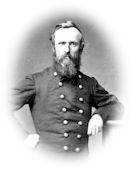
Thursday, 7th—Nothing of importance. Everything is quiet in camp. The rebels are not giving us much anxiety yet, but our officers are not napping; a strong picket is constantly kept in line.

August 7. — Thursday. — Colonel Scammon who came down with the battery and the Thirtieth Regiment, returned to Flat Top this A. M. The colonel is too nervous and fussy to be a good commander. He cut around like a hen with one chicken after getting news of our being attacked three hours or four before he started his troops. They reached the place where they camped, twelve miles from Flat Top, about 5 P. M. They would have got to the ferry, if at all, after dark. The enemy could have fought a battle and escaped before aid would have come.

Lieutenants Avery and Hastings, Sergeant Abbott, Corporal Bennett, and two privates left today on recruiting service.

7th. Watered my horse and took a good bath. Had a good visit with Newt. Adams about officers of our acquaintance and future prospects. Today, as often, I am uneasy for something to satisfy a nervous want of something real to do. Can’t be easy at anything. Commenced reading the “Woman in White,” by Wilkie Collins. Found the book quite interesting. Could hardly leave it for my meals. There seems to be no stopping place. Every paragraph, every chapter, every book is full of thrilling adventures, well laid plot. Great vigilance against surprise.

Fort Barnard, Va., Aug. 7, 1862.

Dear Mother:

My health is improving rapidly, but still they say I look like a ghost. Yesterday there was a large review (that is, for round here) at Fort Ward. I did not go in the ranks, but Jere came along from Arlington House, so I went along with him. It was terribly hot; but I stood it as well as the ones who are full of health. Reviewing officers were Abraham Lincoln, Gen’s. Whipple and Sturgis. He looked as if he had a great deal on his mind (A. L.), dressed very plain; reminded me of old Scripture look in his face. Every fort fired a salute. I expected to see Gen. Hallek, but I was dissapointed, because I went almost on purpose to see him. He was not present. How does that order for the draft take hold of the men north? It makes the boys feel good that they have got to come. The general health of the Regt. is good; but they are trying to kill the men, drilling in the hot sun six hours a day. Mother said she did not care for long letters, so I will close. Love to all.

Yours truly,

L. B., Jr.

Tuesday, 7th.—Last night Federals retreated back towards Cumberland Gap, taking most of their dead and wounded with them.


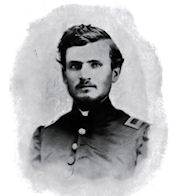
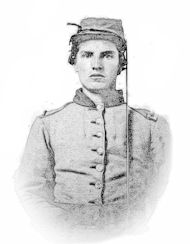
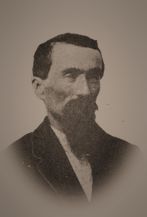
(Note: picture is of an unidentified Confederate soldier.)

August 7TH—Much incomprehensible manœuvring is going on in Orange County.

1862 August Harrison's Landing, Members of 1860 class

This photograph, by photographer Alexander Gardner in August 1862 at Harrison’s Landing, Va., is of members of the U.S. Military Academy class of 1860.  Unfortunately, the Library of Congress image page  does not have names for any of the individuals nor could I find any further information in an online  image search.

August 7. — At Blackburn, England, a large public meeting was held to consider the advantages of recognizing the “Southern States of America,” with a view to bring about an early termination of hostilities. Mr. R. R. Jackson, after declaring that “it was impossible for the North to vanquish the South,” submitted the following resolution:

“That a petition to the Queen be adopted by this meeting, and signed by the Mayor, praying her Most Gracious Majesty to take immediate measures in coalescing with France and such other Powers as may be willing to give their cooperation to recognize the independence of the confederate States of America.”

The resolution was not received with unqualified approval, there being a strong expression of opinion against it; and an amendment was moved by Mr. J. C. Fielden, disapproving the policy of intervention. This amendment was supported by Mr. W. Crossley, but finally withdrawn, and the following amendment, moved by Mr. F. Johnston, was agreed to:

“That this meeting, recognizing the desirability of referring all national disputes to impartial arbitration for settlement, respectfully urges the government of this country to immediately cooperate with other European Powers in recommending to the contending parties in America the above plan as the simplest and most satisfactory method of reestablishing peace, and in their negotiations strongly recommend the abolition of slavery.”

—The rebel expedition to New-Mexico, under Colonel Sibley, was met near Fort Fillmore, by a body of California troops under the command of Colonel Canby. A battle ensued, in which the rebels were routed. Colonel Sibley was assassinated by his own men, who charged him with drunkenness and inefficiency.

— Captain Faulkner, with a body of rebel cavalry, encamped in a swamp near Trenton, Tenn., was surprised by a detachment of the Second Illinois cavalry, losing thirty killed and twenty wounded. — Col. McNeill with a force of one thousand National troops defeated the rebel guerrilla Porter at Kirksville, Mo.—A fight took place in the northern part of Dodd County, Mo., between a party of National troops, under the command of Major Montgomery, and Coffin’s rebel guerrillas, in which the latter were defeated, with a loss of eleven killed, four wounded, and seventeen prisoners.

—A shirmish took place between a small force of Union troops and a body of rebel cavalry at Wolftown, a few miles from Madison Court-House, Va., resulting in the defeat of the rebels, who were driven beyond the Rapidan River, with a loss of two men killed and a number wounded.

—Malvern Hill, Va., was abandoned by the National forces under Gen. Hooker, information having been received that an overwhelming force of rebels, under the command of Gen. A. P. Hill, were advancing upon that place.

August 6 — Remained in camp yesterday, but this morning we renewed our march toward Gordonsville. When we arrived within two miles of the town we turned to the left and went to the Madison Court House pike, marched about a mile on that road, then moved across the country to the Orange Court House road and marched about a mile on that road, then moved to the Standardsville road. We passed through Barboursville after dark, and are camped one mile west of it on the Standardsville road. Barboursville is a small village in Orange County, about five miles northwest of Gordonsville. To-day we passed General Hill’s division, which was on the march toward the Rapidan.