AUGUST 2D.—The Adjutant-General, “by order” (I suppose of the President), is annulling, one after another, all Gen. Winder’s despotic orders.
August 2012
August 2.—A woman named Belle Boyd, who had been acting as a rebel spy and mail-carrier to Richmond, from points within the lines of the Union army of the Potomac, was captured near Warrenton, Va., and sent to the old Capitol prison at Washington.—Gen. Butler transmitted to the Secretary of War copies of a correspondence between himself and Gen. Phelps, in relation to the military employment of the negroes of Louisiana.
—This morning at daylight a band of one hundred and twenty-five rebels attacked seventy-five National troops at Ozark, Mo. The commander of the troops, Capt. Birch, having been apprised of the meditated attack, abandoned his camp and withdrew into the brush. Soon afterward the rebel commander called on him to surrender, but received a volley of musket-balls for a reply. Upon this the rebels fled, leaving most of their arms, their muster-rolls, and correspondence.— (Doc. 167.)
—The bark Harriet Ralli, the first French vessel captured since the commencement of the rebellion, arrived at New-York, from New-Orleans, where she was seized by Gen. Butler a short time after the city was occupied by the National forces. —Large war meetings were held at Lancaster, Pa., and Pittsfield, Mass. At the latter a bounty of ten thousand two hundred dollars was voted.
—The Norfolk, Va., Union newspaper was this day suppressed, for publishing a burlesque proclamation, calculated to bring Commodore Goldsborough into ridicule.
—A sharp fight took place at Orange Court-House, Va., between a reconnoitring party of Union troops, under the command of Gen. Crawford, and a force of rebels, resulting in the flight of the latter. The Unionists had four men killed and twelve wounded.—(Doc. 168.)
August 1 — Early this morning found us striking tents and packing up our all for a general move to eastern Virginia. From all appearances and indications we will bid farewell to the Valley for some time, as the shifting scenes of war seem to center at present in eastern Virginia, and Heaven only knows where the next tragedy will be put on the boards for enactment. When the bugle sounded for forward march we started up the pike, passed through Harrisonburg and Mount Crawford. At the Augusta County line we left the pike, turned to the left, and marched across the country to Weyer’s Cave, where we camped to-night.
 London, August 1, 1862
We have been much prejudiced here by the unfortunate turn things took at Richmond. It is impossible for a non-military man to form any judgment of the events of the campaign, but one thing seems to be certain, that General McClellan must have made some egregious miscalculation of the strength of his right wing. Otherwise the attack of Stuart could not have been successful. As to the future I dare not count upon anything. From this point I should hardly suppose that we had any forces left anywhere. The only accounts we get are of the multitudes on the other side. Our newspapers and quidnuncs delight in counting them with additions of many ciphers, until I am bound to infer that the census of 1860 is all a northern forgery, and that the slave states have had the fertility of the northern hordes that overran the Romans in the days of the lower Empire. So far as foreign countries are concerned I am very much of opinion that our press does more harm than good to our cause. It discloses all our own position, whilst it exaggerates that of the rebels of which it knows really nothing. As a consequence evil minded people here take every advantage of both practices, to our harm….
If you are still with General Williams I beg you to express to him my thanks for his remembrance of me in the commendation he was disposed to give you. Nothing could have been more grateful to my feelings. Much as I deplore this unfortunate war, brought on by the infatuation of men who are only sealing their own fate in persevering in it, I see and admit the necessity which forces you to take your share in it. And such being the fact, it is consoling to me to reflect that you are doing your duty with credit and with honor. Should the time arrive when you are released in safety and with propriety I shall hail it with joy. Redeunt saturnia regna. In the meantime I look to the emancipation of the slaves as the veritable solution of the problem. After that is accomplished I care comparatively little what may be the determination of the southern states, or of their people….
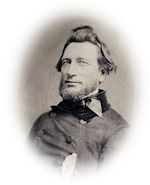
August 1st.—The month was ushered in by the opening of a cannonade, precisely as the clock struck twelve, on our shipping, from the south side of the river. For a short time the firing was very brisk. It was from some batteries of flying artillery which had taken position during the night. They were soon silenced, but not till after they had killed and wounded a number of our sailors, and done some damage to our shipping.
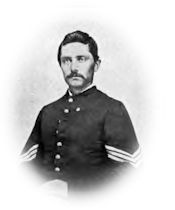
Friday, 1st—All hands are at work cleaning up our camp. We have a very pretty camping ground right on the bank of the river. The entire Crocker Brigade is in this camp and is in command of General Crocker.
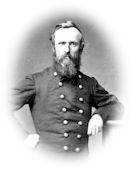
August 1, 1862. Friday. — A good little drill. Mr. Landcraft, one of the three slaveholders of Monroe County who were true to the Union, and a Mrs. Roberts were arrested and brought into my camp in obedience to orders from headquarters. Mrs. Roberts is a ladylike woman; her husband, a Secesh, is a prisoner at Raleigh. Mrs. Roberts and her uncle, Mr. Landcraf t, came over New River and passed into our lines, the pickets admitting them, without proper passes. If this is the whole offense, the arrest is on most insufficient and frivolous grounds. In the case of Mrs. Roberts, who has a nursing child at home, it is as cruel as it is unnecessary. I shall do my best to get them out of the trouble. These needless persecutions of old men and of women, I am ashamed of.
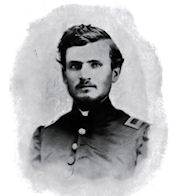
1st. Friday. In camp on Cow Creek, 40 miles south of Fort Scott. Two men were killed here by Standwaite some time ago. Poor water. The big twenty-five miles prairie just beyond. Rode with the Sergeant Major. Fooled with him considerably. Good time. Capt. Smith played fool, infringing on the Second Battalion. Major Purington gave him a blowing. The mail came this evening. Letters from Fannie and home. They did me good. I long for the furlough time to come. Barnitz received a commission as Second Lieutenant. Pleased all. Wrote a short letter to Fannie. Purington thinks of going on tomorrow.
Harrison’s Landing, Va.,
Friday, August 1, 1862.
Dear Father:—
I was very glad to learn that there is some prospect of your being appointed chaplain for our regiment. I suppose the appointments are made by the Governor on the recommendation of the officers of the regiment. If Colonel C. favors your appointment, I think there will be no difficulty about the other officers. My opinion is that the majority of them care but little who is chaplain, or whether there is any or not. Unless some of them have some other person in view, I have no doubt they will all sign the recommendation. You will find the duties of chaplain very different from that of pastor of a church. There will be no deacons or active sympathizing brethren to “hold up your hands.” You will have the whole management of the spiritual concerns of the regiment. The officers will neither aid nor oppose you, but expect you to attend to your duties while they do theirs. I do not know that there is a professor of religion among them, unless I except Lieutenant Colonel Campbell, who I have heard is a Presbyterian. Your charge will be a hard one, a motley assemblage of all sorts of characters, among whom the name of God is used much oftener than he is thought of. One thing I have noticed, however, and that is that profane swearing and card playing are not near so prevalent lately. I do not attribute this to any thought of the sin of these practices. There were many when we first entered the service, who, when they found themselves away from the restraints of society and home, let loose their tongues and indulged in swearing till they could scarcely utter a sentence without an oath. One night when we lay at Hampton, I listened to a couple of fellows in our company awhile, and finally spoke. “Boys,” said I, “I think if you keep on you will make first-rate swearers. I’ve heard you use fifty-nine oaths in about ten minutes.” “Is that so?” said one. “Yes,” said I, and they stopped talking at once. One of them told me since we came here, that he had broken himself of the habit entirely. He was getting ashamed of it.
I am glad Horatio is doing so well. Poor fellow, I pity him. I think of him very often, and hope you will keep me informed how he gets along.
My health continues first-rate yet. If we march I shall stand it as well as any, I think. I shall have no gun to carry. I have no use for one now, and mine was given to a man who came back from the hospital. I have made up my mind that I shall not carry one while I am not required to, for if we get in any place where I need one there is never any difficulty in getting one.
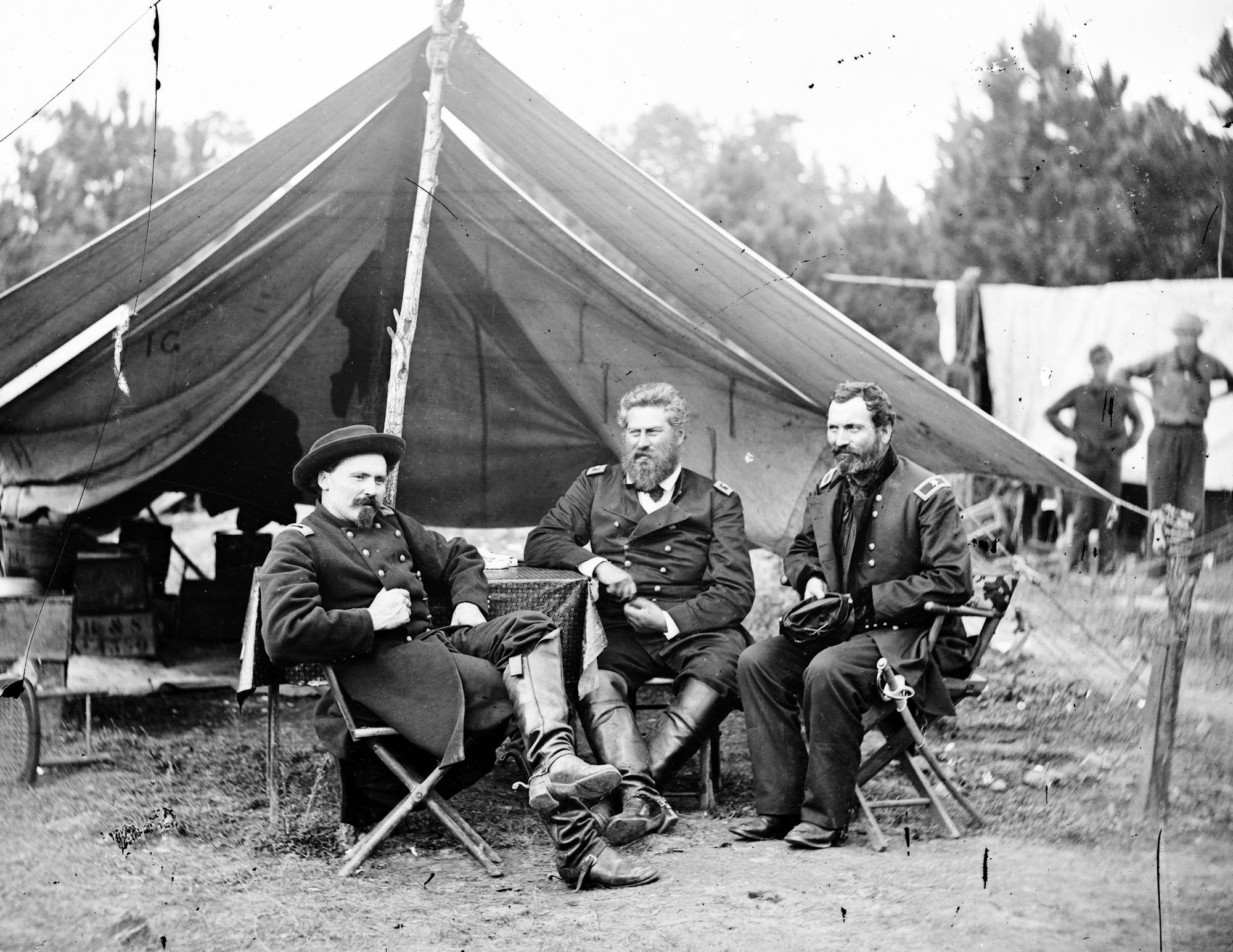
- Title: [Harrison’s Landing, Va. Col. Albert V. Colburn, Col. Delos B. Sacket, and Gen. John Sedgwick]
- Creator(s): Woodbury, D. B. (David B.), d. 1866, photographer
- Date Created/Published: 1862 August.
- Medium: 1 negative : glass, stereograph, wet collodion ; 4 x 10 in.
- Summary: Photograph from the main eastern theater of war, the Peninsular Campaign, May-August 1862.


