Following the American Civil War Sesquicentennial with day by day writings of the time, currently 1863.

May 2013

May 9 and 10—Resting.

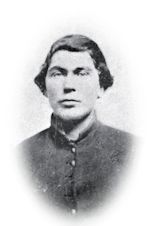
May 11—We moved our camp to the north side of town. Then we were marched to an open field this afternoon, and drawn up in line to see two men shot for desertion. After they were shot, we marched by them and saw one was hit six times and the other four. Their coffins were by their sides, right close to their graves, so that they could see it all.

by John Beauchamp Jones

MAY 11TH.—Lieut.-Gen. J. T. Jackson died at 3 P.M. yesterday. His remains will arrive in the city at 5 P.M. this afternoon. The flags are at half-mast, and all the government offices and even places of business are closed. A multitude of people, mostly women and children, are standing silently in the streets, awaiting the arrival of the hero, destined never again to defend their homes and honor.

A letter from Gen. Lee says, emphatically, that if cavalry be not brought from North Carolina and the South, the enemy’s cavalry will be enabled to make raids almost anywhere without molestation. I recollect distinctly how he urged the Secretary of War (Randolph), months ago, to send to Texas for horses, but it was not attended to—and now we see the consequences.

The exchanged prisoners here, taken at Arkansas Post, are ordered to the Mississippi. Gen. Longstreet urged the Secretary to send them off, if that were their destination, without a moment’s delay, several days ago—else they would be too late to participate in the campaign.

Northern papers set down Hooker’s loss at 20,000, a modest figure, subject to revision.

The Federal Secretary of War has issued a statement to mollify the panic. He is bound to acknowledge that, whereas Hooker advanced upon Lee across the river, he is now, after the battle, back again, where he started from. But he says not more than a third of the army was engaged ; and as 30,000 reinforcements have been sent from Washington, and as many from Suffolk, the army will soon be as strong as ever, and in condition for another advance—and defeat.

But what credit can we attach to such statements, since McClellan, under oath, said that he had ninety odd thousand men at the battle of Sharpsburg, 75,000 of whom only were actually engaged, while Lee had 100,000? We know that he did [click to continue…]
May 11.—A fight took place in the vicinity of Greasy Creek, Ky., between a force of National troops under the command of Col. R. T. Jacob, and a large body of rebel cavalry under General John H. Morgan, terminating, after a desperate contest of seven hours’ duration, in which the rebels had nearly one hundred of their number killed and wounded, in a retreat of the Unionists with a loss of twenty-five killed and wounded.—Louisville Journal

—Crystal Springs, Miss., on the New-Orleans and Jackson Railroad, was entered and burned to-day by a party of National cavalry.

May 10th. Commenced with pleasant and clear weather, which continued until six fifteen; at ten A. M., called all hands to muster, and read a general order from Rear-Admiral D. G. Farragut, after which performed Divine service; nothing more worthy of note occurred during the remainder of this day, except it be that firing of great guns was again heard down the river, at eleven fifty-five P. M., supposed to be the lower fleet bombarding the rebel batteries at Port Hudson.

Sunday, 10th.—Skirmishing began at daylight. Relieved at 7 A. M.; went back two miles to regiment. Regiment relieved at 6 P. M.; found brigade at 11 P. M., after marching eleven miles.

Sunday, May 10.—Sad, sad tidings were brought to our cottage this morning! Washington, the youngest and darling son of our dear friend, Mrs. Stuart, has fallen. The mother and sisters are overwhelmed, while our whole household is shrouded in sorrow. He was young, brave, and a Christian. He fell while nobly fighting with his company, the famous Rockbridge Battery, on Marye’s Hill. We have heard no other particulars. The brave boy had scarcely recovered from a most severe wound received last summer near Winchester. To God we commend his afflicted, though quietly submissive, mother. He alone can soothe the sorrow which He has seen fit to permit.

Near Raymond, Miss., Sunday, May 10. Awoke, harnessed and fed horses at 3 o’clock A. M. 7 A. M. unharnessed and grazed our horses for an hour. Lay in the shade until noon, when we hurriedly harnessed, leaving our dinner half cooked, and marched over very dusty and sultry roads. Poor country, covered with pine poles. Halted at Utica two hours and watered horses, let the cavalry pass. This is a lively looking place of two dozen houses, with frowning damsels in the windows and doors. May poles still standing. They did not expect the Yankees so soon. Took the road toward Raymond, eighteen miles distant. At sundown came into camp in thick oak brush. All our cooking utensils in the mule wagons. “By order”‘ obliged to go to bed without our supper save hard crackers.

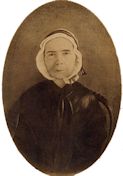
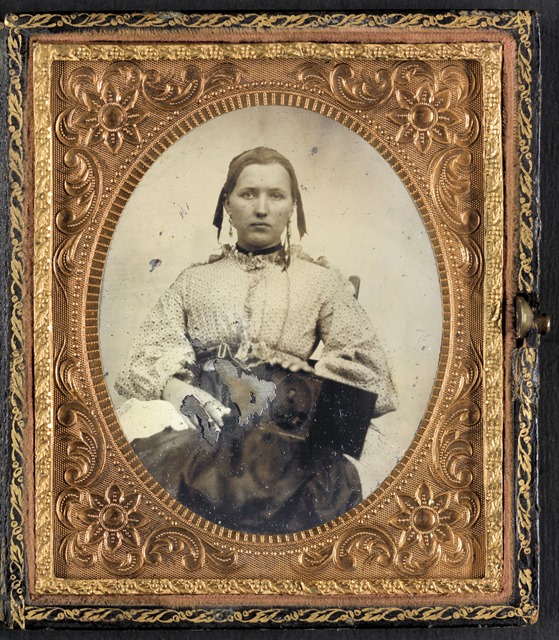
Unidentified woman with cased photograph of Private W.R. Clack Co. B, 43rd Tennessee Infantry Regiment


Unidentified woman with cased photograph of Private W.R. Clack Co. B, 43rd Tennessee Infantry Regiment, possibly Clack’s future wife, Sabria Caroline Newport Clack.  They married after the war.

half-plate ambrotype, hand-colored ; 15.7 x 12.7 cm (case)

Donated by Tom Liljenquist; 2012

Liljenquist Family Collection of Civil War Photographs; Ambrotype/Tintype photograph filing series; Library of Congress Prints and Photographs Division.

Record page for image is here.

______________

http://lcweb2.loc.gov/service/pnp/ppmsca/34900/34983_150px.jpgNote:  This image has been digitally enhanced for fade correction, color enhancement and selected spot removal.

Civil War Portrait 031

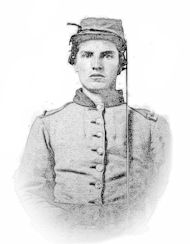
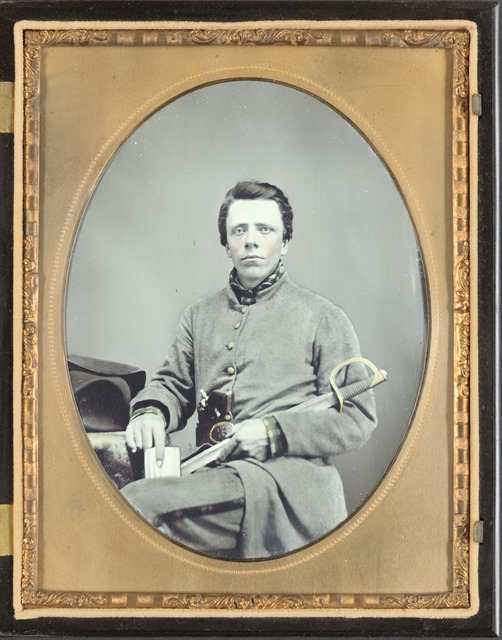
Private W.R. Clack of Co. B, 43rd Tennessee Infantry Regiment

On May 10, 1863, Private Clack is on picket or fortification duty near Big Black River in Mississippi, outside of the Vicksburg fortifications.

__________

Private W.R. Clack of Co. B, 43rd Tennessee Infantry Regiment, with saber, pistol, and small book.

half-plate ambrotype, hand-colored ; 15.7 x 12.7 cm (case)

Donated by Tom Liljenquist; 2012

Liljenquist Family Collection of Civil War Photographs; Ambrotype/Tintype photograph filing series; Library of Congress Prints and Photographs Division.

Record page for image is here.

______________

digital file from original itemNote:  This image has been digitally enhanced for fade correction, color enhancement and selected spot removal.

Civil War Portrait 030

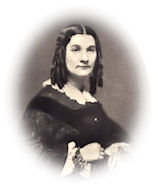
Mrs. Lyon’s Diary.

May 10.—We sat on deck nearly all day to view the scenery, which is very picturesque. The gunboats shelled the bluffs. There are different places where they had cannon stationed, but they did not trouble us. We sat on the bow of the boat to watch the shells explode. We arrived at Nashville without seeing a rebel and very few contrabands. We got there just in time to go to church. Went to the Methodist Church and heard the minister preach Secesh principles.