Before Vicksburg, Saturday, June 6. But little firing during the day. While watering horses I rode about two miles into the country, filled my haversack with ripe, juicy plums. Thought I’d like to take them home to Mary and have a shortcake.. But no—wait awhile. I’ll take them to camp and make some for supper, in hopes for something nicer in the future.
Thursday, June 6, 2013
Saturday, June 6th.
On yesterday we marched six miles to a large open field beyond Culpepper to witness a review of General Stuart’s cavalary. There were 8,000 or 10,000 horsemen covering an immense area. The infantry were permitted to rest, and gaze at will, from the railroad embankment, on their maneuvers. Except the difference in the numbers present there was nothing to note which may not be seen at the review of a regiment. The great numbers inspired a feeling of awe and created an impression of strength and security.
We returned to camp about sunset, having made a march of twelve miles for recreation, entertainment and inspiration. . Just as I was writing the last line we received orders to be ready to march at 12 o’clock; it is now nearly 11. I asked yesterday for Lamar Stark, but I learned from Wat Taylor that he was across the river; so I cannot tell when I shall see him.

6th. After breakfast and morning work issued rations—beef— at daylight. Felt rather tired after the work. Cleaned a carbine I had used for some time. Rather hard job. Another dry sultry day. Thede feels under the weather. Both have the diarrhœa. Boys went for strawberries, but could not get any. Paymaster here.
June 6.—All kinds of rumors are coming in daily from the army. A battle is expected momentarily.
We have had a great deal of rain lately, which makes it sickly and otherwise disagreeable.
Vallandigham passed through here a few days ago. He had little or no notice taken of him, as he is not a southerner; but still clings to the delusion that the Union can again be restored. What madness in any sane man! That can never be until the terrible past is wiped out, and sinks into oblivion; or until the many thousands who have been slain shall be brought to life, and the outrages which have been committed on our people undone. I can not but admire him for his independence of character in defying Lincoln and his minions. Would that we had many more like him in the North, then our hopes of peace would be bright indeed. Many think if we can only hold out a little longer, that the peace party there will rise in its might, and demand of the black republicans to desist from this unholy strife.
June 6—Marched five miles and halted for the day.
June 6, 1803.
Dear Sister L.:—
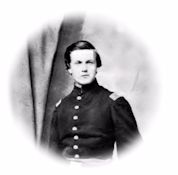
Headquarters are at Crittenden’s Mill, twenty miles above Fredericksburg. The Eighty-third guards Kempel’s Ford. The Sixteenth Michigan and Twentieth Maine guard Ellis’ Ford. The Forty-fourth New York is in reserve at the Mill. Franklin has crossed below Fredericksburg and is fighting this morning. I can hear the cannon.
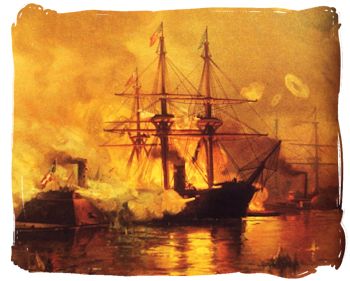
June 6th. Early this morning the shell from the mortar vessels was seen exploding over the rebel batteries; at ten A. M. our Assistant Surgeon, S. D. Kennedy, being detached, left the ship for New Orleans, for passage North. Artillery firing was heard in rear of Port Hudson during the remainder of this day.
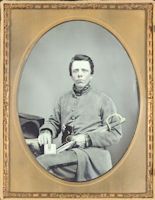
June 6 — The sharp shooters opened fire at daylight this morning but in a milder manner than common — continued all day. Night has come on and the firmament is again decked with the beautiful stars, while we lay us down again to sleep upon the rough ground of Vicksburg. I pray heaven’s blessings to rest upon us. W.R.C.

by John Beauchamp Jones
JUNE 6TH.—We have not even a rumor to-day from Mississippi. The Examiner has made a pretty severe attack on Judge Campbell, Assistant Secretary of War, for the great number of persons he has “allowed” to pass into the enemy’s country. It does not attribute the best motives to the Judge, who was late coming over to the Confederacy.
The British consul here, it seems, has been meddling with matters in Mississippi, the President states, and has had his exequatur revoked.
Gen. D. H. Hill recommends the abandonment of the line of the Blackwater, for Gen. Martin informs him that the enemy are preparing their expeditions to cut our railroads in North Carolina. Gen. Hill fears if the present line be held we are in danger of a great disaster, from the inability to transport troops from so remote a point, in the event of a sudden emergency. Gen. Lee refuses to let him have Ranseur’s brigade.
There are rumors of picket fighting near Fredericksburg, and Davis’s (the President’s nephew) brigade, just from North Carolina, proceeded through the city to-day in that direction. Shall we have another great battle on the Rappahannock? I think it a ruse.
Lebanon, Ky., June 6th, 1863.
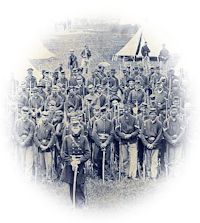
I did not go to Jamestown, as I intended. I called on the Provost Marshal for a pass and learned the program had been changed, and the Seventeenth was then on its way back to Lebanon. I found the company about nine o’clock in the evening, a half mile from Columbia, tired and worn by a march of twenty-six miles. The boys had stretched themselves on the ground, too tired to erect their tents, but when they learned of our arrival, they flocked around us to learn the latest news from home. And such warm greetings I seldom ever witnessed. The Colonel said we were all right on time; he did not expect us to start from home until Monday.
Here I learned the Ninth Corps had received orders to report immediately at Louisville. We started early next morning and marched twenty miles. After supper we threw ourselves upon the ground and forgot our pains and aches in “balmy sleep.”
At two o’clock we were aroused by “the shrill bugle’s cry,” and were told we were to be in Lebanon at 12 m.—eighteen miles. We turned out, cooked and ate our breakfasts, and at four o’clock were on the move. The Quartermaster soon overtook us with teams that he had “pressed” to carry our knapsacks for us. With many thanks to Colonel Luce—it was he that ordered the wagons to follow us—we started on our way with light hearts and lighter feet. But eighteen miles in half a day is no easy task, even in light marching order, and soon the men, worn out by repeated forced marches, began to tire, and many were ready to declare they could go no further, when we were met by a wagon train, sent from Lebanon to bring in those not able to walk. The train was soon filled to its utmost capacity. Not being one of the unfortunates, I “hoofed it” the entire distance.
The all-absorbing question with us is, where are we going? The Louisville Journal says we are “goin” to take a new lesson in geography.” Of course, then, we leave the state. Our officers are about equally divided between Washington and Vicksburg. But which? If we are to take a new lesson we will not go east. Then it must be Vicksburg. Our men say it makes but little difference to them, if only we go where work is to be done.


