Following the American Civil War Sesquicentennial with day by day writings of the time, currently 1863.

June 2013

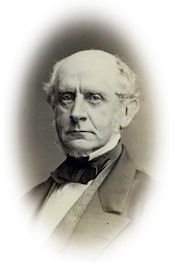
Charles Francis Adams to His Son

London, June 19, 1863

• • • • • • • • • •

Our good friends in this country are always provided with a little later than the last news from America, which is equally sure to be very bad for us. We have just survived a complete capitulation of the whole army of General Grant. A few weeks since we went through the same process with all of you on the Rappahannock. Last year we had the same luck with General McClellan and all his force. The wonder is that anybody is left in the free states. Washington has been taken several times. I am not sure whether Boston has been considered in great peril or not. So little are the majority acquainted with our geography that such a story is as likely to be believed as any of the rest. The only effect all this has upon us is to furnish just so many instances of the intense earnestness of the benevolence prevailing in these parts. The progress of the war has developed this in so many and such various forms that no possible disavowal of it in any future times can avail to shake our conviction. If there were no valid reasons at home for a farther prosecution of the war, I should feel that this manifestation of the temper of the ruling class towards us ought to convince us of its importance to our future safety against them. . . .
Coleman’s Eutaw House,

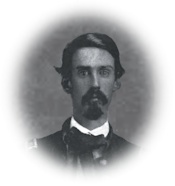
Baltimore, June 19th, 1863.

My dear Mother:

Here I am in Baltimore in safety, neither able to go forward, nor willing to turn back. As yet, all communication with Harper’s Ferry is cut off, but the position Hooker now occupies is such as will enable him soon to include the Ferry within his lines, so I am stopping quietly at the Eutaw House, but almost momentarily expecting to hear from Col. Piatt that the cars will once more be in running order. Probably this will be before the day is over, and I trust I may be able to be of some use. Don’t be alarmed, though, I am not going to attempt anything Quixotic, so, if the opportunity does not soon come, I shall return, and proceed to Simsbury.

I have nothing special to say, beyond wishing to set your mind at rest. The 7th Regiment arrived here yesterday, and makes a fine appearance. Will soon write a more interesting letter, to be dated either from Maryland Heights or Simsbury.

Good-bye. Love to all.

Very affec’y.,

W. T. Lusk.

June 19—Left at 8 A.M., and seven miles took us to Hagerstown, Md. Here the men greeted us very shabby, but the ladies quite the reverse. This town has 5,000 inhabitants, and is a very pretty town. We camped on the Antietam.

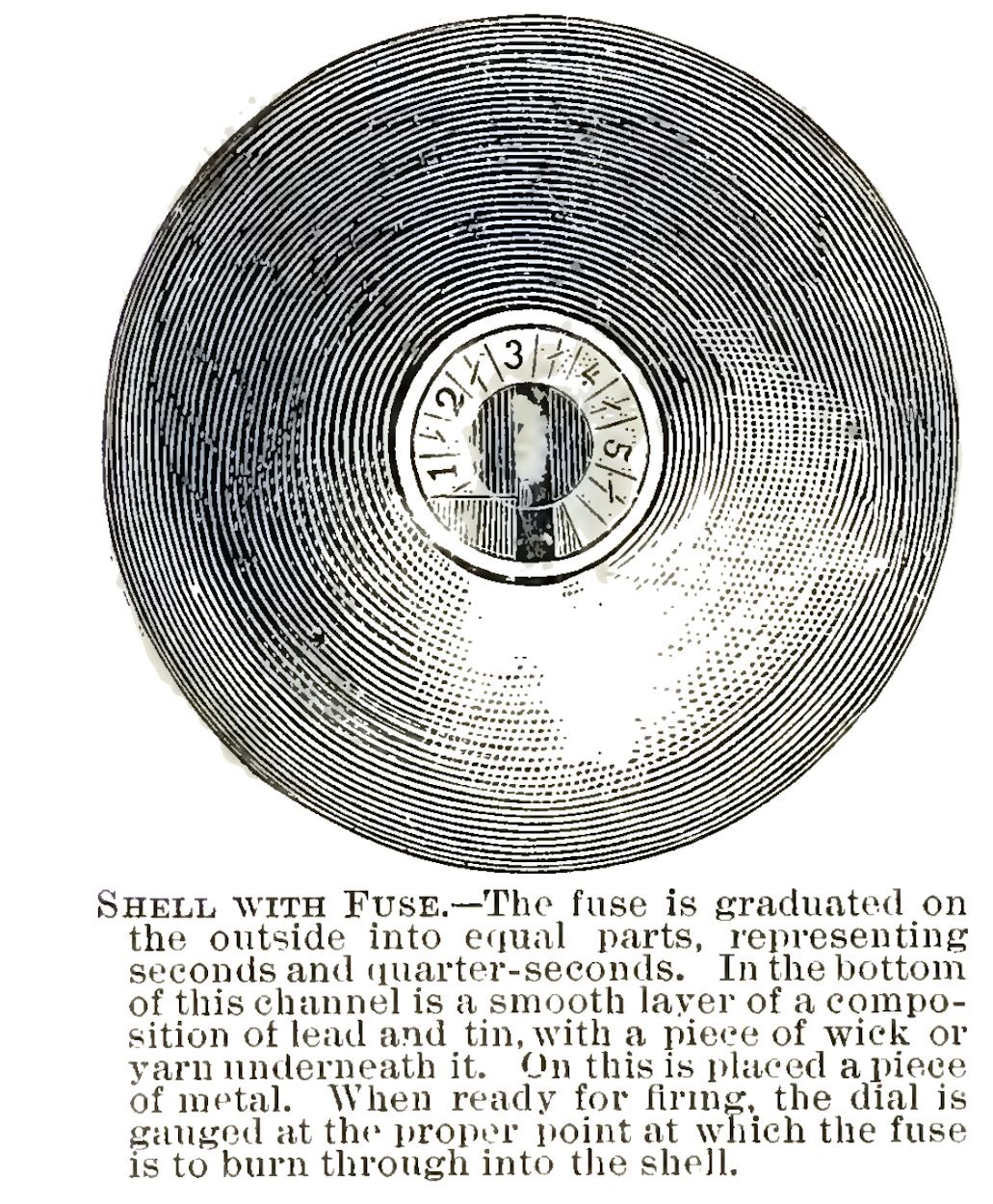
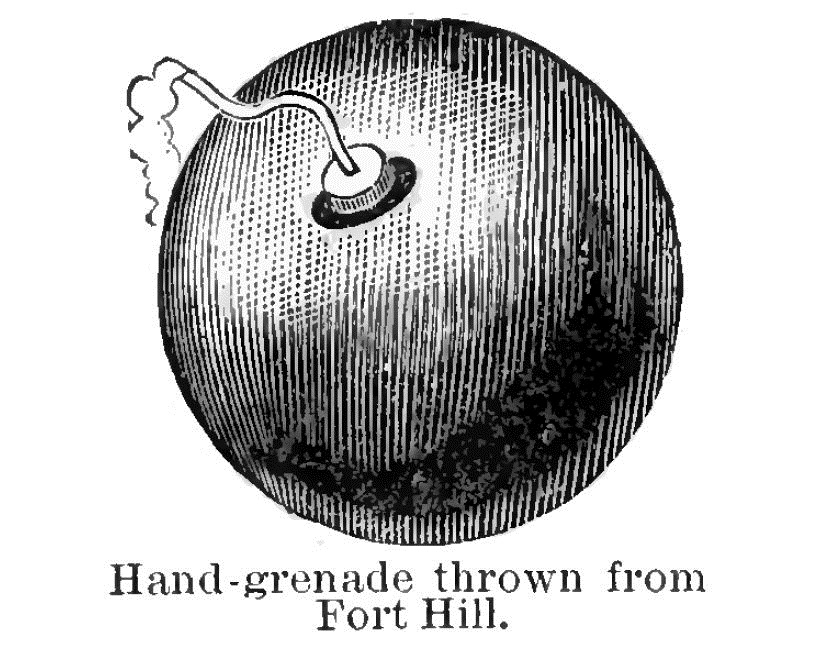
JUNE 19TH.—For a month we have been watching our enemy vigilantly, and a panorama, consisting of a great variety of war scenes, has, during that time, passed before us. We have had charging, digging rifle-pits, blowing up forts and firing all sizes of cannon, to say nothing of percussion shells, spherical Whitworth Projectile - Siege of Vicksburg, June 1863case shot, time shells, parrot, grape, cannister, shrapnel, etc., the memory of which will be vivid to all, both blue and gray, who have seen the show around Vicksburg. The terrible noises, too, that have rung in our ears, must echo for years to come. I may add our endurance of this southern sun, at times being short of rations, and at no time out of danger, yet all the time nearly uncomplaining—every one trying to make the best of it, and all as merry as the Shell with fuse - A Soldier’s Story of the Siege of Vicksburg situation would admit. Each day some of the boys have come in relating new discoveries on reconnoisance, and I do not think there is a foot of ground about these hills that has not been explored, a well or spring that has not been tested, or a single object of interest of any kind that has not been worked till it grew stale. Then each man has had his peculiar view of how a siege like this ought to be conducted—that is, from the standpoint of rank and file.

However, we are all agreed that the quiet man in command of our forces is still able to anticipate the requirements of our situation. I call him quiet, for that is just what he is. There is no dash or glitter about him, but he is marked by a steady nerve, and piercing glance that seems to be always on the alert. Many a second lieutenant has fallen a victim to the sharpshooter because of his fresh uniform, while officers of more experience have escaped under slouched hats and old blouses. There seems to be no limit, however, to the experience of some of them.

A cook of the 96th Ohio happened to be cooking beans the other day, when Gen. A. J. Smith, commanding a division of the 13th Army Corps, came around on camp inspection. After being properly saluted by the cook, the general began a colloquy as follows:

Gen. Smith.—What are you cooking?

Hand-grenade thrown from Fort Hill - A Soldier’s Story of the Siege of VicksburgThe Cook.—Beans, sir.

General Smith.—How long do you cook beans ?

The Cook.—Four hours, sir.

Gen. Smith (with a look of withering scorn).—Four hours! You cook ‘em six hours!

That cook’s beans were tender enough that day.

________

“Once again the fire of hell

Rained the rebel quarters,

With scream of shot and burst of shell,

And bellowing of the mortars.”

Lagrange, Tenn., June 19, 1863.

The general and Sam went to Memphis yesterday to visit General Hurlbut, and the major and I have charge of the machine. The cavalry under command of Colonel Mizner went south last Tuesday. They have a good sized object in view, and if they succeed will be gone some ten days, though they may possibly be back by Wednesday next. They will operate between Panola and Grenada. Another mounted expedition has gone from Corinth to Okolona, a third from Corinth to Pikeville, Ala., and a fourth also from Corinth to Jackson, Tenn., which place has, since we evacuated it, been occupied by some Rebel cavalry (infantry also reported) from the east of the Tennessee river. All of this cavalry (of course excepting the Rebel) belongs to General Oglesby’s command. You see he has it in motion. Deserters are constantly coming in from Johnston’s army; and if we can believe their stories, and the information gained from the corps of spies employed along this line, Grant’s rear is not in as much danger as our southern brethren would fain have us think. Johnston’s army is not in the best condition imaginable; and it is far from being as strong as he would like it. Have no idea that he can march thirty-five thousand men. Grant must have an enormous army. How awful it would be if the yellow fever would visit his camps. I suppose you know that my regiment is at Snyder’s Bluff. I think that is on the Yazoo, near Haines. Don’t you see some more of my extraordinary fortune in being detached just as the regiment is ordered to where there is a prospect of hard knocks. We were all loaded on the cars ready to move, when Sam came down to the train and took me. The regiment then left immediately. There is a possible chance now of the general’s being ordered to Vicksburg; but I’ve given up all hope of my getting there. We are having a great deal of trouble with the citizens here. A great many secesh citizens ask to be exempted from taking the oath, because they have rendered service to our army. This one gave a quart of buttermilk to a sick soldier, another donated an onion to the hospital, another allowed a sick officer to stay in his house for only $2. per day, etc. A number of the claims really have some point to them, and although ’tis against my theory, I really can’t help pitying some of them. We had a sad accident last week near this post. General Hurlbut ordered a small train with a guard of some 60 men to be sent north on the railroad to repair the telegraph line. Twelve miles only from here the train broke through a little bridge over a deep but narrow “swash” and killed five and wounded ten of the party. An examination showed that the bridge had been burned the night before, and afterward the rails had been propped up only strongly enough to keep their places when no weight was upon them. ‘Twas a fiendish, cowardly act, but of course committed by men whose business is robbery and murder, and who have no connection with the army.

Friday, 19th—Regiment came to Fairfield and from there to Bell Buckle and camped. I went out to Mr. Suggs and got some bread baked and returned.

June 19th. Commences with calm and pleasant weather. At nine A. M., inspected crew at quarters. Mr. Watson and Lieut. Eaton of U. S. A. signal Corps, went overland to lower fleet. From eight P. M. to midnight, occasional firing in rear of Port Hudson.

June 19 — We left the trenches at daylight this morning and came back to our old position in the hollow. Things are tolerably quiet this morning — some sharp shooting going on 7 o’clock p.m. — all passed off tolerably quiet today. We commenced drawing flour today. WRC

June 19.— I had a good sleep last night, and enjoyed it very much. We left our camp at Herndon Station this morning at 8 o’clock, and followed Doubleday’s division, which preceded us yesterday, to Guilford’s Station, some three miles. Our corps was camped on Broad Run. In the afternoon I went out with General Paul to establish the picket line. The road was beautiful, being wooded on both sides, with oak groves. We left a real Union family at Herndon, a family from Pennsylvania. This evening we received orders to move on to Goose Creek, but the orders were countermanded. I was sent to General Doubleday to countermand them. Our signal officers sent up a rocket this evening, to the great alarm of our cook, George, who had never seen anything of the kind before. We had a very heavy shower this evening, which I got caught in, much to my disgust, as it is the only time I have ever been out without my rubber coat.

Colonel Lyons.

Fort Donelson, June 19, 1863.—I received official communications yesterday from the rebel General Forrest, threatening to retaliate on prisoners in his hands if we did not treat Hinson and some other prisoners we have as prisoners of war. What a glorious chance to write him a spread-eagle, highfalutin letter in reply, and get into the newspaper! I finally closed my eyes to all this sensational newspaper glory and sent the communication to headquarters without replying to General Forrest at all.

Things look blue. The position of affairs at Vicksburg is full of peril. There is no hope at present in Virginia that I can see that any substantial progress will be made there. The rebels march with perfect impunity into the heart of Pennsylvania, and there is none to molest or make them afraid, and all this because Congress fooled away four months of precious time before they passed the Conscription Act, and nearly four months more have passed and no men are called out under it. Much of the time has been consumed in allowing politicians to quarrel over the appointments of officers under the law. Half a million more men could now have been in the field had Congress and the Administration done their duty, and we would today be safe at every point; but nothing has been done and disaster and defeat everywhere stare us in the face. With bloody graves yawning at our feet, we can only bow our heads and exclaim in bitterness of spirit: ‘How long, O Lord, how long!’

You will think I have the blues. Not so. I think I see disaster ahead that will lengthen the war. I have no doubt of our ultimate triumph.