Following the American Civil War Sesquicentennial with day by day writings of the time, currently 1863.

December 2013

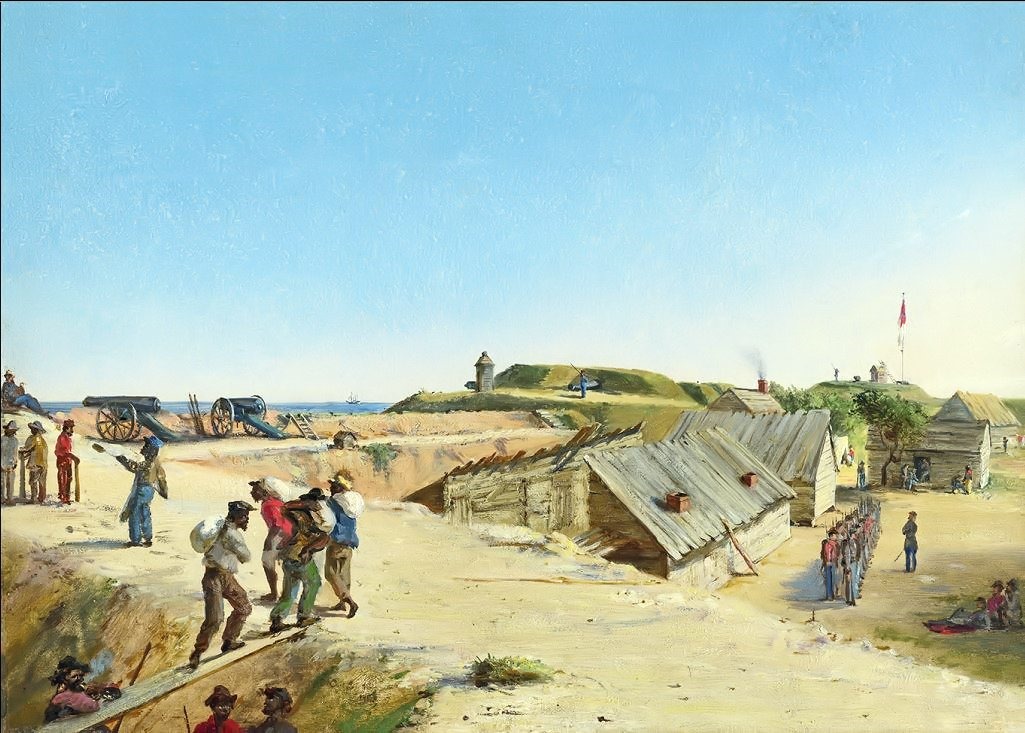
Battery Marshall, Sullivan's Island, December 4, 1863

Painting by Conrad Wise Chapman.

“Here are the barracks of the soldiers.  This being an extreme point, there was always a force ready in case of attack.  Negroes are at work putting up breastworks, under the supervision of an over-seer. Another object to be seen is the lookout sentinel.” – Conrad Wise Chapman, 1898

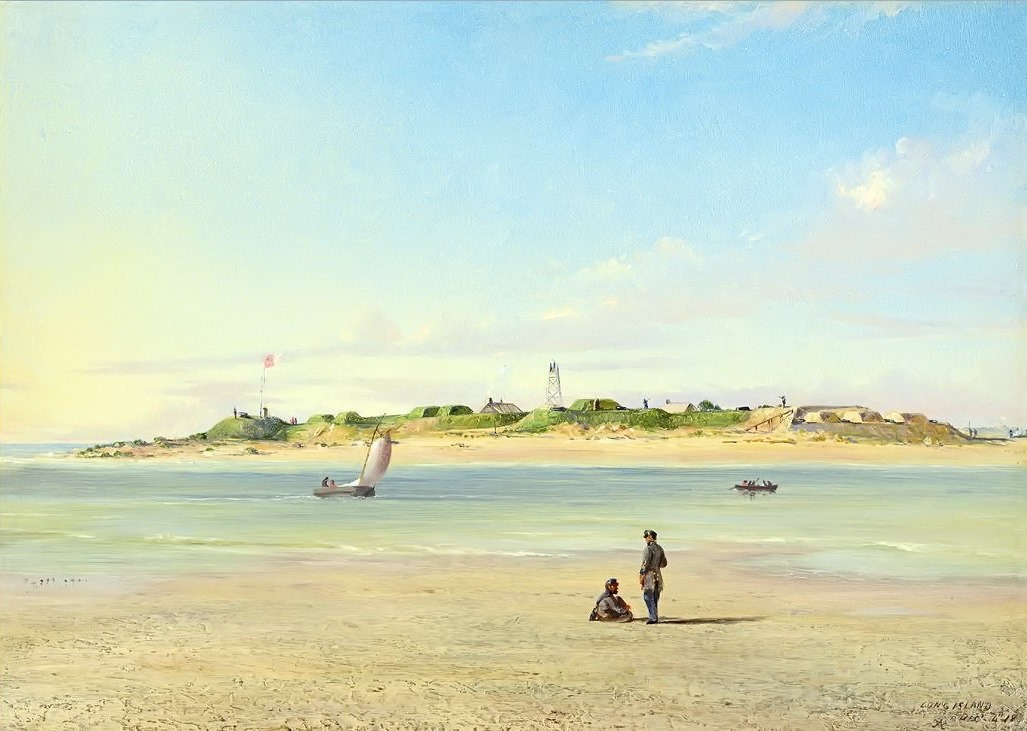
Battery on Long Island, December 4, 1863 by Conrad Wise Chapman

Painting by Conrad Wise Chapman.

“This is the extreme end of Sullivan’s Island, toward the enemy on Morris Island, and shows the views the Yankees had of the battery.  The two men shown are Lieutenant Martin, of Charleston, and one of his friends.” – Conrad Wise Chapman, 1898

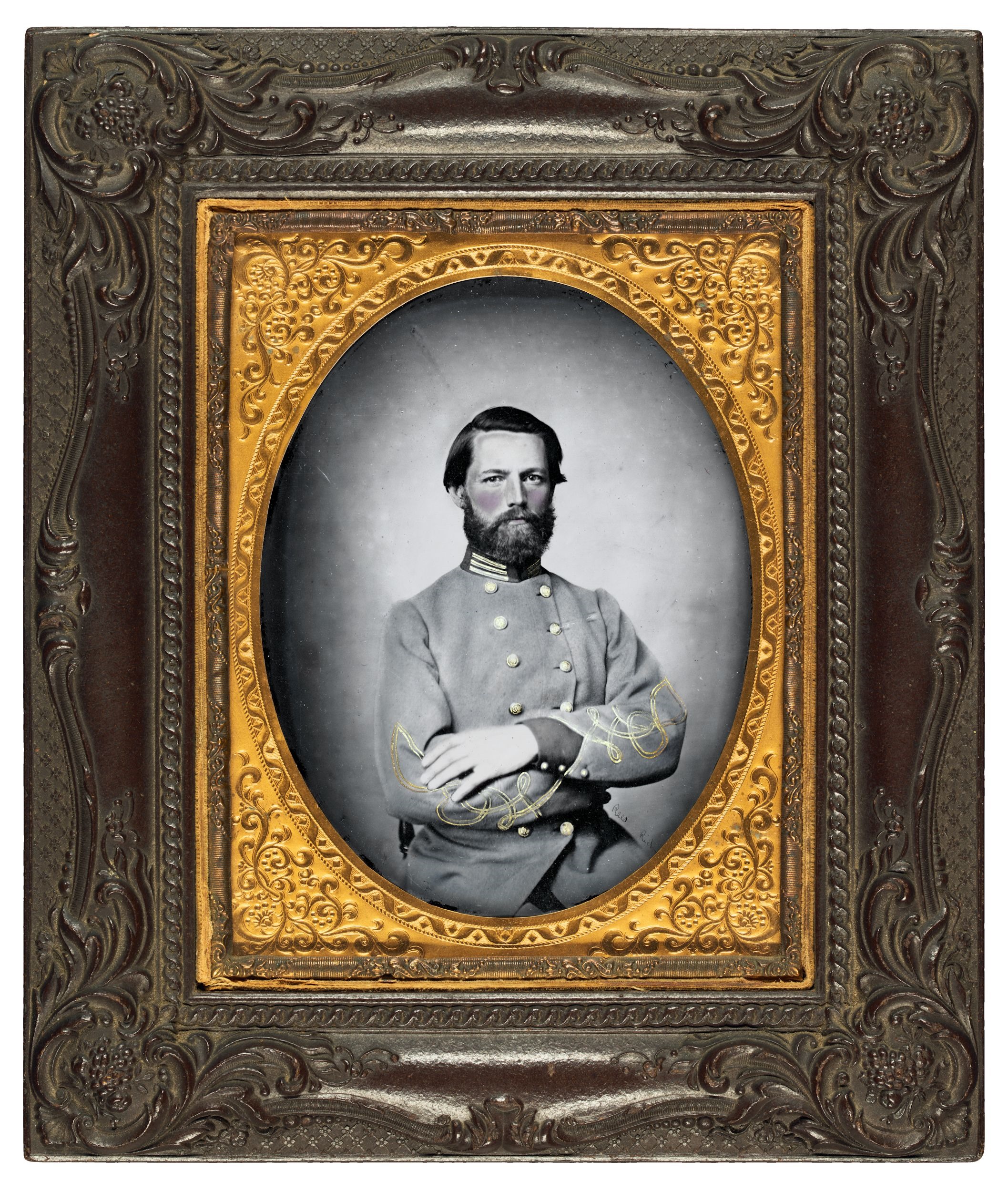
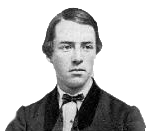
Captain William W. Cosby of H Company, 2nd Virginia Light Artillery Regiment in uniform - in frame


Captain William W. Cosby of H Company, 2nd Virginia Light Artillery Regiment in uniform.

__________

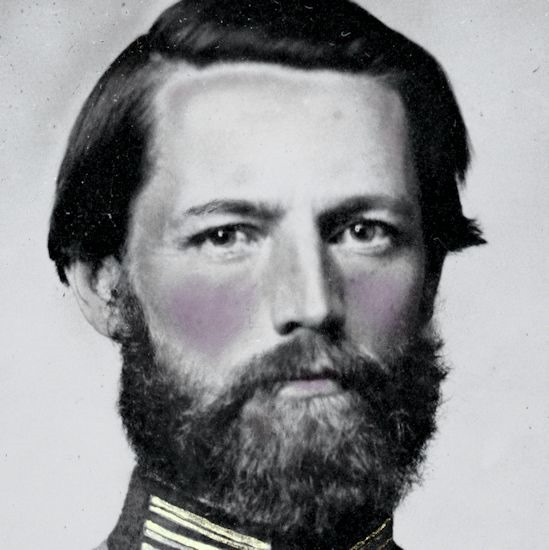
Close-up crop:

close-up crop of Captain William W. Cosby of H Company, 2nd Virginia Light Artillery Regiment in uniform

__________

approximate half-plate ambrotype, hand-colored ; 20.6 x 17.5 cm (frame)

Photographer: Charles R. Rees.

Liljenquist Family Collection of Civil War Photographs; Ambrotype/Tintype photograph filing series; Library of Congress Prints and Photographs Division.

Record page for image is here.

__________

digital file from original framed photo, tonality adjustedNote – This image has been digitally adjusted for one or more of the following:

  • fade correction,
  • color, contrast, and/or saturation enhancement
  • selected spot and/or scratch removal
  • cropped for composition and/or to accentuate subject matter
  • straighten image

Civil War Portrait 113

by John Beauchamp Jones

            DECEMBER 4TH.—The only thing new to-day is a dispatch from Gen. Longstreet, before Knoxville, stating that he had been repulsed in an assault upon the place, and calling for reinforcements, which, alas! cannot be sent him.

            Hon. Mr. Henry, from Tennessee, estimates our loss in prisoners in Bragg’s defeat at but little over 1000, and 30 guns. We captured 800 prisoners.

            We have intelligence to day of the escape of Brig.-Gen. Jno. H. Morgan from the penitentiary in Ohio, where the enemy had confined him.

December 4th, 1863.—We had that musicale last night and it was fine. We had an unexpected guest; in the afternoon cousin Mary wrote a note asking if she might bring Miss Maria Eppes. She had come to visit at Greenwood. Of course we were glad to have her and when she came we were delighted; she is beautiful, and has such charming ways. I have a picture of Lieutenant Mecklenburg Polk, which he sent me by Cousin Sam. He must be remarkably handsome if he looks like his picture and I have framed it in pine cones, the kind that grow on the short leaf pines. It makes a very pretty frame and it occupies a prominent place on the mantel. I do not know this fine young soldier boy, but whenever I look at the picture it seems to recall some one whom I have known; just a fleeting impression, which I cannot quite grasp.

Last night Maria Eppes saw it and she called out in a rather excited tone: “Where did my brother’s picture come from?”

I told her who it was but she could hardly believe me, and said, “It is exactly like Nick.”

I knew then why the face looked familiar and I told Maria of the night her brother took supper with us. Then she told me of the part he took in the great battle of Chickamauga; of Finley’s Brigade, of which his regiment is a part, how they charged the enemy with the bayonet three times before they succeeded in breaking General Thomas’ line; how they yelled as they drove the enemy down Snodgrass Hill; how terrible the fighting was; how the ground was covered with dead and dying men and of the awful groans of the wounded horses.

They had a truce for a short time to bury their dead, not really a decent burial, but just a trench, in which they were laid. The battle lasted three days and covered many acres of ground, miles, it seemed to those engaged.

Just think, exactly one month before, Lieut. Eppes was sitting so quietly at our table, he and cousin John, and so soon after this bloody battle came to them.

Maria said her mother had a letter that morning, telling of the battle of Missionary Ridge and the crossing to Lookout Mountain, where another battle was fought. Maria says her brother escaped almost by a miracle at Missionary Ridge, as most of his comrades were either killed or taken prisoners. We have heard that cousin John and cousin Henry, who were in that battle were taken prisoner and thus far we have not heard where they were carried.

Maria is very glad her brother is safe so far, but then you never know what you will hear next. Maria says if I will send Lieutenant Polk’s picture back, she will give me one of her brother and I can have the original as well as the photograph, too, funny, isn’t she? I do not expect ever to see either one of them.

Cousin Julia had a nice time last night; she likes Hattie better than any of the girls. I do not wonder at that for she is delightful company, so witty and so original. When I have girls staying with me Hattie always entertains for them and then when she has company I reciprocate. It makes it pleasanter all around. Captain Lester and my father “spoil their daughters” the neighbors say, but it is a fine thing to do, according to our way of thinking. It gives us a good time even if we are spoiled. I don’t think we are bad girls either, and how we do love our indulgent fathers.
Friday, 4th— Started for Motley Ford. Heard the Yanks were there and started for Carmichael’s. Came on five or six miles and met up with Dick Tainter of Scott’s Louisiana Regiment. Came on to C. and there divided; Sam Piper going to Mr. Shaw’s with me and T. Had not been there long till the other boys came on. We got, ready to start, and they refused and Sam piper with them. I and Tainter then left them and came on to Mr. Donohue’s and staid all night. I have never taken such a pirute before nor never will again.

December 4.—General Longstreet raised the siege of Knoxville, and fell back to Morristown, Tenn., in consequence of the approach of heavy reinforcements to General Burnside, under General Granger, as well as the great victory around Chattanooga.—(Doc. 19.)

Saturday, December 3. — Sherman reported at Millen. All of us anxious to have Dr. Spencer come. Made my application to go to camp. Day pleasant and warm. Belcher on.

Henry Adams to Charles Francis Adams, Jr.

St. Leonards on Sea December 3, 1863

Things are going on politically here from complication to confusion. Not that our own affairs are essentially changed, though this last week has been more lively than usual, owing to the rebs having bought a Government war-steamer and sent her out of a Government dockyard to cruise against us. This was cleverly done but I doubt whether it was good policy, any more than the other measures they’ve adopted of late towards England, which are calculated to throw the Ministry a good deal onto our side. I fancy this performance will only strengthen Lord Russell’s hands, should he come before Parliament with his new neutrality bill.

But meanwhile the devil only knows what will happen on the Continent. Certain it is that there is already a violent pressure in the money market, which approaches a panic, and I should not be surprised if something were to blow up before long. People are uneasy enough, and with reason. . . .

3rd. During the day was quite busy getting wheat, etc., together. Ordered to be ready to march this P. M. Got all ready but failed to move. Issued meal and flour till Tuesday. Wrote in the evening. Had some apples to eat. Boys played checkers. Two poor stoves.