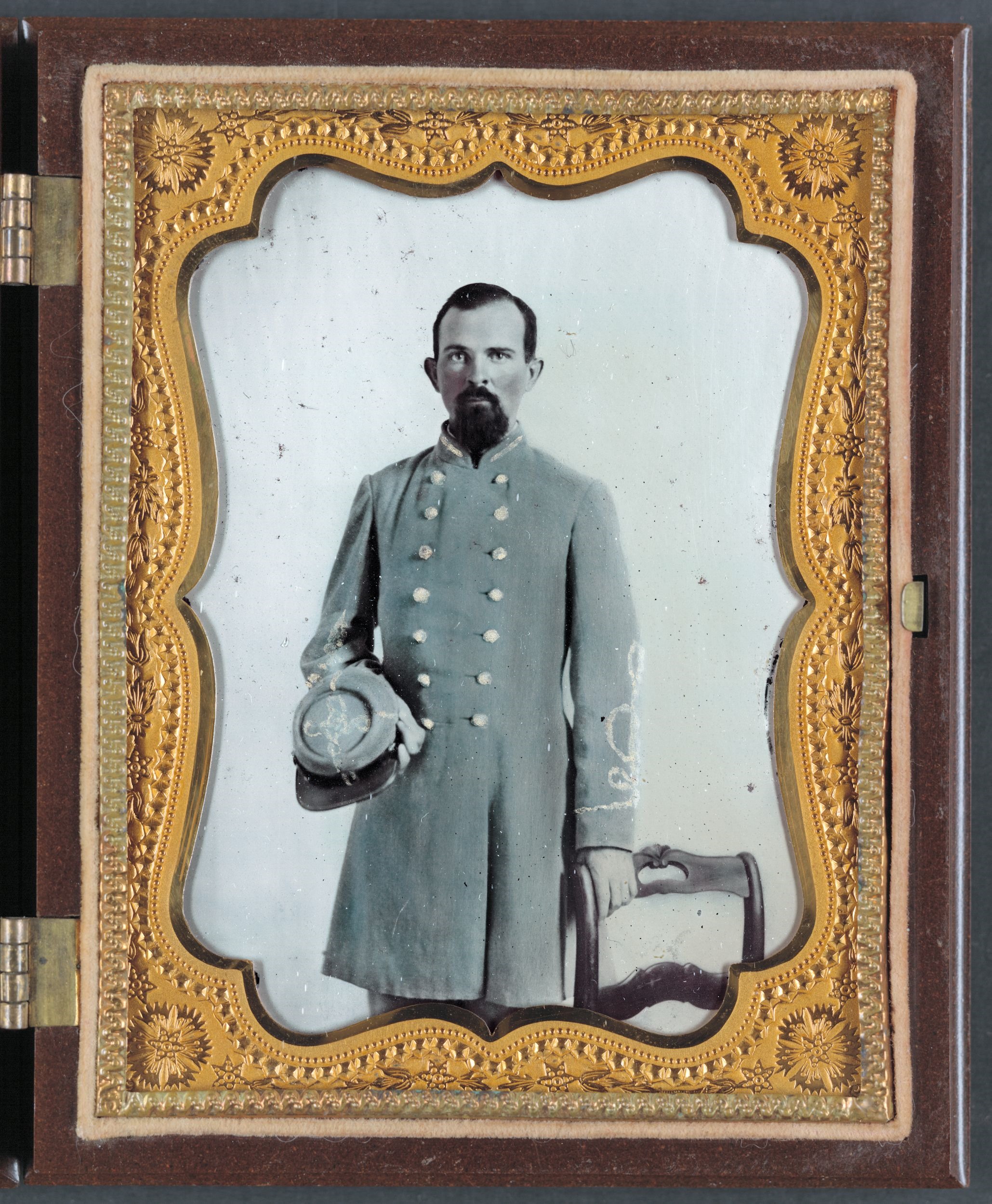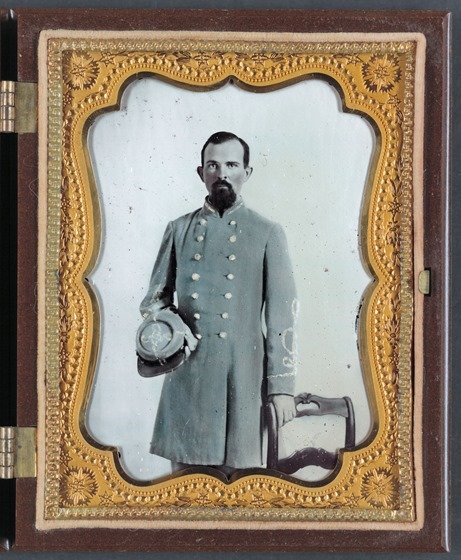
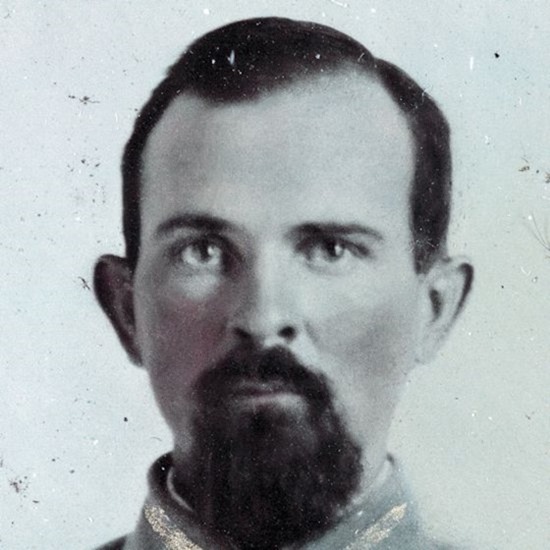
Unidentified officer in Confederate lieutenant’s uniform with kepi.
__________
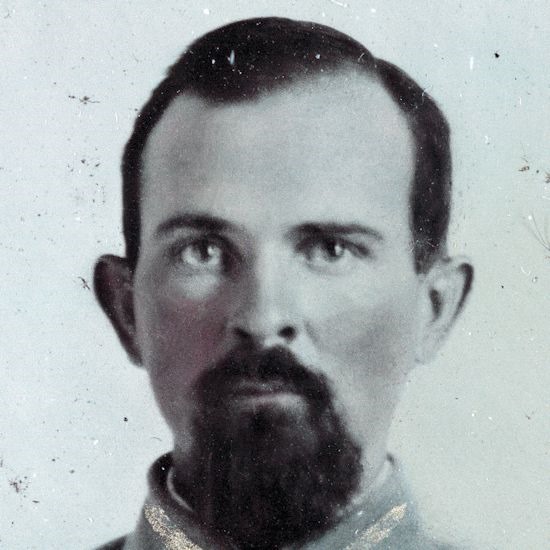
Close-up crop:
__________
quarter-plate ambrotype, hand-colored ; 12.3 x 10.1 cm (case)
Liljenquist Family Collection of Civil War Photographs; Ambrotype/Tintype photograph filing series; Library of Congress Prints and Photographs Division.
Record page for image is here.
__________
 Note – This image has been digitally adjusted for one or more of the following:
- fade correction,
- color, contrast, and/or saturation enhancement
- selected spot and/or scratch removal
- cropped for composition and/or to accentuate subject matter
- straighten image
Civil War Portrait 110
by John Beauchamp Jones
DECEMBER 1ST.—This morning the ground is frozen hard. There was no battle yesterday, only heavy skirmishing. Both armies were drawn up in line of battle, and the front lines slept on their arms. Some froze to death. This morning the enemy opened with artillery—but no battle ensued that we are aware of.
At the last accounts from Bragg he was still retiring, near Dalton. His army must be nearly broken up.
Bragg, it is rumored to-day, has been relieved.
December 1—The other corps is out to-day. The Yankees, as well as ourselves, are well fortified, and we are confronting one another.
December 1.—The army of the Potomac withdrew from before the works of the rebels on Mine Run, General Meade being convinced that they could not be taken without a great sacrifice of life. A soldier, writing from Kelleysville, on December fourth, gives the following account of the retrograde movement: “Since joining the regiment I have had very tough work, marching great distances in a short space of time, besides living on short rations. We crossed the Rapidan at Ely’s Ford, marching through the battle-field of Chancellorsville and the Wilderness, to within six miles of Orange Court-House, where we halted. Our impressions were, that we would reach Gordonsville before any serious opposition would be shown, but were mightily mistaken. The army skirmished with the rebels from the time we crossed the Rapidan until we halted, and through such a perfect wilderness as to be almost indescribable—the road, the only place where man or beast could walk, with both sides covered with dense woods, overrun with underbrush. So you can readily imagine what a place for troops to advance in line of battle, and manœuvre for instant action. Yet it was done, and with a hearty good will, for the impression animated the whole army we would give the rebels a sound whipping, as we were on their flank; but alas! they got wind of it, and formed a line of battle on the high ridge of hills on the opposite side of Mine Run. We would have cleared them out from there, but the whole of our army did not arrive in time. Night came on, and they improved the time by fortifying. When morning came, they had one of the most formidable works in view I ever saw. The creek, or run, was crammed with felled trees, to break our ranks when advancing in line, and then came immense breastworks with abattis in front, making it an impossibility to make a charge over. Yet that morning the whole line had orders to take off knapsacks and overcoats, and make the attack, or rather attempt it. When all was ready, and going on the advance, the order was countermanded, and with it came many light hearts, as we knew it was impossible to make any impression on what we saw before us, although we were willing to attempt it. We lay all that day, and the next until evening, when we picked up our traps, and made a splendid retrograde movement. To be sure, the army suffered a little in killed and wounded, but nothing in comparison to what it would have been if we had fought them. One of the men in my company was shot in the breast while skirmishing. We are now near Kelly’s Ford, and have arrived at the conclusion that General Meade acted wisely in not giving battle, for he would have been repulsed, and that would not do, when things looked so bright in the West”