Following the American Civil War Sesquicentennial with day by day writings of the time, currently 1863.

Wednesday, January 1, 2014

Diary And Memoranda, 1864

Fort Whipple, Jan. 7, 1864

This little book was obtained by the earnest wish of my Mother, who desired I should keep a record of events that transpire, during the new year we have just entered.

Lev.

Jan. 1st. A new year has commenced and before its close I hope peace may be restored to our country. And all be restored to their peaceful homes.

January 1, 1864.—General Hood’s an awful flatterer— I mean an awkward flatterer. I told him to praise my husband to some one else, not to me. He ought to praise me to somebody who would tell my husband, and then praise my husband to another person who would tell me. Man and wife are too much one person—to wave a compliment straight in the face of one about the other is not graceful.

One more year of Stonewall would have saved us. Chickamauga is the only battle we have gained since Stonewall died, and no results follow as usual. Stonewall was not so much as killed by a Yankee: he was shot by his own men; that is hard. General Lee can do no more than keep back Meade. "One of Meade’s armies, you mean," said I, ” for they have only to double on him when Lee whips one of them."

General Edward Johnston says he got Grant a place— esprit de corps, you know. He could not bear to see an old army man driving a wagon; that was when he found him out West, put out of the army for habitual drunkenness. He is their right man, a bull-headed Suwarrow. He don’t care a snap if men fall like the leaves fall; he fights to win, that chap does. He is not distracted by a thousand side issues; he does not see them. He is narrow and sure—sees only in a straight line. Like Louis Napoleon, from a battle in the gutter, he goes straight up. Yes, as with Lincoln, they have ceased to carp at him as a rough clown, no gentleman, etc. You never hear now of Lincoln’s nasty fun; only of his wisdom. Doesn’t take much soap and water to wash the hands that the rod of empire sway. They talked of Lincoln’s drunkenness, too. Now, since Vicksburg they have not a word to say against Grant’s habits. He has the disagreeable habit of not retreating before irresistible veterans. General Lee and Albert Sidney Johnston show blood and breeding. They are of the Bayard and Philip Sidney order of soldiers. Listen: if General Lee had had Grant’s resources he would have bagged the last Yankee, or have had them all safe back in Massachusetts. "You mean if he had not the weight of the negro question upon him?" "No, I mean if he had Grant’s unlimited allowance of the powers of war—men, money, ammunition, arms."

Mrs. Ould says Mrs. Lincoln found the gardener of the White House so nice, she would make him a major-general. Lincoln remarked to the secretary: "Well, the little woman must have her way sometimes.”

A word of the last night of the old year. "Gloria Mundi ” sent me a cup of strong, good coffee, I drank two cups and so I did not sleep a wink. Like a fool I passed my whole life in review, and bitter memories maddened me quite. Then came a happy thought. I mapped out a story of the war. The plot came to hand, for it was true. Johnny is the hero, a light dragoon and heavy swell. I will call it F. F.’s, for it is the F. F.’s both of South Carolina and Virginia. It is to be a war story, and the filling out of the skeleton was the best way to put myself to sleep.
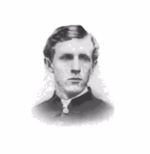
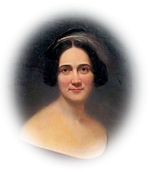
Larkinsville, Friday, Jan. 1, 1864. The new year came in very cold with a little snow, the first of the season. Ground frozen several inches in depth. Veteran enlistments began this morning. John Eagion headed the list and was followed by eighteen before breakfast, which continued rapidly through the day accompanied with considerable excitement and hesitation. Thus New Year’s day was spent, a striking contrast to those that our minds were continually turning to. A good supper for a soldier, of “chicken fixin” which helped to make us very contented during the long evening.

January 1, 1864, Friday. A bright day ushers in the year. Yesterday’s northeast storm has disappeared, and the clouds fell to the earth in heavy rain last night.

Went with my family to the Executive Mansion at 11 A.M. to pay our respects to the President. Foreign ministers and attaches were there. Navy and Army officers came in at half past eleven. The house was full when we left, a little before twelve.

Received at house until 4 P.M. Had official and friendly calls from Navy and Army officers, judges, foreign ministers, etc., etc., with such old friends of my own State as were in Washington, and not a few comparative strangers, who expressed warm personal and official regard.

January 1, 1864.—A bitter cold day. The sun is shining as brilliantly as if there never had been a cloud to vail its glory. I trust it is ominous of the coming year, and that the clouds overhanging our national horizon may soon vanish forever.


“The cause of truth and human weal,

O God above!

Transfer it from the sword’s appeal

To peace and love.”


Mr. Sparks, who suffered so much from his wound after walking about, has had his leg amputated. He seems a great deal better, and does not now suffer so much.

January 1, 1864. The army is comfortably quartered in log huts, and horse racing, games, etc., are under full headway. The rebel army still confronts us as defiantly as ever, and is securely entrenched on the other side of the Rapidan. Who would have dreamed in ’61, that those of us who started out to finish the war in the course of a three months’ service, would still be in the field three years afterwards, with the task still unaccomplished? Immense changes have occurred; in the meantime we have had a vast experience in war and are no longer enthusiastic boys, but veteran soldiers, taught in the best of all military schools, actual service, in campaigns that have had no equal in modern times.

Over one half of our original number has disappeared from the muster rolls; killed in action; died of wounds, of disease, of fatigue and exposure, or perhaps resigned, unable to stand the constant shock of arms. This old state of Virginia has become a vast cemetery, in which thousands of once bright and ambitious men belonging to the army of the Potomac now lie scattered in its shady nooks or somber woods, unmarked except by their bleaching bones and the accumulation of various parts of their accoutrements, which still lay rusting and rotting about them. Amongst the survivors, the excitement and enthusiasm of early days has long since passed away, but the resolve still remains, and until the work is done this army will never lay down its arms.

Our daily life seems natural enough to most of us, and fighting battles and campaigning the ordinary routine of life. There is not much talk of the end of the war, and yet we know it cannot be so far away; still these people have fought so well, made such extraordinary good use of their limited resources and prolonged the contest so unexpectedly that one is loth to express any opinion respecting the ultimate collapse. They will no doubt, fight to the death, in the last ditch, as they suggestively put it, and we shall have many more battles to fight, marches to make, and sacrifice of lives, before the end comes; but come it must, and this grand old army will surely one day parade to receive the submission of what is left of its great antagonist, then quietly disband never to meet again.

January 1, 1864. A new year is ushered in, but peace comes not with it. Scarcely a family but has given some of its members to the bloody war that is still decimating our nation. Oh, that its ravages may soon be stopped! Will another year find us among carnage and bloodshed? Shall we be a nation or shall we be annihilated? . . . The prices of everything are very high. Corn seven dollars a bushel, calico ten dollars a yard, salt sixty dollars a hundred, cotton from sixty to eighty cents a pound, everything in like ratio

by John Beauchamp Jones

            JANUARY 1ST, 1864.—A bright windy day, and not cold. The President has a reception to-day, and the City Councils have voted the hospitalities of the city to Brig.-Gen. J. H. Morgan, whose arrival is expected. If he comes, he will be the hero, and will have a larger crowd of admirers around him than the President. The Councils have also voted a sword to ex-Gov. Letcher, whose term of service ended yesterday. Gov. Wm. Smith—nicknamed Extra-Billy—is to be inaugurated to-day.

            Flour is now held at $150 per barrel. Capt. Warner has just sold me two bushels of meal at $5 per bushel; the price in market is $16 per bushel.

            I did not go to any of the receptions to-day; but remained at home, transplanting lettuce-plants, which have so far withstood the frost, and a couple of fig-bushes I bought yesterday. I am also breaking up some warm beds, for early vegetables, and spreading manure over my little garden: preparing for the siege and famine looked for in May and June, when the enemy encompasses the city. I bought some tripe and liver in the market at the low price of $1 per pound. Engaged to pay $250 hire for our servant this year.

Friday, 1st day of January, 1864—Received one pair of drawers from Miss Nannie Scott, two shirts from Mrs. House. One hundred and fifty of the prisoners start to-day for Strawberry Plains. We go to-morrow.

__________

Dodd was sentenced to death on or before January 5th. An extract from a letter by the general commanding and dated at Knoxville, Tenn., January 17, 1864, reads:

I also avail myself of this opportunity to forward an order publishing the proceedings, findings and sentence in the case of Private E. S. Dodd, Eighth Texas Confederate Cavalry, who was tr, condemned and executed as a spy.

‘I also inclose a copy of an order which I have found it necessary to issue, in regard to the wearing of the U. S. uniform by Confederate soldiers.”

__________

*Inclosure No. 7 (here omitted) contains General Orders, No. 3, Department of the Ohio, January 5, 1864, promulgating charges, findings and sentence to death in the case of E. S. Dodd, Eighth Texas Cavalry, arrested and tried as a spy.”

War of the Rebellion, Series III, Vol. 4, p. 53.

January l, 1864.

—A detachment of seventy-five men, composed of a proportionate number from each of four companies constituting Major Henry A. Cole’s Maryland cavalry battalion, on a scout in the vicinity of Harper’s Ferry, Maryland, were suddenly encountered, at a point near Rectortown, by a force of rebel cavalry, belonging to the brigade under the command of General Rosser. After fighting gallantly and until fifty-seven out of their number (seventy-five) were either killed or captured, the remaining eighteen made their way in safety to camp. Several of those who escaped found their feet frozen when they reached camp.

—Colonel William S. Hawkins, of the “Hawkins Scouts,” a leader in the scouting service of the rebel forces under General Bragg, was captured at the house of a Mr. Mayberry, on Lick Creek, Kentucky, by Sergeant Brewer, of Major Breathitt’s battalion of Kentucky cavalry.—At Memphis, Tennessee, the thermometer stood at ten degrees below zero, and at Cairo, Illinois, at sixteen degrees below. A number of soldiers were frozen to death at Island No. 10.—The Richmond Whig, in an article setting forth the condition of military and naval affairs at the South, concluded its remarks as follows: “Thus we find we have an army poorly clad, scantily fed, indifferently equipped, badly mounted, with insufficient trains, and with barely enough ammunition. To remedy the evil, we are going to double, and if possible, quadruple the number of men and horses, take away every efficient master from the agricultural districts, and leave the laborers, on whom both men and horses depend for existence, a prey to natural idleness, and with every inducement to revolt. If this be not judicial madness, the history of desperate measures adopted by feeble and affrighted councils does not present an example.”

—Andrew J. Hamilton, Military Governor of Texas, issued an able address to the citizens of that State, setting forth their duties to themselves and their government