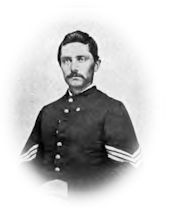
Thursday, 21st—All things quiet in camp and no news. The weather is pleasant, though a little frosty every night. The army could stand a long siege, for we have plenty of wood and the quartermaster has in storage a large supply of provisions. This is fine soldiering.
January 2014
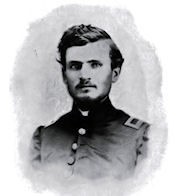
21st. It is astonishing how much the people of E. Tenn. have put up with, and how ignorant and coarse they are. Have seen but one young lady in Tenn. whose clothes have fitted her and who has acted the lady. 27 miles from Chattanooga. Great time at dinner at one Shoemakers—rebel. Guard there—impudent. Got into Chattanooga at 4 P. M. Good time with the Co. Rough night. Routed twice.
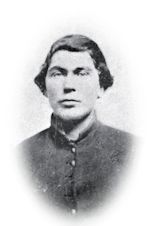
Huntsville, Thursday, Jan. 21. As ordered yesterday, the drill call sounded at 9 A. M. and we fell in. Lieutenant Clark drilled in infantry drill for half an hour, and then had the chief of platoon drill them until the recall was sounded. The same in the afternoon. Bather awkward at first, but it is easier to remember than learn.

Diary And Memoranda, 1864
Jan. 21st. Several of the non-commissioned officers have asked to be reduced to the ranks. Col. T. is issuing orders by the bushel, very unpopular at the present time. Have got to come out on parade in the future.
January 21st.
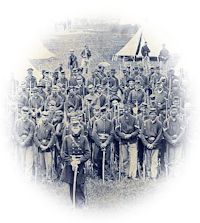
The tumult increases. Our forces have burned the bridge at Strawberry Plains and have fallen back to within six miles of Knoxville. The wagon train arrived here this morning—also the usual number of stragglers.
I said the wagon train arrived. I should have said the little that remains of it. It was mostly destroyed or left for the enemy. It is the general belief that Longstreet has been heavily re-enforced and is about to make a determined effort to regain possession of East Tennessee.

by John Beauchamp Jones
JANUARY 21ST.—Gen. Longstreet reports some small captures of the enemy’s detached foraging parties.
The prisoners here have now been six days without meat; and Capt. Warner has been ordered by the Quartermaster-General to purchase supplies for them, relying no longer on the Commissary-General.
Last night an attempt was made (by his servants, it is supposed) to burn the President’s mansion. It was discovered that fire had been kindled in the wood-pile in the basement. The smoke led to the discovery, else the family might have been consumed with the house. One or two of the servants have absconded.
At the sale of a Jew to-day an etegere brought $6000; a barrel of flour, $220; and meal, $25 per bushel. All else in proportion. He is a jeweler, and intends leaving the country. He will succeed, because he is rich.
Yesterday the House passed the Senate bill, adjourning Congress on the 18th of February, to meet again in April. Mr. Barksdale, the President’s organ in the House, moved a reconsideration, and it will probably be reconsidered and defeated, although it passed by two to one.
Major Griswold being required by resolution of the Legislature to give the origin of the passport office, came to me to-day to write it for him. I did so. There was no law for it.
January 21.—The advance of the cavalry belonging to the National forces, in their retreat from Strawberry Plains, Tenn., reached Sevierville. Skirmishing was kept up all day between the National troops on one side of the Holston River, and the enemy on the other. The latter had a battery on College Hill, near Strawberry Plains, from which he played on the Nationals, while crossing the river. Comparatively little damage was done, the Union loss being not over a half-dozen wounded.—The shelling of Charleston from Fort Putnam continued night and day, at intervals of ten minutes. One gun alone has fired over one thousand one hundred rounds, at an elevation of forty degrees.—On account of the scarcity of grain in the department of the Ohio, and the factitious value given to it by the manufacture of whiskey, the distillation of that commodity was forbidden by Major-General Foster.— Rear-Admiral Farragut, accompanied by his staff, arrived at New-Orleans.
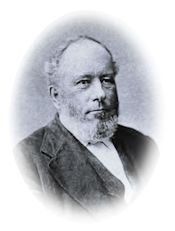
Jan. 20. Yesterday and today have been busy days at Camp Upton. The idea of going home as a regiment has found favor with the officers, and as this is the last day of grace they have been raising heaven and earth to get us to enlist. They have had us out on the parade ground using all their powers of persuasion and eloquence for enlistments, and have succeeded in enlisting nearly the whole regiment. I have reported these speeches and when I get them fixed up with all the necessary embellishments and illustrations, they will make an interesting chapter of literature.
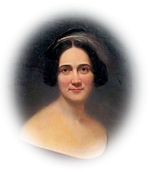
January 20th.—And now comes a grand announcement made by the Yankee Congress. They vote one million of men to be sent down here to free the prisoners whom they will not take in exchange. I actually thought they left all these Yankees here on our hands as part of their plan to starve us out. All Congressmen under fifty years of age are to leave politics and report for military duty or be conscripted. What enthusiasm there is in their councils! Confusion, rather, it seems to me! Mrs. Ould says “the men who frequent her house are more despondent now than ever since this thing began.”
Our Congress is so demoralized, so confused, so depressed. They have asked the President, whom they have so hated, so insulted, so crossed and opposed and thwarted in every way, to speak to them, and advise them what to do.
Wednesday, 20th—The Thirteenth Iowa was today sworn into the service for three years as a veteran regiment.


