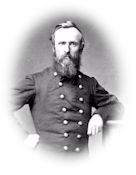
January 5, 1864. — Last day of bounties. Got about three hundred veterans. The Twenty-third may now be counted as a veteran regiment. Very absurd in Congress repealing bounties.
January 2014
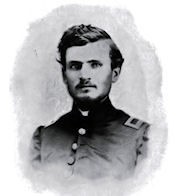
5th. Last day for re-enlistment. Most of the boys in favor. N. telegraphs that proposition has been accepted and regt. will be ordered home within fifteen days. Boys all excitement.
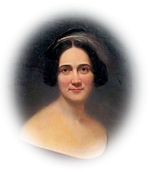
January 5th.—At Mrs. Preston’s, met the Light Brigade in battle array, ready to sally forth, conquering and to conquer. They would stand no nonsense from me about staying at home to translate a French play. Indeed, the plays that have been sent us are so indecent I scarcely know where a play is to be found that would do at all.
While at dinner the President’s carriage drove up with only General Hood. He sent up to ask in Maggie Howell’s name would I go with them? I tied up two partridges between plates with a serviette, for Buck, who is ill, and then went down. We picked up Mary Preston. It was Maggie ‘s drive; as the soldiers say, I was only on ”escort duty.” At the Prestons’, Major Venable met us at the door and took in the partridges to Buck. As we drove off Maggie said: “Major Venable is a Carolinian, I see.” “No; Virginian to the core.” “But, then, he was a professor in the South Carolina College before the war.” Mary Preston said: ”She is taking a fling at your weakness for all South Carolina.”
Came home and found my husband in a bitter mood. It has all gone wrong with our world. The loss of our private fortune the smallest part. He intimates, “with so much human misery filling the air, we might stay at home and think.” “And go mad?” said I. “Catch me at it! A yawning grave, with piles of red earth thrown on one side; that is the only future I ever see. You remember Emma Stockton? She and I were as blithe as birds that day at Mulberry. I came here the next day, and when I arrived a telegram said: ‘Emma Stockton found dead in her bed.’ It is awfully near, that thought. No, no. I will not stop and think of death always.”
January 5th, 1864.
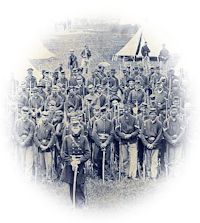
There are now thirty men in my ward. All but two are able to wait on themselves. There are six nurses to see them do it. It has not been so long, however. At first we had sixty of the worst cases in one room. When off duty, until day before yesterday, the nurses had to shirk for themselves, sleeping on the floor in the room with the sick. Now we have a room eighteen by twenty, and warmed by a stove. There is a large building adjoining the hospital assigned to convalescents. Each morning the surgeon examines them all and sends such as he deems able to do duty, to their regiments. These convalescents kept good fires, and I frequently went there to warm myself, when off duty. One morning the surgeon, a new arrival and a stranger to me, noticed me standing by the fire, and thought from my appearance I was fit for duty. “To what regiment do you belong?” “The Seventeenth Michigan, sir.” “How long have you been here?” “About six weeks.” “What are you doing?” “Nursing.” “Where?” “In the first ward.” “What business have you here, then?” “No business, only to warm myself. It is rather cold standing in the street today, when off duty.” “What, have the nurses no place to stay?” “No, sir; they are as poor as was the Son of Man; they have no place to lay their heads.”
This surgeon was Dr. Cogswell, of the Twenty-ninth Massachusetts, who had lately relieved Dr. Fox. In a few minutes I was notified this pleasant room was at our disposal.
Larkinsville, Tuesday, Jan. 5. Rain of yesterday ceased and it is a soft sunny day, everything calm and quiet in camp, it being the last day allowed for enlisting. But nobody goes forward. 12 M. assembly sounded and a telegraphic dispatch from the war department stating three-fourths of the actual number present would take the organization home, etc. If Captain Dillon would express his determination to command the Battery, a sufficient number would go in, to go home, as the boys would rather have him with all his faults, then ——, incompetent to command.
January 5, Tuesday. Congress reassembled after a fortnight’s vacation, or rather were to have assembled but there was not a quorum in either house. At the Cabinet council only a portion were present. The President in discussion narrated some stories, very apt, exhibiting wisdom and sense. He requested me to read an article in the North American Review, (An article by James Russell Lowell which was widely quoted.) just received, on the policy of the Administration, which he thought very excellent, except that it gave him over-much credit.

by John Beauchamp Jones
JANUARY 5TH.—Bright, pleasant day. I saw a letter from Gen. Elzey to-day, stating that his command will probably soon be called out from the city on important service. What can this mean? And our iron-clads are to go below the obstructions if they can get out.
Yesterday Mr. Good offered a resolution declaring the unalterable purpose of Congress to prosecute the war until independence is attained. What significance is in this? Why declare such a purpose at this day?
Mr. Benjamin, Gen. Myers, Col. Preston, and Mr. Seddon are to partake of a feast on Thursday. A feast in time of famine!
January 5.—The Fourth Virginia rebel cavalry surprised an infantry picket belonging to the army of the Potomac, at a point near Eldorado, Culpeper County, Virginia, and captured three of their number.
Monday, 4th—An order was issued by the War Department cancelling the previous order giving the large bounties to soldiers for re-enlisting, but it is not to go into effect until midnight of the 5th inst. Re-enlisting is going on at a lively rate. Company E today secured the necessary number entitling it to be a veteran company—the first one in the regiment, Company K being the second. General McPherson delivered a speech before the Iowa Brigade, expressing his desire that the entire Seventeenth Army Corps might become a corps of veterans, and I think there is no doubt but that it will.
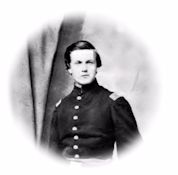
Seaford. Del., Jan. 4, 1864.
Dear Sister L.:—
We came by boat from Philadelphia to Wilmington. New Year’s day our whole detachment was feasted in the town hall at the same time with the First Delaware Volunteers, home on furlough. We had good times there.
On the 2d we came down on the cars to Seaford, one hundred and thirty-three miles south of Wilmington. I saw Governor Cannon in Wilmington and had quite a talk with him. He is enthusiastic on the subject of negro soldiers.
Arrived here at dark, found a man at the depot waiting, who offered us quarters in a negro church and a school house and all were comfortable.
Sunday morning I got my tents up from the cars and we pitched a camp in one of the most beautiful pine groves I ever saw. Our camp was thronged with visitors, and darkies who wanted to enlist. There are hundreds of them, mostly slaves, here now, anxiously waiting for the recruiting officer. The boys are singing—
Rally round the flag, boys, rally once again,
Shouting the battle cry of freedom.
Down with the traitor, up with the star, etc.
They sing with the heart, and the earnestness they put into the words is startling. Cool as I am I found myself getting excited as I heard their songs this afternoon and saw the electrifying effect on the crowds of slaves.
The officers here are lions. I am afraid I’m guilty of putting on a little style. Not with the men of the regiment, though. I was shaved by a woman this morning.


