Following the American Civil War Sesquicentennial with day by day writings of the time, currently 1863.

January 2014

January 25.—A body of rebels six hundred strong, attacked the National garrison of about one hundred, at Athens, Alabama, but were repulsed and routed after a fight of two hours. The Union loss was twenty; rebel loss more severe.—Gen. Rawlins’s Despatch,

—Brigadier-General Graham, by direction of Major-General Butler, went with three armed transports and a competent force, to the Peninsula, made a landing on the James River, seven miles below Fort Powhatan — known as the Brandon Farms, and captured twenty-two of the enemy, seven of the signal corps, and brought away ninety-nine negroes.

They also destroyed twenty-four thousand pounds of pork and large quantities of oats and corn, and captured a sloop and schooner, and two hundred and forty boxes of tobacco, and five Jews preparing to run the blockade, and returned without the loss of a man.—Gen. Butler’s Despatch.(Doc. 57.)

—Corinth, Miss., was evacuated by the National forces, and every thing of value in that section was transported to Memphis, Tenn.—The bombardment of Charleston, South-Carolina, continued. The Courier, published in that city, said: “This is the one hundred and ninety-fourth day of the siege. The damage being done is extraordinarily small in comparison with the number of shots and weight of metal fired, and that creates general astonishment The whizzing of shells overhead has become a matter of so little interest as to excite scarcely any attention from passers-by. We have heard of no casualties. Some of the shells have exploded, and pieces of the contents been picked up, which, on examination, have been found to be a number of small square slugs, held together by a composition of sulphur, and designed to scatter at the time of explosion.”

—The following special order was issued by General Butler, at Fortress Monroe: “That Mrs. Jennie Graves, of Norfolk, having a husband in the rebel States, and having taken the oath of allegiance on the second instant, as she says, to save her property; and also having declared her sympathies are with the South still, and that she hopes they will be successful, be sent through the lines and landed at City Point, so that she may be where her hopes and sympathies are.” —Major Burroughs, the guerrilla chief, was shot by the guard at Fortress Monroe, Va., while attempting to escape from the pest-house where he was under treatment for the small-pox.— Hospital buildings at Camp Winder, near Richmond, Va., were destroyed by fire.

Camp White, January 24, 1864.

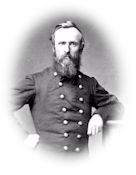
Dear Uncle: — The extension of the bounties and postponement of the draft will postpone my visit home a week or two. I shall not leave here probably before the second week in February.

We are all very well. It is very lonesome here now. All the Twenty-third company officers but four or five are at home, half of the men, besides a good many of all other organizations hereabouts. Recruiting seems to be progressing favorably. I trust we shall have stronger and more efficient armies in the field this spring than ever before. I think it likely that the Rebels with their unsparing conscription of young and old will for a time outnumber us again. But a few weeks’ campaigning will send to the rear the old men and boys in vast numbers.

I am growing anxious to see Birch and his mother talks of him constantly.

Sincerely,

R. B. Hayes.

S. Birchard.

Sunday, 24th—After company inspection this morning, I went to church down in the city; went again in the evening. They have regular church services and Sunday school every Sunday.

24th. At Nashville, 9 A. M. quartered at Seminary Barracks. H. Drake and I went to dinner at a restaurant. Saw colored troops drilled and inspected. Went about town. Some splendid residences. Randall quite sick with pleurisy.

January 24 — I was at preaching to-day at Ivy church, in the country about two miles west of camp. The church is of an antique appearance and almost in a thorough readiness for ruins, and is small, low, and built of hewn logs. The windows are very small, with paper as a substitute for glass, which tempers the light most too severely and renders the church rather dark and gloomy; the walls inside are papered with newspapers.

In striking contrast to the dim, shadowy light in the little church, brilliant strain after strain of burning eloquence flashed and flowed from the unassuming little pulpit, as the preacher delineated and depicted how the beauties of truth, the virtues of unfeigned charity, and the unswerving practice of right and justice shed a sweet, golden, and unfading radiance on the pathway of the truly righteous and those that are Christians indeed, in worthy acts and honest deportment. He preached from the fifth chapter and twentieth verse of second Corinthians.

Huntsville, Sunday, Jan. 24. My face much swollen yet and exceedingly painful. Was on guard, 1st relief. The weather was warm and I felt unwell, sick headache and aching limbs, but I stood my guard. Clothing inspection by Captain Dillon at 9 A. M. He was very particular, found much fault with the service-worn clothes in which we have marched through mud and rain, sleeping on the wet ground, etc. He seemed to have but little sympathy with his privates, but is determined they shall “look well”. Host of the boys attended meeting two or three times during the day.

Diary And Memoranda, 1864

Jan. 24th. Beautiful evening. Makes one think of home when he goes out to take a walk.

Sunday, January 24.—The Coweta House is now a ward in the Bragg Hospital for the accommodation of Florida troops. Mrs. Harrison and a friend of hers, Mrs. Harris, from Florida, are its matrons.

This morning Dr. Adams, an assistant surgeon, who is a deacon in the Episcopal Church, had prayers in one of the rooms. The service was attended mainly by refugees, as there has never been an Episcopal Church in this place. There is a Methodist, Baptist, and Presbyterian Church here. Dr. Gamble, Mrs. G., and Mrs. Harrison, are members of the Episcopal Church, and also some of the officers who are stationed at the post, and their families.

by John Beauchamp Jones

            JANUARY 24TH.—For some cause, we had no mail to-day. Fine, bright, and pleasant weather. Yesterday Mr. Lyons called up the bill for increased compensation to civil officers, and made an eloquent speech in favor of the measure. I believe it was referred to a special committee, and hope it may pass soon.

            It is said the tax bill under consideration in Congress will produce $500,000,000 revenue! If this be so, and compulsory funding be adopted, there will soon be no redundancy of paper money, and a magical change of values will take place. We who live on salaries may have better times than even the extortioners—who cannot inherit the kingdom of Heaven. And relief cannot come too soon: for we who have families are shabby enough in our raiment, and lean and lank in our persons. Nevertheless, we have health and never-failing appetites. Roasted potatoes and salt are eaten with a keen relish.

January 24.—A cavalry detachment from Fort Smith made successful scout into Polk County, Arkansas. They passed through Caddo Gap and found the notorious Captain Williamson, with forty men, posted within log houses. The advance, under Lieutenant Williams, charged into the village and attacked the rebels, killing Williamson and five of his men, wounding two, and taking two lieutenants and twenty-five men prisoners.

The Union loss was one killed; Lieutenant Williams and a private were slightly wounded. All the arms in the place were destroyed. The distance travelled was one hundred and seventy-two miles.