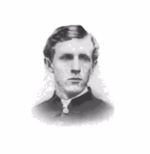
Diary And Memoranda, 1864
Feb. 15th. Our going to Texas is played out, the 2nd. Conn, is going. Got a pipe tonight drawn by a lottery ticket.
Feb. 15th. Our going to Texas is played out, the 2nd. Conn, is going. Got a pipe tonight drawn by a lottery ticket.
February:
Monday, 15th.—Raining very hard this morning. Singing at night; after singing had good deal of fun, two of the boys trying to see which could ruffle the other’s hair the most, and the fun began; soon the room was filled and everybody laughing; after awhile they remarked “laughing is catching,” and both of them caught and rubbed some other fellow’s head, and he, in turn, helped them. Somebody closed the door, and it wasn’t long till every one had been “initiated;” then the door was opened, and everybody was anxious to see what was the fun. As soon as they made their appearance, they were pulled and pushed in, and “initiated” also, and that was kept up probably one hour. They even went so far as to go and wake fellows out of their sleep and ask them to come and see what fun the boys were having down there. Many came and were immediately “initiated.”
February 15, Monday. Mr. Sedgwick on Friday wished a pass to visit Stover, the convict in Fort Lafayette, and would get from him statements that would open frauds and misdeeds upon the government. I disliked to give him such pass, and yet was not fully prepared to deny him, because he might be useful in aiding the Department to bring offenders to light. I therefore put him off with a suggestion that he might consult the marshal, and telegraph me if necessary. I gave a permit, however, to Colonel Olcott, and Baker, the detective. To-day Colonel Olcott telegraphs me that he visited Stover at Fort Lafayette, and found Sedgwick with him by permission of General Dix.
There is evidently a desire among the officials of the War Office to make difficulty, and no disposition to aid the Navy Department in ferreting out offenders. These committees in Congress are like them in many respects.
The movements of parties and partisans are becoming distinct. I think there are indications that Chase intends to press his pretensions as a candidate, and much of the Treasury machinery and the special agencies have that end in view. This is to be regretted. The whole effort is a forced one and can result in no good to himself, but may embarrass the Administration. The extreme radicals are turning their attention to him and also to Fremont. As between the two, Chase is incomparably the most capable and best, and yet I think less of his financial ability and the soundness of his political principles than I did. The President fears Chase, and he also respects him. He places a much higher estimate on the financial talents of Chase than I do, because, perhaps, we have been educated in different schools. The President, as a follower of Clay, and as a Whig, believes in expedients. I adhere to specie as the true standard of value. With the resources of the nation at his disposal, Chase has by his mental activity and schemes contrived to draw from the people their funds and credit in the prosecution of a war to which they willingly give their blood as well as their treasure.
Some late remarks in the Senate have a mischievous tendency, and there is no mistaking the fact that they have their origin in the Treasury Department. The Administration is arraigned as a departmental one in its management of affairs, and unfortunately the fact is so, owing chiefly to the influence of Seward. But Chase himself is not free from blame in this matter. He did not maintain, as he should have done, the importance of Cabinet consultations and decisions at the beginning, but cuddled first with Cameron, then with Stanton, but gained no strength. Latterly his indifference is more manifest than that of any other one, not excepting Stanton. This being the case, it does not become his special friends to assail the President on that score. Chase himself is in fault.
The President commenced his administration by yielding apparently almost everything to Seward, and Seward was opposed to Cabinet consultations. He made it a point to have daily or more frequent interviews with the President, and to ascertain from him everything that was being done in the several Departments. A different course was suggested and pressed by others, but Chase, who should, from his position and standing, have been foremost in the matter and who was most decidedly with us then, flinched and shirked the point. He was permitted to do with his own Department pretty much as he pleased, and this reconciled him to the Seward policy in a great degree, though he was sometimes restless and desired to be better informed, particularly in regard to what was doing in the War Department. Things, however, took such a course that the Administration became departmental, and the result was the President himself was less informed than he should have been and much less than he ardently craved to be, with either the War or the Treasury. The successive Generals-in-Chief he consulted constantly, as did Seward, and, the military measures being those of most absorbing interest, the President was constantly seeking and asking for information, not only at the Executive Mansion, but at their respective offices and headquarters. Scott, and McClellan, and Halleck, each influenced him more than they should have done, often in a wrong direction, for he better appreciated the public mind and more fully sympathized with it than any of his generals. Neither of the three military men named entered into the great political questions of the period with any cordiality, or in fact with any correct knowledge or right appreciation of them. Yet they controlled and directed military movements, and in some respects the policy of the government, far more than the Cabinet.
February _ _, 1864. —I have found out a good deal about Colonel Capers and all I hear makes me admire him the more. I will try to write this like history, my little Diary, and you must take care of it for future generations.
When Georgia seceded, Henry D. Capers was in command of the Marietta Military Institute. This was one of the best schools in the South. Many fine men had graduated there and some of the very best civil engineers in the Southern army had studied the profession at Marietta.
When the wise men of our country met at Montgomery, to organize a government, Henry D. Capers promptly offered his services, in any capacity where he could be useful. He was accepted and was made Chief Clerk and Disbursing Officer of the Confederate Treasury. Here he served until the spring of 1862, when he resigned, to enter active service in the field. The Treasury Department was loth to give him up and resolutions were drawn up expressing their regret at parting with one, who had proved himself so capable and trustworthy. A fine sword was presented to him by Secretary Memminger, bearing a suitable inscription (the Colonel is wearing this sword now). I intend to read that inscription some day if the fates are propitious.
The War Department made Henry D. Capers a captain in the regular army of the Confederacy and he joined General Magruder but for only a little while. Captain Capers was longing for “his boys,” who were so near his heart. When he left them they all volunteered for twelve months in the Confederate Army and became a part of the 1st Georgia Regiment. This Regiment was about to be disbanded at Augusta, Georgia, and, with a permit from the government, Captain Capers was on the spot, to organize the 12th Georgia Battalion. Can we not imagine his feelings, as one by one “his boys” were sworn in “For the war,” and he realized that they were once more in his keeping? These boys tell many interesting things about their Colonel and they all adore him.
This may not be exactly like history should be written but I will learn to write better as time goes on.
(This diary was written in pencil and in many instances the dates are almost, or quite, illegible. The month and year are plain but the figures are not so plain; particularly is this the case during the years of warfare, possibly the pencils were poor, or the paper might have been. At any rate we ask our readers to be lenient if some little mistakes occur.)by John Beauchamp Jones
FEBRUARY 15TH.—We have over forty of the escaped Federal officers. Nothing more from Gens. Wise and Finnegan. The enemy have retreated again on the Peninsula. It is said Meade’s army is falling back on Washington.
We have a snow storm to-day.
The President is unfortunate with his servants, as the following from the Dispatch would seem:
“Another of President Davis’s Negroes run away. — On Saturday night last the police were informed of the fact that Cornelius, a negro man in the employ of President Davis, had run away. Having received some clew of his whereabouts, they succeeded in finding him in a few hours after receiving the information of his escape, and lodged him in the upper station house. When caught, there was found on his person snack enough, consisting of cold chicken, ham, preserves, bread, etc., to last him for a long journey, and a large sum of money he had stolen from his master. Some time after being locked up, he called to the keeper of the prison to give him some water, and as that gentleman incautiously opened the door of his cell to wait on him, Cornelius knocked him down and again made his escape. Mr. Peter Everett, the only watchman present, put off after him; but before running many steps stumbled and fell, injuring himself severely.”
Sunday, 14th—We marched fifteen miles again today and went into camp for the night. The Seventeenth Corps also corralled their wagon train, leaving two brigades as a guard. There was some skirmishing in the front today, but we learn that the rebels have left Meridian without making any resistance, retiring to the south. Some of our men occupied the town late this evening. Things are marching along fine.
February 14.—Major Larmer, of the Fifth Pennsylvania reserve regiment, Acting Inspector-General on General Crawford’s staff, was shot dead in a skirmish with guerrillas about two miles east of Brentsville, Va. He was out with a scouting-party of some fifty men of the Thirteenth Pennsylvania cavalry, who, as they were crossing a bridge over Cedar Run, at the point above mentioned, were suddenly fired upon by a band of guerrillas concealed in a pine thicket a short distance off the road.
His men were driven back across the bridge, but there held their ground until assistance could be sent for from General Crawford’s division. Colonel Jackson, of the Eleventh Pennsylvania reserves, was then sent out with a portion of his regiment, and on his approach the rebels fled. The men then recrossed the bridge to the point where they had been driven back, and brought away the body of Major Larmer, which had been left in the hands of the rebels. The Nationals lost in the skirmish, besides Major Larmer, three cavalrymen killed and one wounded, and two prisoners.
—Gainesville, Florida, was captured by the United States troops under Captain George E. Marshall, of the Fortieth Massachusetts infantry, and held for fifty-six hours against several attacks of the rebels double his own number. A large quantity of rebel stores were distributed among the people of the town, after which Captain Marshall successfully evacuated the place.— (Doc. 87.)
—It appearing that large numbers of men qualified for military duty were preparing to leave Idaho for the far West, for the purpose of evading the draft ordered by the President of the United States, Governor W. M Stone, of that territory, issued a proclamation, announcing that no person would be permitted to depart in that direction without a proper pass, and that passes would be granted to those only who would make satisfactory proof that they were leaving the State for a temporary purpose, and of their intention to return on or before the day of drafting, March tenth.
—Thomas H. Watts, Governor of Alabama, issued the following communication to the people of Mobile:
“Your city is about to be attacked by the enemy. Mobile must be defended at every hazard and to the last extremity. To do this effectively, all who cannot fight must leave the city. The brave defenders of the city can fight with more energy and enthusiasm when they feel assured that the noble women and children are out of danger.
“I appeal to the patriotic non-combatants to leave for the interior. The people of the interior towns, and the planters in the country, will receive and provide support for all who go. The patriots of this city will see the importance and necessity of heeding this call.
“Those who love this city and the glorious cause in which we fight, will not hesitate to obey the calls which patriotism makes.”[1]
[1] General Dabney H. Maury, in command at Mobile, on the thirteenth despatched the following letter to K. H. Slough, the Mayor of that city:
“My Dear Sir: I see but little disposition on the part of noncombatants to leave Mobile. Please use every means in your power to induce them to do so without delay.
“The Governor of Alabama assures me that he will take measures to secure to the people an asylum in the upper region of country bordering the river above here. I cannot believe that the kind and hospitable people of Mobile, who have for years been opening their homes to the homeless refugees from other parts of the Confederacy, will fail to receive a really welcome and kind protection during the attack on their homes.
“Patriotism demands that they leave the city for a while to those who can defend it. Prudence urges that they make no unnecessary delay in going.
“I will assist you here with transportation. The Governor says he will make proper arrangements for their reception and entertainment above.”
9th, 10th, 11th, 12th, 13th and 14th spent getting mustered and rolls completed. 8th boys paid off and furloughed Saturday. Most of the regt. already in city. Work on company papers.
Huntsville, Sunday, Feb. 14. Raining heavily most of the day. Clothing inspection at 8 A. M. by Lieutenant Simpson, with the reading of Sunday orders. Weather prevented our attending church. 3 P. M. two agents of the Chirstian Enquirer and Covenant. 3 P. M. two agents of the Christian Commission held divine services under the tree in front of the tent to the members of the 6th and 12th Batteries. The afternoon was disagreeable but a large crowd turned out to listen. Preached from the parable of the Sower, and advanced ideas that to me were inconsistent and offensive.
Feb. 14th. Took a walk today and visited Forts Craig and Albany, also hospital and saw Geo. Frye [cousin]; he has had a rough time of it.
 Follow on facebook
 RSS
RSS email
email