
9th. Read in “Queen Mab,” by Julia Kavanagh. Shoeing horses as rapidly as possible. A very sultry, oppressive day. A few drops of rain. Turned in to Capt. Viall 3 contraband mules temporarily. Hired David Brooks.
June 2014
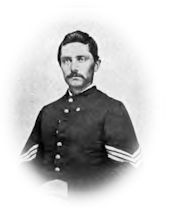
Thursday, 9th—The weather is fine—warm and pleasant. Our corps remained quiet and in its position all day. But orders have been given for the whole army to move forward in the morning. We commenced drawing full rations again today. I went out on picket this evening.
General Sherman is in command of all of our forces, with General Thomas in command of the right wing, General Hooker of the center, and General McPherson of the left. We have a large force of cavalry on each of the flanks. The country about Atlanta being so hilly and rough, it is exceedingly difficult to advance in front of the rebels, they having by far the better position.[1] They have a great deal better chance to kill our men than we have to kill them.
[1] Sherman’s plan was to get up as close as possible to the Confederates’ works, build forts and rifle pits, and then move our right around their left, or our left around their right, thus flanking them and threatening their rear. By that means they would be compelled to evacuate their strong works without having the opportunity of fighting from behind them.—A. G. D.
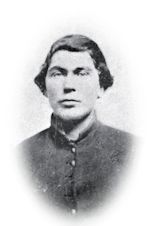
Huntsville, Thursday, June 9. Detailed to go after clothing this morning. Returned by 11 A. M. Clothing issued in afternoon. Still showery and cloudy. As seen by general order, General Logan is assigned to the command of all the railroad line from Nashville to Stevenson, which relieves Smith from his line.
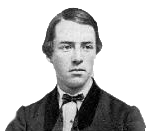
Headquarters 56th Mass. Vol., June 9, 1864.
Dear Father, — We have enjoyed a rest of a couple of days, which is doing our men a vast amount of good. We are all of us completely worn out, both in body and mind. We have now been over 37 days marching and fighting.
From what I can see, I do not think that we shall be in Richmond in much under two months. The papers give too rose-colored a view of matters, and I am afraid that they have raised public expectation too high. We are blocked here for the present, having butted against Lee’s fortifications in vain. I do not feel discouraged about it, as I feel quite confident of ultimate, but not of immediate success. I expect daily to see the whole army start for the James River. When once there, inside our fortifications, we can afford to dig and wait. Here, in our present position, I am afraid that delay is dangerous, for Lee will use some such plan as he did against McClellan. We number probably more men than he does, but they are not the Army of the Potomac, which is pretty well used up. They consist of heavy artillery, dismounted cavalry, etc., of whose fighting qualities I have my doubt. If we only reach James River safely, we can wait for Hunter’s forces, or for Crook’s, or even a portion of Sherman’s, should he demolish Johnston.
Our baggage and commissary stores have all been sent to White House. Possibly this corps may be sent round by water to James River. I hope it will, as it would be a most delightful rest for us all.
Will you please send me $2 worth of postage stamps, and also enclose twenty-five dollars to me, sending it in different letters by ten and fives at a time. I am entirely out of funds, as we have not been paid for almost seven months.
I am gradually rooting out my bad officers, and filling up their places with tried men. The last few weeks have proved a man’s courage and worth pretty effectually. I shall promote some of the sergeants who behaved very bravely.
General Crittenden has been relieved at his own request. He was the ranking major general of the army, with the exception of Burnside and Grant, and felt, quite naturally, unpleasantly at having only a small division under him. I find that he is quite a friend of Uncle Oliver’s. He is a fine man, and I am very sorry that he has gone. He went off quite unexpectedly, and I did not know it until he had gone. He told Charlie Mills that he wished to see me very much before he went. I think that he received a letter from Uncle Oliver about me just before he left. I know that he thought quite highly of me.
I have just received a pair of colonel’s shoulder-straps from Palmer and Batchelder’s. I am very much obliged to the person who sent them to me.
Thursday, June 9. — Saw John Jones to-day. He is going back to his regiment. They are with Butler at present. (Got my bundles from Alice.) Day pleasant. Ladd was here to-day, and also General Ledlie.
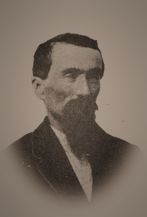
June 9 — The Yankee cavalry disappeared from our front yesterday and it seems they have gone in force on an extensive raid toward the Blue Ridge. I suppose they are trying to nose around to our rear and go into the railroad-destroying business, or perhaps they intend to perpetrate some other devilment that would be more damaging to Dixie than railroad cutting. But whatever they intend to do they had better do quickly, for General Hampton with a good force of cavalry is after the raiders in hot pursuit, and when he strikes a warm trail there is generally some blood left in the track and some game bagged. This morning at daylight we left camp on a forced march westward, to aid the Yankee raiders in finding something. We marched out on the Brook turnpike to the Yellow Tavern; there we took the Telegraph road and moved on it to within about two miles of Hanover Junction; then we left the Telegraph road and marched in the direction of Louisa Court House. Early in the day we forded the Chickahominy and South Anna, both crossed by the Telegraph road. After we struck out in the direction of Louisa Court House we crossed the head of Deep River and struck the Central Railroad at Hewletts just at sunset; we halted there and fed our horses, after which we renewed our march up the railroad and marched to Beaver Dam Station, where we arrived little before midnight and camped. We had a little shower of rain to march by just after dark this evening.

Diary And Memoranda, 1864
June 9th. Arrived at White House and started for the Army; went ten miles and stopped for the night.
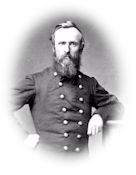
Staunton, Virginia, June 9, 1864.
Dearest: — I wrote you yesterday a letter which if it reaches you at all, will be some days in advance of this. I send this by the men whose term of service has expired and who go to “America” in charge of prisoners captured a few days ago by General Hunter at the battle of Piedmont or “New Hope.”
All operations in this quarter have been very successful. We reached here yesterday morning after an exciting and delightful march of nine days from Meadow Bluff. . . .
The men not enlisting (one hundred and sixty) with nine officers left our camp this morning to start tomorrow in charge of Colonel Moore. The hand played “Home, Sweet Home.” The officers who leave are Captains Canby, Rice, Stevens, Sperry, and Hood; First Lieutenants Stephens, Chamberlain, Smith’, Jackson, and Hicks. We have left seven full companies and twelve good officers. The old flags go to Columbus to the governor by the color-bearer. We shall quite certainly get more men from the Twelfth in a couple of weeks than we now lose.
I send Carrington with the little sorrel to sell or leave with Uncle Moses if he fails to sell him, and Uncle Moses can do what he pleases with him.
I send a pistol captured at Blacksburg from Lieutenant Colonel Linkus, Thirty-sixth Virginia, Rebel. Also pencil memorandum of no account. Preserve the handbill showing Lee’s appeal to the people of this (Augusta) county.
I have just visited the very extensive hospitals here. They are filled with patients, two-thirds Secesh, one-third our men. Nothing could be finer. In a fine building (Deaf and Dumb Asylum), in a beautiful grove — gas and hydrants — shade, air, etc. The Secesh were friendly and polite; not the slightest bitterness or unkindness between the two sorts. If I am to be left in hospital this is the spot.
Direct to “Second Infantry Division (or General Crook’s Division), Department West Virginia, via Martinsburg.”
Love to all. — Affectionately ever,
R.
Mrs. Hayes.
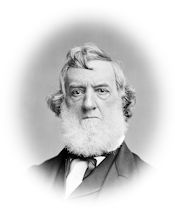
June 9, Thursday. There seems to be general satisfaction with the nominations made at Baltimore, and with the resolutions adopted. Except the nomination for Vice-President, the whole proceedings were a matter of course. It was the wish of Seward that Hamlin should again be the Vice, and the President himself was inclined to the same policy, though personally his choice is Johnson. This, I think, was the current Administration opinion, though with no particular zeal or feeling. Blair inclined to the policy of taking Hamlin, though partial to Johnson. I took no part and could not well take any. Yet to-day from several quarters it is said to me that Connecticut overthrew Hamlin, and that it was my doings which led to it. While this is not correct, I am nowise disposed to be dissatisfied with the change that has been made.
Concluded to retire the marine officers who are past the legal age, and to bring in Zeilin as Commandant of the Corps. There seems no alternative. . . .
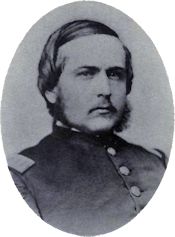
Thursday, June 9th.
After being out all night “the Sheriff” was relieved and reported at camp about 8 o’clock this morning. All was quiet along the lines to-day, and an extra ration of pork, beans and cabbage was issued to the men by the Sanitary Commission, which was most gratefully received. The provisioning of an army is no small matter, but it does seem as if better food, or at least more of it, could be supplied by the department in charge. Sometimes our men have had practically nothing to eat for twenty-four hours, and I have actually seen them pick up ribs and other very stale bones left where cattle have been slaughtered, and roast them in their little coffee-boiling fires and gnaw them as they resumed the march. It was no very unusual thing to see hardtack crackers bought by the men from each other at twenty-five cents apiece, and I have known a man whose pay was $13 per month to offer a dollar for one.
For the first time since May 4th my satchel was brought to me to-day, and I was able to indulge in the luxury of a comparatively clean shirt and suit of underclothing, but that exhausts my wardrobe, for the garments removed were so ragged and infested with “gray-backs” that I burned them all at once, trusting to luck some time to run across a Quartermaster’s train.
Notwithstanding the rough experiences which the war entails, there are occasional incidents which save us from altogether losing confidence in human nature. For instance, to-day at a point where the picket lines were not more than fifteen yards apart, the men on these lines agreed not to fire upon each other and at once got out of their burrows, exchanged papers, traded knives, tobacco and coffee and discussed politics, it being generally agreed among them that if a few men on both sides who stayed at home were hung, matters could be easily arranged. So many men got together that the rebel officers, fearing demoralization, ordered the firing to commence again, and the “Johnnies” sung out, “get into your holes, Yanks, we are going to fire,” and when the incredulous “Yanks” moved very deliberately, the “Johnnies” actually fired over their heads to give them time to hide. Our pickets often hear those on the other side discussing the advisability of coming into our lines and surrendering in the night time, and every night some of them come in, and yet when it comes to fighting, one would not suppose that any of them had the faintest idea of surrendering. It is currently reported that each side is driving mines under the field-works of the other, and that pretty soon somebody will be blown up, but no one seems to have any definite information on the subject. Lieut. Vanderpoel reported for duty with my company, I having had but one lieutenant since Lieut. Clark was detailed to Co. E.


