6th. During the morning the corps fell back to “Old Church Tavern,” near Newcastle on the Pamunkey to rest men and recruit horses. I went on to the train to see about forage, etc. Took supper with the boys. Like Capt. Viall very much. A very pleasant man but of little principle, I guess. Tom came back with me. He returned to company.
June 2014
Monday, 6th—It is quite warm. We started early this morning, and crossing the Coosa river on a pontoon bridge, passed through Rome for Kingston, about fourteen miles distant. We arrived at Kingston about 4 o’clock in the afternoon and went into camp. Kingston is on the railroad running from Chattanooga to Atlanta. Our forces routed the rebels from here about ten days ago. A large force of our men is stationed here. There is no news from the front. We are still in mountainous country, but there are some very nice farms in the valley with fine dwelling houses.
June 6, 1864.
I will try and send you this to-day. Our postmaster never calls for letters, though we could send them if he would. I will try hereafter to send oftener, though you must not feel anxious about me. I will take the best care I can of myself (and do my whole duty). I yet think that to be connected with such a campaign as this is well worth risking one’s life for. It occasionally gets a little old, but so does everything in this life, and altogether I don’t know but that it wears as well as any of life’s pleasures. Do you remember when I was at home how little I knew about good eatables? Here it is a great advantage to me. For five weeks we have been living on “hard tack,” pickled pork and coffee, varied by not half a dozen meals of beef, not even beans or rice. Nearly every one grumbles, but I have as yet felt no loss of appetite, and hardly the desire for a change.
Nearly all the prisoners we capture say they are done fighting and shamefully say, many of them, that if exchanged and put back in the ranks they will shirk rather than fight. It would mortify me very much if I thought any of our men that they captured would talk so. It seems to me that the Confederacy is only held together by its officers exercising at least the power of a Czar, and that should we leave it to itself it would crumble. Well, I am calculating that this campaign will end about the 15th of July, in Atlanta. I cannot hope for a leave of absence again until my time is out, unless I resign, and if active campaigning continues, as some think it will, until the war is over, of course I will have no chance to do the latter. Cousin James is near me here, and I expect to see him soon.
Passed Charlie Maple on the road yesterday; also saw Clegget Birney. He is a splendid looking boy. They say the 7th Cavalry will soon be here; also the 8th Illinois. I will try to write you every week hereafter.
One mile South of Ackworth, June 16, 1864.1
We moved through town and arrived here this p.m. Ackworth is a nice little town. All the “ton” have moved south.
We will lay here two days, and then for Atlanta again. I was out of provisions all day yesterday, and when I got a supply last night filled up to suffocation, but feel splendidly to-day. They credit a prisoner with saying that Sherman will never go to hell, for he’ll flank the devil and make heaven in spite of all the guards. The army is in glorious spirits. I hope the next time to date from Atlanta, but can hardly hope that for three weeks yet.
__________
1 Dated wrong in book; should be June 6, 1864.
Huntsville, Monday, June 6. Very warm day. Went out drilling in the morning. Lieutenant Clark maneuvered us in the streets, coming into battery on the square, crowding citizens, and making ourselves generally ridiculous. 80th Ohio returned to Scottsboro.
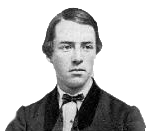
In the field, near Cold Harbor, June 6, 1864.
Dear Hannah, — . . . I am thankful to say that so far I have escaped both shell, bullet and sickness, although the campaign has been by far the most severe that I have ever undergone. Our food has consisted of hardtack and beef, when we could get it, with occasional variations of salt pork. Yesterday, though, my boy foraged some green peas, and I had a regular feast, I can tell you. Our shelter has generally been the “broad canopy of heaven” through all weathers, although I have been able occasionally to indulge in a tent fly. How you would laugh at home to see how dirty, brown and ragged we are. I had to go without a change of clothing for over twenty days, and during that time was unable to take my clothes off, even.
I have had three as narrow escapes as I ever wish to have. The last one was three or four days ago, when a 12-pounder shell that had not exploded, passed close by me, grazing my coat cape.
Everything looks as if we had settled down to a regular siege of Richmond. We shall probably have any amount of digging to do and, I hope, some rest. We can’t get hold of our wagons though, which makes it very inconvenient.
I suppose you know that I am commissioned as colonel, Raish as lieutenant colonel and Captain Putnam as major. I am afraid that I cannot get mustered as colonel, as I have not enough men. . . .
June 6. — We strengthened our rifle-pits, throwing up traverses, etc. In the afternoon the enemy shelled us, and pushed Potter quite strongly. We were under orders to move to his assistance if needed. Had a slight thundershower.
Diary And Memoranda, 1864
June 6th. Went over to Fort Albany and found some of the boys.
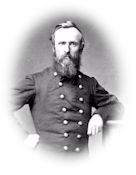
Monday, June 6. — From one mile east of Goshen to two miles west of Craig [Craigsville] on Central Railroad, six miles — 10 A. M. to 1 P. M. Still halted, destroying Central Railroad. A big squad of men turn it over, rails and ties, and tumble it down the embankment; burn culverts and ties as far as possible. The railroad can be destroyed by troops marching parallel to it very fast. Easier to destroy than to build up, as our Rebel friends are learning to their cost. Camped in a big thunder-shower, all wet as drowned rats. Slept well.
23rd. Moved on the R. R. destroying as we went till noon, when we got dinner. 12 miles from Burkesville a rebel force under W. H. Lee as reported of about 2000 cavalry got between Kautz and Wilson. Fight commenced immediately and lasted till dark— our brigade in rear. Drove the rebs at dark in a charge—our regt. on picket and in support of a battery. Got a good night’s rest. Pickets firing all the time.
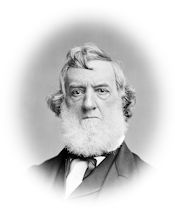
June 6, Monday. Am urged to go to Baltimore but do not deem it advisable. Some talk with Blair respecting Chase and Seward, who, though not assimilating and unlike in many respects, continue to get along. Each has a policy which seems to me unsound, and Blair coincides with me, but is so intent on other matters, personal to the Blairs and the vindictive war upon them, that he is compelled to defer the differences on grave questions to what so nearly concerns him.
I am uncomfortable about the extradition, or rather the abduction, of Arguellis, the Spaniard. The act shocks me, and the Administration will justly be held accountable. Some of us who know nothing on the subject will have to share the responsibility. I knew nothing of the subject, nor that there was such a man, until after the wrong had been committed and the man was on his way to Cuba. Marshal Murray then informed me, and said he was here to escape the grand jury. A few days after the subject was alluded to in the Cabinet. Seward introduced it incidentally, partly as a feeler and partly to affirm hereafter that the subject had been mentioned. A few words passed between him and the President. As no one said a word by way of comment, I inquired if there was not a law in New York against abduction? Seward claimed there was no law prohibiting the extradition, – that we might do it or not. It was an act of comity merely; Spain could not demand it, etc., etc. It was in answer to these remarks that I put the inquiry. I saw it grated, and when I further remarked if there was no treaty or law for it. I should doubt the propriety of acting, I saw I was making discord, and the subject dropped. The arrest is an arbitrary and unauthorized exercise of power by the Secretary of State.


