20th. All quiet with the pickets. Played some at chess. Read papers and “Othello.” Wrote to Ella Clark.
July 2014
July 20th. Called up early, this hot, muggy morning. The 6th Corps early on the move. Watching them cross the Shenandoah River at Snicker’s Ford. No enemy in sight. We follow on after the 6th Corps. As we wade the river I think it was never known to rain harder. We were soaked from head to foot. Crossing the river we filed to the right, going down the river into camp on the battlefield of the 18th, two days before. Looking over the field we were surprised to see that the enemy had not decently buried our dead who fell into their hands. Our boys gave them a decent burial.
Camp in the woods that were occupied by the enemy during the battle. Raining very hard. We build a large campfire which helps to keep us more comfortable during the night.
Hospital Life.
July 20. Thus far I have been unable to discover any .charms in hospital life. With fair health the active camp is far preferable. This hospital is divided into three departments. The first is the officers’ ward, the second is the hospital for the wounded and very sick, and the third is the convalescent camp. The first two are in large hospital tents and are furnished with cots, mattresses and other necessary conveniences. In the third are more than 600 men, quartered under shelter tents. I am in this department. It is not supposed that there are any sick men here. They are all either dead beats or afflicted with laziness, and a draft is made from among them twice a week for the front. I had been here only four days when I was drawn, but Garland of company C, who is an attache at Doctor Sadler’s office, saw my name on the roll and scratched it off. Although there are none here supposed to be sick, there seems to be a singular fatality among them as we furnish about as large a quota every day for the little cemetery out here as they do from the sick hospital. But then in a population of 600 or more, three or four deaths a day is not surprising. I have been here three weeks and have been drafted four times, but with my friend Garland’s help I have escaped. 1 should be pleased to be back with the boys if I was only half well, but I reckon I shall not be troubled with any more drafts. Doctor Hoyt sent a man back the other day. The next morning he was sent up with a sharp note to Doctor Sadler, saying that he didn’t send men to the hospital that were lit for duty and didn’t want them sent back until they were. That roused Doctor Sadler’s ire, and he says when Hoyt wants Irishmen he can send for them.
Doctor Sadler has the whole charge of the convalescent camp, and has several young fellows, assistant surgeons so called, on his staff. Some of these fellows I should think had been nothing more than druggists’ clerks at home, but by some hook .or crook have been commissioned assistant surgeons and sent out here. Every morning all who are able in all the ten wards go up to be examined and prescribed for by these new fledged doctors, and those not able to go seldom receive any medical attendance, but it is just as well and perhaps better that they do not go, as the skill of these young doctors is exceedingly limited. Doctor Sadler is a fine man and a skilful surgeon. He comes around occasionally, visiting those who are not able to go out and prescribes for them, and for a day or two afterwards the assistants will attend to those cases. These assistants make the examinations and draft the men for the front, after which they are again examined by Doctor Sadler and frequently a number of them will not be accepted, and the assistants oftentimes need not feel very much flattered by some remarks of the doctor.
This convalescent camp holds its own in spite of all the drafts made on it. Recruits arrive daily and the drafts are made twice a week, sending back 50 or 100 at each draft. When a draft is made one of the assistants comes into a ward and orders it turned out, and every man not down sick abed turns out. The ward-master forms them in single rank and the inspection begins. They commence on the right and go through the ward, making the same examinations and asking the same questions of every man in the ward. They feel the pulse and look at the tongue, and if those are right they are booked for the front. They remind me of horse jockeys at Brighton, examining horses. Some of the boys who are well enough but are in no hurry to go back, chew wild cherry or oak bark to fur their tongues and are thus exempted until Doctor Sadler gets hold of them, when they have to go. We get some recruits from the other hospital, for as soon as a sick or wounded man there is declared convalescent he is sent here.
A good joke occurred one morning when one of them was drafted for the front. He had been slightly wounded in the leg and was getting around with a crutch. When his ward was ordered out for draft he fell in with the rest, and the doctor, not noticing the crutch, but finding his pulse and tongue all right, marked him as able-bodied. When Sadler inspected them, he said to this fellow: “What are you here for?” “Going to the front, I suppose; there is where I am ticketed for.” Sadler laughed, and said: “I’ll excuse you.” Then turning to his assistant, remarked: “We are not yet so hard up for men as to want three-legged ones.” That assistant looked as though he wished he was at home under his mother’s best bed.
This whole hospital is under the management of a Doctor Fowler, and as far as I am able to judge is well and skilfully managed. The cuisine is excellent and far better than could be expected in a place like this. The hospital fund as fast as it accrues is expended for vegetables, fruits, milk, butter, cheese, preserves and many other things which the government is not supposed to furnish. The kitchen is in two departments, one where are cooked and served out the meats, soups, vegetables and other food for the convalescent. In the other are cooked the roasts, steaks, broths, beef tea and all kinds of light diet for the officers’ ward and the sick and wounded department. The light diet is presided over by an angel of mercy in the person of a Miss Dame who is the hospital matron.
July 20, 1864.
Assembly has just sounded. In a few hours we will know if it is to be a fight. Frank says we are detailed for train guard. If the army marches right into Atlanta, I’ll think it d—d mean, but if there is a fight will not feel so badly, unless we can get a big battle out of Johnston. I want to help in that. We have moved up near the town the army has gone on. Can hear heavy guns occasionally, sounds about three miles away, half the distance to the city.
This little town is quite an old place. About half the citizens are still here. I saw a couple of right pretty girls. Some Confederate prisoners tell me that Johnston is gone to Richmond, and that Hood is commanding and intends to fight us at Atlanta.
The wheat and oats raised this year in this part of Georgia, if it had all been saved, would not more than have fed the citizens. Full one-half the cornfields will not turn out anything.
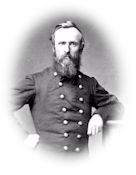
Harpers Ferry, July 20, 1864.
Dearest: — I am here with my brigade, merely to get ammunition and grub. Have been fighting and marching three days; lost only three killed and twelve wounded. Shall remain all day. All well. My boil does me no harm, but it is an awful hole. Doctor well. Can’t give you much news. I am on a scout after Crook who is lost to the bureau! It is very funny. He has caught some Rebels and many wagons, I know, and I think he has got a good victory, but I don’t yet know. . . .
In our hunt we have had hard marching and plenty of fighting of a poor sort. Rebel cavalry is very active and efficient, but it don’t fight. Our losses are ridiculously small for so much noise. . . .
Affectionately,
R
Mrs. Hayes.
[The Diary for the last few months of 1864 is for the most part hardly more than a line a day, entered in a pocket memorandum book, “The Southern Almanac for 1864,” which Hayes’s orderly, William Crump, had got hold of at Middlebrook, Virginia, early in June. Many of the entries were originally made with a pencil and subsequently inked over. Usually the entries give only a bald statement of the movement of the day. In some cases entries are omitted here entirely; in other cases several are combined in a single paragraph.]
Sunday afternoon, July 17, [the] Fifth [Virginia] and Twenty-third [Ohio] [marched from Martinsburg] to near Charlestown. Slept in a farmyard. Twelve miles. The next day, march toward Harpers Ferry and [the] Shenandoah at Keys Ferry. Whole brigade together. Fine river and valley. Skirmish all P. M. Heavy cannonading at Snickers Ford. Twenty-three miles. Spent Tuesday (19th) skirmishing with Bradley Johnson’s Cavalry between camp on Bull Skin and Kabletovvn. Rodes’ Division try to take us in and fail after a brisk fight. Six miles. Wednesday (20th), back to Keys Ferry and Harpers Ferry [and] thence to Charlestown; ordered to join General Crook. Ten miles.
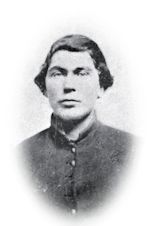
Etowah Bridge, Wednesday, July 20. Cool day. Health good, but weigh twelve pounds less than at Huntsville. Warm weather thins me out. Dixon and Evie started early this morning on horseback to catch fish in the numerous traps along the river. Returned by dinner with “nary” a fish. A drove of 2,000 beef cattle driven by to the front by convalescents. Monthly issue of clothing made. Drew flour rations. Reports are prevalent of the capture of Atlanta. Hope it is so. Good bath in mill-dam in the evening.

by John Beauchamp Jones
JULY 20TH.—Cloudy and warm, but no rain up to 5 P.M. There is no news of importance; but a battle is momentarily expected in Georgia. The Examiner says the President bears malice againstJohnston, and embraces an occasion to ruin him at the risk of destroying the country. That he was not allowed the aid of detachments necessary to success, and hence he could not fight; but all aids will he give his successor, Hood, who will be successful. And that this game was played onJohnston in 1862 inVirginia, and when Lee took command, every facility was afforded by the government. In short, Gen. Johnston cannot be vindicated unless our army be destroyed; and if Hood wins a victory, he is ruined. This is an unpleasant predicament for a general.
Planted some cabbage-seeds given me; no plants are for sale.
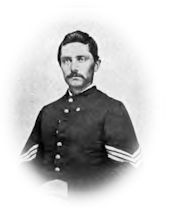
Wednesday, 20th—Have had pleasant weather for a week now. Most of the citizens remaining here have been moved out of town, for the purpose of using their homes for hospitals. No news.[1]
[1] On this day David Hobaugh of my company was killed on the skirmish line. Our entire army moved forward making an advance on Atlanta.—A. G. D.
19th. Played some at chess and read a little in Shakespeare. Eyes quite weak. Letters from home and Floy. Quiet. Heavy firing in direction of Petersburg. Rained almost all day.


