
Saturday, July 23. — Day pleasant. Firing quite heavy, and had to get up several times. Nights foggy. Enemy shelled us quite vigorously. Colonel Jarves came out to the front line, and dined. Set the men to work on bomb-proofs.
July 2014
Friday, July 1st.—Heard that Cousin Robert Magill died at Marietta next morning after he was wounded. Brother Tom went to town and got his watch and pocket-book. Gave them to Mr. Cox to take home to his parents, as he was here and expected to go back home. Mr. Cox was never heard of again.
Friday, July 1st.
Private Carman shot himself in the head at 4 o’clock this morning. He is thought to have been rendered insane by a sunstroke. During the day a communication was sent by the officers of the regiment to President Lincoln through Governor Morgan, reciting the facts of which we complain—our fraudulent enlistment and perfidious treatment, and asking that justice be done us, but none of us entertains much hope of a favorable result. In the afternoon our battalion joined the First Battalion now with the First Brigade.
July 1st. Got a light ration of forage. Lay in the dirt all day. Bought some rations and got some sanitary stores. Got along well. Ordered to move in the morning at 6.
Headquarters 56th Mass. Vols.,
Near Petersburg, Va., July 1, ’64.
Dear Father, — I wish you would see Henry Wilson, and ask him to get permission from the War Department to have my band mustered as a brigade band. The state of the case is as follows: The men, twenty (20) in number, were enlisted and mustered as privates, with the promise that they should not perform duty as privates, but should be detailed for a band. The officers agreed to pay them $25 a month, and the leader $100 a month. Now that the officers are reduced in number, it makes it very hard for them to pay such a large sum to maintain the band, and we wish to have them transferred as our brigade band, there being none for our brigade. I wish you would get him to put the thing through. All that is necessary is to have an order from the War Department, ordering the transfer.
There is nothing new to report, except an unsuccessful charge made by the Tenth Corps on our right yesterday afternoon. I also hear that Wilson’s cavalry division was all cut up, and almost captured day before yesterday. I hope it is not true.
I hope that we shall be reinforced soon, and heavily, too. We need them immediately, and every exertion ought to be made up North to forward 100,000 men to us, as soon as possible. If people wish this war to come to a successful issue, they should send us men. The trouble is that every one is willing, “à la Artemus Ward,” to have their wives’ relations go, but is unwilling to go himself.
I must stop now, as it is getting quite dark.
July 1.— Captain Howe finished mustering the regiment. Hard at work on our monthly return, and muster-rolls. Heavy picket firing during the night. Day very warm. Court-martial begun. Case of McLeod, D Company.

July 1st. This hot morning finds us still in our good camp on the banks of the Great Kanawah River, surrounded by lofty mountains. We have been informed of a fine spring of water over the river, upon a mountain. Some of the residents wish that we would try it and drink of its good waters. They offered us the use of a boat. We rowed over, taking a number of canteens. After a good drink from the spring coming out of the side of the mountain, we had a most wonderful view of this fine valley from another point. The pleasure we had paid us well for our trouble. At this point the river is very wide and deep. We were informed by old residents that soundings had been made and failed to find any bottom.
Wrote many letters from here. Weather fine for camp life. Shelter tents are all right in fine weather. Since the battle of Piedmont, June 5th, our company has been under the command of a sergeant. Two of our officers are prisoners, and one absent on account of wounds.
Marching orders received. Must leave this ideal spot early tomorrow morning. Here we have plenty of good rations and a good rest. Late this afternoon a hard shower came up, a regular mountain shower. The clouds broke loose right over this spot. So hot we don’t mind it very much, will soon dry up. It all comes in the life of a soldier.
July 1, 1864.
This campaign is coming down to a question of muscle and nerve. It is the 62d day for us, over 50 of which we have passed under fire. I don’t know anything more exhausting. One consolation is that the Rebels are a good deal worse off than we are. They have lost more men in battle, their deserters count by thousands, and their sick far exceed ours. We’ll wear them out yet. Our army has been reinforced by fully as many as we have lost in action, so that our loss will not exceed our sick. You notice in the papers acounts of Hooker’s charging “Lost Mountain,” taking a large number of prisoners, and the names of officers. You see they are all from the 31st and 40th Alabama. It is also credited to Blair’s 17th Corps. Our brigade took all those officers on the 15th of June. I wrote you an account of it then. It hurts us some to see it credited to other troops, but such is the fortune of war, and soldiers who do not keep a reporter must expect it. Colonel Wright starts for home to-day.

London, July 1, 1864
The crisis has also passed here. The Ministry have announced that war would be inconvenient; that America is too formidable a power to have in the rear; that Germany is a bully, and Denmark a little fool; that the blame all belongs to France, and is owing to the hatred of Russia to England; that when the war is over and Denmark destroyed, Palmerston will call Parliament to know whether to send the channel fleet to the Baltic; that in short everything is in a muddle and no one knows how to get out of it except by frankly backing out and refusing to act at all. We have been immensely delighted with this utter confusion of England. There is about it so simple and undisguised confession of impotence that it almost excites pity, and would do so wholly if it were n’t that they are so ill-natured and currish in their expression of their disappointment. But it is not a little grateful to see the utter contempt felt for this country all over Europe now. The newspapers are filled with elegant extracts from French and German sources, all expressing in varied terms the opinion that the English are cowards. For my own part, the case does not seem to me to be so bad. The English are not cowards, but they have the misfortune to be damned fools, and to have the same class of men for their rulers. Once in this mire, they are cross but make the best of it, and all the contempt of Europe will be swallowed without shaking the firm conviction of the “true English gentleman,” as Kingsley calls him, that somehow or other he is right and all mankind is wrong. They will not even turn out the Ministry, it is said, and I can well believe it. But the European complication is not ended yet, and England will have to swallow more dirt before the end. What the end will be, I don’t know. But I look for a great movement towards liberalism some day. . . .
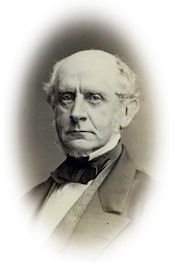
London, July 1, 1864
At present the great excitement here is about the Danish war. The conference which was to prove the grand panacea of the troubles was very skilfully played off by the Germans, and has ended in putting the Danes in a worse situation than before. England has practically been aiding the game of their enemies, whilst proposing, I doubt not sincerely enough, to desire to sustain them. The question now is whether there is to be any such thing as Denmark left. Whilst this question is pending, the dispute among the English seems to be which ministry, the Whig or the Tory, will be in at the death. Next Monday, the great trial is to begin the Commons. Mr. D’Israeli is to move, that the policy of the ins has lowered the country in the eyes of the world, without pledging himself that the outs, if they should come in, would do anything at all different to raise it. In other words, what ought to have been a great question involving a broad examination of the interests of all Europe, is to be dwarfed into a tussle for the loaves and fishes of office. There will be some good speaking on both sides, but the present expectation is that the Ministry will scrape through by a small majority and Denmark will be left to its fate. Should it so turn out, there will not be likely to be anything more done this year of that sort, and the Ministry will tide over to 1865.
So far as this result affects the interests of America, I do not think anything more could be desired. Although I have little idea that the other party, however much it may sympathise with the rebels, will adopt any substantially different course towards us, if it should come in, there would be a change more or less marked in the personal relations already formed, and with it might follow a little more of friction in the movement on the two sides. I incline to think it best to let well enough alone. For myself I have jogged on with the present set more than three years, and if to that I should be able to add the fourth, perhaps at the end of that period they and I might be quitting together. At the age of Lord Palmerston, it would not surprise me if he should not outlive the Parliament. In that case, the chances would be that Lord Derby would come in without any serious conflict at the elections.


