Monday, August 15. — Played whist in the navy room. Had a drunken sergeant on guard who would not allow any one to come in with watermelons, etc. It is reported that Secretary Stanton has resigned.
August 2014
August 15 — We were on the march all day. Camped to-night at Louisa Court House. We have been in the hot sultry lowlands for several months, where we did not get a glimpse of even a pretty hill, consequently to-day, when we first sighted the grand, cool-looking mountain peaks pictured against the western sky, the company gave three cheers for the Blue Ridge.
Etowah Bridge, Monday, Aug. 15. Cannoneers called out this morning at 3 A. M. Stood by their guns till daylight. Some anxiety felt as to affairs at Dalton and vicinity. Wheeler’s Cavalry is in the vicinity, reported on all sides, nothing reliable. 59th Indiana recalled last night. Returned by 10 P. M. No trains going either way. Two trains of wounded came up yesterday, were unloaded at Cartersville. One of trains sent to Kingston to carry reinforcements; other back to the fort. Infantry under arms all day. First piece under Lieutenant Jenawein ordered 2 P. M. to report at Division headquaters. 3 o’clock a train loaded with infantry (homeward bound) came up from the front. Will reinforce our troops at Dalton if necessary. 5 P. M. 93rd Illinois arrived on train from Allatoona, stopped here, took on the 48th. General Smith going back with seven regiments.
Monday, August 15, 1864. — Rebels attacked our picket line and drove it after a brisk skirmish. [The] Twenty-third and Thirty-sixth supporting soon check the Rebels. Our loss two killed, ten wounded. I had some narrow escapes.

Aug. 15th. [Battle of Deep Bottom.] Started at 9 A.M. for the right, having been assigned to the 19th corps of our Brigade; skirmish for four hours, through a dense forest to enable our cavalry to pass out on the right flank. Lost one killed and 7 wounded.
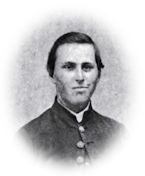
August 15th. This morning finds us still in line near Cedar Creek. Not much firing along the skirmish line. Sometimes both sides seem to get tired of the continual popping of the guns and cease firing. A large mail came for our regiment. Wrote a few letters to friends at home. All is quiet tonight near Cedar Creek.

by John Beauchamp Jones
AUGUST 15TH.—Cloudy, damp, and pleasant. A rain fell last night, wetting the earth to a considerable depth; and the wind being southeast, we look for copious showers—a fine season for turnips, etc.
Cannon was distinctly heard from my garden yesterday evening, and considerable fighting has been going on down the river for several days; the result (if the end is yet) has not been officially stated. It is rumored that Pemberton lost more batteries; but it is only rumor, so far. Nor have we anything definite from Early or Hood.
Bacon has fallen to $5 and $6 per pound, flour to $175 per barrel. I hope we shall get some provisions from the South this week.
Sowed turnip-seed in every available spot of my garden to-day. My tomatoes are beginning to mature—better late than never. The following official dispatch was received on Saturday:
“MOBILE, August 11th.—Nothing later from Fort Morgan. The wires are broken. Gen. Forrest drove the enemy’s advance out of Oxford last night.
“All the particulars of the Fort Gaines surrender known, are that the commanding officer communicated with the enemy, and made terms, without authority. His fort was in good condition, the garrison having suffered little.
“He made no reply to repeated orders and signals from Gen. Page to hold his fort, and surrendered upon conditions not known here. D. H. MAURY, Major-General.”
Gen. Taylor will cross theMississippi with 4000 on the 18th of this month.Sherman must getAtlanta quickly, or not at all.
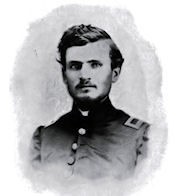
14th. Sunday. Got into camp at noon. Lay all day near Dranesville.
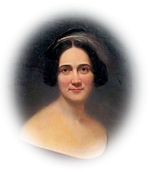
August 14th.—We have conflicting testimony. Young Wade Hampton, of Joe Johnston’s staff, says Hood lost 12,000 men in the battles of the 22d[1] and 24th, but Brewster, of Hood’s staff, says not three thousand at the utmost. Now here are two people strictly truthful, who tell things so differently. In this war people see the same things so oddly one does not know what to believe.
Brewster says when he was in Richmond Mr. Davis said Johnston would have to be removed and Sherman blocked. He could not make Hardee full general because, when he had command of an army he was always importuning the War Department for a general-in-chief to be sent there over him. Polk would not do, brave soldier and patriot as he was. He was a good soldier, and would do his best for his country, and do his duty under whomever was put over him by those in authority. Mr. Davis did not once intimate to him who it was that he intended to promote to the head of the Western Army.
Brewster said to-day that this “blow at Joe Johnston, cutting off his head, ruins the schemes of the enemies of the government. Wigfall asked me to go at once, and get Hood to decline to take this command, for it will destroy him if he accepts it. He will have to fight under Jeff Davis’s orders; no one can do that now and not lose caste in the Western Army. Joe Johnston does not exactly say that Jeff Davis betrays his plans to the enemy, but he says he dares not let the President know his plans, as there is a spy in the War Office who invariably warns the Yankees in time. Consulting the government on military movements is played out. That’s Wigfall’s way of talking. Now,” added Brewster, “I blame the President for keeping a man at the head of his armies who treats the government with open scorn and contumely, no matter how the people at large rate this disrespectful general.”
[1] On July 22d, Hood made a sortie from Atlanta, but after a battle was obliged to return.

Sunday, August 14.—We expected to leave to-day, but the cars did not come down from Atlanta. Mrs. Johnston and Mrs. Ashcraft have taken the men under their care, and Mrs. Captain Nott, who is very kind to the wounded, will also do her part. Dr. Smith is surgeon in charge, and is having every thing put in order. The ladies of the place have been very kind, and have sent the men all kinds of nice things.
I have spent a portion of the day with the young lad who cried so much the first night I came over here. He is wounded in the foot, has gangrene, and suffers excruciating pain. His name is Morgan, and he is from Mississippi. A Mrs. Ross has kindly offered to take sole charge of him. He has begged Mrs. W. and me to take him with us.
Mrs. W. has been very busy; she does not know what I have been doing, nor I of her doings.
A Lieutenant Sommerlin, from Covington, Georgia, is here, badly wounded; his wife, a lovely woman, is taking care of him.
She told me she was in Covington when the raiders passed through there, and that they committed some terrible outrages; among others was the shooting of a Captain Daniel, a cousin of Miss W., of whom I had heard her often speak. He was in the state service, and the vandals made believe they thought him a bushwhacker. He has left a large family of motherless children to mourn for him. He was a man of a highly cultivated mind, and stood well in the estimation of all.
They went to the house of an old man, and as he knew they had come with designs on his life, he sold it dearly. He fought manfully, and killed some half dozen before he fell.
Several of our attendants have come back; they had been sent for the bunks and other things that our folks were not able to take with them.
The hospitals went to Macon by Atlanta, and one of the men has informed me that while passing there the shells flew all around the train, and one struck within a few feet of them.
Atlanta is closely besieged. General Hood is now in command of this army. I believe Johnston is in Macon. There have been many conjectures as to this change of commanders, but no one can tell exactly the why or the wherefore.
Last evening Mrs. Brooks and myself went up to the College Hospital, in which are many of our wounded, besides the prisoners. Among our men I found two Scotchmen, very badly wounded. The wounded Federal captain that I had seen before was here, and looked badly. The prisoners are in much better quarters in this hospital than our men at the Coweta House.
All have fared much better than they have with us, as Mr. Kellogg, the steward, owns the building and has all of his own furniture. There are two ladies who take care of the patients—Mrs. Kellogg and Mrs. Alexander—both kind and excellent women.
We have had a few false alarms about the enemy coming, but they have always turned out to be our own cavalry.
We are leaving many good friends in Newnan; Mr. Dougherty’s family and many others have been very kind to us. As we have been much engaged, we have visited little. I spent a very pleasant evening at the house of Dr. Reesse; Mrs. R. is an excellent lady, and her daughters are highly educated young ladies and accomplished musicians.
Some time ago we all spent a delightful evening at the house of Mr. Bigby. We had a very fine supper, and all on the table was of home production, with the exception of the tea. But the supper was the least of the entertainment. Mrs. B. is a most charming lady, is a poetess, and is called the Mrs. Browning of the South. Lately she published a poem in the Field and Fireside, called Judith. She was earnestly requested by Dr. Hughes to read it, and did so It was certainly a treat, for she lent to the “rhyme of the poet the music of her voice.”
Mr. B. is a lawyer and a polished gentleman. Their residence is in a romantic part of the city, is a handsome building, inclosed in a very pretty garden filled with choice flowers.
There are some very nice residences in this place, and many very beautiful flower-gardens, laid out with a great deal of taste.
The people here seem to regret our leaving the post, though I am told the quartermaster owes many of them money for house rent, etc. I know that Mr. Dougherty has not received one dollar from the government, and we have cut down quantities of timber on his land.
Our post surgeons have been careful to respect the rights of private citizens, and with the exception of taking the churches when we first came here, I believe there have been no buildings taken for hospital purposes without the consent of the owners. In Chattanooga we were constantly coming in collision with the people for taking their property for government purposes. I do not know who was to blame, but I do know that such was the case.


