Sunday, September 4. — Nothing new, except that Atlanta is certainly captured, but no mention made of the number of prisoners. Had nothing to do as it was Sunday. Read The Monastery. Night warm.
September 2014
Camp Near Berryville, September 4, [1864].
Sunday evening.
Dearest: — We had one of the fiercest fights yesterday I was ever in. It was between the South Carolina and Mississippi Divisions under General Kershaw and six regiments of the Kanawha Division. My brigade had the severest fighting, but in loss we none of us suffered as might have been expected. We were under cover except when we charged and then darkness helped. We whipped them, taking about one hundred prisoners and killing and wounding a large number. Captain Gillis was killed, shot near the heart, Captain Austin dangerously wounded through the right shoulder, George Brigdon, my color-bearer, bearing the brigade flag, mortally wounded. Only ten others of [the] Twenty-third hurt. Sixty in the brigade killed or wounded. Captain Gillis was a noble, brave man, a good companion, cheerful and generous — a great loss to us. The Rebel army is again just before us.
It was a pleasant battle to get through, all except the loss of Gillis and Brigdon and Austin. I suppose I was never in so much danger before, but I enjoyed the excitement more than ever before. My men behaved so well. One regiment of another division nearly lost all by running away. The Rebels were sure of victory and run [ran] at us with the wildest yells, but our men turned the tide in an instant. This was the crack division of Longstreet. They say they never ran before.
Darling, I think of you always. My apprehension and feeling is a thousand times more for you than for myself. I think we shall have no great battle. We are again entrenched here. Our generals are cautious and wary. — Love to all. The dear-boys, God bless them.
Affectionately ever, your
R.
Mrs. Hayes.

Sept. 4th. At 12 o’clk our guns fired a salute on the capture of Atlanta. The rebs replied with shell and we answered and for a while the shot fell thick.
4th. Sunday. Moved back by road. Rebs at Berryville and in our rear. 2nd Ohio train guard. Custer’s brigade suffered some. Train moved to Rippon. Parked.
September 4, 1864.
Received a half official notification to-day that the campaign and fighting are over. Orders to clean up arms came also, and the boys, showing their contempt of the enemy’s power to do harm, took their guns all to pieces and set to polishing the should-be bright parts, right in view of the enemy’s pickets.

by John Beauchamp Jones
SEPTEMBER 4TH.—Showery.
Atlanta has fallen, and our army has retreated some thirty miles; such is Hood’s dispatch, received last night.
The cheering in Grant’s camp yesterday was over that event. We have not had sufficient generalship and enterprise to destroySherman’s communications.
Some 40,000 landowners, and the owners of slaves, are at their comfortable homes, or in comfortable offices, while the poor and ignorant are relied upon to achieve independence and these, very naturally, disappoint the President’s expectations on momentous occasions.
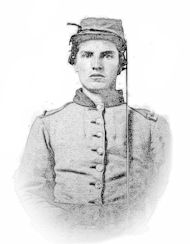
Saturday, 3d.—Camped three miles south of McDonough. Am afraid our wounded were captured at Jonesboro.
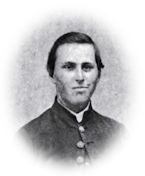
September 3d. Routed out very early this morning. On the march by daylight, moving slowly on towards Berryville. Reached the town at noon. Stop for rations. Sharp cannonading to the west, in the direction of Winchester. While waiting, orders came to camp on the west side of the town. Put up our shelter tents. Weather very cloudy and windy. While preparing rations orders came suddenly to strike tents immediately and get into line. Our pickets on the advance were attacked. A hot skirmish was on. After a hard run for about a mile, line was formed and we were in a hot engagement. Making a charge, orders came to halt. The battle continued until darkness, when we ceased firing, but the artillery kept up their work long after dark. Both lines are very near each other, while we are under arms, ready for a call at any moment. When the firing ceased it did not take us very long to drop off to sleep.
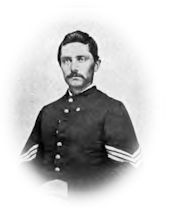
Saturday, 3d—A report[1] came in today that General Sherman has his headquarters in Atlanta, and that the rebel army is in retreat with our army after them.[2] News came also of the surrender of Fort Morgan at Mobile, Alabama; also that General Grant is shelling Petersburg with fifteen-inch shells. All things are quiet here at Rome, Georgia.
[1] The information was gathered from a poster or news sheet about four inches wide and twenty-two inches long, printed on one side and sold among the soldiers at the hospital. Mr. Downing purchased one, which he has preserved, and thinks he paid ten cents for it.—Ed.
[2] General Sherman finally took Atlanta by a bit of strategy. He withdrew his army from the rifle-pits in front of Atlanta, and placing the Twentieth Army Corps across the Chattahoochee river to protect his base of supplies at Marietta, moved with the remainder of the army in a wide circuit by his right flank and got into the rear of Hood’s army. It is said that when Sherman made this move, Hood, taking it for granted that Sherman had given up the siege, proclaimed the fact, and he and his army, together with the citizens of Atlanta, began celebrating the event with a great jollification. But when Hood, in the midst of their rejoicings, learned by courier the truth about Sherman’s move, and that the Union army was in his rear in full force, he sent orders throughout his camp and the city, calling every man to arms. He immediately began the evacuation of Atlanta, destroying the ammunition and all army supplies.—A. G. D.

Etowah Bridge, Saturday, Sept. 3. A hot, sultry morning. Severe storm of wind and rain in the afternoon, threatening to tear our quarters to pieces. Everything wet and damp. Sherman is fighting Hood southwest of Atlanta. 20th Army Corps is in possession of that coveted stronghold.


