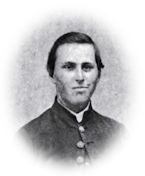
March 5th. While on duty out in the lots and woods, we see many wild animals such as foxes, fox and gray squirrels. Some of the boys cannot resist the temptation to shoot them, which they dress and boil and eat. Our routine of duty is kept up.
March 2015
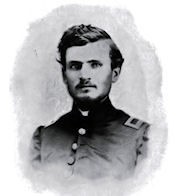
5th. Sunday. Saddled up early but did not move out. One hundred men pulled down the burned bridges. More destruction of R. R. Went out with forage detail. Camped under the hill on which is the home of Thomas Jefferson. Rations and ammunition.
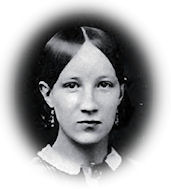
March 5. — I have just read President Lincoln’s second inaugural address. It only takes five minutes to read it but, oh, how much it contains.
The tender words with which President Lincoln closed this inaugural address were as follows:—

“If we shall suppose that American slavery is one of those offences which in the Providence of God must needs come, but which having continued through the appointed time, He now wills to remove, and that He gives to both North and South this terrible war, as the woe due to those by whom the offence came, shall we discern therein any departure from those divine attributes which the believers in a living God always ascribe to Him? Fondly do we hope, fervently do we pray, that this mighty scourge of war may speedily pass away. Yet, if God wills that it continue until all the wealth piled by the bondsmen’s two hundred and fifty years of unrequited toil shall be sunk, and until every drop of blood drawn with the lash shall be paid with another drawn by the sword, as was said three thousand years ago, so still it must be said, ‘The judgments of the Lord are true and righteous altogether.’
“With malice toward none, with charity for all; with firmness in the right as God gives us to see the right—let us strive on to finish the work we are in ; to bind up the nation’s wounds ; to care for him who shall have borne the battle, and for his widow and his orphan—to do all which may achieve and cherish a just and lasting peace among ourselves and with all the nations.”
March 5th.—Bright and cool; some frost this morning.
I saw an officer yesterday from Early’s command. He said the enemy entered Charlottesville on Friday at half-past two o’clock P.M., between 2000 and 3000 strong, cavalry, and had made no advance at the latest accounts. He says Gen. Early, when last seen, was flying, and pursued by some fifteen well-mounted Federals, only fifty paces in his rear. The general being a large heavy man, and badly mounted, was undoubtedly captured. He intimated that Early’s army consisted of only about 1000 men! Whether he had more elsewhere, I was unable to learn. I have not heard of any destruction of property by the enemy.
There is still an accredited rumor of the defeat of Sherman. Perhaps he may have been checked, and turned toward his supplies on the coast.
I learn by a paper from Gen. Gorgas, Chief of Ordnance, that the machinery of the workshops here is being moved to Danville, Salisbury, and other places in North Carolina. He recommends that transportation be given the families of the operatives; and that houses be built for them, with permission to buy subsistence at government prices, for twelve months, that the mechanics may be contented and kept from deserting. This would rid the city of some thousands of its population, and be some measure of relief to those that remain. But how long will we be allowed to remain? All depends upon the operations in the field during the next few weeks—and these may depend upon the wisdom of those in possession of the government, which is now at a discount.
The Secretary of the Treasury is selling gold for Confederate States notes for reissue to meet pressing demands; the machinery for manufacturing paper money having just at present no certain abiding place. The government gives $1 of gold for sixty of its own paper; but were it to cease selling gold, it would command $100 for $1.
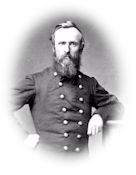
Cumberland, March 5, 1865.
Dear Mother: — We are feeling a good deal of anxiety now to hear from our cavalry. General Sheridan with all the mounted men of the Department left last Monday to make a raid on the Rebel towns south of us. If successful, he will do much towards compelling the evacuation of Richmond. The rains and swollen streams are regarded as the chief danger.
So many troops have left us that those who remain are kept almost constantly on duty. The men never were so cheerful when overworked before. They all think the end is so near that they can stand anything during the rest of the struggle. . .
Affectionately, your son,
R.
Mrs. Sophia Hayes.
Cumberland, Maryland, March 5, 1865.
Dearest: — General Sheridan has got together all the four-footed beasts of this region and mounted his last trooper. They are gone to try to destroy railroads and stores if possible all the way to Lynchburg. We are thinking of nothing else just now. The only danger is the mud and high waters from the rains and melting snows. He is reported to have had a good little success at Woodstock, taking four guns and four hundred prisoners.
A few weeks will probably produce great changes in the situation. Even a considerable disaster to our arms now will hardly enable the Rebels to hold Richmond much longer.
Judge Johnston was here yesterday morning. He did not take his family to the inauguration. As things now are, I am glad you did not come. The railroad is in a wretched condition and our forces are so weak that we are liable to interruption at any time. General Duval will return, it is supposed, in a few days, when I can be better spared, if I wish to go anywhere.
I do not see any notice of Mitchell’s appointment or confirmation. I fear the announcement was premature.
Wager Swayne lost a leg in South Carolina and is promoted to brigadier-general. General Hancock takes General Crook’s place. We rather like the new regime. General Carroll takes General Kelley’s shoes. We all like him, so far, very much. He takes to Dr. Joe almost as much as Crook did. — Love to all the boys and Grandma.
Affectionately, ever,
R.
Mrs. Hayes.
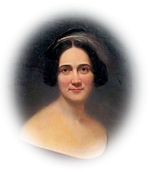
March 5th.—Is the sea drying up? Is it going up into mist and coming down on us in a water-spout? The rain, it raineth every day. The weather typifies our tearful despair, on a large scale. It is also Lent now—a quite convenient custom, for we, in truth, have nothing to eat. So we fast and pray, and go dragging to church like drowned rats to be preached at.
My letter from my husband was so—well, what in a woman you would call heart-broken, that I began to get ready for a run up to Charlotte. My hat was on my head, my traveling-bag in my hand, and Ellen was saying “Which umbrella, ma’am?” “Stop, Ellen,” said I, “someone is speaking out there.” A tap came at the door, and Miss McLean threw the door wide open as she said in a triumphant voice: “Permit me to announce General Chesnut.” As she went off she sang out, “Oh, does not a meeting like this make amends?”
We went after luncheon to see Mrs. Munroe. My husband wanted to thank her for all her kindness to me. I was awfully proud of him. I used to think that everybody had the air and manners of a gentleman. I know now that these accomplishments are things to thank God for. Father O’Connell came in, fresh from Columbia, and with news at last. Sherman’s men had burned the convent. Mrs. Munroe had pinned her faith to Sherman because he was a Roman Catholic, but Father O’Connell was there and saw it. The nuns and girls marched to the old Hampton house (Mrs. Preston’s now), and so saved it. They walked between files of soldiers. Men were rolling tar barrels and lighting torches to fling on the house when the nuns came. Columbia is but dust and ashes, burned to the ground. Men, women, and children have been left there homeless, houseless, and without one particle of food—reduced to picking up corn that was left by Sherman’s horses on picket grounds and parching it to stay their hunger.
How kind my friends were on this, my fête day! Mrs. Rutledge sent me a plate of biscuit; Mrs. Munroe, nearly enough food supplies for an entire dinner; Miss McLean a cake for dessert. Ellen cooked and served up the material happily at hand very nicely, indeed. There never was a more successful dinner. My heart was too full to eat, but I was quiet and calm; at least I spared my husband the trial of a broken voice and tears. As he stood at the window, with his back to the room, he said: “Where are they now— my old blind father and my sister? Day and night I see her leading him out from under his own rooftree. That picture pursues me persistently. But come, let us talk of pleasanter things.” To which I answered, “Where will you find them?”
He took off his heavy cavalry boots and Ellen carried them away to wash the mud off and dry them. She brought them back just as Miss Middleton walked in. In his agony, while struggling with those huge boots and trying to get them on, he spoke to her volubly in French. She turned away from him instantly, as she saw his shoeless plight, and said to me, “I had not heard of your happiness. I did not know the General was here.” Not until next day did we have time to remember and laugh at that outbreak of French. Miss Middleton answered him in the same language. He told her how charmed he was with my surroundings, and that he would go away with a much lighter heart since he had seen the kind people with whom he would leave me.
I asked my husband what that correspondence between Sherman and Hampton meant—this while I was preparing something for our dinner. His back was still turned as he gazed out of the window. He spoke in the low and steady monotone that characterized our conversation the whole day, and yet there was something in his voice that thrilled me as he said: “The second day after our march from Columbia we passed the M. ‘s. He was a bonded man and not at home. His wife said at first that she could not find forage for our horses, but afterward she succeeded in procuring some. I noticed a very handsome girl who stood beside her as she spoke, and I suggested to her mother the propriety of sending her out of the track of both armies. Things were no longer as heretofore; there was so much struggling, so many camp followers, with no discipline, on the outskirts of the army. The girl answered quickly, ‘I wish to stay with my mother.’ That very night a party of Wheeler’s men came to our camp, and such a tale they told of what had been done at the place of horror and destruction, the mother left raving. The outrage had been committed before her very face, she having been secured first. After this crime, the fiends moved on. There were only seven of them. They had been gone but a short time when Wheeler’s men went in pursuit at full speed and overtook them, cut their throats and wrote upon their breasts: ‘These were the seven!'”
“But the girl?”
“Oh, she was dead!”
“Are his critics as violent as ever against the President?” asked I when recovered from pity and horror. “Sometimes I think I am the only friend he has in the world. At these dinners, which they give us everywhere, I spoil the sport, for I will not sit still and hear Jeff Davis abused for things he is no more responsible for than any man at that table. Once I lost my temper and told them it sounded like arrant nonsense to me, and that Jeff Davis was a gentleman and a patriot, with more brains than the assembled company.” “You lost your temper truly,” said I. “And I did not know it. I thought I was as cool as I am now. In Washington when we left, Jeff Davis ranked second to none, in intellect, and may be first, from the South, and Mrs. Davis was the friend of Mrs. Emory, Mrs. Joe Johnston, and Mrs. Montgomery Blair, and others of that circle. Now they rave that he is nobody, and never was.” “And she?” I asked. “Oh, you would think to hear them that he found her yesterday in a Mississippi swamp!” “Well, in the French Revolution it was worse. When a man failed he was guillotined. Mirabeau did not die a day too soon, even Mirabeau.”
He is gone. With despair in my heart I left that railroad station. Allan Green walked home with me. I met his wife and his four ragged little boys a day or so ago. She is the neatest, the primmest, the softest of women. Her voice is like the gentle cooing of a dove. That lowering black future hangs there all the same. The end of the war brings no hope of peace or of security to us. Ellen said I had a little piece of bread and a little molasses in store for my dinner to-day.
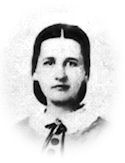
March 5th, 1865.—It seems we are not to be captured by McCook after all. Over the signal stations between the Light House and Tallahassee a message came this morning. Gunboats are around the light house and colored troops are landing and are now on the way to Tallahassee via Newport. Such excitement I never saw; Captain Brokaw called in the Home Guards and they came, from the farm, the stores, from all places, where old men were employed, they came hurrying in. Soldiers at home on furlough, (there are very few of these) came forward to take their places in the ranks of Tallahassee’s defenders. The cadets from the seminary, west of the Suwanee, offered their services and there was even some talk of a company of women, to organize and help to hold the enemy at bay. It is four o’clock now and these hastily marshalled troops are gone. Tallahassee waits, waits for news of the morrow.
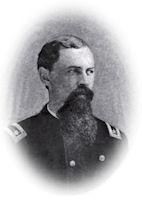
Cheraw, S. C., March 4, 1865.
We were from 8 a.m. until 4 p.m. on this little five miles. The 17th have their pontoons down and have a division across. Hear that the enemy is fortified a short distance back from the river. Can hear no firing. Our foragers took Society Hill last night.
This is a very pretty place, about the size of Canton.
The river, Great Peedee, is navigable for boats drawing five feet. The left wing is at Chesterfield 12 miles above. There is an immense amount of cotton here. Noticed guards on it, and some think it is to be sent down the river. A thousand mounted men are to start from here to-morrow (from our corps, and it is said the same number from each corps) for —somewhere—rumor says, to release 8,000 of our prisoners at Florence. Our wounded men are all doing splendidly.
Chattanooga, Saturday, March 4. Heavy thunder and lightning last night, with the rain pouring down while I was walking my muddy beat. To-day it cleared up a little. Heavy detail after timber. Another to work in camp hewing logs. Policed camp in the afternoon. This is the day on which Abraham Lincoln is to be inaugurated. President for the second time. After four years tempestuous sailing ‘mid terrible breakers he has carried the good old ship of state through. May his second voyage know more sunshine, and be as successful as before. News is meager. Rumors of the evacuation of Richmond and Petersburg follow up the confirmation of the fall of the rebellious Charleston.


