Following the American Civil War Sesquicentennial with day by day writings of the time, currently 1863.

Adams Family Civil War letters; US Minister to the UK and his sons.

Hilton Head, S.C., July 28, 1862

I read your 4th of July reflections with much interest and on part of them my last letter to you had bearing. Our ultra-friends, including General Hunter, seem to have gone crazy and they are doing the blacks all the harm they can. On this issue things are very bad. General Hunter is so carried away by his idea of negro regiments as, not only to write flippant letters about his one to Secretary Stanton, but even to order their exemption from all fatigue duty; so that while our Northern soldiers work ten hours a day in loading and unloading ships, the blacks never leave their camp, but confine their attention to drill. There may be reasons for this, but it creates intense feeling here and even I cannot see the justice of it. The course of Sumner, Wade, Stanton, etc., have ruined us, I fear, in the war, by making success subservient to their preconceived plans of negro good, instead of allowing the movement to develope itself. I no longer see anything but our ruin on our success, and no escape from it save in our defeat as to the ends of the war. Still I do not lose faith, but go into the future as cheerfully, if, in my own opinion, a little more blindly than heretofore. I liked the innuendoes in Hawthorne’s article in the July Atlantic.

[London,] Saturday, July 19, 1862

Knowing that you would probably be anxious to hear from us what effect the bad news of June 26-30 might have on our position here, I take the last moment to write in order to tell you what I think we are to expect. Certainly it was a violent blow. We suffered several days of very great anxiety, knowing that the current here was rising every hour and running harder against us than at any time since the Trent affair. This reverse called out at once all the latent hostility here, and there was nothing to do but to give way. I shut myself up, went to no more parties and avoided contact with everyone except friends…. The only bright spot in the week was the reception of your letter. As we had all relied on your being safe in the hospital, or if not there, with your regiment which we knew was not engaged, your letter was quite welcome, as it told us first both of your going in and your coming out. I congratulate you, and apropos to that, I congratulate your General Hunter on his negro-army letter. We all here sustain him and I assure you that the strongest means of holding Europe back is the sight of an effective black army. Nevertheless our trouble here was extreme. As the week passed it was not diminished. Nor is it now, I fear, permanently so. It arrived however at its culminating point last night. It so happened that last night was the occasion of an expected debate in the Commons on a motion in favor of mediation. We had been busy in preparing for it and had assurances that all was right. But lo and behold, at two o’clock yesterday afternoon in rushes a member of the Commons, and half a dozen alarmists in his rear, with an evening paper whose telegraphic column was headed in big letters, “Capitulation of McClellan’s Army. Flight of McClellan on a steamer. Later from America.” This astounding news for a moment made me almost give way. But a single glance at dates showed us that it was an utter swindle, and that we had bulletins from McClellan of two days later than the day of the reported surrender. The next reflexion led us to see that it was intended for the debate of the same evening, and we, who know the seal, recognized the stamp of our old friends the Southern liars, who juggled Georgia out of the Union by telegraph. But the consternation among our friends was incredible and even when they knew it must be false, they still shook and shuddered with terror. Every Englishman believed it, or doubted in a tone that showed he wanted to believe it. As for me, I have come to consider it my whole duty here to keep up the spirits of the community and so did the best I could to laugh the lie off. Luckily its effect on the Commons was very good, for it disposed them to postpone action and tended to quiet them. Palmerston made a good speech, and the motion was not pressed to a division. This morning the Arabia’s news has arrived, three days later, which relieves us again for a time of our anxiety, and induces us to believe that the enemy were as much crippled by their victory as we by our defeat.

Thus the pinch has again passed by for the moment and we breathe more freely. But I think I wrote to you some time ago that if July found us still in Virginia, we could no longer escape interference. I think now that it is inevitable. The only delay thus far has been caused by the difficulty in inducing the five great powers to unite, and Russia and Austria to act with England in any sense favorable to the South. That unity cannot much longer fail to be obtainable. England alone or with France will not move, but their idea is that if all the great powers were to unite in offering mediation, they could by their moral influence alone force some result. If the North defied them, a simple recognition of the South by them would, they think, secure her independence. And this belief is probably correct.

It must now be the effort of the North to cast upon the South the responsibility of standing against a settlement. Here will be three means of hampering European attempts: the slavery question, the boundary question, and the Mississippi; and it is the slavery question from which we can derive the greatest strength in this running battle. You see we are stripping and squaring off, to say nothing of sponging, for the next round. If our armies sustain us, we shall win. If not, we shall soon see the limit of our hopes.

London, July 18, 1862

You can have very little notion of the effect the Richmond news is having here. It has set all the elements of hostility to us in agitation, and they are working to carry the House of Commons off their feet in its debate tonight. To that end a story has been manufactured of an alleged capitulation of General McClellan on the third coming out by the Glasgow that sailed on the fifth, in the face of a later telegram dated the seventh, which reported his address to his army pledging himself to continue the war. Yet the people here are fully ready to credit anything that is not favorable. I have no doubt that the matter is bad enough, but it is not quite to that extent. Yet the consequences are likely to be as unfavorable as if it was….

Hilton Head, S.C., July 16, 1862

McClellan’s reverses fell on us with sufficient weight here and 10,000 of our troops are being hurried to the north, destroying all chance of operations here and leaving only artillery to hold these points. For artillery and cavalry they say they do not need, so our poor regiment seems likely to go into garrison duty in the midst of active war, and that too when all the operations of the war in Virginia indicate the vital necessity of good cavalry and this regiment is here considered the best in our volunteer service. However personal considerations don’t amount to much and I want to discuss the news and its effects. How do you look at this terrible fighting in Virginia? Not, I mean, in a military or even immediate point of view, but in its remote bearing on our country’s future? For myself I must confess I begin to be frightened. The questions of the future seem to me too great for us to grapple with successfully and I have really begun to fear anarchy and disorganisation for years to come. If we succeed in our attempt at subjugation, I see only an immense territory and a savage and ignorant populace to be held down by force, the enigma of slavery to be settled by us somehow, right or wrong, and, most dangerous of all, a spirit of blind, revengeful fanaticism in the North, of which Sumner has come in my mind to be typical, which, utterly deficient in practical wisdom, will, if it can, force our country into any position — be it bankrupt, despotic, anarchical, or what not — in its blind efforts to destroy slavery and the South. These men, and they will always in troublous times obtain temporary supreme control, will bankrupt the nation, jeopard all liberty by immense standing armies, debauch the morality of the nation by war, and undermine all our republican foundations to effect the immediate destruction of the one institution of slavery. Do you not think that this is so? . . .

London, July 4, 1862

It is some time since I last wrote. I have hardly had the courage to do so in the face of what is now going on at home, and today we hear news of a battle near Charleston on the 16th which has done little to encourage me. Your last letter speaking of your illness and general position troubled our camp much. I had to pooh-pooh it more than I liked in order to stop the noise. Hard as your life is and threatens to become, I would like well to share it with you in order to escape in the consciousness of action a little of the struggle against fancied evils that we feel here.

The truth is we are suffering now under one of those periodical returns of anxiety and despondency that I have often written of. The last was succeeded by that brilliant series of successes which gave us New Orleans, Yorktown, Norfolk and Memphis, and perhaps this may end as well; but meanwhile we are haunted by stories about McClellan and by the strange want of life that seems justly or not to characterize our military and naval motions. You at Charleston seem to be an exception to the rule of stagnation which leaves us everywhere on the defensive even when attacking. A little dash does so much to raise one’s spirits, and now our poor men only sicken in marshes. I think of it all as little as I can.

Our own position here is now so uninteresting as to give us nothing to think of. After some pretty sharp fighting and curious experiences that I dare n’t trust to paper, we are again quiet and undisturbed, waiting the event of the struggle at Richmond. Things are not over-inspiriting with us, but I don’t know that they look much brighter with the English or French. The suffering among the operatives in Lancashire is very great and is increasing in a scale that makes people very uncomfortable though as yet they keep quiet about it. Cotton is going up to extraordinary prices; in a few days only it advanced three cents a pound and is still rising. Prices for cotton goods are merely nominal and vary according to the opinions of the holders, so that the whole trade is now pure speculation. Mills are closing in every direction. Add to this that the season has been bad and a short crop is now considered a certainty, and you can comprehend how anxious people must be to know how they are to weather next winter. No doubt this state of things will soon produce fresh agitation for mediation or intervention before long if no progress is made by our armies, but as yet we enjoy quiet….

If it were not for home matters it would be all well enough, but they have a good deal of influence here, which is felt rather than seen. We have entertained a good deal — evening receptions once a week for Americans, and several state dinners for English. . . .

London, July 4, 1862

This detestable war is not of our own choosing, and out of it must grow consequences important to the welfare of coming generations, not likely to issue from a continuance of peace. All this is true, and yet here in this lonely position of prominence among a people selfish, jealous, and at heart hostile, it needs a good deal of fortitude to conjoin private solicitude with the unavoidable responsibilities of a critical public station. I had hoped that the progress of General McClellan would have spared us much of this trouble. But it is plain that he has much of the Fabian policy in his composition which threatens to draw the war into greater length. Of course we must be content to take a great deal on trust. Thus far the results have been all that we had a reasonable right to expect. Let us hope that the delay is not without its great purposes. My belief is unshaken that the end of this conflict is to topple down the edifice of slavery. Perhaps we are not yet ready to come up to that work, and the madness of the resistance is the instrument in the hands of Divine Providence to drive us to it. It may be so. I must hold my soul in patience, and pray for courage and resignation.

This is the 4th of July. Eighty-six years ago our ancestors staked themselves in a contest of a far more dangerous and desperate character. The only fault they committed was in omitting to make it more general and complete. Had they then consented to follow Thomas Jefferson to the full extent of his first draught of the Declaration, they would have added little to the seven years severity of their struggle and would have entirely saved the present trials from their children. I trust we shall not fall into any similar mistake, and if we are tempted to do so, I trust the follies of our enemy will avert from us the consequences of our weakness. This is the consideration which makes me most tolerant of the continuance of the war. I am not a friend of the violent policy of the ultras who seem to me to have no guide but their own theories. This great movement must be left in a degree to develope itself, and human power must be applied solely to shape the consequences so far as possible to the best uses. . . .

James Island, S.C., June 28, 1862

I Received yours of May 30th last week and it found me still here. Since then, however, the news of the engagement of the 16th has been carried home and today we receive the return blast from Washington. They tell us we are to see Charleston, but not now to enter it; that we are to go back to Hilton-head and generally to confess ourselves as out-generaled, while Benham is to be made the scape-goat for all our misfortunes — and the last is the only item of news which gives us any satisfaction. The army is a great place to learn philosophy, I find, and in it you not only get careless of danger, but indifferent as to what disposition is made of you. The enemy have again begun to shell us and yet I find I do not even any longer go to the door of my tent to see where and how their shells burst. And today, though under every circumstance I have looked on riding into Charleston as a sure and ample reward for all I might be called on to undergo, I hear that the chances are immense against my ever receiving that reward with an indifference which surprises me. I am ordered and I can’t help it; though it seems strange to me that we must turn our backs on these fellows for lack of ten poor regiments out of the grand army of the republic. I do so know we could whip these men if we had two chances out of five, and we would so like to do it; and now to go back with nothing but failure — oh! for one hour of generalship!! Everything here but honor has been sacrificed to the fussy incompetence of Benham, the unmilitary amiability of Hunter, and the misplaced philanthropy of Edward L. Pierce…. Philanthropy is a nuisance in time of war and I sympathised somewhat with Governor Stanley. There are 3000 men at Beaufort in the service of philanthropy and tomorrow we turn our backs on Charleston because they are not here. What good is Beaufort to us? A gun-boat can take it any day. I respect the missionaries for their objects and perseverance, but they have no business here. Their time is not yet and they make us fight in fetters. . . .

General Williams has seen fit in a special order to his brigade to make honorable mention, among others, of each member of his staff by name. He also yesterday requested me in my next letter to you to mention from him his extreme satisfaction with my conduct in the action….

London, June 27, 1862

But the main thing is now the issue at Richmond. At the latest dates things were getting uncomfortably close. McClellan was making his movements steadily and slowly until the choice only remained to attack at disadvantage or to move. In this case my impression is strong that the rebels will move. They did so at Manassas, and at Yorktown, at Williamsburg and at Corinth. Why not do so again? The only question is to know where to go to. Money is scarce, and confederate promises have lost what little credit they had. The means to feed and support great bodies of men are not so easily to be had from a country already pretty heavily drawn upon. My conclusion is that before long the attempt to keep a large army in the field must be abandoned, and that from that time hostilities will be continued by small bands who will sustain themselves by levies on the country. Such is the policy sketched out by Mr. Yancey in a letter to somebody here of which I have heard. The effect of this will doubtless be to complete the devastation and ruin which seems to be the fate of the slaveholding region. I scarcely see the good it will do to anybody. If cotton be not grown here, it will come from Surat and Bombay. In the meanwhile what are the slaves to do?

The cotton problem in England is becoming more and more serious. The stock has got down to about two hundred and fifty thousand bales, and there is a demand for export which is reducing it faster than was anticipated. At present it is calculated that by November there will be none left. Provided always that the slaveholders should be so foolish as to persevere in destroying it and themselves. It has seemed to me all along that they were mere suicides, and I believe it more firmly every day.

John’s Island, S.C., June 18, 1862

Yours of May 23d reached me here last night, keeping up the series of your weekly despatches. Whatever may happen to me in this war I assure you there has been no item in it which has touched me so much as this series of letters coming so regularly in spite of all you had to occupy your mind. They have not been answered as they should have been, but do not suppose that I have failed to appreciate them, or the great thoughtfulness which dictated them. This one found me well and in good spirits, and with two bulletins already sent to John and Louisa informing them of these facts, I had left it for them to notify you and given up the idea of writing myself, for writing here is no small effort; but as General Williams orders all of us to sit up all night, I am going to devote my two hours of dawn to you.

You have probably heard, through Southern sources and with their usual degree of truth, of the action yesterday and you may have been anxious for my safety, though I hope you were sufficiently ignorant of all the facts not to be apprehensive for me personally. The amount of the whole story is that we had a severe action and were repulsed with very heavy loss. This much you know; and for myself, General Williams’ brigade was in the advance of one of the attacking columns, was under fire about four hours, during the whole of which time the danger of his men was fully shared by the General and his staff. I would not have missed it for anything. I had never been really under fire before and the sensation was glorious. There we were, mounted officers, either standing right before the enemy’s works, while the shells went shrieking and hurtling just over our heads and sometimes broke close to us, or else carrying orders to all parts of the line, feeling that you carried life and death in your hands. I was frightened of course — every one is, except a few who don’t know what danger is; but my fear was not what I had imagined it might be. My face was a little fixed I imagine. I knew that my nerves were a little braced, but my mind was never clearer or more easily made up on points of doubt, and altogether the machine worked with a vigor and power which, under the circumstances, I had never hoped it possessed. To all his staff, collectively and individually, General Williams has expressed the highest satisfaction, saying that he was perfectly satisfied and that a difficult and dangerous work could not have been better executed; and if you knew General Bob, and had seen how recklessly he exposed himself, and were aware how he does snub and how he does n’t praise, you would allow that this was something. In a word I don’t care if I’m never in action again, and I would rather not run its risk, though I should like once to join in the shouts of victory; but I would not for anything have lost the experience of yesterday and, without affectation, it was one of the most enjoyable days I ever passed.

I don’t pretend to give you a history of the engagement. You will get that from the lying prints, and a very false one it will be; but being on the staff I saw all the Generals and all the movements. There was Benham, an old hen, cackling round, insulted by messages from angry Brigadiers sent through boyish aids, and he himself mainly anxious for cover, indecisive, and, many thought, frightened. There was Wright, a little excited at times but growing genial and kindly as the fire grew hot. There was your friend, Stevens, dirty and excited, but clear headed and full of fight, with a dirty straw hat on his head and his trousers above his knees from the friction of riding. And finally, there was handsome Bob Williams astride of his big horse, defiantly planted in front of the battery in open field, full of all sorts of humors — the long sabre hanging from the saddle-bow and his eyes beaming, sparkling and snapping according to the turn of the fight. In the hottest fire he grew genial and took the occasion of a shell splashing us with mud to tell me an old and not very good story. Then the retreat was ordered and he grew savage, though not to us; and finally I thought old Benham would have to put him under arrest, he treated him with such undisguised contempt. My rides round the battle field too were curious. Here was a long line of wounded men toiling to the rear, and the different ways in which they bore their wounds, from the coward limping off untouched to the plucky fellow with his leg hanging by the skin making faces that he might not yell. There were knots of men behind hedges and in the ditches, stragglers and cowards, men who could not be shamed to the front. To talk of the horrors of a battle field is a misnomer. The hospital is horrid and so are the stretchers and ambulances running blood; but in the heat of battle a corpse becomes a bundle of old clothes and you pass the most fearful wounds with a mere glance and without a thought.

There was nothing disgraceful in our repulse, and our retreat was a model of good order and regularity. The regiments when overcome retired in column in common step and with their colors flying and formed exactly where their officers ordered. There was no running, no panic, and I felt proud of New England as I saw the 3d N.H. coolly hold their position between two murderous fires. We should have whipped them dreadfully had they followed us. . . .
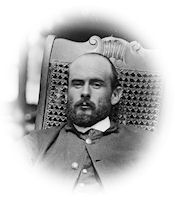

‘London, June 6, 1862

The evening before the Derby, the Chief and I were down at the House of Commons from five o’clock P.m. till one A.m., listening to the great debate of the season. This is one of the sights that I enjoy most. With us debate has gone out, and set speeches and personalities have taken its place. But here, though they no longer speak as they used in the old days of Pitt and Fox, with rhetorical effort and energy, there is still admirable debating. That night we heard Palmerston, Disraeli, Horsman and Cobden. Palmerston is a poor speaker, wants fluency and power, and talks the most miserable sophistry, but he does it so amusingly and plausibly and has such prestige that even Disraeli’s keenness puts no quencher on him. Gladstone is the best speaker in the house, but next to him I should place Disraeli. He looks precisely like the pictures in Punch, and speaks with a power of making hits that is infinitely amusing. He kept me in a roar three quarters of an hour, and the House cheered him steadily. Cobden was very good too. He damaged Horsman dreadfully. But the most striking part of the debate was that not a word as to America or interference was said in it. This was peculiar because the debate was on the subject of retrenchment, and retrenchment was necessary because of the American war. Six months ago such a debate would not have taken place, but in its place we should have had war speeches with no end.

Our position here now, putting aside a few diplomatic questions, is much as it might be at home. The Speaker calls the Chief “The Conqueror,” and it is only now and then, when our armies stop a moment to take breath, and they think here that we are in trouble, that the opposition raises its head a little and barks. Indeed the position we have here is one of a great deal of weight, and of course so long as our armies march forward, so long our hands are elevated higher and higher until we bump the stars. I hear very little about our friend Mason. He is said to be very anxious and to fear a rebellion within the rebellion. He has little or no attention paid him except as a matter of curiosity, though occasionally we are told of his being at dinner somewhere or other. A Southern newspaper called the Index lately started here, contains numbers of southern letters, all of which are so excruciatingly “never conquer” in their tone, that one is forced to the belief that they think themselves very near that last ditch. . . .