Following the American Civil War Sesquicentennial with day by day writings of the time, currently 1863.

Adams Family Civil War letters; US Minister to the UK and his sons.

London, March 21,1862

Nowhere has the condition of the western campaign been productive of better effects than in this country. The change produced in the tone towards the United States is very striking. There will be no overt acts tending to recognition whilst there is a doubt of the issue. It is nevertheless equally true that whatever ability remains to continue the contest is materially aided by the supplies constantly and industriously furnished from here. Every effort to run the blockade is made under British protection. Every manifestation of sympathy with the rebel success springs from British sources. This feeling is not the popular feeling, but it is that of the governing classes. With many honorable exceptions the aristocracy entertain it as well as the commercial interest. So did they in 1774. So did they in 1812. So will they ever, when their narrow views of British interests predominate. . . .

London, March 15, 1862

Times have so decidedly changed since my last letter to you, which was, as I conceive, about three weeks or a month ago, that I hardly know what to write about. My main doubt is about your prospects. I see no reason why Davis and his whole army should n’t be shut up and forced to capitulate in Virginia. If so, you will be spared a summer campaign. But if he is allowed to escape, I shall be disgusted, and God only knows what work may be before you.

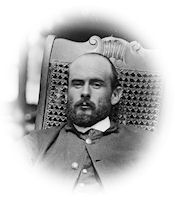
Henry Adams 1862Meanwhile it worries me all the time to be leading this thoroughly useless life abroad while you are acting such grand parts at home. You would be astonished at the change of opinion which has taken place here already. Even the Times only this morning says: “The very idea of such a war is American, multitudinous, vast, and as much an appeal to the imagination as the actual brunt of arms.” And again in speaking of the tone of the Southern papers it says in a striking way: “Some of their expressions recall those in which the Roman historians of the later Empire spoke of the Northern tribes.” The truth is, as our swarm of armies strike deeper and deeper into the South, the contest is beginning to take to Europeans proportions of grandeur and perfection like nothing of which they ever heard or read. They call us insane to attempt what, when achieved, they are almost afraid to appreciate. A few brilliant victories, a short campaign of ten days or a fortnight, rivalling in its vigor and results those of Napoleon, has positively startled this country into utter confusion. It reminds me of my old host in Dresden, who, when he heard of the battle of Magenta, rushed into my room, newspaper in hand, and began measuring on the map the distance from the Ticino to Vienna. The English on hearing of Fort Donnelson and the fall of Nashville, seem to think our dozen armies are already over the St. Lawrence and at the gates of Quebec. They don’t conceal their apprehensions and if we go on in this way, they will be as humiliated as the South itself. The talk of intervention, only two months ago so loud as to take a semiofficial tone, is now out of the minds of everyone. I heard Gregory make his long-expected speech in the House of Commons, and it was listened to as you would listen to a funeral eulogy. His attacks on us, on Seward and on our blockade were cheered with just enough energy to show the animus that existed in a large proportion of the members, but his motion, a simple and harmless request for papers, was tossed aside without a division. I saw our friend Mason on the opposite side of the House to where I was sitting with Thurlow Weed. He is unlucky. One of the Bishops who happened to have come in and was seated near the door, heard a “Hear! hear!” behind him, and looking round saw Mason. For a stranger to cheer is a breach of privilege, and the story went all over town creating quite a row. Mr. Mason now denies it, I am told, and says it was some one else who cheered. He maintains now that the South always expected to lose the border States and that now that they are retiring to the cotton region the war has just begun. He coolly talks this stuff to the English people as if they had n’t always asserted that the border States were a vital point with them. We on the other hand, no longer descend to argue such stories, or to answer the new class of lies; but smile blandly and compassionately on those who swallow them and remark that so far as advised, the nation whom we have the honor to represent is satisfied with the progress thus far made, and sees no reason to doubt that the Union will be maintained in its fullest and most comprehensive meaning.

The blockade is now universally acknowledged to be unobjectionable. Recognition, intervention, is an old song. No one whispers it. But the navy that captured Port Royal, Roanoke and Fort Henry, and that is flying about with its big guns up all the rivers and creeks of the South, is talked of with respect. And the legion of armies that are winning victory after victory on every side, until we have begun to complain if a steamer arrives without announcing the defeat of some enemy, or the occupation of some city, or the capture of some stronghold, are a cause of study to the English such as they ‘ve not had since Napoleon entered Milan some seventy years ago. I feel like a King now. I assert my nationality with a quiet pugnacity that tells. No one treads on our coattails any longer, and I do not expect ever to see again the old days of anxiety and humiliation….

Beaufort, S.C., March 11, 1862

What I see here only confirms my previous impressions gathered mainly from Olmsted and developed in the articles I wrote for the Independent. We can do nothing for these people until the cotton monopoly is broken down and a new state of political economy forces the cotton producer here to employ a new and cheaper machinery. Edward Pierce arrived here on Sunday in command of forty missionaries. They had better have kept away; things are not ripe for them yet and they are trying to force the course of nature. Yet the problem is a difficult one. We have now some 7000 masterless slaves within our line and in less than two months we shall have nearer 70,000, and what are we to do with them? I have not thought sufficiently to express an opinion. My present impression is in favor of a semi-military system for the present. District the territory, oblige the young to go to school, punish rigidly all thieving and violence, and then teach them all the first great lesson, that they must work to live; establish low wages and let the blacks support themselves or starve. If they choose to live in there own huts and cultivate their own land and so support themselves I see no objection, if the young went to school; but the first lesson must be work or starve. These blacks will not starve. They are just such as the white has made them and as we have heard them described. They are intelligent enough, but their intelligence too often takes the form of low cunning. They lie and steal and are fearfully lazy; but they will work for money and indeed are anxious to get work. They are dreadful hypocrites and tomorrow would say to their masters, as a rule, what today they say to us. As a whole my conclusion is that the race might be devoted, if man were what he should be; but he being what he is, it will be destroyed the moment the world realises what a field for white emigration the South affords. The inferior will disappear — how no man can tell — before the more vigorous race. The world has seen this happen before many times and this, though the newest, will not be the last instance. This war, I think, begins the new era from which, while freedom has much, the African has little to hope…

Some things in your letters filled me with astonishment and laughter. First and foremost among them was the idea of your new intimacy with Thurlow Weed — Thurlow of the unopened letter, Thurlow the unforgiving and corrupt, coming at this very time when the star of the injured Sumner — Sumner the philanthropist, the persecuted and the beaten — was no longer in the ascendant. Verily politics does give and take strange bed-fellows, and to find you working heart and hand with Weed, advising with him, confiding in him and believing in him, is something I did not dream to see. I am glad of it. The devil is not indeed so black as he is painted, and in this I think I see the last link needed in a political alliance — a Puritan and New York political confederacy — destined to be potent for good in the affairs of this Continent. Surely never did we need that all motives and all faculties should work together as we do now, and I hope lead and pestilence will spare me to do what I may as a member of the new league. . . .

Beaufort, S.C., February 28, 1862

My life here is very charming and pleasant, but is growing monotonous. I dread the idea of being here much longer, though any change is almost certain to be for the worse and the sameness of stable-duty, drill and camp life is telling on all of us. A prettier place than Beaufort would be hard to find, and a finer climate I do not want to see; but nothing marks the days as they pass, and few know less of the progress of the war than we, in the heart of South Carolina and in sight of the enemy’s pickets. How long this will last we can’t tell, but I fear for a good while; for there are no signs of real activity here, and now we all feel a desire to soon leave this Capua for the free, changing life of Tennessee, Missouri or even Texas. Nothing, I fear, but foreign intervention will get us out of this, however, and I imagine our destiny is either to fight at home against England and France or to march into Charleston.


Meanwhile I am very well and very comfortable, save in some respects of position with which I will not trouble you and which will cure themselves. To us it is now more of a picnic than war, and I live in as much luxury almost in my tent as I ever did at home. We are all very well and as brown and dirty as nuts, and I have never enjoyed life more than in the army. In fact, my college days seem to have come back to me, but bereft of most of their cares. I have been doing a good deal of detailed duty and have pretty thoroughly explored this island and last week they made me Judge Advocate to a Court of Inquiry, and these give quite a variety to life and took me away effectually from certain annoyances of my camp life; but they’ve found me out now and I’m steadily kept here, while my pleasant rides and expectations have come to an end. Socially also things are extremely agreeable here. Colonel Sargent is in immediate command and recent experiences have made me feel as if walled in with friends. My tentmate, Davis, is the very man I need and it is generally supposed in camp that he is a sort of nurse and guardian for me and that without his fostering care I should be a tentless wanderer. In fact my family will be pleased to know that my announcement that at home I had always been considered rather an old Betty was received with shouts of derision, and in camp here, in all matters of comfort, I enjoy the reputation of being the most careless, shiftless and slipshod devil in the whole battalion. Still I get on well enough, but I do not grow here, or, rather, should not long. The life and experience will have its uses for me and they will be great, but it is not the life for me for a permanency. The mind is perfectly fallow. . . .

London, February 21,1862

Of course if you remain on the island there can be little use for your arm of the service, so I presume you may be employed mainly in the labor of the manège. And even if on the mainland I cannot well conceive what business you can have in a region so sparsely settled with whites and with few elements of aptitude for military operations. Neither Savannah nor Charleston can be taken by cavalry, and apart from these ports what is there in that country important to the object of the war?


To be sure you may individually obtain much insight into the economy of that densely populated slave region, and thus reinforce your means of speculating on the cotton producing theory. If so, I should very well like to see the conclusions to which you may come. To me at this distance it looks very much as if the slave tenure must be irreparably damaged by the social convulsion through which the country is passing, but I confess myself puzzled to see what is likely to take its place. I learn that some letters reach here from Carolina planters declaring that they are utterly ruined. The end to them may then be emigration. And what then? Is it a community of negroes requiring to be taught the very rudiments of social and political economy? . . .

The Trent affair has proved thus far somewhat in the nature of a sharp thunderstorm which has burst without doing any harm, and the consequence has been a decided improvement of the state of the atmosphere. Our English friends are pleased with themselves and pleased with us for having given them the opportunity to be so. The natural effect is to reduce the apparent dimensions of all other causes of offense. The Manchester people are patient and uncomplaining. The distress is not yet of such a kind as to give rise to much uneasiness, and the blockade shuts up the expectation of cotton enough to stimulate the prospect of production in other quarters, so that England shall not be again subject to a similar catastrophe. In the meantime industry naturally seeks new channels, and emigration affords a steady outlet. So that I am now quite encouraged to think that the prospect of interference with us is growing more and more remote. All that I have ever sought for has been the opportunity of developing our policy of repression. At first I confess I had little confidence in its success. But of late I have been thinking better and better of it. And it seems to me that the same impression is growing all around me. . . . The struggle is a tremendous one, and must not be measured hastily. I pity the people of the southern states, but I have no mercy for their profligate leaders, who have wantonly brought them to such a catastrophe.

London, February 14, 1862

Good morrow, ‘t is St. Valentine’s day

All in the morning betime.

And I a maid at your window

To be your Valentine.

Hail, noble lieutenant! I have received your letter written on board ship, and I am with you. Now that you are at work, if you see or do anything or hear something that will make a good letter to be published, send it to me and I think I can promise that it shall see the light. Thus you can do double work, and if you write well, perhaps you can get double pay. I shall exercise my discretion as to omissions. .. .

You find fault with my desponding tone of mind. So do I. But the evil is one that probably lies where I can’t get at it. I’ve disappointed myself, and experience the curious sensation of discovering myself to be a humbug. How is this possible? Do you understand how, without a double personality, I can feel that I am a failure? One would think that the I which could feel that, must be a different ego from the I of which it is felt.

You are so fortunate as to be able to forget self-contemplation in action, I suppose; but with me, my most efficient channels of action are now cut off, and I am busy in creating new ones, which is a matter that demands much time and even then may not meet with success.

Politically there is no news here. We shall be allowed to fight our battle out, I think; at least for some time yet. Parliament has met and the speeches have been very favorable to neutrality. I think our work here is past its crisis. The insurgents will receive no aid from Europe, and so far are beaten. Our victory is won on this side the water. On your side I hope it will soon be so too. . . . John Bright is my favorite Englishman. He is very pleasant, cheerful and courageous and much more sanguine than I have usually been. . . .


Beaufort, S.C., February 2, 1862

I was then in the delicious doubt of our first picket detail which I was to command. After all it did n’t come to much and the only danger I had to face arose from the terror of my own horses at the sight of the sabres of my men and at the dulcet sounds of the band at guard mounting. Lord! what a time I had, and for an instant your son proved himself a trooper in profanity at least. But imagine the feelings of a young officer leading the first detail of his regiment ever seen at a public parade on seeing his men and horses go shooting over the field in all directions like squibs on the 4th of July. With stern decision I at once disgraced and sent home two horses and their riders and paraded the rest in style, marching them in review in a way which almost restored our honor. Then I escorted the officer of the day to his post and stationed my details and then visited the outposts.

We are all alone on an island here, and on its shores our pickets stand and gaze placidly at the pickets of the enemy on the shore opposite. About three times a week one party or the other try to cross in boats and get fired at, but no one ever seems to be hurt and so the danger is apparently not alarming. I visited our furthest pickets and found them on Barnwell’s Island at the house of Mr. Trescot, the author of whom we have heard. It is n’t a pleasant picture, this result of war. Here was a new house on a beautiful island and surrounded with magnificent cotton fields, built evidently by a gentleman of refinement and very recently, and there was the garden before it filled with rubbish, and within broken furniture, scraps of books and letters, and all the little tokens of a refined family. Scattered over the floors and piled in the corners were the remains of a fine library of books of many languages, and panels and glasses were broken wherever so doing was thought an easier course than to unlock or open. I wandered round and looked out at the view and wondered why this people had brought all this upon themselves; and yet I could n’t but pity them. For I thought how I should feel to see such sights at Quincy. . . .

London, January 31, 1862

The disputed mock-heroes, who came so near creating a war between people vastly better than themselves, have arrived safe and sound in this city. But for the usual notice in the newspapers nobody would have known it. I doubt whether the presence of one person more or less will have any very serious effect upon the current of public events, which depends far more upon the results now taking place with you than upon any action here…. In the meanwhile the newspapers indulge their respective fancies as freely as ever. Their abuse is not very pleasant, but I am always consoled for it, when I reflect that Lord Lyons is likely to get about as much on his side. The balance of national invective being thus kept about even, I do not see why we cannot consider the one side as neutralising the other, and nothing left…. In any event I shall retain the conviction that the endeavor to excite enmity against us here has a purely political origin, and does not find its root deep in the heart of the community. It pleases an influential class to think that the demon of democracy may be laid at home, if it can be stripped of its American garb. Perhaps they are right, though I do not believe it. No more fatal mistake can be committed by them than that of taking up the cause of a slaveholding oligarchy to prove the fact. Every step in its progress would be a new argument against them. For it would more and more establish the fact of their want of sympathy with free institutions and the progress of the age. Hence the decline of their power over the public mind would be precipitated rather than retarded, and the end would come just as surely….

London, January 31, 1862

We are going ahead just as usual and our position has not varied. The only fault I am disposed to find is the old and chronic one with our Chief, and for that matter, with me also, of not extending his relations enough. I want him to cultivate the diplomatic corps, which has been greatly neglected and from which many advantages may be drawn. About the English it does not so much matter. They are so extremely jealous of whatever looks like foreign influence that on the whole they are better left to themselves. We have now a tolerably good organization in our branch of the press, and Weed is extending this rapidly. He can do everything that we cannot do, and a single blunder on our side that would bring the Legation into discredit, would much more than compensate for any advantage we are likely to get from bold action. Since my exposure in the papers here, I have wholly changed my system, and having given up all direct communication with the public, am engaged in stretching my private correspondence as far as possible. This I hope to do to some purpose, and with luck I may make as much headway so, as I could in any other way.

The two unhung arrived after all. Evidently they are born for the gallows, as the sea casts them out. Their detention of two months was a great stroke of luck for us in my opinion. Their party here had made all their preparations for a war, and stopped their old game almost wholly. Peace was a great blow to them, and has disconcerted all their plans. For two months they ceased to send supplies to the South; they kept the Nashville in port; and they worked on a whole line of manœuvres which are now regularly knocked into a cocked hat. Slidell might have been dangerous in France, for the Emperor was very shaky, but Seward’s course and Weed’s dexterity just turned the corner and now Slidell’s first reception is the announcement of Napoleon’s continued neutrality. Up to the last moment the beggars were confident that directly the opposite course would be taken. Then, in expectation of a war, the Nashville was kept in port. The Tuscarora arrived just in time; and now Mason is received here with the news that the Nashville can no longer remain in port but that both she and the Tuscarora must proceed to sea.


And now the great battle is coming and we shall see lively times. Parliament meets on the 6th. The reprobates are as usual very sanguine that there will be intervention, and that the Ministry will be compelled to recognize or resign. A battle there will be, no doubt, but unless we are defeated at home, I think we shall yet maintain ourselves here. The opposition to intervention of any sort will be bitter in the extreme. They are well organised, I understand, but they are too vulnerable to stand a long contest, and we shall not give up with a short one. Still, much is yet in the dark as to our relative strength. Lord Russell distinctly stated the other day, in private conversation with the Duc D’Aumale, that he thought we should conquer the South in the end. If he thinks so he surely won’t countenance interference. And if the Ministry are firm, we are safe.


Parliament will bring society, and this I dread. The son of the American Minister is likely to meet with precious little favorable criticism in London society in these days, and, after all, I ‘m very little of a society man. I do not mean to press myself on this quarter, but rather to avoid notice and be all the more active where no one sees me. I can’t do much, but I think I can make myself of some use.

I was surprised to hear that you were to go to Port Royal. I can’t conceive of your being placed there except for service, but I should guess that at least half your regiment would be more likely to break their own necks than to hurt an enemy in a battle. If you see the correspondent of the London Star there, a youth named Edge, pray make his acquaintance and tell him that Moran, Wilson and I are all particularly anxious to know whether that travelling suit is worn out yet, or the telescope used up. He is not a bad fellow, though rather long-winded, and his employers are warm allies of ours here with great influence. They like his letters, as we all do, but wish there were more of them and longer. At last accounts he was doing the fever and toping on quinine. I hope you will forswear that luxury, not uncommon, it appears, in that neighborhood.

We are dreading the next news. I hardly dare think of a battle and we all are tacitly agreed not to talk about it. I am sorry to say that our advices are not quite so satisfactory as we would like. But the darkest hour before the dawn. . . .

London, January 24, 1862

The Trent case has not blown hard enough to carry me away from my post of duty here. But it is not quite calm for all that. The rebel emissaries and their sympathisers are continually at work puffing up grievances and straining out falsehoods, and they find multitudes of not unwilling ears. One day it is the barbarism of savage blockade by filling up harbors; the next, it is the wretched pretence of paper blockade, respected by nobody. All this shows the eagerness to clutch at some pretext for interference. The expedition to Mexico is taking extraordinary proportions just now, which may not be without its significance under possible contingencies. Political matters being a little dull on this side, it would seem as if people would like to take a hand in the quarrel in America. I do not wish harm to any body, but if the Austrians and the Italians should fall to belaboring each other a bit just at this moment, so as to turn the public attention from our continent, I do not know that I should regard it as wholly a misfortune. . . .