Following the American Civil War Sesquicentennial with day by day writings of the time, currently 1863.

Adams Family Civil War letters; US Minister to the UK and his sons.

London, November 8, 1861

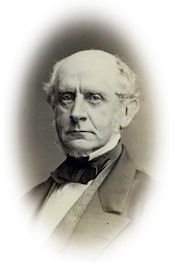
It may be my predilection that biasses my judgment, but I think I see in my father (John Quincy Adams) the only picture of a full grown statesman that the history of the United States has yet produced. By this I mean that in him were united more of all the elements necessary to complete the character than in any other man. I weigh very deliberately the substance of what I affirm. Neither am I disposed to detract from the merit of the many distinguished persons who have likewise run a brilliant career in America. In single points they may have shown a superiority. The mind of Jefferson, or Hamilton, or Webster may when directed to a special object have given indications of more positive power. Marshall may have developed a more disciplined professional intellect. All this may indeed be true. But that does not touch the question. Compare the figures from the foundation to the apex, look at them all round and you will not fail to note deficiencies of a most striking kind in those cases which you will not see in him. Read the writings of Hamilton. You see ability, sagacity and penetration, but you will find it hard to keep awake. Webster is strong in logic and forcible in exposition, but very imperfect in his bases of reasoning. Calhoun is subtle and keen in ratiocination, but never true to any consistent theory of morals. All of them are equally bold in resources for illustration and the philosophy of generalization.


The first and greatest qualification of a statesman in my estimation, is the mastery of the whole theory of morals which makes the foundation of all human society. The great and everlasting question of the right and wrong of every act whether of individual men or of collective bodies. The next is the application of the knowledge thus gained to the events of his time in a continuous and systematic way. It is in this last particular that the greatest number of failures are observed to occur. Many men never acquire sufficient certainty of purpose to be able to guide their steps at all. They then become the mere sport of fortune.

Today they shine because they have caught at a good opportunity. Tomorrow, the light goes out, and they are found mired at the bottom of a ditch. These are the men of temporary celebrity — the Charles Townshends, the John Randolphs, the George Grenvilles, the Harrison Gray Otises of their day. Every civilised nation is full of them. Other men, more favored by nature or education, prove their capacity to direct their course, at the expense of their fidelity to their convictions. They sacrifice their consistency for the sake of power, and surrender their future fame in exchange for the applause of their own day. The number of these is Legion. They crowd the records of all governments. The feebleness of perception and the deliberate abandonment of moral principle in action are the two prevailing characteristics of public men.

In my opinion no man who has lived in America had so thoroughly constructed a foundation for his public life as your grandfather. His action always was deducible from certain maxims deeply graven on his mind. This it was that made him fail so much as a party-man. No person can ever be a thorough partisan for a long period without sacrifice of his moral identity. The skill consists in knowing exactly where to draw the line, and it is precisely here that it seems to me appears the remarkable superiority of your grandfather over every man of his time. He leans on nothing external. He derives support from every thing he can seize. But if circumstances force it out of his hands, he is still found standing firm and alone. . . .
London, November 7, 1861

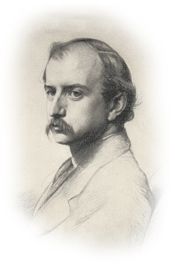
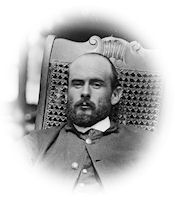
We have just received the account of the disaster to the 20th, and I tell you, I feel bad. That there was a blunder somewhere I have no doubt, and I am inclined to believe that it was Baker and that he paid for it with his life. But to lose Lee and Paul Revere and to have your friends wounded and defeated is not atoned for by the fact of its being a blunder. Thank God it was no worse and that no one was killed. You can imagine I trembled when I ran down the list of losses.

The anxiety with which we are waiting now for the struggle that is coming is not pleasant to bear. A general battle must come before the month is over, and on its result everything will turn. I shall wait to hear of it before I discuss anything about what is to follow.

Affairs here remain in the old position and promise to remain so until there is something decisive on your side. There is no danger of any movement from England, of that you may be sure, and I have done my best to induce the New York press to change its tone towards this country, but they are damned fools, and they will remain damned fools, I suppose, and make our difficulties as great as they possibly can be. The English Government are well disposed enough, at least so far as actions are concerned, and now we hate each other too much to care a brass farthing what our opinions may be, on either side. Last May was the time for the contest of opinions. Now it is the most wretched folly to waste a moment over what this or any other country thinks. We must induce them not to act, but as for their thoughts, I, for one, have been thoroughly satisfied that America can expect no sympathy or assistance in Europe from any Government. They all hate us and fear us, even the most liberal. We must depend wholly on ourselves, and so long as we are strong all will go on, but the instant we lose our strength, down we shall go. The New York press are playing into the hands of the party here which is organized on the basis of antiblockade.


As for me, I am not wholly lazy. A few days ago I called again on Townsend, the editor of the Spectator. He says that the present Ministry will stand and that there will be no interference with us even in the case of another defeat. But he doubts about France. Then I called on “Tom Brown” Hughes and had a long talk with him, but not about politics entirely. He is a regular Englishman and evidently one who prides himself on having the English virtues. He is to ask me to dine with him next week.

But my great gun is the Manchester one. Tomorrow evening I start with a pocketful of letters for Manchester to investigate that good place. With such recommendations I ought to see everything that is to be seen and learn all that is to be learned. I am invited to stay with a Mr. Stell, an American there, and have accepted. My present plan is to report with as much accuracy as possible all my conversations and all my observations, and to send them to you. Perhaps it might make a magazine article; except that it should be printed as soon as possible. If I find that I can make it effective in that form, I shall write it out and send it to you for the Atlantic. If not, I shall contract it and send it to you for the Advertiser or Courier.

As for the matter of your becoming a correspondent of some paper here, I have had it always in my mind, but the difficulty is that every paper here has already one or more American correspondents. I intend to suggest it to Townsend, and should have done so earlier but that I do not think the Spectator cares for correspondents. As for papers against our side, of course I could n’t get you onto one of those, nor would I if I could. George Sumner is writing weekly vile letters in the Morning Post. I wish you would put the screws on him to stop it. He does more harm than his head’s worth. So does Charles, here and at home. They’re both crazy, and George, at least, unprincipled. Charles, though I believe him to be honest, is actuated by selfish motives. . . .

Boston, November 5, 1861

By the last mail I got a letter from you intended for the press. I have not however used it as intended. . . . The great facts of the case stand out. Six months of this war have gone and in them we have done much; and by we I mean our rulers. But if we have done much with our means, the rebels have performed miracles with theirs. At the end of six months have we a policy? Are traitors weeded out of our departments? Is our blockade effective? Is the war prosecuted honestly and vigorously? To all these questions there is but one answer. The President is not equal to the crisis; that we cannot now help. The Secretary of War is corrupt and the Secretary of the Navy is incompetent; that we can help and ought to. With the rebels showing us what we can do, we ought to be ashamed not to do more. But for me I despair of doing more without a purification of the Cabinet. With Seward I am satisfied, and so is the country at bottom, for our foreign affairs are creditable. Chase will do and to Blair I make no objection. But all the rest I wish the people would drive from power. Your historical examples are not good. When was England greatest? Was it not when an angry people drove the drivellers from office and forced on an unwilling King the elder Pitt, who reversed at once the whole current of a war? I want to see Holt in the War Department and a New York shipowner in that of the Navy, or else Mr. Dana. I am tired of incompetents and I want to see Lincoln forced to adopt a manly line of policy which all men may comprehend. The people here call for energy, not change, and if Lincoln were only a wise man he could unite them in spite of party cries, and with an eye solely to the public good.

Herewith you will receive three Independents, in each of which you will find an article by me for your delectation. They answer at some length your suggestion that I am an “abolitionist.” I am also assured that they met with favor in the eyes of Wendell Phillips, which indeed I do not understand. I imagine they will not meet your and my father’s views, but on the whole I am not dissatisfied with the two last in general and the last in particular

Please notice the leader in the Independent of the 24th. I did more than I expected in influencing the editorials of the Independent.

London, October 25, 1861

Our American news comes much in the old way, always of a chequered character. First, we are compelled to blow away a great deal of froth on the top of the cup, and then we find the liquor more or less muddled beneath. The impression is that “some one has blundered.” Our Navy does not look as it did in the last war. Then the land expeditions indicated as much incapacity as they do now. Now our ships do nothing but catch fishing schooners. The Alliance, the Goudar, the Thomas Watson, the Bermuda, the Fingal, the Amelia, have all taken quantities of clothing, and military equipment of every description from here, of which we have had notice beforehand. But I do not see a sign of their capture in any quarter. Yet to my mind this is a greater triumph than twenty such results as that at Bull’s Run. The latter at least had the effect of seriously crippling the victor. The former supplies the material for carrying on the war indefinitely and gives to all Europe the idea of an ineffective blockade — the most dangerous thing of all to our ultimate success… I cannot sympathise with Mr. Sumner’s speech, because the tone is purely vindictive and impracticable. But I do not the less feel that we must ultimately embrace the military necessity as a basis for the reconstruction of a stable government.

London, October 25, 1861

You complain of the manner in which England has been allowed to wheel round. I mean to write a letter to the Times on that matter some day. Do you know the reason why it is so? How do you suppose we can make a stand here when our own friends fail to support us? Look at the Southerners here. Every man is inspired by the idea of independence and liberty while we are in a false position. They are active, you say. So they are, every man of them. There are no traitors among them. They have an object and they act together. Their merchants and friends in Liverpool have been warm and vigorous in their support from the beginning. Ours have been lukewarm, never uttering a hearty word on our side, and the best of them, such as Peabody and the house of Baring’s invariably playing directly into the hands of our opponents. They have allowed the game to go by default. Their talk has been desponding, hesitating, an infernal weight round our necks. How can you suppose that we should gain ground with such allies.


But we might nevertheless have carried the day if the news from home had been such as to encourage our party, which was once strong and willing. You know how much encouragement we have had from your side. Every post has taken away on one hand what it brought of good on the other. It has by regular steps sapped the foundations of all confidence in us, in our institutions, our rulers and our honor. How do you suppose we can overcome the effects of the New York press? How do you suppose we can conciliate men whom our tariff is ruining? How do you suppose we can shut people’s eyes to the incompetence of Lincoln or the disgusting behavior of many of our volunteers and officers.

I tell you we are in a false position and I am sick of it. My one hope is now on McClellan and if he fails us, then as I say I give it up. Here we are dying by inches. Every day our authority, prestige and influence sink lower in this country, and we have the mournful task of trying to bolster up a failing cause. Do you suppose I can go among the newspapers here and maintain our cause with any face, with such backing? Can I pretend to a faith which I did once feel, but feel no longer? I feel not seldom sorry in these days that I did n’t follow my first impulse, and go into the army with the other fellows. Our side wants spirit. It does n’t ring as it ought.


These little ups and downs, this guerilla war in Missouri and Kentucky, amount to nothing but vexation. Oh, for one spark of genius! I have hopes of McClellan for he does n’t seem to have made any great blunders, but I don’t know.

We are all in a lull here. The English Government is perfectly passive and likely to remain so. . . .

London, October 15, 1861

In your last letters I am not a little sorry to see that you are falling into the way that to us at this distance seems to be only the mark of weak men, of complaining and fault-finding over the course of events. In mere newspaper correspondents who are not expected to have commonsense or judgment, this may be all natural, but you ought to know better, for you have the means for hitting the truth nearer. For my own part I tell you fairly that all the gossip and senseless stories that the generation can invent, shall not, if I can help it, shake for one single instant the firm confidence which I feel in those who are guiding our affairs. You are allowing your own better judgment and knowledge to be overruled by the combined talk of a swarm of people who have neither knowledge nor judgment at all; and what is to be the consequence, I would like to know, if you and men like you, who ought to lead and strengthen public opinion in the right path, now instead of exercising your rights and asserting your power for good, give way to a mere vulgar discouragement merely because the current runs for the moment in that direction. Call you that backing of your friends? A plague upon such backing. Every repetition that is given to these querulous ideas tends to demoralize us worse than a defeat would, and certainly here abroad is sure to counteract every attempt to restore confidence either in our nation or her institutions.


Even if I believed in the truth of the sort of talk you quote, I would suspend the moral habeas-corpus for a time and deny it. But I don’t believe it; and more than that, in all the instances which you quote about which I know anything at all, I know it to be false. You, like a set of people with whom you now for the first time agree, seem to have fallen foul of the President and Cabinet and in fact every one in authority as the scapegoats for all the fault-finding of the day, simply because their positions prevent them from showing you the truth. Now so far as military and naval affairs go, I know nothing at all, but one fact I have noticed and this is that our worst misfortunes have come from popular interference with them. Croaking is just as likely to bring another defeat, as that ridiculous bravado which sent our army to Bull Run. But your troubles don’t end with the army and navy; if they did, I might perhaps think that your informants really knew something about a matter on which you and I know nothing. You go on to find fault with the President and the Secretary of State, or at least to quote others who find fault, as though there might be something in it. Here I am willing to make a direct issue with your authorities, and you may choose between us which you will believe and whose information you think best entitled to credit. They say that the Secretary of State’s education and train of mind are not adapted for these times; that his influence is no longer such as it once was; that you can no longer discern under the surface of events that firm grasp and broad conception that we once admired and bent to, in the founder of the republican party; and finally you quote an old calumny, thirty years ago as common as it is today; a year ago as virulent as his prominence could make it; a calumny which you knew then from the testimony of your own eyes and ears to be utterly and outrageously false; and you seem now to suppose that mere repetition is going to shake my own knowledge of facts; my own certainty of conviction; and that too because men who are really ignorant attempt to make you believe that you are so.


You say that Mr. Seward’s hand is not evident in the course of events. I disagree entirely to any such idea. I think it is very evident and so much so that, feeling perfect confidence in him, I have come to the conclusion that our ideas are wrong and that his are right, at least on one question. I am an abolitionist and so, I think, are you, and so, I think, is Mr. Seward; but if he says the time has not yet come; that we must wait till the whole country has time to make the same advance that we have made within the last six months, till we can all move together with but one mind and one idea; then I say, let us wait. It will come. Let us have order and discipline and firm ranks among the soldiers of the Massachusetts school.

But apart from this, when you say that you do not see the hand of the Secretary of State in the course of events, I tell you plainly that you do not know that whereof you speak. I do assure you, and I do pretend to knowledge on this point, that his direction of the foreign affairs of the nation has been one of very remarkable ability and energy, and to it we are indebted now in no small degree; in a very large degree, rather; to the freedom from external interference which allows us to give our whole strength to this rebellion. Never before for many years have we been so creditably represented in Europe or has the foreign policy of our country commanded more respect. They will tell you so in Paris and they will tell you so here, if you don’t go to such authorities as the Times for your information. The high tone and absolute honor of our country have been maintained with energy and lofty dignity, but are we not on good terms still with foreign nations? Have not the threatening clouds that were hanging over our relations with this country a few months since, been cleared away by an influence that no man of common experience would imagine to be accident? And what of Spain? And Mexico? Trust me, when you come to read the history of these days at some future time, you will no longer think that the hand of the Secretary of State has been paralysed or his broad mind lost its breadth, in a time of civil war.

Now let me read you a lesson in history. When the English nation in the year 1795 were struggling with revolutionary France, their armies were beaten, their allies conquered and forced to sue for peace; every military effort failed the instant it was put forth; famine was in the land; revolution raised its head boldly within the very hearing of Westminster Hall; ill-success of every kind, infinitely greater than our own, dogged their foot-steps at every move; and their credit sank under their enormous subsidies to Austria, and eternal draughts on the money market. But did the English people hesitate to give a firm and noble support to Pitt, their Prime Minister, in spite of his gross failures? Not a bit of it. His majority in Parliament and throughout the nation was firmer than ever, and when he threw open a loan at last to the people, even in such a dark hour as that after Bull Run was to us, noble and peasant, King and Commoner, snapped it up in a single week, at a rate at which the money-market would have nothing to do with it. The English have the true bull-dog’s grip, and that is what we must have if we expect to do anything either in victory or in defeat.


If you think the above worth printing, send it to Charles Hale. If not, no matter.

Boston, October 14, 1861

My impression is that we are on the eve of great movements and the naval expedition, if successful, will open the ball. We can see little in the papers, but it looks to me as if the correspondents were at fault. But in truth McClellan is coiling himself up for a spring on Manassas immediately after a coast success. If he succeeds, and in him alone have I any confidence, the loan will be at a premium in twenty-four hours and all over Europe in six weeks. For those who have confidence now is the time to buy and sell in the victory. .. .

Let me call your attention to the article on England and America in the Examiner I send the Governor by this bag. It is said to be written by Dr. Hedges and is one of the ablest papers I have read for a long time. . . .

By the way, I had almost forgotten what I most wanted to say. In his last letter the Governor hinted that it would be a good thing if I could get a connection as American correspondent with some London paper, as the correspondents from this side as a whole were beneath contempt. I will leave this to you. Of course I demand no pay and only desire to influence public opinion abroad. If any respectable London paper will print my letters, I will let them hear from me as often as there is anything of interest to let them hear about. I am not anxious about it at all, but at this crisis I am anxious to do everything in my power.

Quincy, Sunday, October 6, 1861

I received your letter of the 7th some ten days ago and not a word from London since; so that as I have seen no signs of trouble in the press, I presume the little flurry you there mention has passed away. In fact I cannot say I share your apprehensions, though I must confess I think the government’s cards, so far as the public sees them, are played badly enough both here and in England. While the agents of the Confederates are abroad working the whole time at public opinion and at the foreign mind, influencing papers and thinkers and undermining us the whole time, our press at home does but furnish them the materials they need and our agents abroad apparently confine their efforts to cabinets and officials and leave public opinion and the press to take care of themselves. This may not be so in fact, but if it is not, all that can be said is that the Southern emissaries are far more efficient than ours. We have money and the command of the sea, so that Europe can know nothing except through us, and yet, from the beginning, so much more active and efficient has the South been, that we have done nothing but lose ground. Why is this? I may be all wrong, but to me our policy in England seems as plain as noon-day, but I see no signs of its operation on the press, though I hope it is working secretly. England is made up of large interests. Some of those are in our favor and some opposed to us; but why are they not played off against each other? This war promises immense results to India, and has already carried up the Indian bonds. That interest is immensely powerful in England and can only reap benefit from the war; but I have not noticed that its organs were particularly friendly to us. The shipping interest derives great benefit from the war, but their organs are opposed to us. Why is this? What are our agents doing? Why is not India played off against Manchester and London against Liverpool? Why do the Southern agents have it all their own way? Why are not a few American papers sufficiently under the control of government to enable some expression of good sense to go abroad? Why is everything so utterly left to take care of itself? Remember I only ask these as questions, for I do not know but what a profound plan and ceaseless activity under-runs it all; but if it does, the State department certainly keeps its own councils much better than the war. So much for these things.

I wait curiously for the next development from abroad and chuckled amazingly over the tight place in which the Governor had got Lord John. Meanwhile, if there is to be trouble, for Heaven’s sake give me a few days’ notice. . . .

Tuesday, 7th

I send the corrected copy of Sumner’s speech herewith. Did you ever see anything like the classical exposure in the Advertiser? How can it be accounted for? What can Sumner mean by perpetrating historical frauds so sure of detection? The speech has been made the subject of most severe criticism and that too from men hitherto Sumner’s friends. Dana tore it to shreds for my edification in a most substantial manner, and Sumner has done himself no credit. For myself I’m glad the speech was made, though I think very differently from most in these matters. The education is going on and the fallacies lie hid. I agree with it, however, neither in theory or results, and if we had a Juvenal, would not the celebrated author of a certain 4th of July peace oration, now become the leading advocate for a savage Servile war, catch particular jess. Sumner is a humbug! There’s no doubt about it. He’s been a useful man in his day, but he’s as much out of place now as knights in armor would be at the head of our regiments.

The convention was managed and its results brought about by Dana, and it was to him a great personal triumph as he had all the old party associations to contend with. You never saw a man chuckle over anything as he did over his doings at Worcester. Sumner, I imagine, is offended with him and will evince it in the usual way. There is, of course, no political contest. The position of the country is now very curious and my strong conviction is that everything is ready and one good victory would start everything. Politics are so dead that a little success would lead to an era of good feeling in the North. Business is, in New England, all ready to rise under the tariff to a state of activity, unusual even in time of peace. Everything that is left is strong and the present feeling of depression is wholly unfounded. I am convinced that one victory would make an almost incredible change, but we shall not see it for a long time without a victory.

London, October 5, 1861

Your letter and your articles in the Courier arrived last Monday. I sent one set of them down to Lucas, the editor of the London Star, and received a complimentary note in return which I will enclose to you. The other set I sent down to the editor of the Spectator, and from him I have not heard. There was one article to the Star which was partly drawn from your’s, without quoting it, but there has been no reprint. The Spectator never reprints, but if it notices you, I will send you the notice. Your Manchester paper I have made unavailing efforts to find, but London seems to despise anything provincial, and I can find the paper nowhere. London papers go to Manchester but Manchester ditto don’t seem to return the compliment.

This week I have no news for you. Everything seems to be getting along well and the Government here behaves itself very fairly. I don’t know whether my last letters will appear or not, but if they do you can form some judgment as to my inventive powers. The truth is that I ‘ve lately told so much in that way which was not generally known, that my position began to be too hot and I thought I ‘d try a little wrong scent. The facts are all invented therefore, but the idea is carried out as faithfully as I could, of quoting the state of English opinion.

We have been overrun by visitors this week. My friend Richardson goes in the Arabia to Boston, if he can, but I ‘m not sure that he won’t have to make Halifax his terminus. He was in a horrible position. His family and property are in New Orleans and he has a brother in the Virginian army. He is himself a good Union man, I believe; at all events he talks so; but he does not want to do anything which will separate him from his family or make them his enemies. So he could not make up his mind to take the oath, and determined rather to run his risk without a passport. I believe he means to pass the winter in Boston. He told me all about his troubles and I strongly advised him not to think of ever living in New Orleans again; at least as an architect.

Sohier and Charley Thorndike have been here this week. Both leave for Paris this morning. Sohier was quite amusing, and dined with us twice. But the trouble about London is that no one ever stays here and I can’t keep a companion. As for Englishmen I don’t expect to know any of my own age for at least six months more, as this club business has got to be settled and the season to come round again first. We see no English people now, or very few, and the fogs are thick almost every morning. Hooroar! Can you find out (not through Sumner, who seems to have distorted even your ideas of Washington affairs) what ground Seward takes on the slave question?

I need n’t say that the articles are devilish good and made me blue for a day, thinking of my own weak endeavors in the same way.

London, September 28, 1861

Time goes precious fast and yet seems to leave very little behind it. I have been very busy for the last three weeks but now am at leisure again though I have some ideas of beginning a new tack. Papa got back late last night from a visit to Lord Russell’s in Scotland. I must say I think Lord Russell was rather hard in making him take all the journey, but as it could n’t well be helped I am glad it has happened, and especially so as it will have an excellent effect on the relations of the two countries. When I last wrote things looked threatening if I recollect right. Since then they have wonderfully cleared away. Lately, except for the Bunch affair and the negotiation business, England has behaved very well. The Southerners were refused recognition and we are no longer uneasy about the blockade. Lord Russell has explained the Mexican business very satisfactorily and it appears that England is trying to check Spain, not to help her. Lord Russell was very open and confidential towards the Chief and showed him confidential despatches proving the truth of the matter with regard to Spain, besides treating him in every way extremely kindly and confidentially. You know that these are state secrets which no one knows out of the immediate circle here, so you must be very careful not to let it out, even to write back here that you know about it, as it might shake confidence in me….

I have no news for you beyond what I’ve told. We are all right here, strong and confident. If you win us a victory on your side, the thing’s finished. Rosecrans seems to be a good deal of a man, if I understand his double victory over Floyd and Lee. The Lee business has not wholly reached us yet, but seems to be a first-rate thing, as he was one of their great guns.

I occasionally worry a newspaper writer, but advance slowly. Called on Tom Brown Hughes the other day but he was out of town and won’t be back for some time. No one is in London, but in about a month I suppose the country visiting will begin and then one may make a few more acquaintances. . . .

We are settling down into the depths of a London autumn. The fogs are beginning and the streets look as no streets in the world do look out of England. Berlin was never so gloomy as London. Every now and then, when things go wrong, I feel a good deal as though I would like to cut and run, but on the whole my position is much better than it was three months ago. I saw a little article of yours (I suppose) in the Transcript a short time ago, and I hope that you will see in some of the London newspapers if not my writing, at least my hand. They need it, confound ’em.


I enclose an order on the Times. I did n’t know precisely how to word it for I don’t know how many of my letters he has published. Fourteen or parts of fourteen I know of, but there may be more. I wish you could manage to get the money from Raymond without letting the subordinates into the matter. I doubt if I can carry it on much longer without being known.