Following the American Civil War Sesquicentennial with day by day writings of the time, currently 1863.

Adams Family Civil War letters; US Minister to the UK and his sons.

Charles Francis Adams To His Son

London, June 14, 1861

My position here thus far has not been difficult or painful. If I had followed the course of some of my colleagues in the diplomatic line this country might have been on the high road to the confederate camp before now. It did not seem to me to be expedient so to play into the hands of our opponents. Although there has been and is more or less of sympathy with the slaveholders in certain circles, they are not so powerful as to overbear the general sentiment of the people. The ministry has been placed in rather delicate circumstances, when a small loss of power on either extreme would have thrown them out. You can judge of this by the vote on the Chancellor’s budget which was apparently carried by fifteen, but really by the retirement of opponents from the division. The difficulty seems now to be removed. No farther test vote is expected at this session. I think they are at heart more friendly to the United States than the Conservatives, though the question is not raised between them. I am therefore endeavoring to establish such relations with them as may re-establish the confidence between the countries which has been somewhat shaken of late. Circumstances beyond my control will have more to do with the result for good or for evil than any efforts of mine. I wait with patience — but as yet I have not gone so far as to engage a house for more than a month at a time. . . .

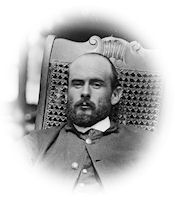
Post image for “Now if such a regiment is raised, I wish to go in it, and I think I have a right to almost demand your assent to my doing so.”–Adams Family Letters, Charles Francis Adams, Jr., To His Father

Boston, June 10, 1861

I am sorry to see what you say of the possibility of your demanding your passports. Stocks rose in New York on Saturday owing to the reported tenor of your despatches, which must however have been of a tone very different from your letter to me. Still I can’t help thinking that the tenor of the news from this country must create an improvement in England. Now, however, the feeling here is very bitter, and significant intimations fall from some of the leading papers that the July Congress, while it modifies the Morrill tariff so as to assist and help France to the utmost of our power, will indulge in no friendly legislation to England. This is the tone of the Evening Post, a free-trade journal. If England wants to break down the Morrill tariff, her only course is to take the back track and conciliate our good will. . . .

About this war business. A great change has come over my feelings since you left, as I have told you, and I now feel not only a strong inclination to go off, but a conviction that from many points of view I ought to do it. I am twenty-six years old and of course have a right to do as I choose; but I acknowledge, as I have done all along, that great regard is due in this matter to you and your feelings, and now, as heretofore, I shall not go without your consent; but I think you ought to give that consent, if, under certain circumstances, I ask for it. Undoubtedly a further levy will soon be demanded in this war and when it comes there will be an effort made in this state to send forth a model regiment, and already John Palfrey is spoken of as its colonel. I saw Governor Andrew the other evening and he promised me that, in that or any other regiment to be sent from Massachusetts, if I would apply, he would give me a company. Now if such a regiment is raised, I wish to go in it, and I think I have a right to almost demand your assent to my doing so. How does the case stand? I cannot see that in a business point of view I am very necessary to you. Your property and mine would be just as safe and probably better managed in the hands of a man of business, or Sam Frothingham under John’s supervision, than in mine; and of this you must be aware. So how is my presence here necessary to you, which is the only ground on which I think you ought to object? If you say it is, I will give up the idea still, but before saying so I earnestly hope you will consider the matter fairly. You will say there is small glory in a civil war, and this is generally true; but in the civil war in England or in the Revolution here, what should we now think of a man who, in the hour of greatest danger, sat at home reading the papers? For years our family has talked of slavery and of the South, and been most prominent in the contest of words, and now that it has come to blows, does it become us to stand aloof from the conflict? It is not as if I were an only son, though many such have gone; but your family is large and it seems to me almost disgraceful that in after years we should have it to say that of them all not one at this day stood in arms for that government with which our family history is so closely connected. I see all around me going, but I sit in my office and read the papers, for I have nothing else to do. I see great events going on, and a heroic spirit everywhere flashing out, and you ask me for no sufficient cause to stifle my own and, when sitting here at home, I am convinced of my failure as a lawyer, to quietly sink into a real estate agent. I hope you will let me go, for if you should and I return, it will make a man of me; and if I should not return — am I likely to live to a better purpose by going on as I have begun? Perhaps the occasion will not demand it. Perhaps no such regiment will be raised. If it should so happen, however, I earnestly hope for our own credit and that of our name, that you will make no objection to my taking this commission which now I have but to ask for, and going forth to sustain the government and to show that in this matter our family means what it says…
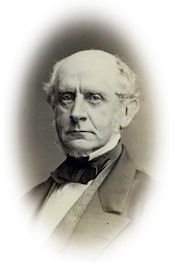
Post image for “You may be more interested to know a little about the House of Commons. My diplomatic privilege gives me the entree there, and I have used it twice.”–Adams Family Letters…Charles Francis Adams To His Son .

London, June 7, 1861

For after all that may be said, there is not and cannot be any assimilation of manners and social habits between Americans and English people. All intercourse with the aristocratic class is necessarily but formal. We are invited everywhere, and dine out almost every day, but this brings us no nearer. Everybody is civil, but each one has his interests in England, so that a stranger is but an outsider at best. . . .

You may be more interested to know a little about the House of Commons. My diplomatic privilege gives me the entree there, and I have used it twice. The last time was at the close of the debate on the budget, when it was generally understood that the fate of Mr. Gladstone, if not of the whole Cabinet hung on the decision. More than six hundred members were present, and the array showed great equality on the two sides of the House. I had attended on the Monday before and had made up my mind that if the division should follow, the opposition would prevail by a decided vote. The ministry however had influence enough to command an adjournment, and on Thursday the case stood differently. The attack was neither so vigorous nor so confident, whilst the defence was bolder and more strenuous. The first effective stroke came from Lord John Russell, which I did not get in time to hear. The next was from Mr. Cobden, which was plain, direct and evidently telling on the House. The decisive blow came, however, from Mr. Gladstone, who stood like a bull in the arena surrounded by dogs. He began by tossing the very last one who had attacked him, and he went on with every one in turn, until he had them all sprawling on the ground. He is by all odds the best speaker I have heard, and though I cannot think him a very great man, I must award him the palm as a skilful debater. Lord Palmerston is evidently powerful more from his character, talents and position, than from any oratorical qualities. The ministry triumphed by fifteen majority only.

The characteristic of the House is that it is in essence a real deliberative body, whilst our House has ceased to be one. We speak to the people and not to the audience. Hence we make orations and not speeches. I know not how this can be remedied in America. Some members of Parliament tell me that this is perceptibly growing even here. So it must be, in proportion to the control which the people exercise over their representatives. . . .

Post image for “Imagine a line of pot-bellied, round-shouldered respectabilities of fifty or thereabouts standing in two rows and trying to dance, and you have a fair idea of this justly celebrated corps.”–Adams Family Letters, Charles Francis Adams, Jr., To His Mother .

Boston, June 3, 1861

The war affords them [of Quincy] some diversion for their thoughts and the clash of arms is heard even among the Quincy exempts, who hail John Captain. I drilled them the other evening and a funnier sight I don’t want to see. Imagine a line of pot-bellied, round-shouldered respectabilities of fifty or thereabouts standing in two rows and trying to dance, and you have a fair idea of this justly celebrated corps. I was infinitely delighted when on glancing down the ranks, as I came the heavy military on them. I saw Mr. Robertson and Captain Crane side by side in the front rank, with Mr. Gill and poor old Flint vainly struggling to cover them in the rear. That was too much and I almost smiled right out loud. The only man I saw who could by any possibility be converted into a soldier was, unfortunately, our worthy pastor, Mr. Wells, who however in case of emergency would probably have other duties to perform. There he was, however, with his musket in his hand and it was so refreshing to see a man who seemed able to bend his back that I asked John to make him a sergeant and I believe he promised that he would. By the way, I really do believe we have drawn quite a prize in Wells. He seems to have pleased every one and you don’t know how strange it seems to have some one here who really takes an interest in and means to manage the Parish. I had a short talk with him the other evening and was much pleased. He evidently understands the people here and is going to make his mark, and I have little doubt that if he lives, you ‘ll find the Parish a very different thing when you come home from what it was when you went away. . . .

Charles Francis Adams, Jr., To His Father

Quincy, May 27, 1861. I got out here last Saturday evening, having that day been relieved at Fort Independence by the 4th Battalion of rifles. We would like to have stayed there longer, and were certainly arriving at a state of very considerable proficiency in drill, but our being kept there was beginning to create some hard feeling and the Governor was obliged to yield to the pressure. What will be done with us now, if any thing, no one seems to know. I hardly think they will leave such an efficient body of men alone just now, and yet I do not see how we can be profitably employed. That we shall not be sent out of the State is certain; but the rumors seem to tend towards our being sent to the State camp to serve as a model and to furnish instructors, and ultimately to be used as a supply of officers. Meanwhile I find that I have not returned a day too early, and that my presence is necessary in Boston for some time to come. To me things look pretty bad. Money is plenty, but lenders are very timid. Business is wholly dead and the business community seems to be calculating as to whether they can live out the war or had better go down now. For myself, I see little to change the views I have entertained all along. We are going into this war too heavily to have it last long, but it will be an awful drag while it does last, and all who are not under short sail must go down. I do not believe in getting alarmed or in the eternal ruin of the country; but a great deal of money has got to be lost and all who have, have got to lose some, be it more or less. . . .

Of course all this does not at all add to the pleasure of a reluctant return. I have become fond of military life and I feel ashamed that I am here at home when so many of my friends have already gone, and gone in such a way. I do not wish to boast of what I should do under other circumstances, but I feel, as I look at these tedious and repulsive details [of business], that I should tonight sleep perfectly happy if tomorrow I could hand them all over to anyone who would take them, and for myself go and join my friends in camp. I could get a commission and a good one, for only today Dana evidently wanted to advise me to go and told me I ought to have a majority if I wished it. . . .

Charles Francis Adams To His Mother

Fort Independence, May 12, 1861

The truth is that in garrison life, with guard duty three times in two weeks, five hours drill a day and the necessity of waiting on oneself, it is difficult either to write or read much in a room about the size of our bed-room in Boston in which eleven other men are quartered — that is live, eat and sleep — besides myself. Yet I like the life very much and am getting as rugged and hearty as an ox, passing all my time in eating, drilling, sleeping and chaffing. Our mess is made up of very good fellows indeed, all friends of mine, such men as Clark and Pratt, the two celebrated rowers, Tom Motley, Jr., Caspar Crowninshield, Fred d’Hauteville, etc. Our life is one of rigid garrison duty: reveille at half past five with breakfast at six; dress parade at seven; a squad drill at eight and a company drill at ten; at twelve dinner and at three a battalion drill which lasts until half past five, when we have an evening dress parade, which finishes work for those off guard for the day. At six we have tea and amuse ourselves till half past nine, when tattoo beats and we go to bed and after a little sky-larking quickly to sleep. When on guard, which every man is about twice a week, it is rather restless, as for twenty-four hours we are on guard two hours and off four, day and night, and properly can’t leave the guard room; but as our mess are especial friends of the sergeants rules are rather relaxed in our favor. Food is tolerable, coarse but enough, though devilish unclean at times. In our mess each man takes his turn in washing up the dishes and keeping the quarters of the mess clean. So once in ten days or so visitors see the best blood in America, in the person of your son, washing dishes, sweeping floors, wheeling coal, etc., like a family servant. Meanwhile health is superb and I never looked so browned and hearty in my life. . . .

Outside we hear a good deal of a raging military ardor. A good many young men we know are getting commissions, especially in Gordon’s regiment, and from our mess three men went up in one day, among them George R. Russell’s son Henry; but two of them came back, Hal only staying. Sam Quincy they say is a Captain. Elliot Parkman has a commission of some sort in the navy and Dick Goodwin, George Bangs, Rufus Choate, Greely and Pelham Curtis and others with Gordon. . . .