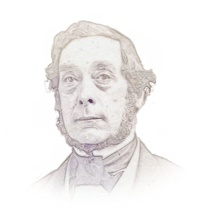
DECEMBER 23D.—Gen. T. J. Jackson has destroyed a principal dam on the Chesapeake and Ohio Canal. That will give the enemy abundance of trouble. This Gen. Jackson is always doing something to vex the enemy; and I think he is destined to annoy them more.
It is with much apprehension that I see something like a general relaxation of preparation to hurl back the invader. It seems as if the government were waiting for England to do it; and after all, the capture of Slidell and Mason may be the very worst thing that could have happened. Mr. Benjamin, I learn, feels very confident that a rupture between the United States and Great Britain is inevitable. War with England is not to be thought of by Mr. Seward at this juncture, and he will not have it. And we should not rely upon the happening of any such contingency. Some of our officials go so far as to hint that in the event of a war between the United States and Great Britain, and our recognition by the former, it might be good policy for us to stand neutral. The war would certainly be waged on our account, and it would not be consistent with Southern honor and chivalry to retire from the field and leave the friend who interfered in our behalf to fight it out alone. The principal members of our government should possess the highest stamp of character, for never did there exist a purer people.
DECEMBER 22D.—Dibble has succeeded in obtaining a passport from the Secretary himself.
DECEMBER 21ST.—Col. Bledsoe was in to-day. I had not seen him for a long time. He had not been sitting in the office two minutes before he uttered one of his familiar groans. Instantly we were on the old footing again. He said Secretary Benjamin had never treated him as Chief of the Bureau, any more than Walker.
DECEMBER 20TH.—A man by the name of Dibble, the identical one I passed on my way to Montgomery last spring, and whom I then thought acted and spoke like a Yankee, is here seeking permission to go North; he says to Halifax. He confesses that he is a Yankee born; but has lived in North Carolina for many years, and has amassed a fortune. He declares the South does not contain a truer Southern man than himself; and he says he is going to the British Provinces to purchase supplies for the Confederacy. He brought me an order from Mr. Benjamin, indorsed on the back of a letter, for a passport. I declined to give it, and he departed in anger, saying the Secretary would grant it. He knew this, for he said the Secretary had promised him one.
DECEMBER 19TH.—Judge Perkins came in to-day and denounced in bitter terms the insane policy of granting passports to spies and others to leave the country, when every Northern paper bore testimony that we were betrayed by these people. He asked me how many had been permitted to go North by Mr. Benjamin since the expiration of the time named in the President’s proclamation. This I could not answer: but suggested that a resolution of inquiry might elicit the information. He desired me to write such a resolution. I did so, and he departed with it. An hour afterward, I learned it had been passed unanimously.
DECEMBER 18Th.—Men escaped from the Eastern Shore of Virginia report that Mr. Custis had landed there, and remains quiet.
December 17th.—Bravo, Col. Edward Johnson! He was attacked by 5000 Yankees on the Alleghany Mountains, and he has beaten them with 1200 men. They say Johnson is an energetic man, and swears like a trooper; and instead of a sword, he goes into battle with a stout cane in his hand, with which he belabors any skulking miscreant found dodging in the hour of danger.
DECEMBER 16TH.—We hear to-day that the loyal men of Kentucky have met in convention and adopted an ordinance of secession and union with our Confederacy.
DECEMBER 15TH.—The President’s private secretary, Capt. Josselyn, was in to-day. He had no news.