Huntsville, Monday, Jan. 11. Worked quite hard all day building fireplace. Had to carry much of the brick on our shoulders twenty rods, but we had completed it by night, and had the satisfaction of sitting by the fire in the evening. Draws well.
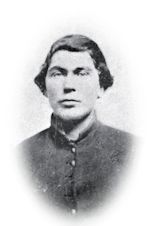
An Artilleryman’s Diary–Jenkin Lloyd Jones, 6th Battery, Wisconsin Artillery.
Huntsville, Sunday, Jan. 10. Notwithstanding that all were very tired from the fatiguing march of the past three days through severe weather, the camp reverberated with the sound of axe, saw and lumber, erecting quarters for the third time this winter. Teams busy and in great demand hauling lumber and brick, of which there is plenty. Our tent is back with the boys on the R. R.; therefore E. W. E. got a load of lumber and built a hut in accordance with our means, and by night had it up and covered with shakes. Slept in it but it was quite cold.
Huntsville, Ala., Saturday, Jan. 9. I felt very good on our “downy” bed, so good that I did not wake up till broad daylight. Rolled up our blankets in great haste and started toward camp, as we were out of rations, but we found the Battery moving and were obliged to “fall in” with an empty stomach, as a reward for our straggling. Flint River was crossed on mule wagons, which were very slow, obliging us to stand on the banks for nearly an hour. It was freezing very hard and all were chilled through. The natives say it was the coldest day known for years. Animals and wagons covered with ice. Cooked coffee on the other side while the remainder of the Brigade crossed. By that time we were ready to follow with our breakfast eaten. Marched very fast through a beautiful country interspersed with a low range of bluffs of the Cumberland Range. Good timber and beautiful water. Sun shone in the afternoon making roads muddy and slippery, very tiresome walking. Met John A. Logan and staff going back afoot from Huntsville.
4 P. M. Coming around the point of the bluff we could see Huntsville in the valley below three miles distant. And weary as I was I could but enjoy the beautiful scenery before me greatly. The sun shone brightly on the snow-covered roofs of this beautiful town with their tall church spires raising their snow-capped peaks to the heavens as a witness of better and happier days gone by. On either side broad fields with beautiful mansions were spread to view, the whole enclosed by the frost-covered range of low mountains. Marched through the town with colors flying and bands playing, much to the satisfaction of the large crowds of contrabands that flocked at every corner. Came into camp a mile north of the town on Russell Hill. Old quarters here were soon taken possession of by the boys. I was very tired.
Brownsboro, Ala., Friday, Jan. 8. Arose in good time, while it was broad daylight, and found that one of the party had his hat burned up during the night. An inch of snow on the ground, and it was chillingly cold. But a small portion of the train came up last night, therefore did not move until nearly noon. The roads were slippery and hard to travel. E. W. E. and I took the R. R. After a hard march of ten miles we reached Brownsboro at 4 P. M. on Flint River, the terminus of the R. R. communications as yet. Here we found the boys that had come through on the cars. Cooked our supper by their fires and went in search of shelter for the night. Seven of us in the squad found a cotton patch in the middle of a dense forest with a cotton pen. Built a crib of rails, crammed a foot of cotton into it and covered with the rubbers. The wagon road seen on the opposite side of a range of mountains, and the Brigade had not yet come up. Nigger Henry had kindly taken my blankets on his horse in the morning and was now with the Battery. We could hear the rattle of the wagons coming in from a distance, and as I was in much need of my blankets I started to meet them, but found they had camped three-quarters of a mile back. Climbed a little hill and the hundreds of fires burned brightly in the distance, whither I turned myself. Wandered through the city of lights some time before I found the Battery, found my blankets, thanked Henry for carrying them, and turned my steps towards my bedfellow in the woods. Taking a bee line, I thought to find them there. I tugged through a dense thicket of briar and underbrush, scratched my face, tearing my clothes, and in water to the tops of my boots most of the time. It was very dark, but still I kept on certain of finding them. Suddenly the light blazed up before me and I found them going to bed at 9 P. M. I was tired out and footsore.
Near Paint Rock River, Ala., Thursday, Jan. 7. Reveille woke us to prepare for the march at 4 A. M. Breakfast cooked and eaten. Tents struck and loaded in due time. I was detailed to stay with the wagons, and did not start for half an hour after Battery left. The roads are frozen and very rough, the weather extremely cold, the air damp and filled with frozen mists, covering our clothes with ice and sleet. The troops marched fast and kept warm, but the train moved slow and tedious, wagons sticking in ruts, mules giving up, lying down in the road, to receive beastly cruelty from merciless drivers, and horrid oaths from impatient wagon masters. Often obliged to put our shoulders to the wheel to get along. Suffered severely from the cold with bare hands.
2 P. M. came upon the officers’ wagon on side of the road, axle-tree broken, where we had to stop and take on the load, and it followed in the rear, with a pole for wheel. A little farther on passed the battery wagon and forge, both wheel teams having given out, and abandoned and waiting for men to be sent back. Passed through Woodville at 4 P. M. Crossed Paint Rock River at dark, having yet three miles to camp through a low wet bottom, timbered thickly with large tall beach, and it grew very dark. Sergeant Runyan drew his wagons one side to wait till morning, but Lieutenant Clark ordered them on.
I reached camp with our wagon at 9 P. M. after much trouble. I never was out in a darker night. Boys were scattered along the road for miles doing the best they could to keep warm and escape the storm, as it began to snow very heavy. Found a bedfellow and joined a squad in an old field where we made shelter between two old corn cribs from the shakes. Built a roaring fire. Received mail, and I was happy to read by the light of the rails of home. Made our beds on the rough frozen ground and slept well till morning.
Larkinsville, Wednesday, Jan. 6. Cold and freezing. Everything quiet, the theme of the last five days having been dropped since the time expired. At evening roll call marching orders were read to us to leave at 8 A. M. in the morning. All extra baggage, harness, etc. loaded on cars and a detail of twenty men to accompany them. Camp was still at an early hour. All felt bad at being obliged to leave their comfortable quarters, so recently built by hard labor, and face the stern, hard march. None of the quarters were to be destroyed as they were to be occupied by troops coming in to occupy the place.
Larkinsville, Tuesday, Jan. 5. Rain of yesterday ceased and it is a soft sunny day, everything calm and quiet in camp, it being the last day allowed for enlisting. But nobody goes forward. 12 M. assembly sounded and a telegraphic dispatch from the war department stating three-fourths of the actual number present would take the organization home, etc. If Captain Dillon would express his determination to command the Battery, a sufficient number would go in, to go home, as the boys would rather have him with all his faults, then ——, incompetent to command.
Larkinsville, Monday, Jan. 4. Rained heavy all night. Cloudy and misty all day. Many to-day expressed their willingness to re-enlist, if allowed to return to the state and elect their own officers. At evening roll-call Lieutenant Simpson called all those desiring to return to the state under their old officers to step to the front. But none desired to under those conditions, as they desire to choose their own officers. Mail arrived. I received news of the 27th ult. from Brother John. Quite ill, but true to his custom wrote on the last Sunday of the month, having not missed one through the year.
Nashville, Tuesday, Jan. 3. A quiet day. Weather much warmer. Probabilities of going to Sherman lessening. General Thomas has protested against our leaving. Put up harness racks this afternoon. Big mail bringing me several papers, reading matter for the evening. Our new lieutenants mustered. Corporals Goodwin and Proctor made sergeants to fill their vacancies. T. C. Jackson and W. B. Jacobs, veterans, made corporals. All worthy appointments.
Larkinsville, Sunday, Jan. 3. Little warmer to-day. Stormed a little. It is hoped by many that a sufficient number will enlist so as to return to the state and reorganize. Forty-eight on the rolls now, ninety-eight required. Y—— returned to the Battery, having been under guard at headquarters ever since we left Gilbertsboro. Court-martialed and punishment read at evening roll call, the loss of two months’ pay for offering violence to superior officers and slandering. Dillon received orders, it is said, to allow Battery to stay where they are if they are comfortably quartered.


