Enroute, Thursday, Dec. 3. Moved for Bridgeport, Ala., 7 A. M. All the serviceable horses reported to Lieutenant Harlow of the 12th Battery and were put in the teams. E. P. Dixon took “Reb” for a saddle horse, giving me a pony instead, which exempted my team. Emptied my valise into E. W. E.’s knapsack. My blanket on saddle, Evie’s blanket in valise, saddle by my side, and we started in rear of 12th Battery. Double quicked it for the first two miles after which we came into muddy roads and moved slow. Walked about seven miles, taking railroad. Had to wait three or four hours for Battery to come up at South Sides coal mines. A steep stony hill ahead of us, and a long wagon train loaded with artillery horses stuck on it. The Battery did not get started until after sundown. The horses were entirely jaded out, no feed and hard work. Nearly every piece stalled and obliged to double teams. Tired of waiting and standing in the mud, cold and cheerless we pushed on through the brush until we reached the valley below. We unharnessed and tied to the trees our faithful but hungry steeds, scraped our haversacks for the last crumb, after which we laid down all alone and no “grub” for the morrow, but it worried not our lives.
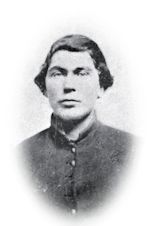
An Artilleryman’s Diary–Jenkin Lloyd Jones, 6th Battery, Wisconsin Artillery.
Near Chattanooga, Wednesday, Dec. 2. Horses fed, cleaned,, etc. I commenced writing on letter commenced yesterday, but was again disturbed with orders to hitch up as we were to turn the battery over, horses, harness and all to Chattanooga. Very good news, and therefore promptly obeyed. Took the six pieces, and caissons, leaving the battery wagon and forge. The town; was farther than I expected, about three miles. Crossed the river on the pontoon bridge (simple but invaluable invention, this pontoon), a “flying ferry” running right above it and well used. It is a novel arrangement, in which the boat is crossed by the strength of the current acting against gates let into the water, it being fastened to a tow-head above by forty rods of rope. After some delay we parked the old battery that we had hauled through the mud of Mississippi, across the bayous of Louisiana and the mountains of Tennessee, and had belched our terror to traitors from Corinth, Raymond, Jackson, Champion Hills, Vicksburg and Chattanooga. Although once wrested from our hands for an instant, success always crowned their labors. We left them alongside of a long line of captured napoleons.
The town was under strict military order, and patrols busy picking up all those found without a pass, so I did not have a chance of going around. Had a strong desire to visit Lieutenant J. Silsby’s Battery, but I could not. Returned to camp by 5 P. M. Wrote on T. L.’s letter till dark, when we were assembled for pay at the Captain’s tent, it being for the months of September and October. Clothing accounts settled. I was $12.86 behind, therefore did not draw but $19.15, better than some who did not draw any. Turned $15 over to J. Lester, to be expressed home, leaving me but two dollars pocket money.
Near Chattanooga, Tuesday, Dec. 1. Health good and fine appetite for dodgers, which is all we have, minus salt and extras. Warning given in camp to avoid smallpox. Case in the 12th Battery carried out to the woods this morning. Commenced writing to brother Thomas but interrupted to hitch up for review. Most of the mule teams were required to help us out, and moved out “in fine style”. Formed line on the extreme right of the Division under direction of Captain Dillon. He tried to show off a little by ordering a “trot”, but came very nearly showing a failure. The men were ragged, dirty and worn out, so were the beasts, but the fine line of stripes and stars looked as beautiful as ever, intermingled with the blue banners. It is a soldier’s privilege to look at it as a friend and boon companion, “may it ever wave”.
Soon the inspectors came. The first one was Major General Hunter, inspector general, glittering with military pomp and gaudy tassels, etc. I did not like his appearance. He wore a sandy mustache, and looked as though he might be forty-five years old. He was followed by the modest unassuming Grant, dressed in plain blue, no glitter or decorations except the small stars on his deserving shoulders. He looked much poorer and worse than when I last saw him. By his side was General Smith, surly as ever, and General Meigs alongside of the “war dog” Logan, who it is said is now in command of the 15th Corps. The bands sounded the cheers as they passed, which filled the narrow valley with echo. They passed and the line marched to their encampment.
Near Chattanooga, Sunday, Nov. 29. Slept very cold, or rather shivered through the night with little sleep. This morning it is still very cold. Froze quite hard last night. Harnessed the team and “snaked” some firewood, banked our tent, etc. Gathered leaves in them so we were a little better prepared for it. Tried to write home, but my fingers were so numb that I gave it up much to my dissatisfaction, as I know they are anxious for my having not written any since the battle.
Near Chattanooga, Saturday, Nov. 28. Reveille aroused the dreaming camp at 3 A. M. It had been raining nearly all night, but we slept dry and well. Feed call. One of my horses missing. Walked up and down the hills and hollows for over an hour in the search. At last found him. I found breakfast ready, consisting of coffee, corn cake and fresh mutton, which I devoured with a keen appetite. 5 A. M. we started. We were to go back, and faced in that direction. We were glad of it, as both we and the horses were too much worn out to follow, and the roads were getting very bad with the rain and lateness of the season. The excitement was much less. We marched with more labor than if following the enemy, but we knew that plenty of others were on their track, and Bragg’s forces scattered, he taking three different roads, showing that he did not intend to risk a general engagement with Grant very soon. Raining heavy all day. The roads very bad and we had much trouble to get along with artillery. All of the batteries of the 15th Corps not in marching condition. Returned with the 3rd Division in charge of Captain Dillon, which were five besides our own. Stopped at Chickamauga Station at noon to feed, gathering corn along the railroad where hundreds of bushels had been scattered by the rebs.
Reached the pontoon bridge over Chickamauga half an hour of sundown. After a long delay it was clear and we crossed. Met General Sheridan and his Division followed by two others, going to relieve Burnside. Came to our old camp before the battle, after night. The rain had ceased and it turned very cold, and the wind whistled as of old Wisconsin. Unhitched, unharnessed, cleaned off my muddy team, and then with a great deal of chattering and shivering, etc. pitched tents, made our bed on the muddy wet ground. Felt very much like eating a good home supper as prepared by Mary, but after waiting a long time it was substituted by a dish of mush and a cup of coffee and thankful for that. Many of the infantry had nothing but parched corn and no tents, no rails to make a fire; rather tough but I suppose it is honest.
Graysville, Ga., Friday, Nov. 27. Started at 8 A. M. Our march lay through a poor country, thinly settled, covered with small pine, swampy soil. All along the road evidence could be seen of the haste of the enemy. Wagons, limbers, wheels, harness, etc. left, but all were destroyed. Reached Graysville at 3 P. M. and came into camp on a steep hillside, a lively little R. R. station on Chickamauga Creek, good water power, cabinet works and flouring mill. The latter was kept running by soldiers of the 11th Corps. A range of mountains commenced here, and our advance came upon the rear of the enemy here this morning, capturing a battery commanded by Beauregard’s son. It was harnessed up and ready to move. General Thomas manned it with infantry, took it after them. A brisk fight could be heard at Ringgold, five miles distant. Prisoners and deserters came in thick and fast from every direction. They say they are tired of running and being hunted like beasts. Bragg promised victory and gain to them, instead of which they received nothing but a dastardly retreat and shame with empty bellies.
Foragers doing a good business in the shape of geese, chickens, sheep, etc., few hogs. I was sent by Dixon after hay for the horses. Went about two miles south, and returned with a good bundle, quite tired in carrying it, but horses fared well for it.
Sat up till late cooking “dodgers” for the morrow’s march. It looked like rain, so we ditched about our bed, spread our ponchos over and laid down, tired and sleepy, and I felt nearly worn out, but the thought of following a retreating line kept up my strength and spirit.
Mission Ridge, Thursday, Nov. 26. After we retired last night with horses unharnessed, a courier came in hot haste with the report “The enemy is coming down upon us in double columns”. We were ready to give them a warm reception on short notice, but they did not come, and again we laid down, but left the harness on. They will not catch us napping. It was a chilly, cold night and we suffered much from cold bed. But little rest during the night, and at 3 A. M. we were called up to feed, which was more of a relief than otherwise. But no man grumbled or complained as we thought of our wounded who lay on the field all night with no covering, and weak from the loss of blood. Their groans could be heard by our men all night, and the friends in rebellion would not permit them to carry relief to them or bring them in. The enemy occupied the contested ground. One, who had a brother lying on the field, started with the determination of relieving him or die in the attempt. True to his determination he was shot dead by the inhuman wretches who would not listen to his plea. Their punishment will be great.
A dense fog settled as the morning approached, so that it was impossible to discern objects two rods distant. Troops commenced pouring down the hill early. The 1st Section joined us. At first we thought it was maneuvering for the day’s battle, but the truth was soon known. The wounded pelican of the South had flown during the night, and all their boasts and threats of the re-occupation of East Tennessee has ended in a retreat. We were to go on the chase. The 11th Corps swung around on their rear and flanked their line of retreat, while the 15th Corps reached back to the Tennessee River, and crossed Chickamauga Creek on the pontoon. Halted on the bank two hours to give the advance time to cross. Grazed our horses. 10 A. M. we crossed the bridge in rear of the 1st Brigade. The infantry moved more still and quiet than usual. Thus they come but miss their comrades that fell in yesterday’s engagement. Our Division lost * * * killed and wounded. A marked change is to be seen in its ranks. Marched lively the rest of the day through the Chickamauga Valley. The troops were entirely out of rations, the infantry many of them having had nothing to eat but parched corn on which they fought for two days and intrenched by night with pick and spade. Halted at 5. P. M. an hour for supper. Shelled corn was got in plenty for horses from Secesh camp, but the boys many of them supped on corn and coffee. Artillery firing could be heard in the distance which told us that we were upon their rear.
Moved on till 9 P. M. through Chickamauga Station, where large piles of corn were in a blaze. Twelve thousand bushels of corn are said to be burned here, and a large quantity of cornmeal left of which we were lucky enough to get a good supply. The road for miles was white with meal, spilled as they ran. Caisson bodies left and several blown up. Took twenty-one howitzer shells from one of them into our chests. Came into camp in an open field in rear of the 11th Corps. Made our beds in the leaves and slept sweet till morning light.
Mission Ridge, Wednesday, Nov. 25. Called up before three in the morning to feed. Suffered very much from cold during the night. The blankets stiff with frost over us. Witnessed an almost total eclipse of the moon and again lay down, but no sleep.
6 A. M. McCook’s Brigade of Davis’s Division formed in line of battle facing to the left and supporting our artillery, should it be necessary. 1st Section (rifles) reported to be well fortified on the ridge.
9 A. M. Not much fighting as yet, the pickets advancing and skirmishing. A reb battery shells directly over and in rear. One shell twelve-pounder time-fuse dropped ahead of our team and was dug up by the boys. A mule team came up and issued one day’s rations of hard-tack.
11 A. M. The 2nd and 3rd Brigades went in on double quick followed by the 11th Corps with crescents flying, a fine looking body of men, but are looked on rather suspiciously by our sturdy veterans. They went in and advanced towards the rebels’ works on Tunnel Hill, and musketry rattled very severe.
From that time [till] late in the evening a terrible struggle followed, wounded men coming back thick and fast. Our position was such that we could not witness the field and we were not permitted to leave the teams an instant. Our loss is very heavy especially in officers. The struggle on our side was for the occupation of Tunnel Hill and our line advanced up the steep side of the bluff time after time, but were obliged to fall back, the rebels being reinforced all the time, and could pick them off with ease, the lay of the land being such that they succeeded in flanking the 11th Corps, and they fell back in disorder. But they were received by the 2nd and 3rd Brigade of our Division, and soon compelled to retire.
More desperate fighting, it is said by those who witnessed, they had never seen. Our line being for hours under the enemy they rolled stones upon us, wounding many. Three companies of the 5th Iowa, were taken prisoners, having used up all their ammunition and would not run. Artillery could not be brought to much use, and my feelings as I staid under that hill, listening to the noise and rattle of the fight, mingled with suppressed cheers of charging parties, and the groans of the wounded as they passed in the long trains of ambulances, or the lighter wounded hobbling back a-foot with bleeding and mangled limbs, I cannot describe in words. General Matthies was wounded in the head while leading his Brigade on to the charge. I saw him ride to the rear covered with blood. Colonel Putnam of the 93rd Illinois was killed instantly while waving the colors in front of his men, a noble and much loved officer. The 90th Illinois and 73rd Pennsylvania were, literally cut to pieces, and their officers all killed or wounded.
The day closed, and the dark mantle of night was spread over the gory fields. We have gained nothing in the shape of ground all day, but their slaughter must be terrible. Thomas and Hooker were at them all day and it is reported gained great advantage. We had to fight the main body of the army. Lookout was taken yesterday, 2500 prisoners and three pieces of artillery. To-morrow if they stand, will be a final and awful test of strength. Sherman, cool and deliberate, is ready for them. Got corn to feed on the battle-field.
Mission Ridge, Tenn., Tuesday, Nov. 24. Marched to our position of night before last, unhitched and unharnessed. Laid down till 1 A. M. when we were awakened and ordered to hitch up. No noise allowed to be made. The pontooners marched by on quick time with axes, etc. Cogswell’s Battery moved out and took position in the front. We soon followed in breathless silence, entered an open field and followed it up nearly half a mile, when we came upon the column of infantry moving along in close order and very fast. Not a breath could be heard, nothing but the grating of their feet on the gravel was to be heard. Never did a more earnest or thoughtful column move to meet the enemy. The column proceeded to the river, and we went into battery in the field thirty rods from the bank. The infantry were ferried across in the pontoon boats. One division was already across. Contrary to all expectations not a gun was fired, and we could hear nothing from our position of the advancing column. The out-post guard were gobbled up by surprise and sent over on this side. One escaped and carried the alarm that the Yankees were coming, which was not believed. But the officer of the day with seventeen men reconnoitered the grounds, and they too were “taken in out of the wet” and taken across and put in charge of the guard of the 5th Wisconsin Battery, they being stationed in a bastion on the bank. The out-post very innocently told the story that upon hearing a rustle in the brush which he challenged with a “Halt! Hush you d fool you, the Yankees are right here upon us.’ The fust thing I knew you ‘uns hed me.” While our Division was crossing, long trains of pontoons came up there with a, long line of snow-white ambulances which caused the anxious question—”Who will be obliged to be borne in these from the field of battle?” Then came the hospital train, a wagon for each regiment in the Division, loaded with stores to establish a Division hospital.
6 A. M. . Two divisions were safely across and a more beautiful scene I never witnessed. Through the gray dawn a long line of infantry could be seen drawn up on the opposite banks a mile long, while the waters were covered with boats busily going and coming, loaded with men, the regimental colors standing in the center of the boat. The bridge was now covered, boats brought up, anchored in line, and the floor laid without any delay, the 4th Division marching in the boats and the artillery covering the field. Fires were allowed, to be built now and we soon had coffee. It commenced raining, as cold and disagreeable as the day could be. A steamboat was due at 4 A. M. to take us across, but did not come till 6:30 A. M. (an old rebel boat, but rebuilt). Taylor’s Battery crossed the river first, and as we were not pressed we waited for the bridge to be built. It was very disagreeable, and I felt almost sick; late hours and irregular meals having brought on diarrhea, etc. A large constellation of stars were gathered on the bank, watching the progress of the bridge, among which were Sherman, Blair, W. P. Smith, chief engineer, etc. The line on the other side in one hour had a line of breastworks up and advanced out of sight to form another.
12 M. The bridge completed and we crossed it, being the second battery to do so. The dread of crossing had passed. Halted at a corn crib and the cannoneers got as much corn as they could, but the infantry was formed and advanced in column of division at secure arms, it raining very heavy. This savage-looking column moved forward with caution, crossed a forty-acre lot and halted. The skirmishers went out but not a gun was fired. Advanced again, the batteries were in column of sections. An occasional gun shot, but we advanced until we were directly under Mission Ridge. Not a reb seen and our infantry soon climbed it. Our line formed on the brow when the artillery moved up. Battery D, 1st Missouri was the first up and soon opened fire on them from the right. Our Battery started for the left. The “smooth bores” were left on the other side of the river for want of horses, and we had four teams on a carriage, but the hill was too steep for us and two more teams were put on the pieces, and caissons left behind. A detail of two hundred men were sent to our aid with axes, the enemy sending shells over us quite thick. 1st piece failed to advance with the horses. Ropes brought forward and it was hauled up by hand, we following with all haste. By this time a very brisk skirmishing was going on right to our left and rear quite close, and General Matthies came down at the head of his Brigade on double quick, the old general on foot, making fine time. Captain Dillon ordered the howitzer section and Cogswell’s Battery to the rear in all haste. The extra teams were unhitched and the pieces unlimbered, and with great difficulty we made a left about, the hill being so steep that it shoved our horses down amongst the infantry that were pouring down. But the cannoneers fastened a rope to the axle-tree, and down we went in good earnest. Halted at the R. R. crossing in a complete jam of infantry, artillery and ambulances near General Smith’s headquarters, who knew nothing of our movements and demanded by whose orders we came down. A flank movement by General Longstreet was apprehended, and we were to guard it by order of General Sherman. We stood there in the cold damp evening for half an hour, got a feed of shelled corn from an out-house close by, when we moved back into the first field above General Matthies, and came into camp alongside of Cogswell’s Battery and the 2nd and 3rd Brigades of our Division. Unhitched but did not unharness. Our rations were entirely out with the exception of coffee and some cornmeal picked up, so we ate hastily of unsifted mush and coffee.
Three drivers from each piece sent after sheaf oats for horses. I was on the detail and we rode back nearly three miles toward the river. Found the oats all gone, but plenty of good tame hay, of which we took as much as possible. Returned to camp by 9 P. M. I was nearly exhausted from cold and loss of sleep, having been up since 1 A. M. Lay down in cold and wet blankets.
Near Chattanooga, Monday, Nov. 30. Cold during the night but comfortable at midday. Wrote a letter to John, signed pay rolls in the afternoon. It is expected we will move soon. Hope it is so as our infantry are in a suffering condition, their tents at Bridgeport and their blankets, many of them, lost on the battle-field. They are scattered through the valley seeking shelter from friendly cliffs, drawing comfort from glowing fires, and trusting fate and fortune for rations, as Uncle Sam fails this time. But hope it will not be so long.


