Camp on the mountains, Friday, Nov. 13. Broke camp at Winchester before daylight and moved out in advance of the other brigades. Crossed the R. R. south of Decherd and kept along the track southeast until we reached Cowan Station, when we travelled toward the hills. Halted half an hour to strip the chest of all knapsacks, the cannoneers being obliged to carry everything after the style of infantry. At about half past twelve o’clock we mounted and started up the mountain. The foot was covered with white large stones smooth as ice. Both of my horses fell the first pull, but soon gathered and we made the ascent in about two hours. The road was very stony and most of the horses poorly shod, very steep in places, but we made it without an accident or a balk, although four of our teams had a span of mules in. The General and staff were very much scared, it is said, and thought it not safe to ride up so they dismounted, lamenting our fate, but our horses did it all right. The road followed the summit which was perfectly level, rather sandy. Passed two or three houses inhabited, but I know not how. Came into camp; old camping ground, first rebel and then federal. Had but one load of corn for to-night and to-morrow morning, so we had but eight ears to a horse. Drew two little crackers in the morning which was all we had till the wagons came up late at night, and we were a set of very hungry boys. Sow belly and hard-tack went as good as the best of suppers at home. Camp as merry as ever, singing and cracking jokes by the bright camp fires, although we were weak in the center.
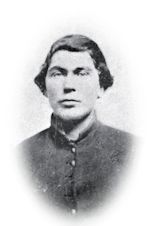
An Artilleryman’s Diary–Jenkin Lloyd Jones, 6th Battery, Wisconsin Artillery.
Winchester, Thursday, Nov. 12. Lay in camp all day. 3rd Brigade came up early. The weather very raw and blustering. Forage trains went out seven miles and returned loaded with good corn. Wrote two letters but no mail came in. To-morrow we are to start across the mountains. If half of what is said of it be true, we will have hard times to cross it with our teams. The cavalry say we will not be able to cross it in two days. 1st Brigade of Stanley’s Cavalry Division is here. Winchester is the county seat of Franklin County and a good business town as large as Fayetteville. Mr. Lester brought Nashville papers of to-day into camp, the first we have seen since the 22nd of last month.
Winchester, Tenn., Wednesday, Nov. 11. Called up at 4 A. M. Harnessed before daylight. The horses covered with frost. Cold work for bare hands. Started as soon as daylight; about seven miles more of barrens without a house or trace of civilization. Slough holes very often, the pioneer corps bridging many of them while we waded through the others. Four or five horses gave out before we got through. Three left behind. Came out of there by noon on higher ground, well settled, but not very productive. Citizens look decidedly Secesh. Passed Salem at 2 P. M., two overshot waterwheels and a tower. Came into camp within two miles of Winchester at sundown. We are within our own lines. The Army of the Cumberland has a force stationed here, among which is the 1st Wisconsin Cavalry. Drew one day’s rations of crackers.
Camp in Oak Barrens, Tenn., Tuesday, Nov. 10. Prepared for an early march. Moved at 9 A. M. as we had to wait for the 2nd Brigade to move ahead. Passed through town, which is an old fashioned place of quite a size. Looks as though it was the same twenty years ago. Of course it was perfectly dead, no sign of trade or purchase of any kind. Crossed Elk River two miles from the town on the best bridge I ever saw. It is built of solid stone all hewed, five arches, with a foot path on top of each side wall. It is but a single track erected in 1861. Poor country! After we left the river valley, nearly deserted fields lie idle. About noon we entered the Oak Barrens, so called from its sterility. It is a perfectly flat tract of land with a yellow clay soil. Oak openings, no underbrush, the oak not very large. It lies lower than the surrounding country and covered with pond holes which we rendered bottomless with a little travel, the wheels cut down so. No houses or fields to be seen. Went into camp in the first field we saw for five miles, and that was deserted. 4th Platoon wheel horse fell dead tonight before it came to camp. He was the biggest and best horse of the Battery, supposed to be overdone. Train of cars passed out on the Fayetteville branch loaded with crackers for our camp. It was escorted by two regiments of Slocum’s Corps, the New York and Pennsylvania regiments. Mail received. I got letter from home of the 25th ult, so we are once more approaching the Union lines. No news or paper seen save wild camp rumors which are conflicting. No corn to feed our horses to-night. I am on guard.
Fayetteville, Monday, Nov. 9. I laid in camp all day. 2nd Division came up on another road. One day’s rations of crackers issued to us. The infantry regiments are entirely out. Mills were worked all day grinding cornmeal. Lieutenant Amsden of the 12th Battery went out with squad of Battery boys to pick up horses by order of Captain Dillon. Returned late at night with twenty mules and ten or twelve horses, but mostly too young for team purposes. We got one very pretty horse for our Platoon. They report abundance of all good things off from the road where “Yankee” vandals have not reached, with no end to come. No wonder that the rebs are making a desperate effort for the recapture of this country. We are in their very granary and without it they cannot live. A report is rife that Thomas has evacuated Chattanooga, but I trust it is not so. I would write, but there is no communication open yet.
Fayetteville, Sunday, Nov. 8. A chilly cold night. Froze half an inch of ice on water, but we slept warm. Moved out early. Had a very long and steep hill to climb. Several of the teams failed, but ours came out all right. My off horse was put on the wheel in place of the one there, whose shoulder had been worn raw. Marched weary and slow through a hilly country. Most of the valleys were all under cultivation and very full of excellent corn, but a small proportion of it husked. I think the corn crop here will far exceed the best of Wisconsin’s in number and quality. It is perfectly sound and untouched by frost. The road was very winding but not as rough as before. Came into camp two miles from Fayetteville before sundown, with materials for a good supper and plenty of corn for horses. 2nd Brigade camped here, and the 3rd Brigade came up late.
Near Fayetteville, Tenn., Saturday, Nov. 7. 2nd Brigade started at 6 A. M. We followed at 8 A. M. struck a macadamized road a mile from camp which we followed five miles. The road runs from ——, a beautiful road high and dry. Extensive fields of corn on all sides. Most wealthy country we have seen. Elegant houses of frame and brick. Left the road a quarter of a mile from Elkton and struck north along hilly ridges, very stony and rough. Came into camp at 5 P. M. on a high point, five miles from Fayetteville in Lincoln County. Drew fresh meat from commissary, but we had no salt to cook, no salt in the Division. The timber to-day was mostly beach, grew very tall and large, beautiful timber loaded with nuts, and we ate many. Sugar, cane of sorghum kind raised on a small scale by nearly all, I suppose to supply the deficiency occasioned by the Confederacy. Small wooden mills. Vertical rollers used to press it. Slept in the open air, not thinking it worth while to put up tent.
Camp on Richland Creek, Tenn., Friday, Nov. 6. Got up at 3 A. M. Moved out at 5 A. M. A clear cold morning, the roads very muddy. We soon struck a range of hills which we rode over. They were, of solid rock broken off in ledges, very hard to travel with artillery, especially with the wheel horses. For six miles it was a continual stony bed, very steep hills and rocky declivities. Eight miles on we struck the Nashville and Decater R. R. at Prospect. Followed it north for two miles through a very fertile valley well laden with corn. I got a handkerchief full of Irish potatoes from under a farm house, satisfied the negro for them, the master not at home. The track was in good running condition, built of “T” rails bolted together at the ends and the filling is of crushed stone. Turned east, leaving the R. R. to our left. Climbed a very high hill or mountain, a mile long, stopped an hour for dinner on the top. The wheel was locked for over a hundred yards going down, over the roughest road man ever travelled. Struck Richland Creek at the bottom, a stream as large as Big Black Muddy, unlike all other streams of this country. Followed it up stream for two miles, a fine stone wall built along the other side of the road, three feet at the bottom, two feet on top, and five feet high, of quarried limestone, inside of which was a beautiful cornfield. I got a feed for my team out of it. Forded the creek below Tom Brown’s Mill. The regiment halted, stacked arms, took off shoes, stockings and pants, then waded in it. It was a rare sight, several hundred men walking through at once, bare legged, their unmentionables thrown over shoulder and musket high in the air. The water was waist deep and quite cold. To any but soldiers it would be a serious necessity. They took it very as a lark, each one vieing with the other to make the more noise by the way of singing, hooting, plunging, etc. Came into camp on the bank of the creek in a pretty grove half an hour of sundown. 2nd Brigade here ahead of us. Y —— tied to the gun all day with two feet of rope, for mutinous conduct and offering violence to officer.
Gilbertsboro, Ala., Thursday, Nov. 5. Thanks to the corporal of the guard we did not get up till nearly 4 A. M. this morning, as he slept and did not wake the orderly at the proper time. But we had to hurry up to start at 5 A. M. which was a good while before daylight. Left the 3rd Brigade behind. They were just having reveille. A cloudy morning. Marched six miles through a flat country heavily timbered, with excellent soil, but entirely uncultivated. It lies in the hands of speculators. When we neared Sugar Creek it became bluffy and rocky, which was all fenced and cultivated by poor folks. Came up to the 2nd Brigade here and we halted three hours to allow them to get out of the way. We went to a neighboring corn crib, and shelled nose bags full of corn. Commenced raining very heavily. At 1 P M. we hitched and started out. The rain fell in torrents but the boys were as merry as ever and forgot the wet in singing. Halting, the infantry built a bridge across the stream with rails. Marched very lively over a hilly road but rich valley. The clay, which in dry weather made good roads, was soon converted into bottomless mud. Came into camp at sundown at Gilbertsboro, Limestone County, Alabama. A very rich plantation here surrounded by very high hills. A large amount of fodder and hay was stored away in the surrounding houses which were soon emptied by the boys and fed to the horses or made for beds. Hungarian grass and millet was the most of it. Division commissary issued out plenty of fresh meat for the boys and there was not much shooting. This evening thirty barrels of whiskey was found buried by the 48th Indiana close to camp, so there were several drunken men in camp.
En route, Wednesday, Nov. 4. Reveille sounded at 3 A. M. and the sleepy camp was soon ready to march. Started at 5. It was a dense, foggy morning and the red glare of innumerable camp fires lit up the infantry in heavy columns, giving the surroundings of the camp a wild and terrible aspect. We moved out moodily, the stars lighting us on our way for nearly three miles and a half before daylight appeared. The road was rough and covered with pebbles which made it very bad for the horses. One of mine being barefooted is somewhat lame. 10 A. M. We came up on to the camp of the 2nd Brigade at Rogersville, the town half a mile to the left of us. The 4th Division had just returned, having found the bridge over Elk River destroyed. Then it moved out on another road leading north, which gives twenty miles more travel I understand. We halted for three hours, unhitched and unharnessed, cleaned off our horses and fed them. The 2nd Brigade moved out soon after we came in. The 3rd Brigade came up at 12 M. At 1 P. M. we again took the road and an easy march of six miles took us to camp on a good creek, an old fashioned breast-wheel grist mill close by, the name I did not learn. The first five miles was a flat timbered country, uncultivated, but when we came towards the creek it broke up in hills and rocks where poor folks lived and picked up a scanty living. As soon as we approached camp, guns were heard in every direction, more than last night. Several bullets flew directly over camp, but fortunately nobody was hurt. Officers of the day and staff officers galloped in every direction endeavoring to stop it. A camp guard was thrown around the infantry with orders to keep all men from going in who had guns. But General Smith had commenced too late to stop this Division from foraging. The guards sat down and always looked the wrong way, and meat in plenty was brought. Our mess had laid in a supply early in the morning; six chickens, a beef and a goose was our stock for eight men. Mail received late in the evening but I received “nary” one.


