Dickson Station, Saturday, Oct. 24. A clear but cold night, but with the aid of a blazing fire I spent the hours quickly. Today it is cloudy and cold. A cold day South is far more disagreeable than in Wisconsin. It is always accompanied with rain, consequently very damp, and the wind pierces through the body although it does not freeze. Two teams’ with Sergeant Hood started for Iuka early. We are about three miles from the front. The smoke of Osterhaus’s Division is clearly seen. Blair’s on this side of it. They have laid here several days, but we find plenty of forage. Two beeves were brought in by our Platoon and Evans and Blake went and dug out a sweet potato patch for the twenty-fourth time. Succeeded in finding a fine mess. Corn is brought in by teams. Artillery firing could be heard in front this morning; result I have not heard. Four of the 4th Brigade captured by guile.
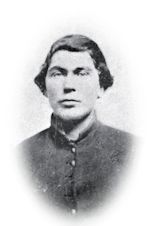
An Artilleryman’s Diary–Jenkin Lloyd Jones, 6th Battery, Wisconsin Artillery.
Dickson Station, Ala., Friday, Oct. 23. Reveille before daylight. Raining very heavy. Orders to march at 7 A. M. We were on the advance of the column, and an order came to hitch up and strike tents before the cooks had breakfast started. The rain was very cold and my fingers were numb before I got my team harnessed and hitched. It was very disagreeable work. “Stand to Horse” was sounded before we were fairly hitched up, and we started out on a trot to pass the regiments as we were behindhand. The road was muddy and rough, the horses all trembling from cold, and the drivers with wet clothes and cold hands, shivering and wishing they could go to the stove and warm—(that is, in Wisconsin). But we moved on lively passing over several ridges, then the valley widened into a very pretty cultivated country. Our road lay along the railroad, the track of which was badly destroyed. All the trestle work burned, and a fire built at the end of each rail crooking it so as to destroy it. The column halted at Dickson Station, a tiny depot building with a fine farming country on each side and extensive buildings. The fence was torn down, and we came into battery in a field of clover. A large fire of rails was started, and we warmed while the General looked for camping ground and water. In half an hour Dillon’s orderly came back and we moved to the right half a mile, and came into camp nearly on the bluffs, unharnessed, tied our horses to the trees and stuck up our tents in the mud, but found boards to floor it and plenty of rye straw to lie on. We built a fire in front of it, and got partly warmed by 1 P. M. I was soon called on guard and I suffered very much from the cold.
Camp on Bear Creek, Thursday, Oct. 22. The 3rd Brigade came up this morning bright and early. The train stuck in the mud, so they did not come through last night. Did not move. Wrote a letter home this morning. Washed a shirt and pair of socks in the P. M. Information received at headquarters that a battery of six 12-pound light guns, had been shipped for us to Vicksburg, also one for the 12th Battery. Efforts are being made to send an officer after them; hope they will succeed. I gather news from the front that Osterhaus, who is in the advance, encountered Roddey’s command, they coming up in federal uniform, killing Colonel W. M. Torrence, 30th Iowa and several others after which they skedaddled. This was the firing heard last night. Batteries were opened on them. Forrest is reported at Tuscumbia, strongly fortified, determined to retard our progress. J. W. Jenawein was to-day made second lieutenant, and Joseph Hood 6th sergeant orderly instead. Mail arrived 9 P. M.
Camp on Bear Creek, Ala., Wednesday, Oct. 21. Rainy morning. Ready to move at 10 A. M., but as large wagon train was to go ahead of us and the roads were slippery, we did not start till noon, all this time being in a turmoil. I sat in my saddle with my head protruding through the rubber, moodily wondering if we would ever start. Marched in the center of the Division about four miles from Iuka. Struck a range of hills, and our road lay through narrow and crooked valleys, much of the way being gravelly. Passed very pretty spring brooks, crossed the R. R. about the state line. A squad of engineers stationed there. Struck Bear Creek 4 P. M., which is a beautiful stream four rods wide and fordable where crossed; runs swift over a pebbly bed. Came into camp on the east side in a valley two miles wide, high ridges on either side, the Battery in a cultivated field, the tents in a belt of timber. Cooked our supper, which was of flour and fresh beef and pancakes. Heavy cannonading heard in front, supposed to be ten miles distant. Cogswell’s 1st Chicago Independent Battery attached to our Division, four guns, James new pattern, good looking lot of men and horses. Lay down in a damp bed to take our first night’s sleep in “Alabam.”
Iuka, Tuesday, Oct. 20. Cloudy and windy morning. Health very good. Prepared to march in morning, but did not move. Cleared off very pleasantly. Wrote a letter to Albion. Had beefsteak for dinner, having paid 10 cents per pound. The water we got from a pearly spring but heavily tainted with mineral so as to be very unpalatable. Much talk about the disgraceful affair of last night. Happened to be done by members of the 2nd Division mostly, and it is supposed that General Smith will assess the damage from the pay of all absentees at last night’s roll call. It will be no more than just. I think that our Division is getting to be the worst in the Department. Everything is left unmolested by other troops, but when we come along, jayhawking and pillaging is the order of the day. It is done by unscrupulous young men or boys rather, having been removed from all restraint of society and parents, led into extravagant use of money by the spendthrift, finding $13 per month too short, they resort to this means to make “a raise”. It is certainly too bad to think that one would so far forget his home and family as to shock them with their deportment, did they but know. Lieutenant Simpson returned on 2 P. M. train with supply of nose bags, halters, ammunition, etc. but no horses, which are the most needed.
Iuka, Miss., Monday, Oct. 19. Ordered to march at 9 A. M, but as the Division train moved in the center and we were in the rear, we did not get started till 1 P. M. The bottom on each side of Yellow River was very wet, the bridges bad, so there was considerable delay in starting, but after we started we marched very fast and had few halts. The soil was a light sandy loam, poorly timbered, rather hilly. Halted at 4 P. M. The big drum taken forward in the wagon, and we walked through Iuka with the 1st Brigade Band playing lively airs. Found the 2nd Division posted here, the 1st commanded by General Osterhaus, having left this morning. Iuka is, or was, a very pleasant town, larger than Corinth, celebrated for its medicinal springs, two of which are enclosed very tastefully in a beautiful grove of young oaks. Went into camp south of town in a large field with the whole Division quartered in their tents before us. Osterhaus’s Division having left in the morning leaving boards, bunks, etc., we were soon in comfortable quarters. Retired early but were awakened at 9 P. M. to report at roll call, an order having been sent to report all absentees. The Division, as usual, pillaging down-town. Nearly $3000 worth of goods having been stolen, the outlaws being in the shape of a regiment led by a Major “straps and colors” etc. Luckily the artillery boys were all in camp.
Burnsville, Sunday, Oct. 18. Was on guard last night, and the way it rained while on guard at night relief was enough to drown one inexperienced. 2nd Division, 15th Army Corps, commanded by Gen. G. A. Smith, passed by at 9 A. M., also Major General Blair, who is in command of Corps at present. Also a large wagon train with 5th I [Illinois ?] Cavalry as escort. Ordered to have 200 rounds of ammunition in chest, 300 now in train, and 30 days’ rations. Mother very ill.
Burnsville, Miss., Saturday, Oct. 17. As instructed at last night’s roll call, reveille was sounded before daylight with orders to prepare to march at 8 A. M., and also to take our pay before we started. The paymaster soon arrived, and as soon as possible counted the $26. By breakfast he was through and at the due time we were on the road. We marched in center of 1st Brigade bound eastward, the column short and roads good. We had but few halts. The road lay through an uncultivated country poorly timbered with oak and pine, and hilly in latter end. Arrived at Burnsville by 12 M. marched through the town (a small village) with bands playing and colors flying. 3rd Brigade stationed here. Went into camp a mile north of R. R. on Yellow River, with tops of high hills and bluffs to be seen in the distance. Pitched tents, put up racks. Lieutenant Simpson went to Corinth.
Glendale, Friday, Oct. 16. A very fine day, rather warm midday. Health never better, weight 140 pounds which is six pounds better than on September 30 at Memphis. Grazed as usual. After returning I washed a pair of pants at the spring. After dinner received orders to prepare for inspection, each man to appear in his best. 1:30 P. M. “Boots and Saddles” sounded and we soon were ready to move with boots blackened (those that could afford it), coats brushed, and the old 6th looked middling fine after all the dust of the war it has gone through for two years. The only drawback was the horses which looked terrible. Had the bones sticking out so as to almost cut the harness. Moved out under command of Lieutenant Clark, accompanied by his wife, who rode by his side, but she was evidently a little scared. Passed by the cavalry troops with the 12th Battery behind us. The two Batteries came into “Action Front”, when Captain Dillon with several of the staff rode up and down on inspection, after which they took a position in front with the beautiful flag of the 12th Battery posted, and we passed in review in column of sections at walk, then mounted cannoneers, and passed on trot. We then resumed our “Action Front”‘, after which Captain Dillon took command with his usual zeal, put us through on the double quick for nearly two hours. Returned to camp quite tired. To-morrow we move.
Glendale, Thursday, Oct. 15. Rained nearly all night, but cleared off this morning and it was a very pleasant day. No feed for horses. Grazed them in a dry field for two hours. Train came in this afternoon with a little grain and hay for our Division. We drew half rations for five days. A large mail came in on same train. Eight letters for our Platoon, six of which were for Evans and myself, two of which bore dates of September 7. Where the deuce have they been? But one was a long letter from Sister Ellen of the 4th inst. How it stirred up my feelings. It seems as though I was once more restored to the peaceful paths of life after laying here in the wilderness for over a week without a word from anywhere save from the soldier boys. Evie had anxiously waited for a letter as his family were in a critical condition. He was growing pale and sick. But when the letters came with cheerful news, he looked like a new man.


