Near Black River, Wednesday, May 6. Remained quiet. Foraging parties sent out bringing plenty of corn, fresh meat and many other things, taken from the deserted houses of fleeing chivalry. Mail arrived. Rec’d two letters from home dated 18th and 26th ult. Pontoon train of eighteen wagons passed to the right.
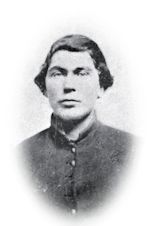
An Artilleryman’s Diary–Jenkin Lloyd Jones, 6th Battery, Wisconsin Artillery.
Near Black River, Tuesday, May 5. A fine day. Health good. Lay quiet all the morning until 2 P. M. Orders came to hitch up a howitzer and a rifle piece; first and third pieces made ready and fell in with 5th and 10th Iowa Infantry and four companies of cavalry on a reeonnoitering expedition. Colonel Boomer in charge. Waited three quarters of an hour at the river to finish the bridge, when the cavalry crossed and started on, the bridge consisting of three flat-boats tied together endways, which reached across. Passed through a half mile of very swampy bottom, then came into an open country with fine plantations. Marched briskly on the road to Vicksburg, about four miles, then rested. General McPherson passed to the front and returned in about an hour, ordering us to retrace our steps as soon as possible as there was much need of us there and the roads were bad. Returned on full trot and came into camp a little after dark.
Near Black River, Monday, May 4. Harnessed and hitched, but soon received orders to unhitch and get fodder enough to feed all day. Firing with artillery across the river occasionally during the day. Earthworks thrown up on this side of the bayou, the rebels being on a neck of land between that and the Black River, said to have received reinforcement.
Near Black River, Sunday, May 3. Arose at 2 A. M. and as soon as practicable hitched up with one day’s shelled corn in our bags. Did not leave until sunrise. Crossed a small stream on a chain-suspended bridge which the rebs had set afire, but was saved. Our way was disputed about a mile on by a rebel battery which threw shells at the advance, which formed line and moved on. At 10 A. M. the skirmishers were hotly engaged and sent back for a howitzer. The third (with which I was connected) piece moved out on a trot, took a position by direction of Colonel Powell within 200 yards of their sharpshooters, who were firing briskly in a thick wood. Opened on them with canister, which soon had the desired effect of “drying them up there.” Advanced to the left a few rods and opened fire on a log house where the sharpshooters were working. Threw three shells, then retired to await orders, having shot ten rounds in all, four spherical case, three canister, three percussion shells. The litter-bearers report a rebel captain killed in front of the piece by canister cutting him nearly in two. In the meantime the 1st and 5th pieces took position on the right to prevent three pieces of artillery from taking position. Advanced about two miles when their pieces opened fire with shells on us. The howitzers went forward but were ordered back by Chief of Artillery, and two ten-pound Parrotts instead. A brisk firing on both sides for ten or fifteen minutes. The 1st Brigade in line on right, 2nd on left, when they pulled up stake and we marched without molestation within a mile of Black River; went into park. All very tired and needed rest. Passed about seventy-five prisoners during the day, many more being taken by Logan on the left. Pickets firing often during the night, once with artillery.
Near Port Gibson, Miss., Saturday, May 2. Awoke at 2 A. M. In the saddle at 3:30, and moved on. By sunrise we were on the ground of yesterday’s action. They met the enemy and drove them for five miles, disputing every inch. Captured many prisoners and took one battery. The dead were yet unburied in many instances, one lay on the roadside with the upper part of his head taken off by a cannon ball. Many were wounded, as they took the advantage of the unevenness of the country to attack us by surprise. Passed the 1st Wisconsin Battery, which had done good execution the day before. Finally we passed the brush hospitals along the road and marched unmolested to Port Gibson. Enemy left two bridges burned behind them.
Unhitched, watered and fed. Rested ourselves about two hours, when we again started, crossed the stream over which was a chain bridge, crossed on a rough pontoon of slabs which. nearly sank under water under the artillery. General Grant, careworn and nearly covered with dust, sat on the bank watching the progress of his advancing army. Marched through at double quick until very late, when the infantry laid down in the road, and we turned to the right in the field for three hours’ and a half sleep, out of which we had to feed, water, etc. Laid down without any supper and slept. Oh how sweet, but very short. Nine miles from Port Gibson.
Near Grand Gulf, Friday, May 1. Awoke early to be soon on the march; travelled down the levee four miles, when we embarked on the “Silverwave” at Hard Times Landing. Seven gunboats and four transports crossing troops as fast as possible in sight of the bastions of Grand Gulf. Landed two miles below, and by 11 A. M. were on the march toward Port Gibson. The flat of Louisiana was relieved by the broken surface of Mississippi. Steep hills, and obliged to lock [the gun wheels] often. Marched very fast, only one mule team along. Heard firing all the afternoon in the advance. Encamped at sundown after travelling twelve miles. Mississippi furnished plenty of sweet potatoes, fresh pork, chickens, etc. All tired. Went to bed early.
Near Grand Gulf, Miss., Thursday, April 30. Bugle sounded in broad daylight, which led the boys to conclude that we were not to leave early, so they lay quiet, but were soon aroused by Captain Dillon coming in and telling us to hurry up, we would have to be on the road in less than forty minutes; and in three minutes we were all in ranks to the sound of the bugle. Ordered to have three days’ rations in haversacks and prepare to fight. Hitched up. Mustered for pay in the saddle and then started out. Passed two steamboats where they used to take on troops, but we marched on about thirteen miles and encamped within hearing of the guns of Grand Gulf. Four miles off, heavy firing all the afternoon. Our gunboats attacked them silencing all their guns except three which they were obliged to leave. Such is the report. Travelled through beautiful country which was all in full growth. Corn three feet high. Blackberries and strawberries ripe. Peaches as large as a plum. Looking like a July day in Wisconsin.
Near Richmond, Wednesday, April 29. Awakened at 2 A. M. with orders to march before daylight. Everything ready accordingly, but did not start until an hour after sunrise. Crossed the bayou about two miles from where we started on a rude pontoon built across a barge. Marched through a thick wooded bottom three miles, then recrossed the bayou on a similar bridge. Open country once more. Encamped early within two miles of where we crossed the river. Teams sent back after forage and rations. Very tired. Gnats very bad.
Near Richmond, Tuesday, April 28. Took up the march at 6 A. M. The rain of almost twenty-four hours had rendered it muddy beyond description. We had seen deeper mud in Mississippi last fall, but none so hard as this to travel; the soil being of a bluish clay, was made into wax, the wheels clogging so as to hide all traces of spoke or felloe. The 2nd piece wheel was locked by the mud and slid along. Slowly we worked our way on, often straining our horses to their utmost. Ambulances, wagons, etc. stuck all along. Rested one hour and watered horses at 11 A. M. Came into park at 2 P. M. on rebel General Fink’s ground, who was killed at Murfreesboro. Unhitched and swam horses to wash them, and fed them freely on rebel corn, having made about four miles. Supped on fresh beef and hard-tack, and laid down in the open air.
Near Richmond, Sunday, April 26. The Battery were awake at 2 A. M., while I was on post, having had but four short hours of sleep. The horses were harnessed immediately and we started at about 3:30 which gave us a good start before sunrise. Not quite as warm as yesterday. Marched through apparently very old country and productive. 11 A. M. went into park at Holmes’s Plantation, eight miles from Richmond. Unharnessed. Put up the tarpaulins. Got some fresh meat and water. At 1 o’clock the order came to be ready to march at 4 P. M. Logan’s Division marched by. Marched until sundown when we went to park at another plantation just in time to prepare for a storm. Rained heavily all night. Heavy firing heard in the night via Vicksburg.


