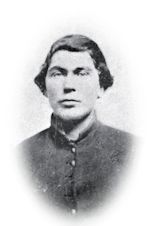
Memphis, Tuesday, Feb. 24. Very pleasant spring day. Boys busy setting their accounts. Captain H. Dillon started home on a furlough. Lieutenant Simpson also went with a discharge.
An Artilleryman’s Diary–Jenkin Lloyd Jones, 6th Battery, Wisconsin Artillery.
Memphis, Monday, Feb. 23. Very pleasant. Health little better. The long looked for “to-morrow” at last arrived and the paymaster paid us off. Rec’d $13.80. $20.00 sent per allotment, being up to Oct. 31, 1862.
Memphis, Sunday, Feb. 22. Cold. Froze the mud in the morning. Excused from duty, being on the sick list. Cold.
Memphis, Saturday, Feb. 21. Rain and thunder all day. Health not very good. Sore throat.
Memphis, Friday, Feb. 20. Health better but very sore throat. Beautiful day.
Near Helena, Thursday, March 19. Exercised and washed my horses. Health in camp poor. Eighteen on the sick list.
Memphis, Thursday, Feb. 19. Warm and dry, though windy. Suffering with a very bad cold. Captain Dillon read an order from J. B. McPherson, commanding 17th Army Corps, relative to going to Vicksburg. Patriotism raised the spirit of the boys fifty per cent. Played ball in the afternoon.
Memphis, Wednesday, Feb. 18. Raw and windy. Health not very good.
Memphis, Tuesday, Feb. 17. Wet and cloudy. A dismal and dreary day for me. Kept inside nearly all day. Burnt up all my letters which by this time had accumulated, so as to encroach too much on the room of my crowded valise. It was a difficult task. They seemed to be a connecting link between me and the dear ones. I read the anxious words over, and then with a sigh consigned them to the flames. Burnt up 17 of T. L.’s, 18 of J. L.’s, 11 of M. L.’s and 15 from Albion.
Memphis, Monday, Feb. 16. Was called on guard last night, second relief. While on the last relief, the sounds of the drum and bugle were heard upon all sides. A foraging expedition to be sent out, one section of the 12th Wisconsin to accompany, but when the bugle sounded most of the men refused to fall in, as there were some sixty of the recruits of last August, these having been by neglect not mustered in the U. S. service, hence a remonstrance was sent to General Quinby. Meantime the men refused to do duty.
After watering horses, G. Thomas, E. W. Evans and myself visited the Elmwood cemetery half a mile distant. It contains forty acres and is certainly a beautiful “City of the Dead”, handsomely divided off by evergreen shrubbery, with the spacious vaults of solid marble. From the white obelisk to the little lambs at the heads of once sparkling innocent babes, all was beautiful. But on one side were four hands busily piling up the rounded graves in close compact. They held the bodies of the unfortunate soldiers, averaging twelve a day. On the other side were the like victims of the Confederate States of America.


