Oxford, Sunday, Dec. 7. Nothing new. Laid in camp. Many rumors afloat of Richmond taken, Bragg defeated, etc. Health improving.
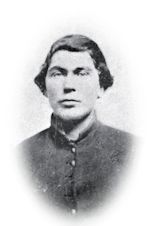
An Artilleryman’s Diary–Jenkin Lloyd Jones, 6th Battery, Wisconsin Artillery.
Oxford, Miss., Saturday, Dec. 6. Awoke with an unpleasant feeling, a racking pain in back and head. Started out early, the road having frozen hard enough to bear footmen, marched without much difficulty. Reached Oxford by noon. Neat place, two-thirds the size of Holly Springs; compared favorably with it in building but not in situation. Went into camp on the southern limits, saw some 700 prisoners marched in from the advance. Price still ahead. One darky reported him almost to hell.
Enroute, Friday, Dec. 5. Took up the line of march through mud and rain early. In the morning the rain that was continually falling made the road almost unpassable for the artillery. Crossed the Tallahatchie with difficulty, passed fortifications which might have given us much trouble to pass had they been held by their builders. Met thirty prisoners. Halted at Abbeville about two hours at noon, then pushed on. Night overtook the train while crossing a lagoon [Herrington’s Creek], which was very difficult. Stood in the road till 8 P. M., when finding it impossible to cross, we came into park on the road-side in an old cornfield, slept on the tarpaulin, no shelter.
Enroute, Thursday, Dec. 4. We remained quiet all day. Rained in the evening. Pitched Quartermaster’s tent. Felt symptoms of the ague, felt rather bad.
Enroute, Wednesday, Dec. 3. A sunny and bright day, dried up the mud and made things cheerful. Hitched up at 8 A. M., stayed harnessed until 3 P. M. We then moved out to the river and went to camp in sight of the rebels’ fortifications. Some of the boys crossed the river while watering [horses]. Pitched our tents.
Enroute, Tuesday, Dec. 2. Advanced about five miles, starting at about 8 o’clock, marched south, leaving Waterford on our left. Halted some three hours on the road, it raining continually. We were passed by General Hamilton and staff, also General Grant and suite. Came into camp at 4 P. M. some three miles from the Tallahatchie in open field near large mansion used as Quinby’s headquarters. Stretched our tarpaulin and slept sound.
Lumpkin’s Mill, Monday, Dec. 1. Awoke to find it a muddy morning, it having rained very hard in the night, blowing the fifth tent to the ground. Our tent leaked considerably. Laid quiet all day. No firing heard. Evie went foraging, gone nearly all day. In the evening ordered to have two days’ rations ready to march at sunrise.
Lumpkin’s Mill, Miss., Sunday, Nov. 30. This was a dark and sultry morning, and about 8 A. M. while sitting upon the ground, I felt the earth shake a kind of a dull roll, which was felt by many. Firing with siege guns was commenced at about nine o’clock and kept up briskly through most of the day. While listening to the firing, expecting momentarily to be called upon, the orders came to hitch up, get two days’ rations in haversacks, and ready to march in half an hour. 11 A. M. At this time L. N. Keeler rode up for one man to go foraging. Sergeant Hamilton detailed me. We started with two teams and three men, Bowman, Leffart and myself. We went to the northeast one and one fourth miles, crossed the railroad, found our corn in an old log barn. We had to turn around before loading in order to be ready to leave in case of necessity, as the pickets close by were expecting an attack. We loaded our corn got three quarters of a barrel of salt from the smoke house and returned in a hurry. Found the Battery still there, unharnessed and cooled down. The firing gradually ceased, and by night was heard no more. We went to bed without knowing anything of the result in the front.
P. S. This place represented as Waterford proved to be called Lumpkin’s Mill.
Holly Springs, Miss., Saturday, Nov. 29. The bugle’s notes awoke me in the same position as that I fell asleep in three hours before. Prepared for march and started with the sun, in advance of the artillery; passed through Holly Springs about 11 A. M.; passed through the streets where twenty-four hours before the last of the rebels skedaddled. Holly Springs passed my expectations in size and beauty, being the largest place I have seen in Secession.
We traveled on in a southward course towards Waterford. General Hamilton and troupe passed us about 4 miles beyond Holly Springs. Two miles farther on we heard two guns discharged and heard rumors of a battle ahead. On the brow of a hill we were shown the grounds where the cavalry were engaged in the morning with the Rebs’ pickets, killing a Michigan boy and three Rebs. Ascended the hill which overlooked Waterford, consisting of a mill and a small creek, branch of Coldwater River. Here the enemy opened fire on our troops in the morning with two pieces which were taken. We forded the stream about 5 P. M., went into camp on the banks, got some flour from the mills (ground by the secesh for supper), and laid down under the gun on soil twenty-four hours ago occupied by Rebs, seven miles south of Holly Springs.
Moscow, Friday, Nov. 28. Awoke before daylight with orders to prepare to march. All was ready by 6:30 A. M. Started at about 7:30, fell in rear of the column and marched toward Holly Springs; traveled all day with the exception of the necessary halts in the train. Passed through Early Grove 4 P. M., Hudsonville 7 P. M. Traveled until 9 P. M. Encamped near Coldwater River for the night. The country was all woodland except the cleared plantations; after dark the air was illumined, the raging fire caused by the dry leaves and fences, running for miles, it being set out by the advance. Came into park in a grove, made a “shebang” of shakes and laid down about 11:30 P. M.


