Following the American Civil War Sesquicentennial with day by day writings of the time, currently 1863.

Diary and Letters of Rutherford Birchard Hayes

Camp White, July 26, 1863.

Dearest:—I got yours of the 18th last night. Morgan’s embargo having been removed, we may now expect less delay in our correspondence. . Your description of the militia doings is amusing enough. We saw the same things on our route in Ohio, but they were really very useful in blocking roads, carrying information, and the like.

Dear little Joe, it will be a long, long time before you will even know in how many ways he was dear to you. There will be a loneliness in the house at Cincinnati greater than anywhere else. It was fortunate for your present feelings that we lost him as we did, instead of at home. The other boys are, I hope, enjoying themselves.

We are likely, I think, to remain here some time. The great successes of this month, if the Potomac Army meets with no great reverse, will be likely, I think, to substantially end the Rebellion during my original term of service. It is two years ago yesterday since we left Camp Chase. — Good-bye, dearest. Love to all.

Affectionately,

R.

Mrs. Hayes.

Camp White, August 15 (Saturday afternoon), 1863.

Dearest: — Hottest day yet. All busy trying to keep cool. A dead failure all such attempts. A year ago today we set out for Maryland and east Virginia. A swift year.

You don’t write often these days. You don’t love me so much as you did. Is that it? Not much! You are as loving as ever, I know, only it is a bore to write. I know that. So it’s all right and I am as fond of you as I was when you were only my sweetheart. Yes, more too. Well, write when you can comfortably.

I am going to inspect the Thirteenth at Coal’s Mouth tomorrow; take the band along for the fun of it.

I ride about, read novels, newspapers, and military books, and sleep a power. We shall go up to Lewisburg, I guess, in two or three weeks to see after the Rebels in that quarter. All quiet in our borders now. . . . Love to all.

Yours, with great warmth,

R.

Mrs. Hayes.

Camp White, Charleston, West Virginia,
August 9 (Sunday), 1863.

Dear Mother: — It is a quiet, pleasant Sunday morning. A large number of the officers and men have gone over to town to church, leaving a few of us here “to keep house.”

Our Rebel friends are gathering in pretty strong force in our front. Many think it is with the intention of driving us out as soon as the roasting-ears are in condition to afford them food. I think, however, that they are merely concentrating to prevent us from making raids to destroy their important railroad to the Southwest. Whatever they mean, it is a comfort to know that we are giving occupation to a larger force of Rebels that they can well spare at this time.

Uncle writes that he expects to meet Lucy at Delaware or Columbus, and as she intends to visit you soon, I suppose you will see them all in a few days or weeks. I would be glad to be with you, but I am not expecting to be my own master before another year. — Love to all.

Affectionately, your son,

Rutherford.

Mrs. Sophia Hayes.

Camp White, Charleston, West Virginia, August 6, 1863.

Dear Uncle: — I received yours of the first yesterday morning. Lucy writes that she expects to go to Delaware and Columbus about the middle of this month, and to visit you before her return. I begin to feel about those visits to you a good deal as mother does — that the care and trouble they make for you more than overbalances your pleasure in them; but you ought to know best.

The money that I supposed was in Stephenson’s hands, is somewhere, and I’ll inquire until I find it and let you know.

I think it probable that we shall remain in West Virginia. The enemy has become alarmed by our movements against the Tennessee Railroad, and has been strengthening their posts in front of us until now we have twice our numbers watching us. To keep them out of mischief, it is more likely that our force will be increased rather than diminished. A gunboat has come up to help us within the last half-hour. Our Wytheville raid did the Rebels more harm than was reported. Five thousand suits of clothing, over four thousand new arms, and quantities of supplies were burned. I think they will not attempt to drive us out in their present scarcity of men and means.

The Kentucky election pleases me. I hope Ohio will do as well.

Sincerely,

R. B. Hayes.

S. Birchard.

Camp White, August 5, 1863.

Dearest: — Yours from Elmwood, dated 2nd, reached me this morning. You were not in as good heart as it found me. I am feeling uncommonly hopeful. The deaths of officers and men to whom I am attached give me pain, but they occur in the course of duty and honorably, and in the prosecution of a war which now seems almost certain to secure its object. If at any time since we were in this great struggle there was cause for thanksgiving in the current course of things, surely that time is now.

Our prisoners left at Wytheville were well treated, and a chaplain has been allowed to go there to see if the bodies of Colonel Toland and Captain Delany can be removed.

I am grieved to hear that Uncle Scott is in trouble about Ed. If he recovers from his present sickness it is likely he will be able to stand it better hereafter. The process of acclimating must have been run through with him by this time. If he gets good health he will soon recover from the trouble about the promotion. Let him make himself a neat, prompt, good soldier and there need be no worry about promotions. It was not lucky to put so many cousins in one company. I could have managed that better, but as it’s done they ought to be very patient with each other. Ike Nelson was placed in a delicate position, and while he perhaps made a mistake, it was an error, if error at all, on the right side. Too much kinship in such matters does not do, as Governor Dennison found out a year or two ago.

I am glad you are going to Columbus. I had a chance to send one hundred and eighty dollars by Colonel Comly to Platt where you can get it as you want.

By the by, who has the money left at Cincinnati? I sent an order to Stephenson and he had none.

Poor boys, they will get to have too many homes. I fear they will find their own the least agreeable. Very glad Birch is getting to ride. Webb will push his way in such accomplishments, but Birch must be encouraged and helped. Rud will probably take care of himself.

Yes, darling, I love you as much as you can me. We shall be together again. Time is passing swiftly. . .

Joe was never so jolly as this summer. He is more of a treasure than ever before. — Love to all.

Affectionately,

R.

Mrs. Hayes.
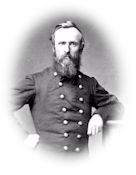
August 1, [1863). — Our best scout, Corporal Jacobs, and Private Fenchard, Company F, were murdered last night at Morris’ mill on Gauley River, twelve miles above Gauley Bridge. Jacobs was an awkward, pigeon-toed youngster, cool, shrewd, brave; could walk fifty miles a day, go without food or sleep longer than most men; very fond of scouting. Poor fellow! I have long feared that he would be caught in this way. He was made one of the color-guard but was so awkward — never could keep step — that we usually let him be excused from all ordinary duty. Ordered Morris arrested, to be kept if no proof against him; hung if guilty of the murder in any way.

Camp White, July 28, 1863.

Dear Uncle: — . . . We are again in our old camp. We have lost some valuable officers and men since we left. Captain Delany, commanding one of my cavalry companies, was killed in storming Wytheville. He was a man to trust. He received his promotion on my recommendation and was one of my best friends. . . .

We hear Morgan is himself taken at last. This is important. At least ten thousand of our mounted men have heretofore been kept busy watching him. They will now be at liberty to push against the weakened enemy.

It now seems probable enough that the war will be substantially ended with our original enlistment.

Sincerely,

R. B. Hayes.

S. BIRCHARD.

Camp White, West Virginia, July 26, 1863

Mrs. Delany: — I have seen several officers and men were with your husband at Wytheville. His company led the attack on the town. Captain Delany’s horse was killed under him and some think he was slightly wounded soon after the attack began. Captain Delany continued the attack, encouraging his men by his example until he was killed instantly by a ball in his head. His body was taken to a house outside of the town, and it is a gratification to know that it was left in charge of Father Heidekamp, a friend of your husband, who is in charge of a parish at Wytheville.

I will get together the property of your husband and send it to you as soon as practicable.

A flag of truce will be sent towards Wytheville when further particulars will be known.

Sincerely,

R. B. Hayes, Colonel Commanding First Brigade.

Sunday, [July] 26. — The cavalry of General Scammon’s command left Raleigh on Wednesday, 15th, to cut the [Virginia and] Tennessee Railroad. On the [18th] they reached Wytheville and had a desperate and bloody encounter. The Rebels occupied the houses firing from them on our men. Our loss is serious. Colonel Toland, Thirty-fourth Ohio Mounted Infantry, killed. Colonel Powell, Second Virginia Cavalry, wounded mortally. Captain Delany, a brave and valuable officer of my brigade, killed. He was wounded in the body as he rode into town; dismounted and stood by his horse firing his revolver when he was shot through the head and killed instantly. The ball came from a house hitting the eagle ornament on the side of his hat. Two of his lieutenants badly wounded. The Rebels used the houses as fortifications. They were burned.

Captain Delany was killed at Wytheville on the 18th. It was near the entrance to the town from the northwest. His horse had been killed and he stood by her firing his revolver. He reloaded after firing all his shots. A ball from a second-story window struck through the eagle ornament on his hat and ranging down through his head came out at his lower jaw on the opposite side. Colonel Toland was at the bottom of the ascent leading up into town, urging the men to go in and fire the town, when he was shot through the breast. It is thought the same citizen, a man of wealth living in a brick house at that end of town, shot both Colonel Toland and Captain Delany. He (the citizen) was killed by a [man of the] Thirty-fourth. His house was burned. One citizen, a large fleshy man, in specs, was killed.

The Second Virginia Cavalry behaved shamefully. They would not go in to the support of Captains Gilmore and Delany. The Thirty-fourth did nobly. Major Huffman, Second Virginia, said with a smile as Lieutenant-Colonel Franklin and the Thirty-fourth passed in: “That’s right Colonel, go in”! but [he] didn’t offer to go in himself.

Camp White, July 24, [1863].

Dearest: — The happiness of this week’s operations is dashed by the death of Captain Delany and the probable loss of a number of other good officers and men in our cavalry. Captains Delany [and] Gilmore, the Thirty-fourth mounted infantry, and Second Virginia Cavalry left Raleigh, on the day we returned from there, to cut the Tennessee Railroad at or near Wytheville. On the very day we (the infantry) were gaining bloodless (or almost bloodless) victories over Morgan on the Ohio, our cavalry were fighting a most desperate battle with superior numbers three hundred miles off at Wytheville. Our men were victorious, carried the town by storm, but they lost Colonel Toland, Thirty-fourth killed, Colonel Powell, Second Virginia, mortally wounded, Captain Delany, killed, his two lieutenants, mortally wounded (you know them both), and four other lieutenants, wounded; thirteen privates, killed, and fifty, wounded or prisoners. It was a most creditable but painful affair.

I am expecting my two companies, the survivors, back tomorrow. Wytheville has been one of the most violent Rebel towns from the first. They always talked of “no quarter,” “the black flag,” etc. The citizens fired from their houses on the troops as they rode in. Colonel Powell was shot in the back. The town was burned to ashes. I will write you more about it when they get in.

We are cleaning camp and getting settled again. The old lady moved into the cottage when we left; I occupy the tent Captain and Mrs. Hood were in. Captain Zimmerman went today to relieve Captain Hunter as commandant of post at Gallipolis.

Uncle Scott and Uncle Moses will feel very hopeful in view of this month’s work. We have taken, as I reckon it, seventy thousand prisoners this month besides killing or disabling perhaps fifteen thousand to twenty-thousand more. A pretty big army of Rebels disposed of.

Morgan is not yet caught. He may get off, but his ruin is very complete. — Love to all.

Affectionately, your

R.

Mrs. Hayes.