November 13. — Had a good march down to Gauley — the whole Third Brigade under General Schenck. Weather warm as summer, almost hot. Crossed New River at ferry near its mouth, worked by Captain Lane and his good men, thence down left bank of the Kanawha to the road from Montgomery Ferry to Fayetteville, thence about two miles to Huddleston’s farm, where we bivouacked among briars and devil’s-needles — officers in corn fodder in a crib. The band played its best tunes as we crossed New River, Captain Lane remarking, “I little hoped to see such a sight a week ago when the enemy were cannonading us.” About 10:30 o’clock General Schenck got a dispatch from General Benham saying Floyd was on the run and he in pursuit, and urging us to follow. At midnight the men were aroused and at one we were on the way.
Diary and Letters of Rutherford Birchard Hayes
Friday, December 13.— Another beautiful winter day — cold, quiet. Sun strong enough to thaw all mud and ice. No ice on streams yet that will bear a man. Building redoubts at either end of town. Since I came to Virginia in July, I have not shaved; for weeks at a time I have slept in all clothes except boots (occasionally in boots and sometimes with spurs), a half dozen times on the ground without shelter, once on the snow. I have wore [worn] no white clothing (shirts, drawers, etc.) for four months; no collar or neckerchief or tie of any sort for two months; and have not been the least unwell until since I have taken winter quarters here in a comfortable house. Now I have but a slight cold.
Camp Ewing, Virginia, up New River, twelve miles above Gauley. November 12. Tuesday. — Officer of the day. Rode to Townsend’s Ferry to see Major Crawford’s folly. Saw it. Preparations to cross New River although the enemy must be aware of our purpose — a thing difficult if unopposed, impossible and ruinous if opposed. Why don’t these generals have common sense?
Camp Ewing, November 11. Monday. — Today private Roach, Company I, was killed by a pistol shot accidentally discharged by a comrade. Rode down to reconnoitre enemy’s position up the river. Saw Captain Mack fire at them with Parrott six-pound guns.
Camp Ewing, November 10 (Sunday night late), 1861.
Dearest : — I have just returned from a hard day’s work examining the romantic mountain gorge of New River which we are preparing to cross, but which I suspect we shall not cross. A glorious day — exciting, and delightfully spent.
Got your letter by Dr. Clendenin on my return at dark. A good letter, darling. Write ’em often.
Yes, Frémont’s removal hurts me as it does you. I hate it as much as I did the surrender of Sumter. It may be justified and required by the facts; but I don’t see it in anything yet published against him.
Mrs. Herron is misinformed about Matthews. I know all about it. The colonel would have returned and expected to return. He wished a change immensely, but he would not have resigned. I am sorry to lose him. I know he did his best to get me with him. He got a promise which he thought would please me even better. — It is all agreeable with me here — perfectly so. I can’t say when I shall be able to go home. Not for some weeks, but sometime during December or January, I see no reason to doubt that I shall see you. . . .
We sent home a lot of things and would send more if we could. (Take care of the soldier with the scalded hand. You will, of course.[1]) The reason is, the roads are bad and when we move as we must do often, we shall be compelled to leave or destroy all surplus baggage.
Affectionately,
Rutherford.
Mrs. Hayes.
[1] Mrs. Hayes wrote November 19: “We had kept the soldier, Harvey, here. His hand was badly burnt, but mother has dressed it every day, and now it is well.”
Camp Ewing, November 10, 1861. Sunday morning. — I am officer of the day today and interested in the weather. It stopped raining towards evening yesterday. It is foggy and damp this morning—will probably be pleasant during the day. I have to visit all the pickets; the stations are ten or twelve in number and it takes about three hours’ riding to visit them. They are on the Lewisburg pike for three or four miles, on the Chestnutburg road about the same distance, and on suitable points commanding views of the country on either side and of the river.
Went with Colonel Scammon, Captain Crane [Company A, Twenty-sixth Ohio], [and] Lieutenant Avery to Pepperbox Knob and looked over into enemy’s camps on [the] south side of New River; thence with Avery to Townsend’s Ferry, the proposed crossing place. Most romantic views of the deep mountain gorge of New River, near the ferry. Climbed down and up the hill by aid of ropes. Two Rebel soldiers got up an extempore skiff, just opposite where our men were getting our skiffs, and crept down the cliffs. They came over and were caught by our men as they landed. They were naturally surprised and frightened. A third was seen on the other bank who escaped. So our scheme is by this time suspected by the enemy.
Camp Ewing, November 9, 1861. — A wet disagreeable morning. Anticipating hasty movements — expeditions without baggage against the enemy and the like — I yesterday sent home my jottings up to this time and begin today a new book. We were yesterday expecting to use four skiffs or yawls and two boat frames built here covered with canvas in crossing New River at a point five miles above here. It was hoped to surprise the enemy. Indications yesterday showed that the enemy were preparing to meet us. The passage to the water is down precipitous rocks six or seven hundred feet. The stream is very rapid and deep. McCook says one hundred yards wide by one hundred and fifty yards deep! The ascent on the opposite side is equally difficult. One hundred men could resist the passage of one thousand. We were not ordered over in view of these facts. What will be done is yet unknown.
Last night ate a turkey supper at commisary building [with] Captains Skiles and Drake and Lieutenant Avery and others. Yesterday I drew resolutions on occasion of death of Captain Woodward; today, on leaving of Colonel Matthews. Last night Sergeant Blish of Company I, a very competent, good officer, died — making, I think, the fifth death in camp in our regiment.
Camp Ewing, November 9, 1861.
Dear Mother : — It is a rainy disagreeable November day. I have done up all the little chores required, have read the article in November number of the Atlantic Monthly on “Health in Camp,” and hope not to be interrupted until I have finished a few words to you.
I wish you could see how we live. We have clothing and provisions in abundance, if men were all thrifty—food enough and good enough in spite of unthrift. Blankets, stockings, undershirts, drawers, and shoes are always welcome. These articles or substitutes are pretty nearly the only things the soldiers’ aid societies need to send. India-rubber or oilcloth capes, or the like, are not quite abundant enough. Our tents are floored with loose boards taken from deserted secession barns and houses. For warmth we have a few stoves, but generally fires in trenches in front of the tents or in little ovens or furnaces in the tents formed by digging a hole a foot deep by a foot and a half wide and leading under the sides of the tent, the smoke passing up through chimneys made of barrels or sticks crossed cob-house fashion, daubed with mud.
There is not much suffering from cold or wet. The sickness is generally camp fever — a typhoid fever not produced, I think, by any defect in food, clothing, or shelter. Officers, who are generally more comfortably provided than the privates, suffer quite as much as the men — indeed, rather more in our regiment. Besides, the people residing here have a similar fever. Exposure in the night and to bad weather in a mountain climate to which men are not accustomed, seems to cause the sickness irrespective of all other circumstances. We have nine hundred and twenty five men and officers, of whom two hundred and thirty are sick in camp, in hospitals in Virginia and in Ohio. Less than one-fourth of the privates are sick. One-half the captains, and one-half the lieutenants are or lately have been sick. Few are seriously or dangerously sick. Almost all are able to walk about. Only five out of about as many hundred cases have died. Three of them were very excellent men. Overwork and an anxiety not [to] give up had much to do with the fatal nature of their attacks. One was one of our best and hardiest captains, and one a most interesting youngster who somehow always reminded me of Birch — Captain Woodward, of Cleveland, and Bony Seaman, of Logan County.
I never was healthier in my life. I do not by any means consider myself safe from the fever, however, if we remain in our present location — higher up in the mountains than any other regiment. If I should find myself having any of the symptoms, I shall instantly come home. Those who have done so have all recovered within a week or two and been able to return to duty. I do not notice any second attacks, although I suppose they sometimes occur. Other regiments have had more deaths than we have had, but not generally a larger sicklist.
Our men are extremely well-behaved, orderly, obedient, and cheerful. I can think of no instance in which any man has ever been in the slightest degree insolent or sullen in his manner towards me.
During the last week the enemy have made an attempt to dislodge us from our position by firing shot and shell at our camps from the opposite side of New River. For three days there was cannonading during the greater part of daylight of each day. Nothing purporting to be warfare could possibly be more harmless. I knew of two or three being wounded, and have heard that one man was killed. They have given it up as a failure and I do not expect to see it repeated.
Dr. Jim Webb came here a few days ago, on a dispatch from the general, and will aid in taking charge of the sick in some part of the army, not in our regiment. He brought many most acceptable knickknacks and comforts from home. . . .
The newspapers do great mischief by allowing false and exaggerated accounts of suffering here to be published. It checks enlistments. The truth is, it is a rare thing for a good soldier to find much cause of complaint. But I suppose the public are getting to understand this. I would not say anything to stop benevolent people from contributing such articles of clothing and bedding as I have described. These articles are always put to good use. — Love to all.
Affectionately, your son,
R. B. Hayes.
Mrs. Sophia Hayes.
Camp Ewing,
November 8, 1861, Thursday A. M.
Dearest: — Mr. Fuller, our waggon-master, goes to Cincinnati today. We are [so] busy preparing to send expeditions against the enemy, sending off sick and baggage, that I have no time to write.
I send you a few things that I would not want lost. My Diary, up to date, for your eye alone, etc., etc. Drs. Joe and Jim are busy as bees also.
We shall go into winter quarters in a fortnight or so I think, when we shall have plenty of leisure.
I see the papers are full of foolish stories, sent by frightened people to terrify without rhyme or reason. Nobody is hurt by all this cannonading. One killed and three wounded covers the casualties of five days. Our provisions are plenty and we are in no peril here.
“Love to all the boys” and Grandma. Bushels — no, oceans for yourself.
Affectionately,
R.
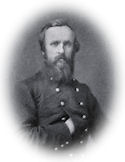
P. S. — Jim laughs when he sees me and says I must send home my picture to show you that I tell the truth about health.
You need not buy any lieutenant-colonel’s shoulder-straps or send me anything more to this region.
Mrs. Hayes.
Camp Ewing, November 8. — A beautiful fall day. About six hundred and fifty for duty, about two hundred and twenty-five sick, present and absent. All sent off who are in hospital but four; nine hundred and twenty-nine men still in regiment.[1]
We are getting ready to leave. I send home all I can, preparatory for rapid movements with weak trains of transportation. Still we have thirty-nine waggons, thanks to Gardner.
Captain Woodward died Tuesday, our hardiest officer. Industrious, faithful soldier, he has made his company from the poorest to almost the best. A sad loss. We send his remains home. Our fourth death in camp.
[1] For some weeks after this date, nearly every entry in the Diary contained a report similar to the one in this paragraph.


