Thursday, 16th—We have a beautiful camping ground; it is well situated on high ground which affords good drainage and in case of rain will dry off quickly. The weather is very warm and pleasant, with signs of autumn on every hand, and a northern autumn at that. We have warm days and cool nights, and the foliage of the forest is turning many different colors.
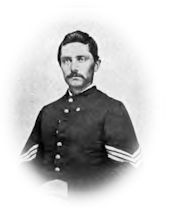
Diary of Alexander G. Downing; Company E, Eleventh Iowa Infantry
Wednesday, 15th—We are once more getting settled in camp. Our duties are not as laborious as they were at Bolivar and Iuka. We have begun the building of forts and rifle-pits, close in, all around Corinth, so that a small force can hold the place. We are pulling down some of the vacant houses to make room for fortifications. But the fortifications will not be on as grand a scale as those built here during the summer. They will be smaller, too, than the fortifications which protected us during the battle here.
Tuesday, 14th—No news of importance. We washed our clothes today. We have to haul our water about two miles, and it is poor at that. The horses and mules are taken by the men to water.
Monday, 13th—Quite a large mail awaited us here. We cleaned up our camp grounds and pitched our tents in order. All are glad to be in camp again, as sleeping on the damp ground in bivouac, without any protection whatever, as we did the last week, is hard on the health.
Sunday, 12th—We started early this morning and marching thirty miles arrived at Corinth just at dark. The soldiers are all very tired and worn, having marched about sixty-five miles over a heavy road in two days. We came into Corinth over the ground we had fought over in the battle of October 3d and 4th. This battlefield is a terrible sight and gives one a horrible picture of war. Our men having hurriedly gone in pursuit of the fleeing rebels, the burial of the dead was left to the convalescents, together with such negroes as could be found to do the job. Many of the dead bodies had become so decomposed that they could not be moved and were simply covered over with a little earth just where they lay.
Saturday, 11th—We were routed out this morning at 1 o’clock and started for Corinth, seventy miles distant. It soon began raining, and after marching six miles in the rain we met our provision train. We stacked our arms by the roadside, drew some rations and had a good square meal again. The hard-tack and coffee, with the bacon broiled on our ramrods in the fire, tasted mighty good—better than any pound cake eaten at home. While resting here and feasting, a number of the boys who had gone into the negro huts, caught up with us. They were in the cabins, nice and dry, and thought when we were routed out in the night, that it was to form in line, but in the morning found out their mistake and hastened to catch up with the command. A few of them were taken prisoners by the rebel cavalry following us. After our meal we continued our march till we reached the Tallahatchie river, and bivouacked in heavy timber on the banks of the river. We traveled thirty-five miles today, the weather being quite cool.
Friday, 10th—We have received no rations yet and have nothing but fresh meat and sweet potatoes to eat. Our brigade went out about four miles on a scout, to escort a battery to another part of the army. The weather is very hot and about 3 o’clock in the afternoon it commenced to rain, the roads soon becoming very muddy, for the dust was so deep. At dark we reached our old bivouac, where we had been the night before last, and stopped for the night. A cool wind followed the rain and some of us went into negro huts, built fires and dried our clothes.
Thursday, 9th—We have received no rations today and the boys have been pitching pretty freely into the cattle and hogs in this locality. The rebels are reported to be at Holly Springs, Mississippi. We moved on nearer Ripley and are three miles east of town. It is very warm and dusty; water is scarce along the way.
Wednesday, 8th—We did not get into bivouac until late last night, and again started on our march early this morning. We marched until 3 p. m., when we halted to rest, going into bivouac for the night in a large field of cow-peas, near the town of Ripley, Mississippi. We ran out of rations and foraging parties were sent out. They brought in sweet potatoes and fresh pork, which is all we have to eat. I picked some cow-peas and cooked them; they are rather strong, yet better than nothing to eat. The report is that the rebels have scattered out and escaped, and that we shall not follow them any longer. We are so far from our base of supplies that we are in danger of being captured.
Tuesday, 7th—We kept on the march last night till 1 a. m., when we stopped in bivouac. The men were all very tired, yet were willing and anxious to go on if only they could capture Price, or even a part of his army. Leaving our bivouac at 8 o’clock this morning, we again started after Price. We soon came upon the rebels and shelled their rear guard almost all day. We took a great many prisoners. It is reported that they are breaking up into small bands and getting away through the timber and are scattering in every direction.


