Wednesday, 20th—The first thing this morning was to finish drying our clothing, after which we cleaned up and burnished our guns. There are several thousand troops, infantry, cavalry, and artillery here in camp. The barracks are ordinary frame structures and built around the drill ground. The Eleventh Iowa is located on the west side of the ground. We have large quantities of firewood on hand.
Diary of Alexander G. Downing; Company E, Eleventh Iowa Infantry
Tuesday, 19th—We started down the river again at daylight and reached St. Louis at 3 p. m. We landed and marched to Benton Barracks, where we were to be at home. Just as we left the boat it commenced to rain and we marched the whole way in a downpour of rain which soaked our clothes through and through. Reaching the barracks we built fires to dry our clothes before retiring for the night.
Monday, 18th—We left Keokuk at daylight and ran all day without accident or incident. We again tied up for the night, for fear of encountering a “secesh” battery on the banks. The weather is delightful and riding on the “Father of Waters” is very enjoyable.
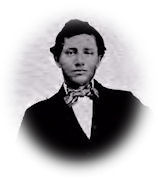
Sunday, 17th—We had a pretty stiff introduction to our first night on a river boat, for it snowed in the night. My bunk-mate, James Fossett, and I lay down on the deck with our heads to the smoke-stack instead of our feet, in order to avoid lying with our heads down hill. By morning we were covered with snow, about two inches deep. At 8 a. m. we landed at Montrose, where two of our companies were transferred from our boat to another boat in order to lighten our boat for the purpose of passing through the rapids just above Keokuk. We reached Keokuk in safety about noon and went on shore to cook some provisions. At dusk we returned to the boats, our company being transferred to another boat which lay at Keokuk all night while the “Jennie Whipple” proceeded down the river.
Saturday, 16th—Reveille sounded at 2 a. m., and packing our knapsacks, we started at 8 o’clock for the boat down at the levee. Here we stacked our arms and waited until the quartermaster with his detail got the commissariat loaded, putting it upon our boat and the two barges, one on either side. By noon all was ready and we marched on board, some going upon the boat and some upon the barges, and at 2 p. m. left Davenport, bound for St. Louis.
We reached Muscatine about sundown and because there are so many Muscatine people in the regiment, we landed and marched uptown to Main Street. Here we had dress parade for the benefit of the citizens, who turned out in large numbers. Companies A and H are made up of Muscatine boys, while our colonel and quartermaster reside here; besides, Company I is from Louisa county just west of this place. After the parade we marched back to the boats and left at once for Keokuk. Our boat is the “Jennie Whipple,” and Company E is stationed on the hurricane deck.
Friday, 15th—We received orders to leave for the South and everybody is happy in the thought that we are going to leave. A great many got passes to go down town to purchase supplies, such as letter paper, stamps and the like. We had our last drill on the old camp ground yesterday and got ready today to move.
Thursday, 14th—Our regular drills twice a day, company and regimental. No news.
Wednesday, 13th—The weather is getting cold, which makes it rather disagreeable eating our meals at the long tables outside the barracks; besides, the coffee and victuals cool off so quickly.
Tuesday, 12th—There is some talk of our having to stay here in camp all winter. Most of the men are getting rather restless and anxious to get to the seat of war. New companies for the Fourteenth Iowa are still arriving.
Monday, 11th—No news of importance. Our regiment is gradually adapting itself to the military harness; the hardest thing to get used to is wearing the leather collars about our necks.


