Sunday, 4th—I was on picket again today. A work train came in from Memphis, and four trains passed through going to Memphis; but none of them brought provisions, and as our provisions are so low, the division quartermaster sent all the teams to Memphis to bring provisions.
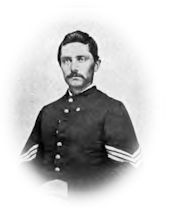
Diary of Alexander G. Downing; Company E, Eleventh Iowa Infantry
Saturday, 3d—A work train came in from Corinth today, and troops are coming in from the front. It is said they are bound for Memphis where they will take transports down the river, to go into camp just above Vicksburg. The Fifteenth Iowa left camp here and took up quarters down in Lafayette.
Friday, 2d—We are now on less than half rations and the outlook for anything better in the next few days is not good, although a train was expected to come through from Memphis today.1 The railroad east and west from us has been torn up; the rebel cavalry seem to be able to destroy it as fast as we can repair it.
1 The train the day before did not have provisions.—A. G. D.
Thursday, 1st—We have become somewhat indifferent about keeping our camp in the best possible order, for we have been disappointed so often in soon having to leave a camp which we took pains to build. We have, however, fairly good bunks in our tents, made of brush and leaves. Our duties are very laborious here, for besides the regular picket duty, we are almost constantly at work repairing the railroad. Today four companies were on picket patrol and at work repairing a railroad bridge. I was on picket duty with the countersign “helmet.” The army is on half rations, but we expect more soon, as a provision train came through today from Memphis. The Third Division went to Memphis. The weather is clear and cool.
Wednesday, 31st—We left our bivouac at 6 a. m. and entered the town of Moscow at 7 and were then ordered to move to Lafayette, Tennessee, on the Memphis & Charleston Railroad thirty-five miles east of Memphis, where we are to guard the railroad. The town is located on the Wolf river and is surrounded by heavy timber.
Tuesday, 30th—We struck our tents and started at 10 a. m. We reached Coldwater by noon and stopped for our mess. Our colonel must have been cold and in a hurry, for he gave the order, “Front right dress! Stack arms! Break ranks! Get rails and build fires! G— D—!” It amused the boys and they were not long in building fires and preparing hot coffee. At 1 o’clock we left for Moscow, Tennessee, along the railroad, and after a day’s march of twenty miles went into bivouac for the night within one mile of town.
Monday, 29th—We had company drill this morning and received orders to be ready to march in the morning. We have been at Holly Springs nine days now, and the town is almost deserted.[1]
[1] When we passed through Holly Springs going south, the town looked very pretty, and no property was destroyed. But when the place was surrendered to Van Dorn by our traitorous colonel in command of the small garrison, and that without the firing of a gun, then it was that destruction followed. When we had to come back to find our stores burned and live on half rations, our men were not in the best of humor; they did not care then if the whole town was destroyed.—A. G. D.
Sunday, 28th—The weather is quite cool. We are pretty hard on clothes in the army. My bill for clothes up to this time is as follows: One overcoat, $7.20; two dress coats, $13.42; four pair pants, $12.12; two pair double woolen blankets, $5.12; three pair drawers, $1.50; two pair shoes, $3.12; three woolen shirts, $2.64; one rubber poncho, $2.73; four pair socks, $1.04; one hat, $1.55; one cap, 60c; one knapsack, $1.56; one haversack, 56¢; one canteen, 44¢. [1]
[1] Then there was that leather collar (“dog collar”) to make us hold up our heads; it cost fourteen cents, but it was enough and the only one needed during the four years of war.—A. G. D.
Saturday, 27th—Nothing of importance.[1]
[1] The days of the latter half of the month of December were the darkest we had seen up to that time and, as it proved, they were the darkest days of the entire Union army during the whole four years of war. Our armies, all along the line, East and West, had not been successful. The second 600,000 men had been called for during the summer, and the loyal men of the North responded nobly, most of them being on the field by December, ready for action. But there was an element in the North holding nightly meetings and declaring that the war was a failure; there was also talk of England’s recognizing the Confederacy; then there were discouraging letters from the home folks to the men in the field, for the times were hard and the situation looked very bad to them. They would, in writing to us, ask what we thought of the outlook, and almost to a man, the reply would be that we would push ahead until we were successful, for our loss already had been too great to give up the struggle short of going to the bitter end.—A. G. D.
Friday, 26th—The Fourth Division commanded by General Logan passed here today on their way to Memphis. Nearly all of the troops which started on the expedition south have now returned.


