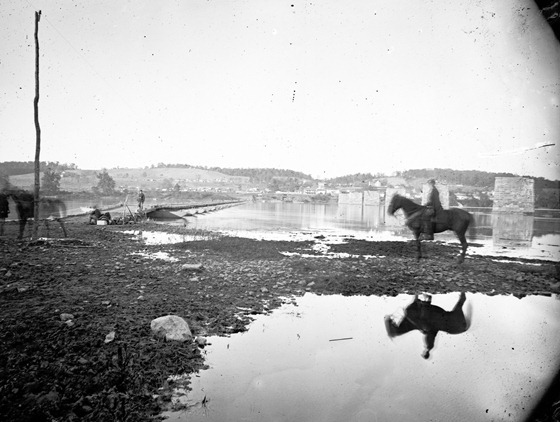
This photograph is by Alexander Gardner at Berlin, – now Brunswick – Maryland and is a cropped portion of the original image.
Library of Congress summary: Photo shows telegraph pole at left and pontoon bridge built by Union troops across the Potomac River at Barry, Maryland (earlier called Berlin and later Brunswick, Md.). This view, looking from Virginia towards the town, features a horse and rider with their reflection in the water and also includes the stone piers of a bridge destroyed by the Confederate Army in 1861. The town is about 30 miles south of Antietam, and the photographer was in the area to document the main eastern theater of the war, Battle of Antietam, September-October 1862.
In his Photographic Sketch Book of the War, Gardner writes,
BERLIN is a quiet little village on the Baltimore and Ohio Railroad, twelve miles from Point of Rocks. A fine bridge connected it with the Virginia shore until June, 1861, when the Confederates sacrificed it to the spirit of destruction that ruined Harper’s Ferry and laid waste the pleasant places of the border. Its inhabitants, numbering about five hundred, are dependent principally for support upon the business of the Chesapeake and Ohio Canal, which passes the place, and during the war, from the interruption of navigation necessarily suffered much hardship. The bivouac of the Army of the Potomac in its vicinity in 1862 first introduced its name to the country, and it has fallen again into the partial oblivion that has hidden much more pretentious villages. Here McClellan had his headquarters after the battle of Antietam, and the troops crossed into Virginia, marching down through Loudon to Rectortown and Warrenton, and thence to Fredericksburg.”
The Photograph only shows the village and a small portion of the Maryland shore, from which no adequate impression can be formed of the beauty of the surrounding scenery. The river at this point is obstructed by scattered rocks, and with the wooded hills that slope precipitously to the water’s edge, forms one of the most charming pictures of the Potomac. Game and fish abound, many objects of interest are close at hand, and the summer fugitive from the ills of city life finds here a pleasant halting place in his journeyings for recreation.
Library of Congress image.
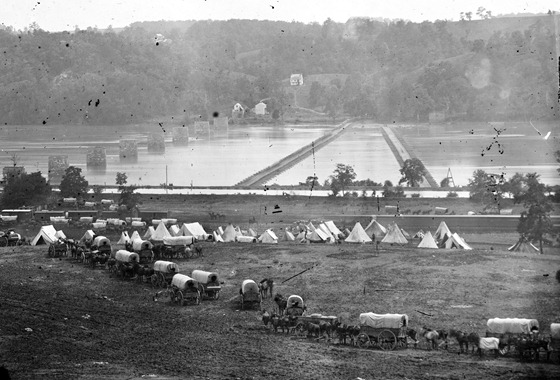
This is an interesting image that features civil war era transportation and infrastructure. The bridge that connected Berlin, Maryland with the Virginia shore was destroyed by the Confederates in June 1861. Two parallel pontoon bridges have been assembled for the Union army to use in crossing the Potomac. In the foreground are supply wagons of the Army of the Potomac. The horizontal trace just behind the tents is a train that was in motion on the Baltimore & Ohio Railroad, I believe, during the exposure of the film for this photo. On the left are several stationary boxcars, probably on a siding. On the other side of the railroad tracks are more supply wagons and past them is the Baltimore & Ohio Canal.
The photograph is by Alexander Gardner at Berlin, – now Brunswick – Maryland. This is a cropped portion of the original image.
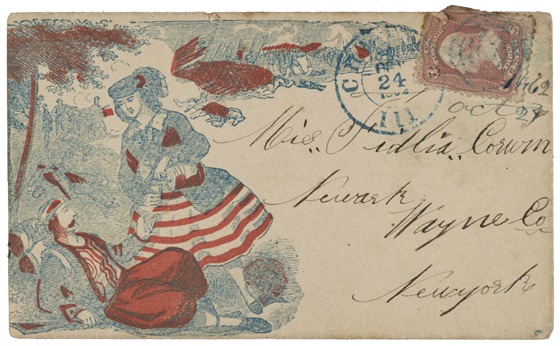
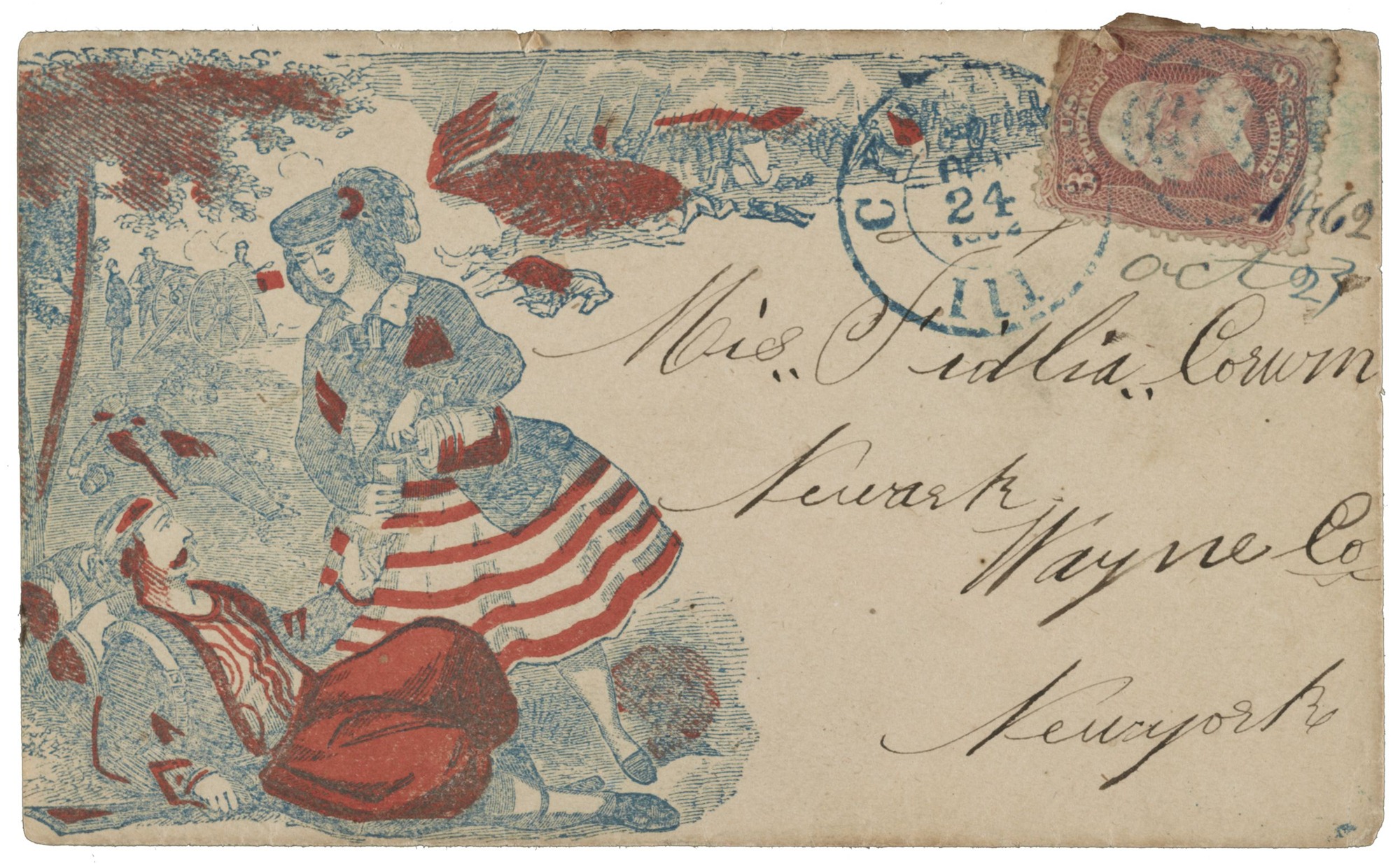
Civil War envelope showing woman pouring a drink for a wounded soldier as a battle rages in the background; Addressed to Miss Fidlia Corwin, Newark, Wayne Co., New York; bears 3 cent stamp; Postmarked October 24, 1862.
From Liljenquist Family Collection of Civil War Photographs (Library of Congress).
Library of Congress image.
Cropped from the photo in Alexander Gardner’s Photographic Sketchbook of the War.
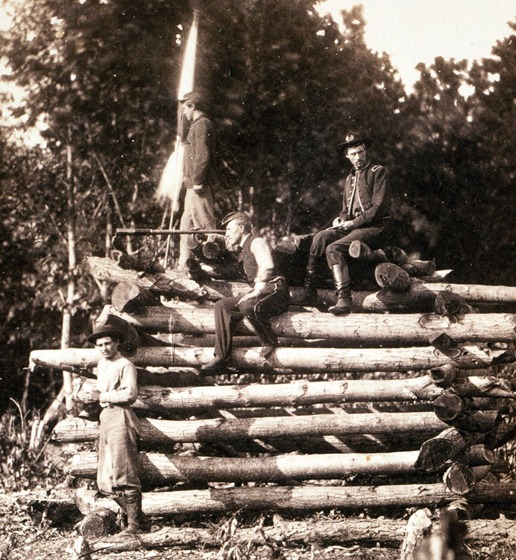
To the hero of Antietam belongs the credit of first developing and fully appreciating the value of a corps of signalists to an army throughout its active operations in the field, and especially during a great battle. His signal officers were most intelligently and advantageously posted, and seldom, even in later campaigns, has their assistance to a commanding general been more valuable, or more frankly and handsomely acknowledged, than in the momentous struggle on the Antietam. At intervals along our line of battle, and on the most prominent points in the vicinity, were stationed the Federal Signal Officers, detecting by their skill, vigilance, and powerful glasses, every movement of the enemy, reporting them instantly by a few waves of their flags to the Union Commander, and in return, transmitting by the same means the orders to the subordinate generals, which were to check or defeat the manœuvres of the enemy. The adjoining sketch represents the most important of those signal look-outs, and was located on the summit of Elk Mountain, one of the South Mountain Range of the Blue Ridge, and overlooking the battle-field.
The Elk Mountain Signal Station was operated by Lieutenants Pierce and Jerome, and the view was taken whilst the former officer was receiving a dispatch from General McClellan, probably requesting further information in regard to some reported movement of his wary foe, or sending an important order to a Corps Commander.
A rebel correspondent of a Richmond paper, who claims to have been an eye-witness of that battle, thus writes on the succeeding day, of the part taken in it by the Signal Corps of the Union Army: “Their signal stations on the Blue Ridge commanded a view of our every movement. We could not make a manœuvre in front or rear that was not instantly revealed to their keen look-outs and as soon as the intelligence could be communicated to their batteries below, shot and shell were launched against the moving columns. It was this information, conveyed by the little flags upon the mountain-top, that no doubt enabled the enemy to concentrate his force against our weakest points, and counteract the effect of whatever similar movements may have been attempted by us.
_____________
Library of Congress image.
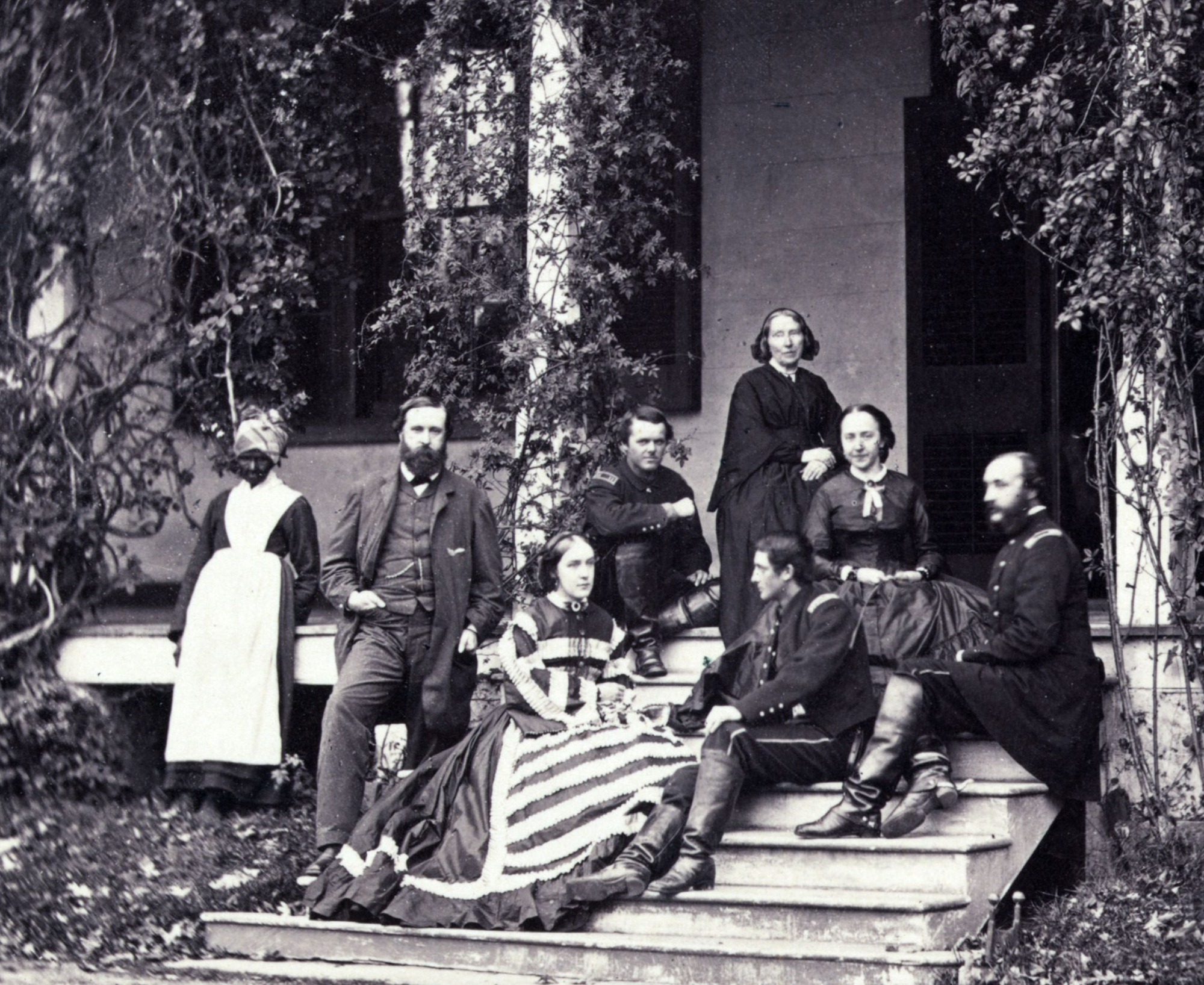
Cropped from the photo in Alexander Gardner’s Photographic Sketchbook of the War.
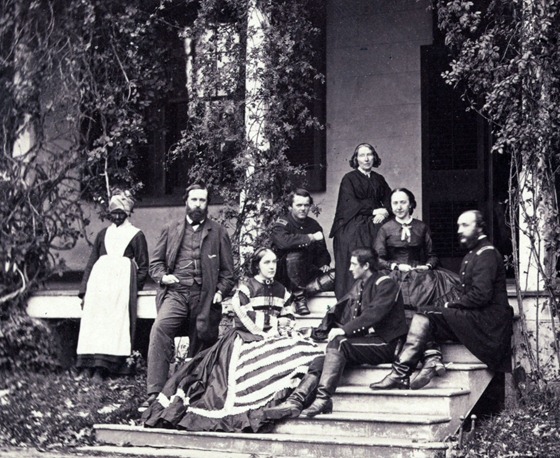
The house of Mrs. Lee, situated in Pleasant Valley, Maryland, was selected by General McClellan, after the battle of Antietam, as a temporary home for Mrs. McClellan, who paid a brief visit to the army. The General spent much of his time here, when not occupied with military matters, and in the vine-clad porch the officers of the Staff whiled away many a pleasant October day. Two of the officers shown in this group were members of General Burnside’s Staff, and one of General McClellan’s. It was intended that General McClellan should make one of the group, and all the necessary arrangements had been perfected by the photographer, when heavy cannonading on the Virginia side of the Potomac, caused by a reconnoitring party of cavalry, drew the General away.
The headquarters were located in a field near this house, and were composed only of a sufficient number of tents to shelter the General and Staff, and the offices of the various departments. A portion of the army was encamped along the base of Maryland Heights and South Mountain, and the remainder was located on the heights back of Harper’s Ferry. Supplies were forwarded over the Baltimore and Ohio Railroad, which afforded excellent facilities for visiting the army, and thousands of the friends of the soldiers found their way to camp. The citizens of Maryland were noted for their hospitality to such visitors, and their generosity to the troops. When the army was on the march, many families stood at their gateways with buckets of water for the thirsty men, and filled the canteens of all who had time to wait. There were very few of the Army of the Potomac who left Maryland and crossed into Virginia after Lee without regretful partings with new made friends, and for many a month thereafter the bivouac was enlivened by the memories and recital of the Marylanders’ welcome.
Library of Congress image.
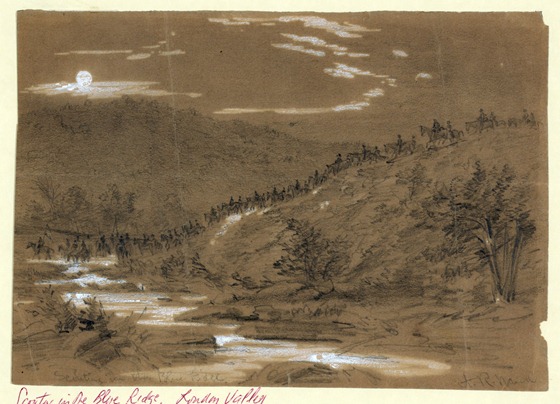
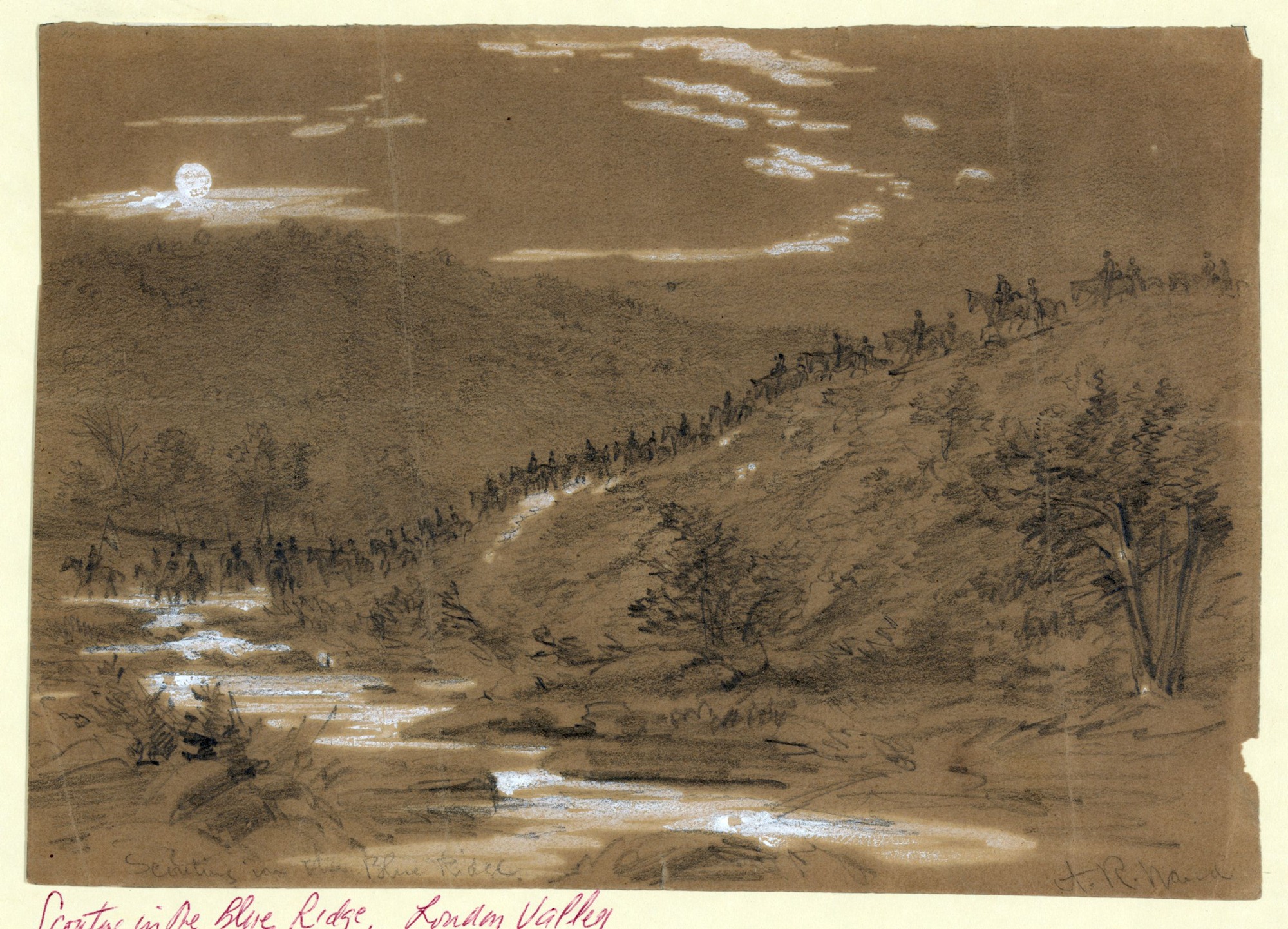
Inscribed on back: A cavalry excursion over the Blue ridge from Loudoun Valley, this was an exceedingly picturesque and romantic scout Loudon heights.
Published in: Harper’s Weekly, November 22, 1862, p. 742.
1 drawing on brown paper : pencil and Chinese white ; 16.4 x 23.1 cm.
Signed lower right: Alf R Waud.
Library of Congress image.
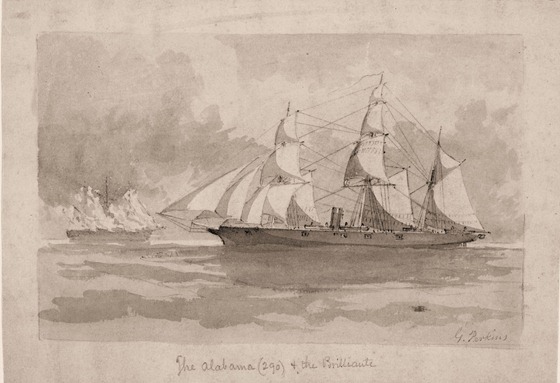
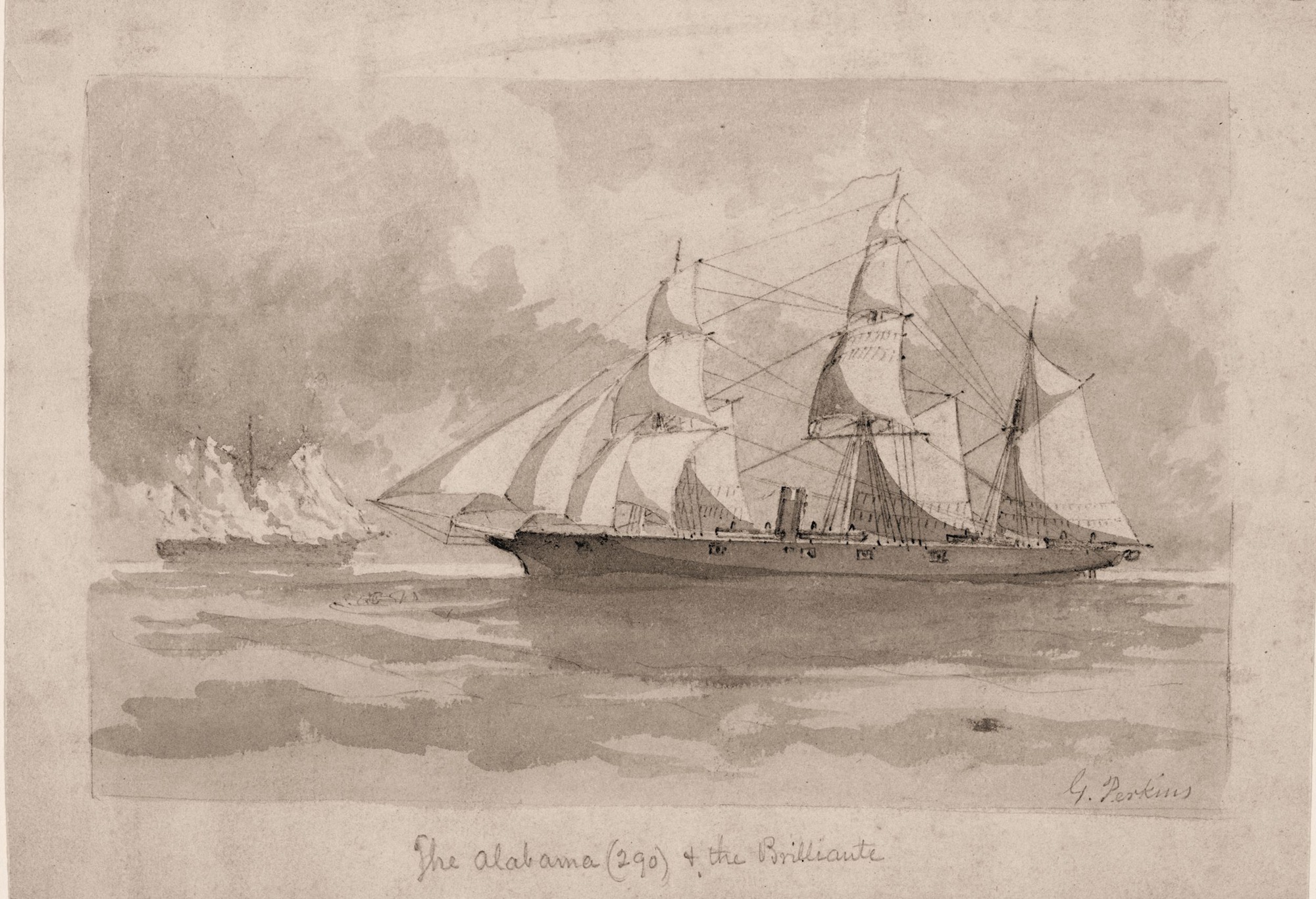
Artist: Granville Perkins.
Medium: 1 drawing on cream paper : pencil and black ink wash ; 18.8 x 27.1 cm. (sheet).
Summary: Broadside view of steam frigate in foreground, broadside view of ship on fire in background.
Published in: Harper’s Weekly, 1 November 1862, p. 689 (cover), as: The Pirate “Alabama,” Alias “290,” Certified to be Correct by Captain Hagar of the “Brilliant.”
According to the Harper’s story, the captain of the Brilliante certified that this image is an accurate rendering of the Alabama. The certification is dated 18 October 1862, apparently after the Brilliante and its goods were seized.
Library of Congress image.
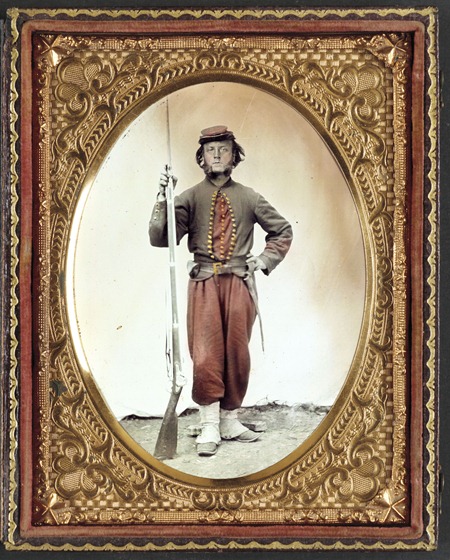
Possibly identified as Alonzo F. Thompson of Company C, 84th New York Infantry Regiment (earlier known as 14th Regiment New York State Militia). (Source: Martinez, Ramona. Photo Mystery Solved, Then Doubted, Then Deciphered, Thanks to Readers; http://www.npr.org/blogs/pictureshow/2012/04/17/150801239/)
Medium: 1 photograph : quarter-plate tintype, hand-colored ; 11.1 x 9.5 cm (case)
Liljenquist Family Collection of Civil War Photographs; Ambrotype/Tintype photograph filing series; Library of Congress Prints and Photographs Division.
Record page for image is here.
Civil War Portrait 015
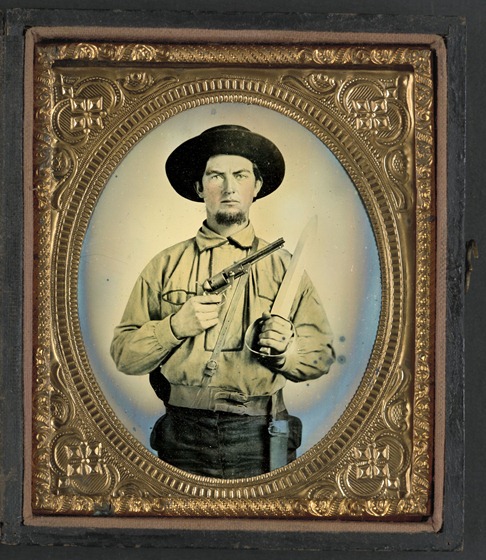
Unidentified soldier in Confederate uniform with Colt Navy revolver and double handle D-guard Bowie knife.
Liljenquist Family Collection of Civil War Photographs; Ambrotype/Tintype photograph filing series; Library of Congress Prints and Photographs Division.
Record page for image is here.
Civil War Portrait 014
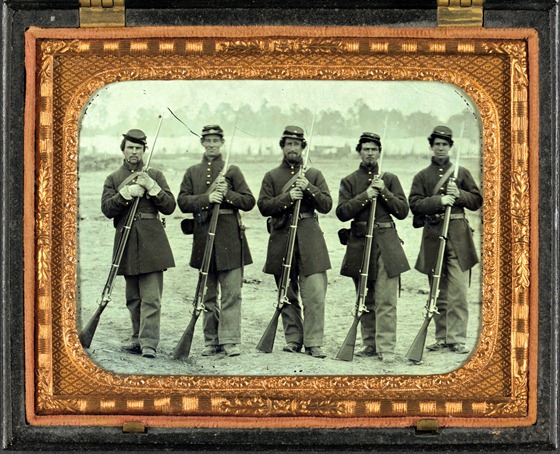
Five soldiers, four unidentified, in Union uniforms of the 6th Regiment Massachusetts Volunteer Militia outfitted with Enfield muskets in front of encampment.
Photo shows soldiers wearing frock coats and standing at ease with their Enfield Rifles. An encampment is visible in the background. (Source: Matthew R. Gross and Elizabeth T. Lewin, 2010) Photo shows one identified soldier, Albert L. Burgess, on far right.
Date Created/Published: [between 1862 September 8 and 1863 June 6]
Medium: 1 photograph : quarter-plate tintype, hand-colored ; 12.5 x 10 cm (case)
Liljenquist Family Collection of Civil War Photographs; Ambrotype/Tintype photograph filing series; Library of Congress Prints and Photographs Division.
Record page for image is here.
Civil War Portrait 013