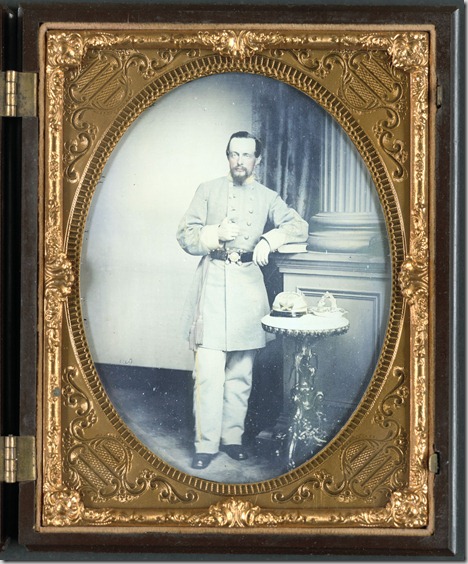
Library of Congress image:
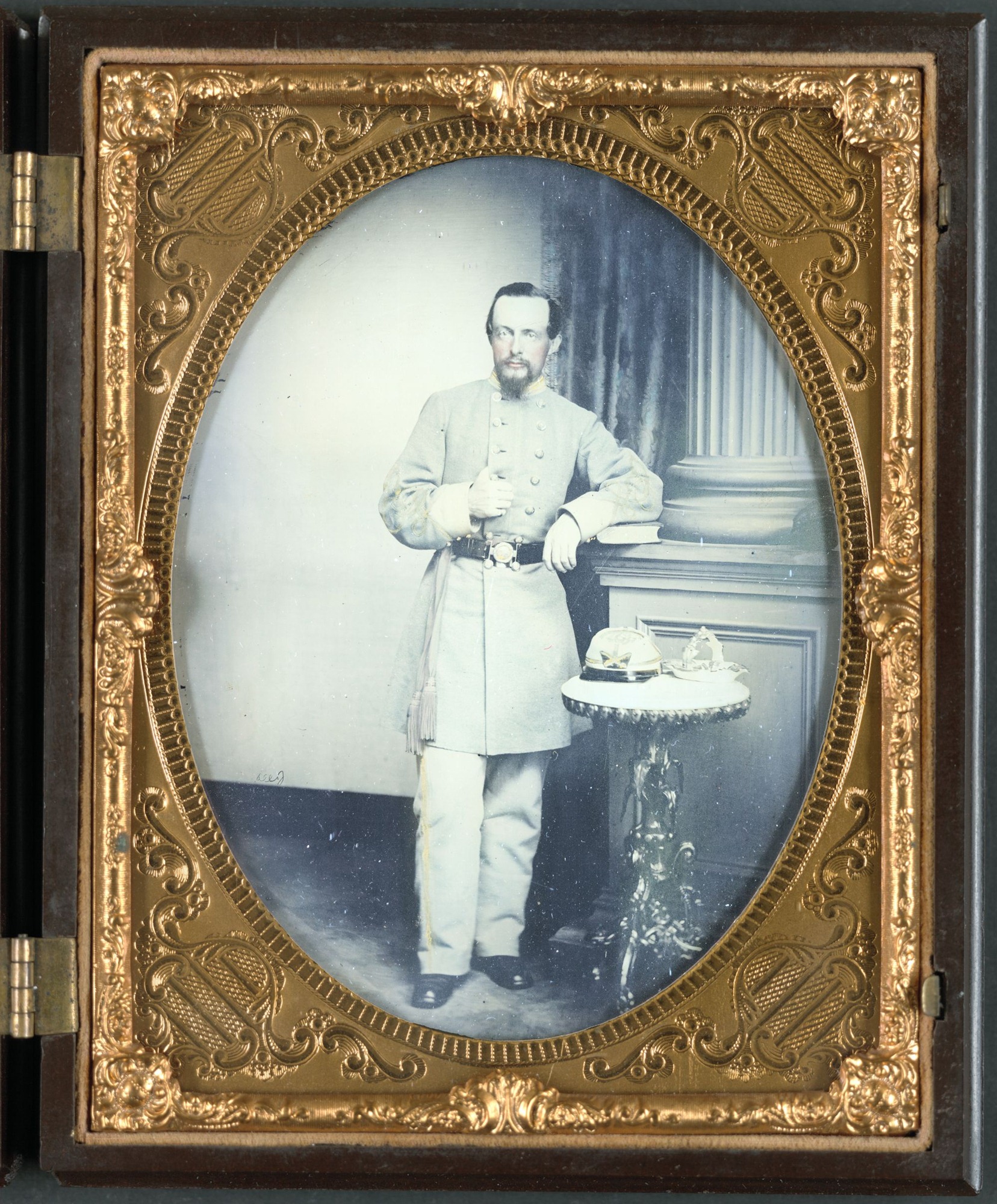
- Title: Captain George Riggs Gaither of K Company, 1st Virginia Cavalry
- Creator(s): Rees, Charles R., photographer
- Date Created/Published: [between 1861 and 1863]
- Medium: 1 photograph : half-plate ambrotype, hand-colored ; 15.9 x 12.6 cm (case)
- Summary: Photo shows identified soldier with arm resting on book at the base of a column; a table next to him holds his cap and a dish. Exhibit caption: George Riggs Gaither (1831-1899), whose ancestors founded Gaithersburg, Maryland, is the subject of this ambrotype by Richmond-based Charles R. Rees, one of the best Civil War era photographers in the South. As captain of a local militia unit, the Howard County Dragoons, Gaither led a group of landowners, many of whom owned slaves, and assisted with peacekeeping in Baltimore during riots in 1861. When pressed to swear allegiance to the United States, most refused, gathered their weapons, rode to Leesburg, Virginia, and joined the Confederate Army. Gaither was captured at Manassas Junction on August 27, 1862, later exchanged, and sent to Europe the next year on a mission for the Confederate government. Following the war, he became a cotton trader.
- Ambrotype/Tintype filing series (Library of Congress) Liljenquist Family collection
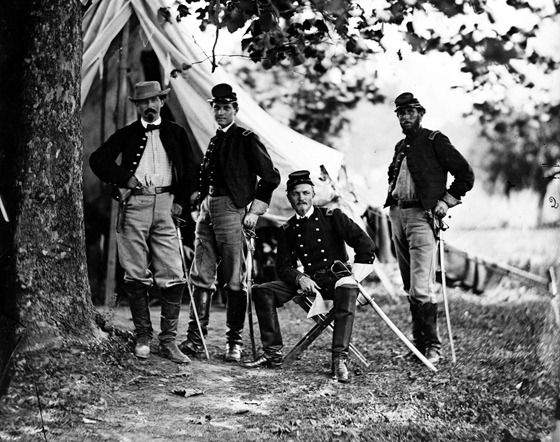
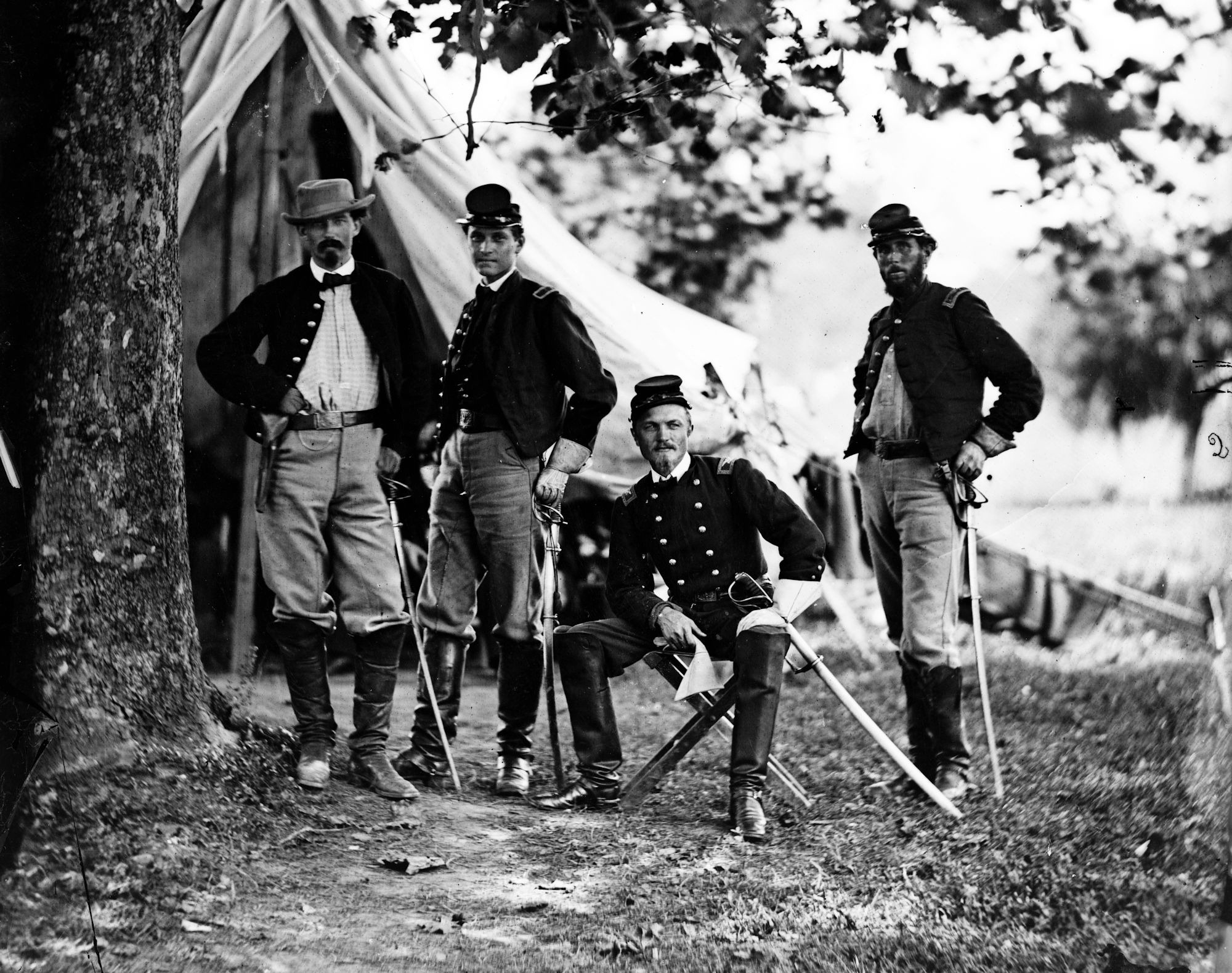
Westover Landing, Va. Photograph from the main eastern theater of war, the Peninsular Campaign, May-August 1862. Left to right: Lt. W.H. Brown, 5th U.S. Cavalry; Lt. H.H. King, 3d Pennsylvania Cavalry; Colonel Averell; Lt. Phillip Pollard, 3rd Pennsylvania Cavalry., photo taken by Alexander Gardner in August 1862.
(Library of Congress image)
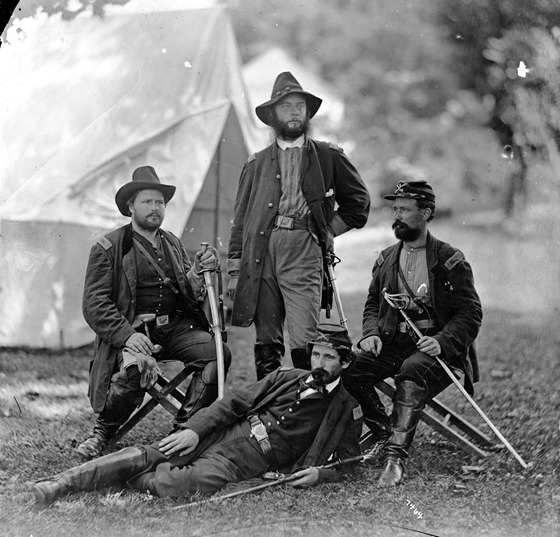
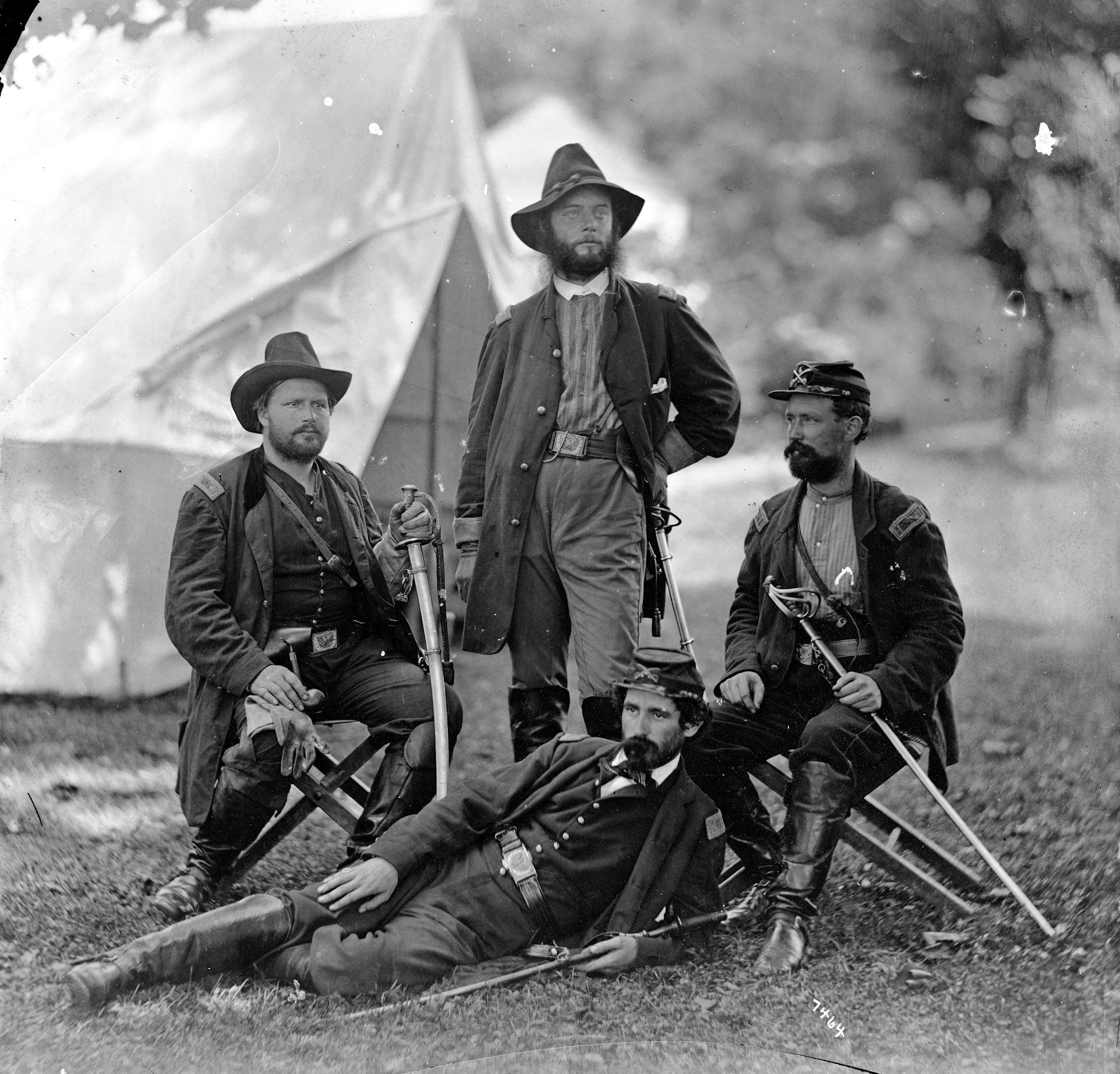
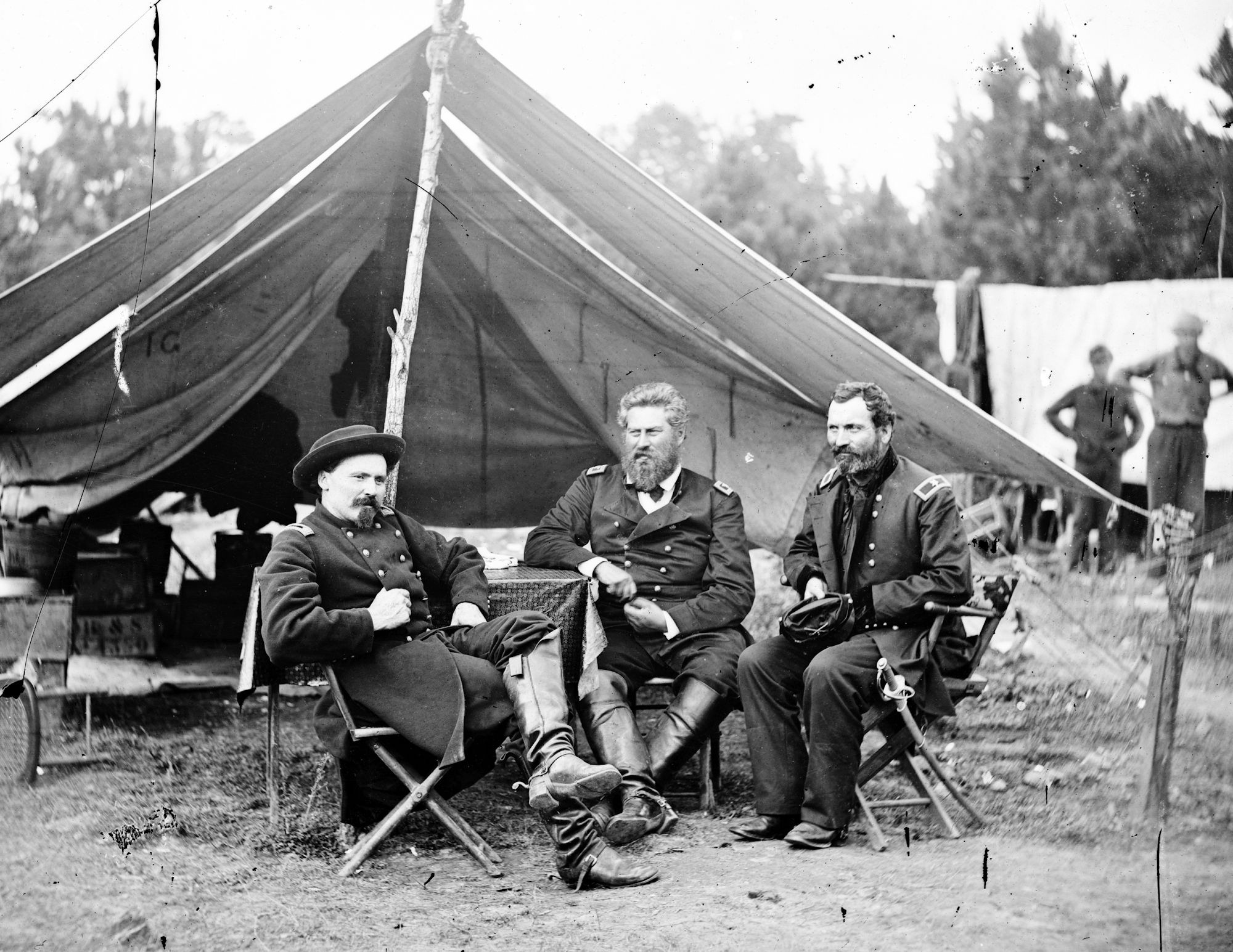
Westover Landing, Va. Col. James H. Childs (standing) with other officers of the 4th Pennsylvania Cavalry, photo taken by Alexander Gardner in August 1862. (Library of Congress image)
More info on James H. Childs:
During the civil war, to avoid being burdened with large numbers of prisoners, armies in the field would “parole” soldiers that they had captured, releasing them on their oath that they would perform no military service until formally exchanged for prisoners of war held or paroled by the other side. In the early part of the war, many paroled men would simply go home, or elsewhere, not to be found when time came for the exchange.
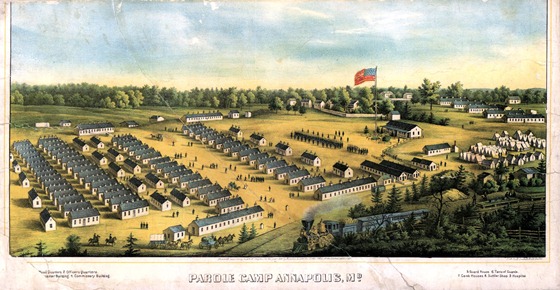
Originally intended as a “camp of instruction,” a camp for paroled prisoners was established near Annapolis, Maryland, in the summer of 1862. It came to be known as Camp Parole.
.
Letters of Francis Reed of the 7th Cavalry, 80th Regiment Pa.
.
July 31, 1862
Camp Parole, Annapolis, Md.
We arrived hear yesterday morning, we heard that exchanging has been stopped. We are all very anxious to be exchanged to go back and square accounts with some of the rebels in the vicinity of Murfreesboro. We are entirely out of money. The rebels took all my clothes they did not leave me anything except what I had on, I have no change and I am pretty dirty. Harry Snyder is situated worse than I am, he has no shoes. He has come about 800 miles barefooted. If we do not get exchanged I shall try and get a furlough from here for a few weeks.
__________
Library of Congress:
Parole Camp Annapolis, M’d.
Library of Congress Geography and Map Division
http://hdl.loc.gov/loc.gmd/g3844p.cw0245390
- LC Civil War maps (2nd ed.) 245.39
- Bird’s-eye view.
- Entered according to Act of Congress in the year 1864 by E. Sachse & Co. in … the District Court of Md.”
- Includes index to points of interest.
Encyclopedia Virginia:
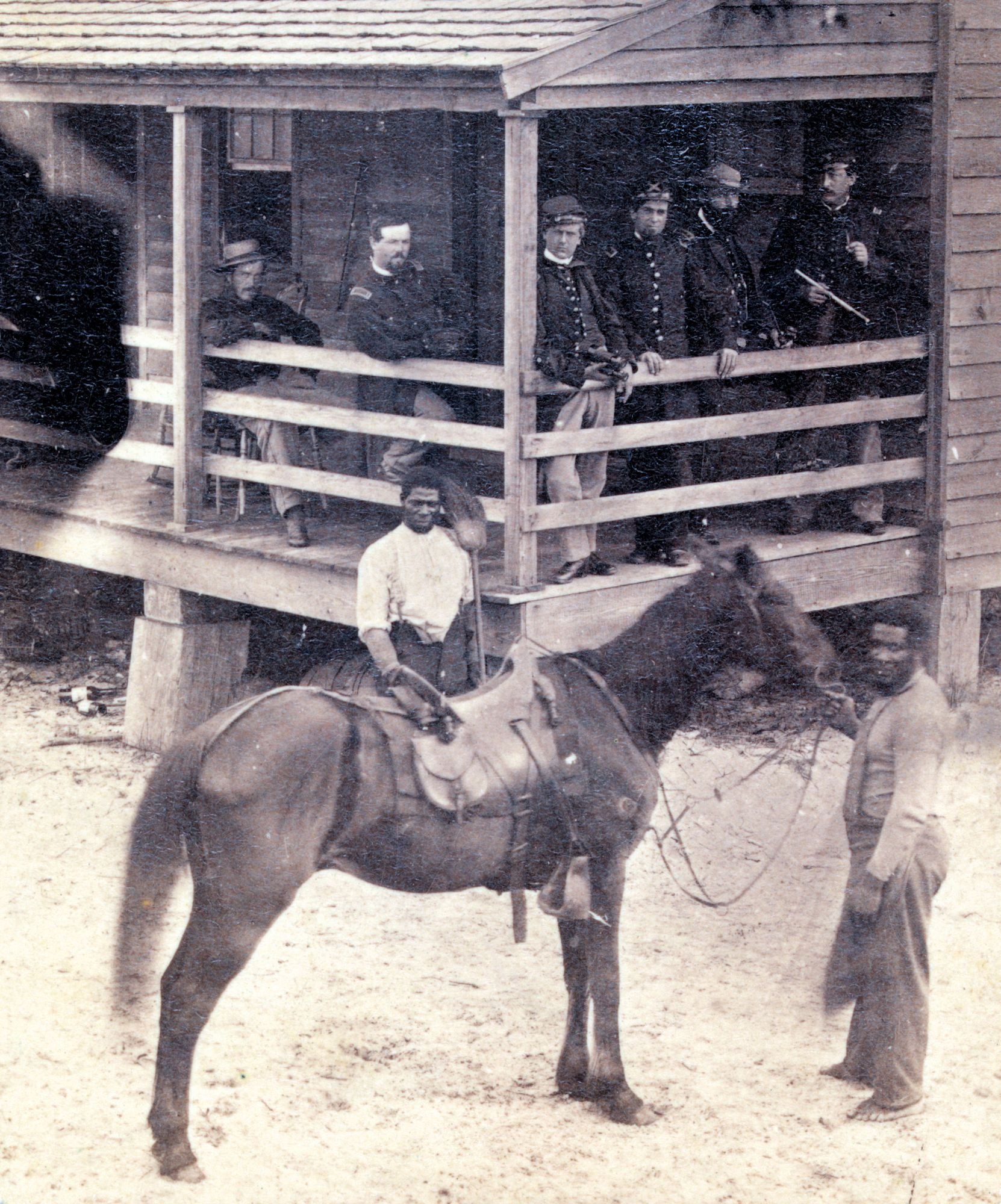
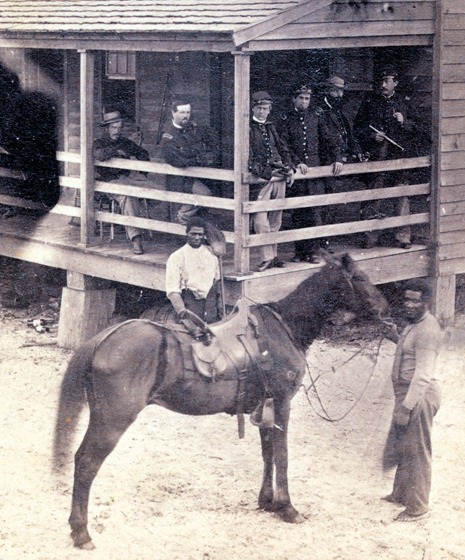
A pair of African American men—one holding a horse, the other a broom—pose in front of a group of Union soldiers. Free blacks served the Union forces in various capacities, from laborer to soldier.
Creator: Mathew Brady
Created: ca. 1862 (copyrighted 1862)
Medium: Albumen carte-de-visite photograph.
____________
Library of Congress
Gladstone Collection of African American Photographs
Library of Congress Prints and Photographs Division
National Park Service:
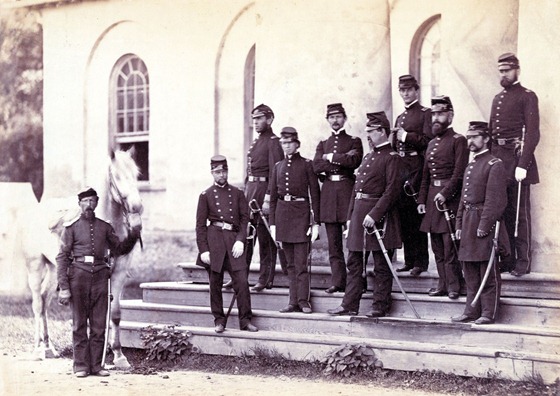
In 1862, a Wisconsin volunteer writes, “The grand old southern homestead of Arlington, with its quaint and curious pictures on the wall, its spectacular apartments, broad halls and stately pillars in front, was an object of especial interest; but, abandoned by its owner, General Robert E. Lee, who was using his great power as a military leader, to destroy the Government he had sworn to defend, it was now a desolation. The military headquarters of McDowell’s division was in the Arlington House, which was open to the public and hundreds tramped at will through its apartments.”
Some, like this man, seemed to consider the changes at Arlington to be Lee’s punishment for his decision to follow Virginia when it seceded from the Union. Such an attitude was not uncommon as many in the Union army viewed Lee as a traitor who had acted dishonorably in resigning his U.S. Army commission at the start of the Civil War. Thus, for these people, the transformations at Arlington were Lee’s just fruits. Subsequent developments on the estate during the War would only contribute to such a feeling, as the Government looked for new ways to use the Arlington estate.
Library of Congress:
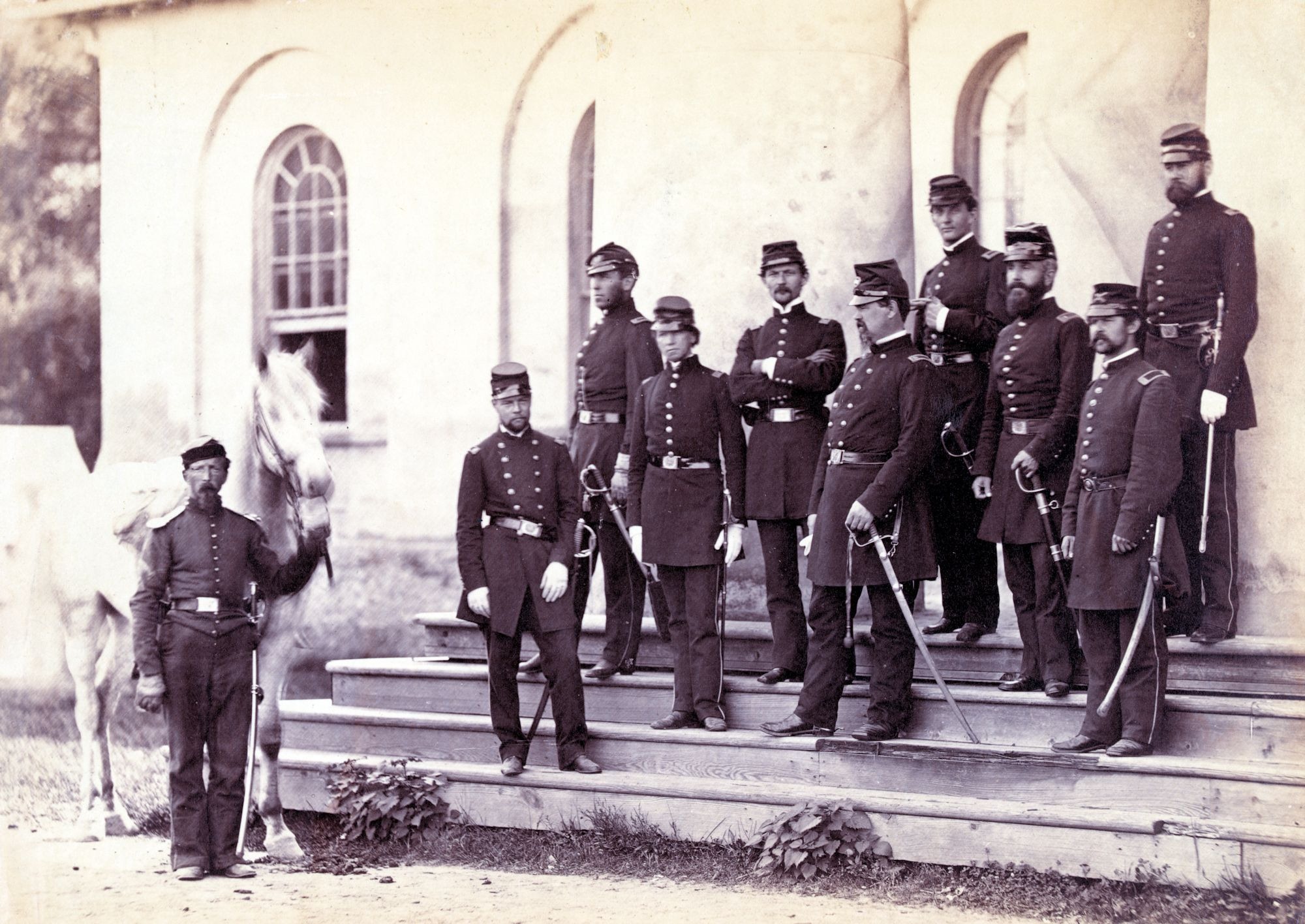
Summary: Photo shows Major-General Irvin McDowell, full-length portrait, facing left, standing on steps with eight officers and one officer holding a horse.
Library of Congress Prints and Photographs Division
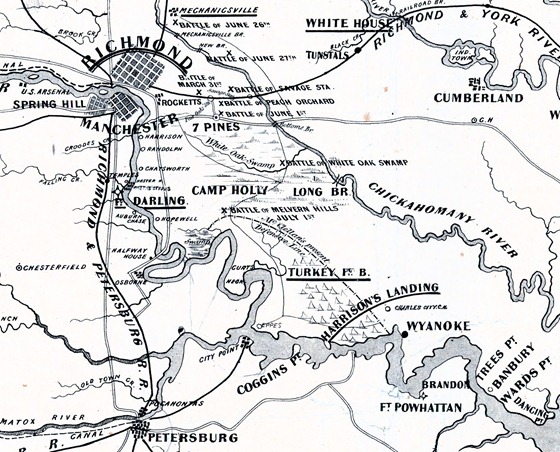
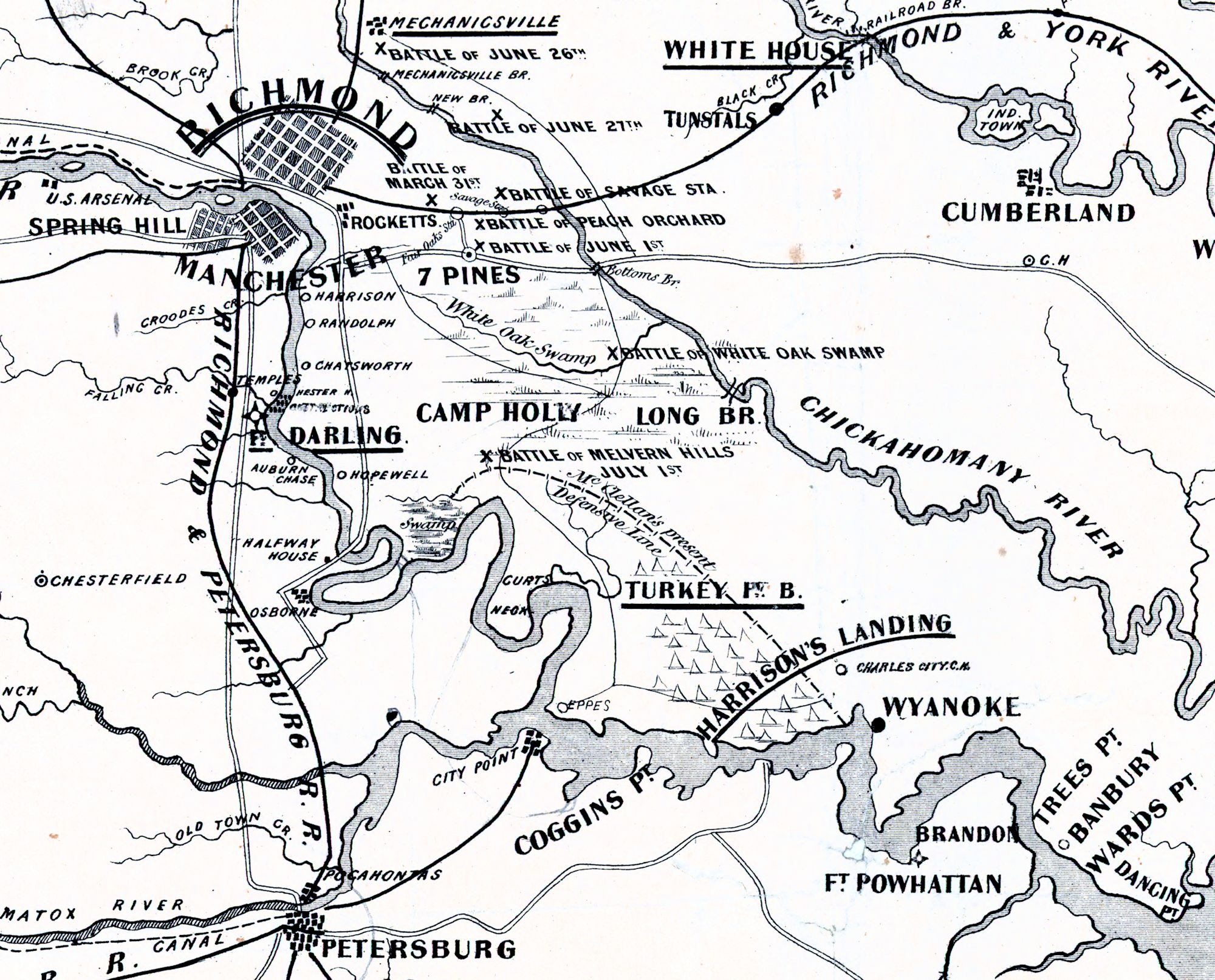
This map puts a bit of perspective on the battles that were fought around Richmond in 1862 and the location of McClellan’s forces in July.
________
 From “Map of the battle ground near Richmond, showing plainly, every point of interest of the late & present position of the Union army.”
-
L. Prang & Co.
-
Boston 1862
-
Scale ca. 1:250,000.
-
LC Civil War Maps (2nd ed.), 633
-
Indicates location and dates of battles, “McClellan’s present defensive line” at Harrison’s Landing, principal roads, railroads, towns, and drainage.
_________
Digitally corrected for fading.
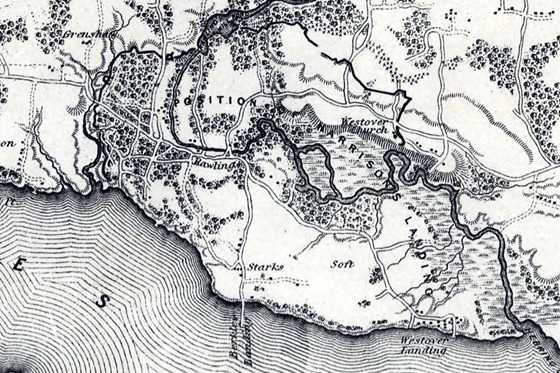
Harrison’s Landing appears to have been a named place or property, while Westover Landing was an actual river landing.
_______
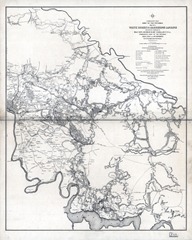
Above map is from the map:
“White House to Harrison’s Landing”
- Creator: Abbot, Henry L.
- [S.l.] : Top. Engr’s., Army of the Potomac, [1862]
- Relief shown by hachures.
- Shows fortifications, towns, roads, railroads, houses, names of residents, vegetation, drainage.
- At head of title: “Campaign map, Army of the Potomac, map no. 3.”
- Library of Congress Geography and Map Division
- www.loc.gov/item/2006626049
____________________
Digitally enhanced for fade correction MpG
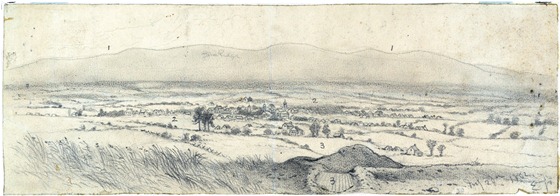
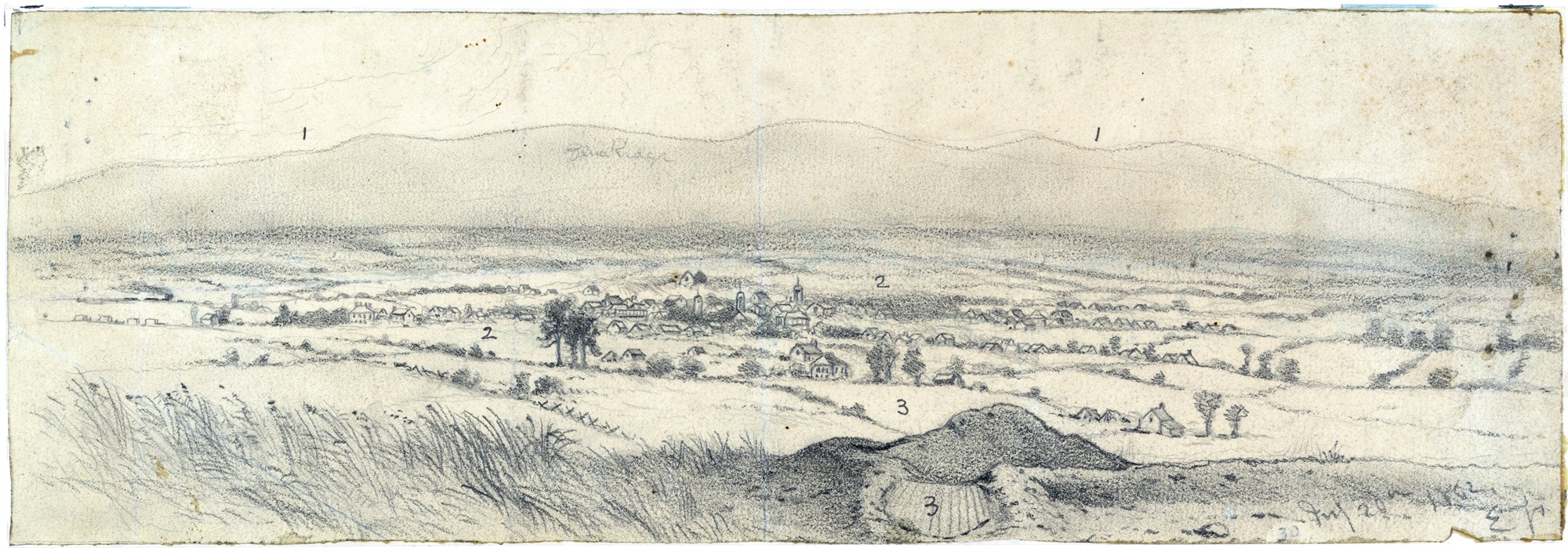
View of Winchester, Va., from fort on the hill N.E. of the town, breastwork in foreground.
Artist: Edwin Forbes.
Morgan collection of Civil War drawings, Library of Congress Prints and Photographs Division
Record page for image is here.