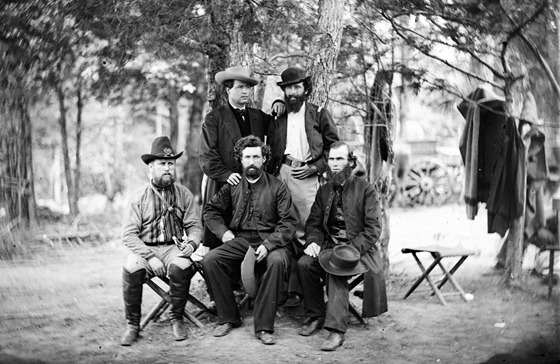
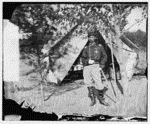
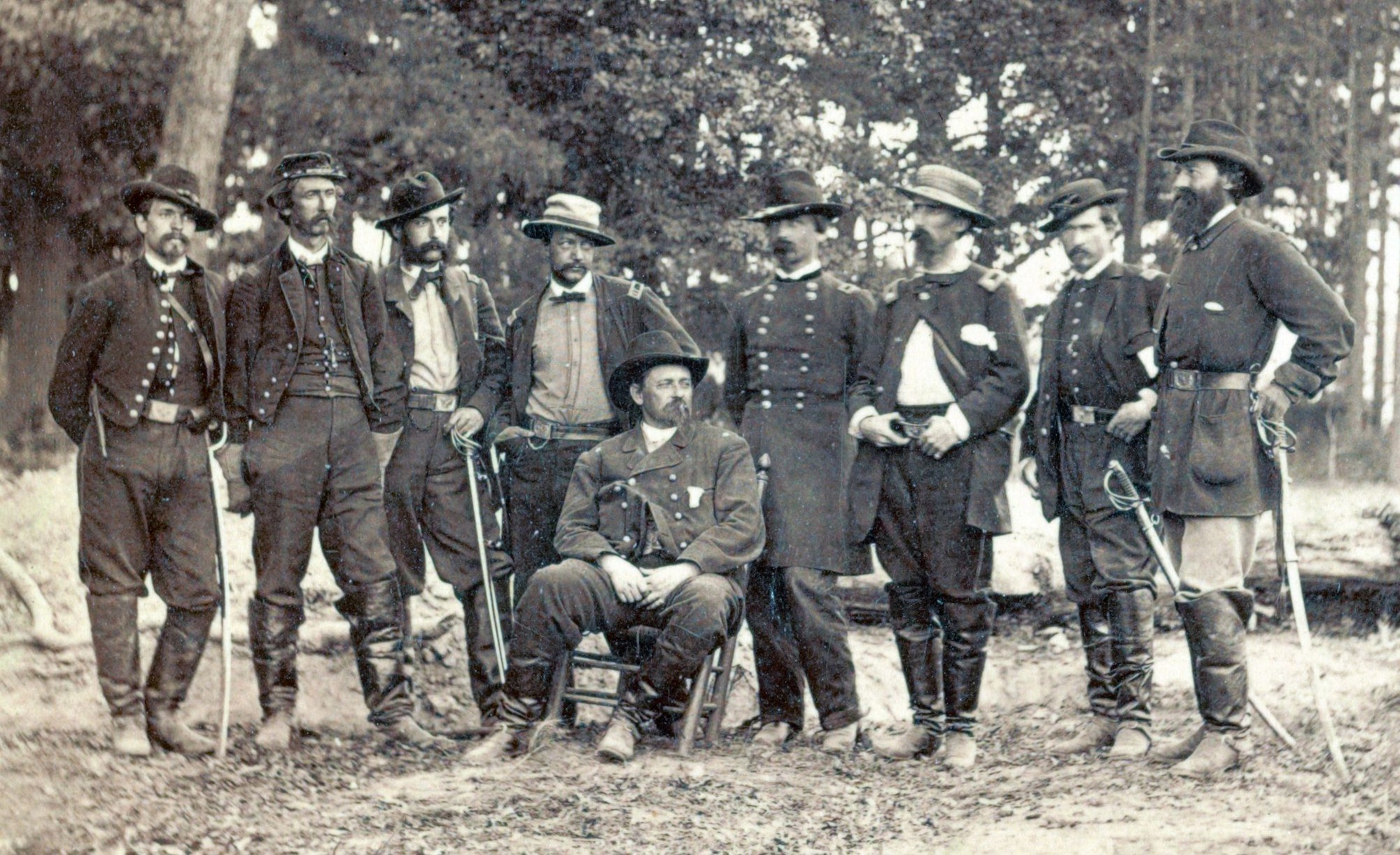
Photo taken by Timothy H. O’Sullivan in the vicinity of Bull Run, July 1862.
From Wikipedia:
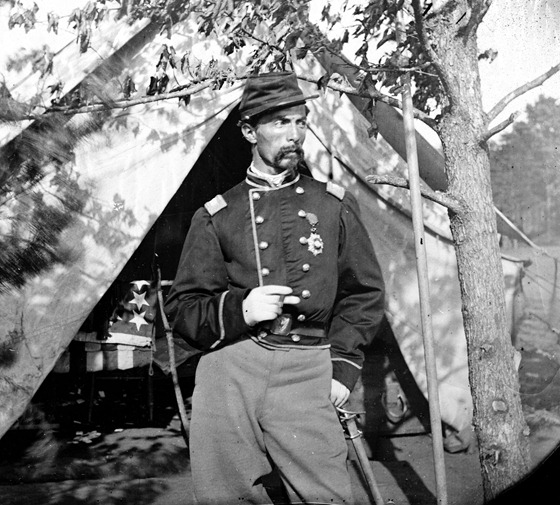
Alfred Napoléon Alexander Duffié (May 18, 1833 – November 8, 1880) was a French-American soldier and diplomat who served in the Crimean War and the American Civil War.
When the American Civil War broke out, Duffié enlisted in the Union Army. He first joined the 2nd New York Cavalry (also known as the Harris Light Cavalry), on August 9, 1861, and was soon promoted to the rank of captain. The somewhat quarrelsome Duffié was placed under arrest several times for confrontations with other officers; in one incident, he challenged General Fitz John Porter to a duel. In July 1862 Duffié was appointed to command the 1st Rhode Island Cavalry, with the rank of colonel, by that state’s governor, William Sprague IV. Though the 1st Rhode Island’s officers initially refused to serve under a foreign-born leader, Duffié soon won them over and reorganized the 1st into a fine fighting unit. Assigned to the command of General William Averell, they saw action against Confederate troops under Thomas J. “Stonewall” Jackson in August 1862, in fighting near Cedar Mountain, Virginia.
From Library of Congress:
 One of two images of Duffié in the Library of Congress online catalog.
Library of Congress Prints and Photographs Division Washington, D.C. 20540 USA
Record pages for images: http://www.loc.gov/pictures/item/cwp2003005510/PP/ and http://www.loc.gov/pictures/item/cwp2003005564/PP/
From Wikipedia:
The Irish Brigade was an infantry brigade, consisting predominantly of Irish Americans, that served in the Union Army in the American Civil War. The designation of the first regiment in the brigade, the 69th New York Infantry, or the “Fighting 69th”, continued in later wars. The Irish Brigade was known in part for its famous war cry, the “faugh a ballagh”, which is an anglicization of the Irish phrase, fág an bealach, meaning “clear the way”.
From Library of Congress:
This photo was taken by Alexander Gardner in July 1862 at Harrison’s Landing, Virginia.
Summary: Photo shows: (back row) Patrick Dillon, unidentified; and (front row, left to right) unidentified, James Dillon, and William Corby. The identified men are priests of the Congregation of the Holy Cross, University of Notre Dame. (Source: E. Hogan, Univ. Notre Dame Archives, 2009.)
Library of Congress Prints and Photographs Division Washington, D.C. 20540 USA
Record page for this image: http://www.loc.gov/pictures/item/cwp2003000093/PP/
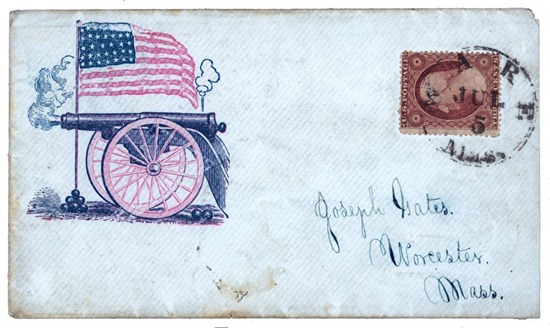
Civil War envelope showing a firing cannon and an American flag standing in a pile of cannon balls.
Addressed to Joseph Gates, Worcester, Mass.; postmarked; bears 3 cent stamp.
Collection: Liljenquist Family Collection of Civil War Photographs (Library of Congress)
This envelope and additional information may be found here at the Library of Congress
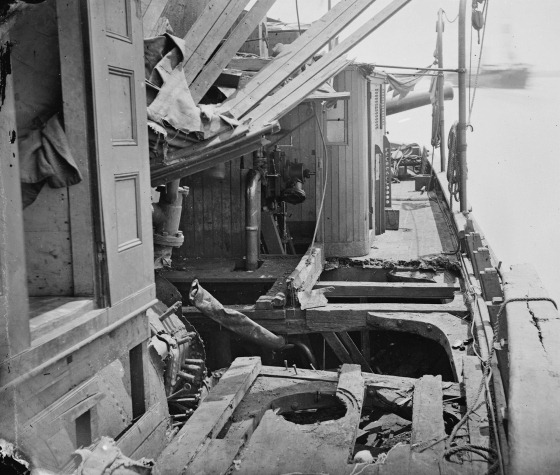
From Wikipedia:
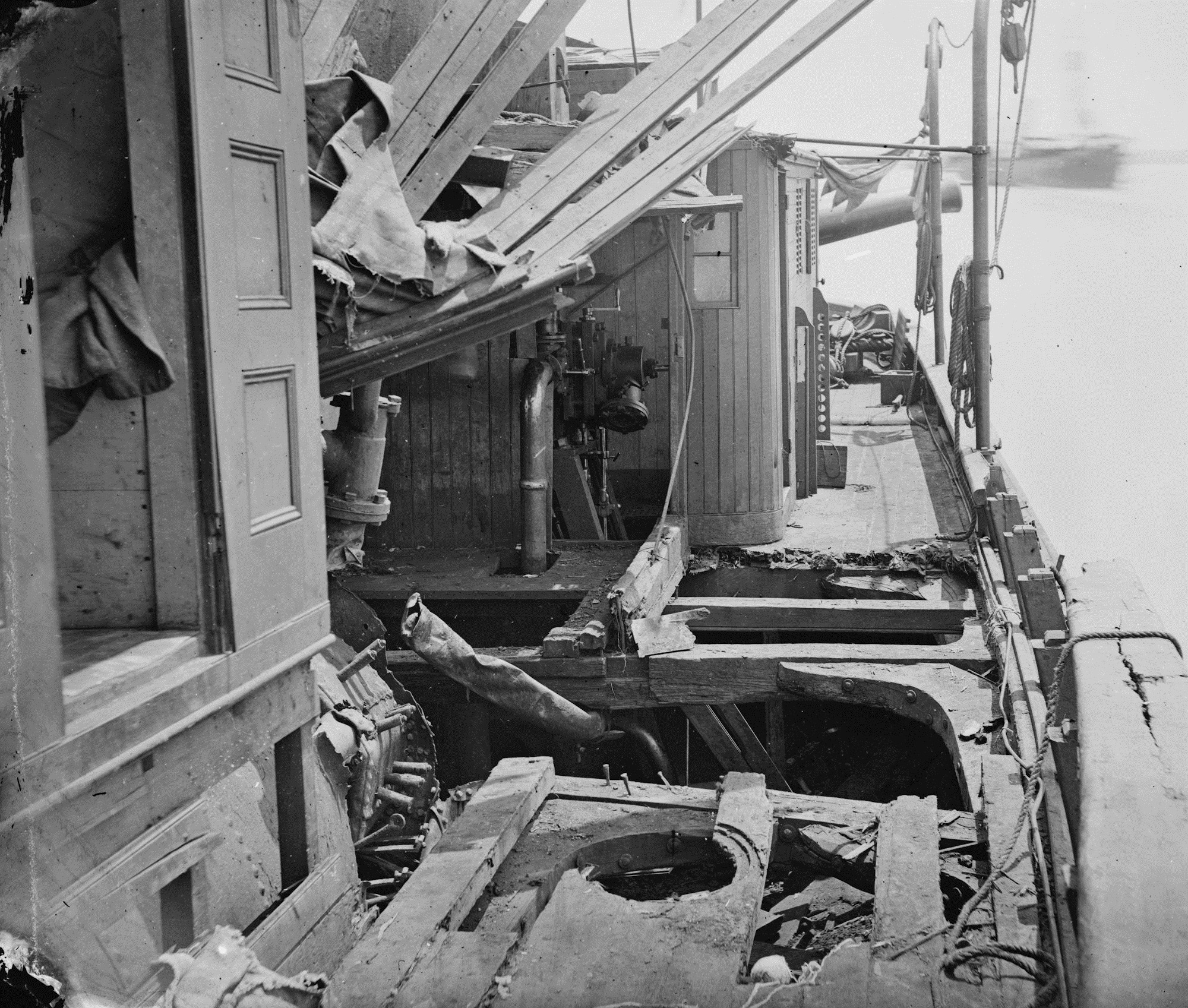
CSS Teaser had been the aging Georgetown, D.C. tugboat York River until the beginning of the American Civil War, when she was taken into the Confederate States Navy. Later, she was captured by the United States Navy and became the first USS Teaser.
Teaser was built at Philadelphia, Pennsylvania. Purchased at Richmond, Virginia by the State of Virginia in 1861, she was assigned to the naval forces in the James River with Lieutenant James Henry Rochelle, Virginia State Navy, in command. Upon the secession of Virginia, Teaser became a part of the Confederate States Navy and continued to operate in Virginia waters. With Lieutenant William A. Webb, CSN, in command, she took an active part in the Battle of Hampton Roads on March 8–March 9, 1862, acting as tender to CSS Virginia. She received the thanks of the Congress of the Confederate States for this action.
Teaser was a pioneer “aircraft carrier”, serving as a base for an observation hot air balloon; she also became a pioneer minelayer when ordered on June 17, 1862, to assist General Robert E. Lee’s Army of Northern Virginia. Under Lieutenant Hunter Davidson, CSN, she was used by the Confederate Naval Submarine Battery Service to plant and service “torpedoes” (mines) in the James River. While engaging USS Maratanza at Haxall’s on the James on July 4, 1862, a Union shell blew up Teaser’s boiler and forced her crew to abandon ship. When seized by Maratanza, Teaser was carrying on board a balloon for aerial reconnaissance of Union positions at City Point and Harrison’s Landing.
From Library of Congress:
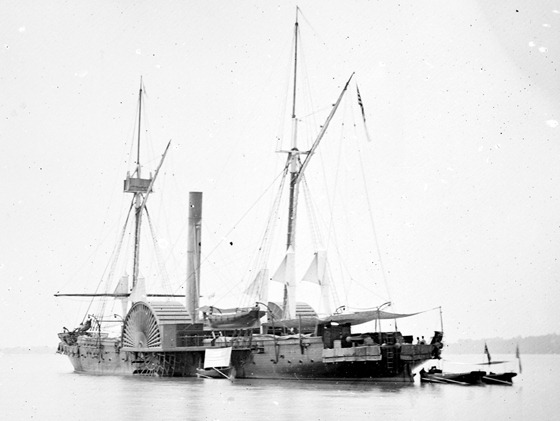
From Wikipedia:
USS Maratanza (1862) was a steamer acquired by the Union Navy during the American Civil War. She was used by the Union Navy as a gunboat to patrol navigable waterways of the Confederacy to prevent the South from trading with other countries.
Double-ender, wooden steamer Maratanza, built at Boston Navy Yard in 1861, was launched 26 November and commissioned at Boston, Massachusetts, 12 April 1862, Comdr. G. H. Scott in command.
From Library of Congress:
Photographed by James F. Gibson
Photographs of the Federal Navy, and seaborne expeditions against the Atlantic Coast of the Confederacy
Library of Congress Prints and Photographs Division Washington, D.C. 20540 USA
Record page for this image: http://www.loc.gov/pictures/item/cwp2003000709/PP/
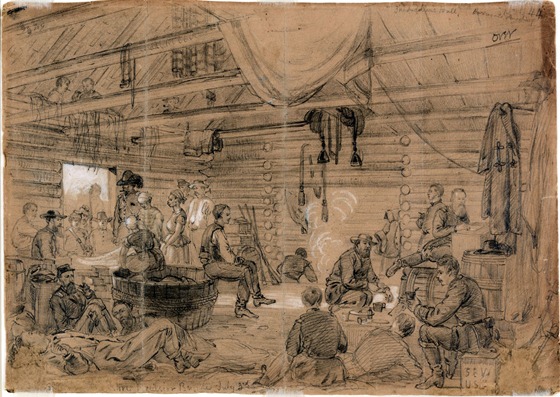
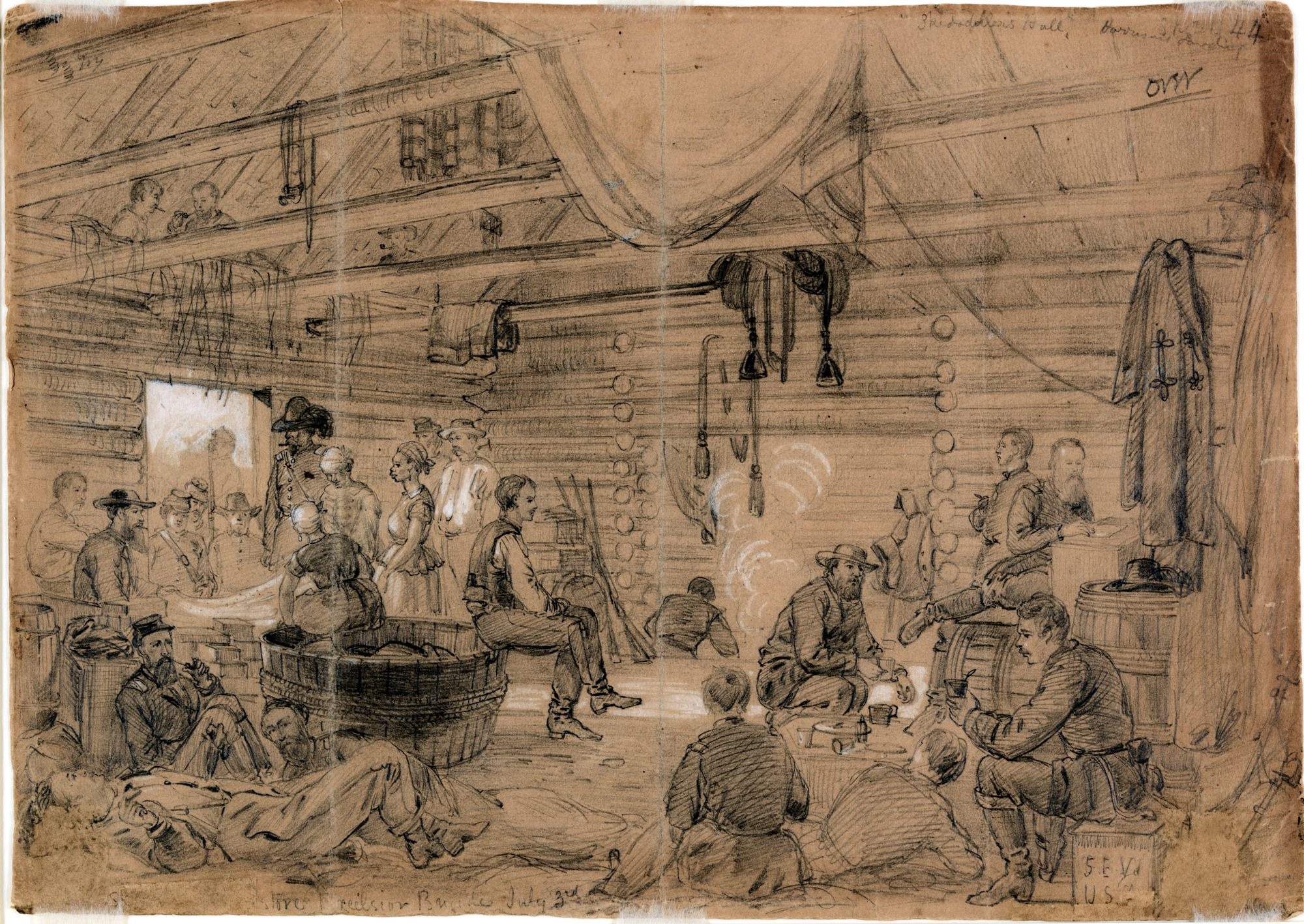
From Library of Congress:
- Signed lower right: Waud.
- Title inscribed upper right.
- Inscribed lower left: Sk[etch in Sutlers’s] store Excelsior Brigade July 3rd.
- Note that the figure seated to the left of the doorway bears a close resemblance to Waud and was probably intended as a self-portrait.
- Published in: Harper’s Weekly, August 9, 1862, p. 500.
- Inscribed on box in image: 1000 … Cartridges Call 52.
Part of Morgan collection of Civil War drawings.. Library of Congress Prints and Photographs Division Washington, D.C.
Record page for this image: http://www.loc.gov/pictures/item/2004661191/
![Battle of Malvern hills fou[ght] on Tuesday July 1st in which the federal forces gained a complete victory over the rebel army](https://dotcw.com/wp-content/uploads/2012/07/Battle-of-Malvern-hills-fought-on-Tuesday-July-1st-in-which-the-federal-forces-gained-a-complete1.jpg "Battle of Malvern hills fou[ght] on Tuesday July 1st in which the federal forces gained a complete victory over the rebel army")
From Library of Congress:
Title: Battle of Malvern hills fou[ght] on Tuesday July 1st in which the federal forces gained a complete victory over the rebel army, led by Genl’s Magruder and Jackson
- Signed lower right: Alf. R. Waud.
- Title inscribed aboveimage.
- Inscribed upper right: Right wing of the 5th corps Genl Porter.
Part of Morgan collection of Civil War drawings.. Library of Congress Prints and Photographs Division Washington, D.C.
Record page for this image: http://www.loc.gov/pictures/item/2004660457/
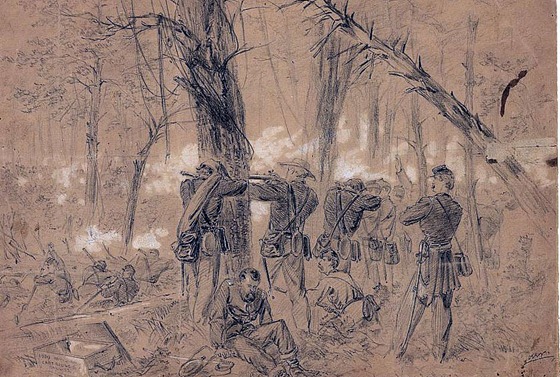
From Harper’s Weekly, August 9, 1862:
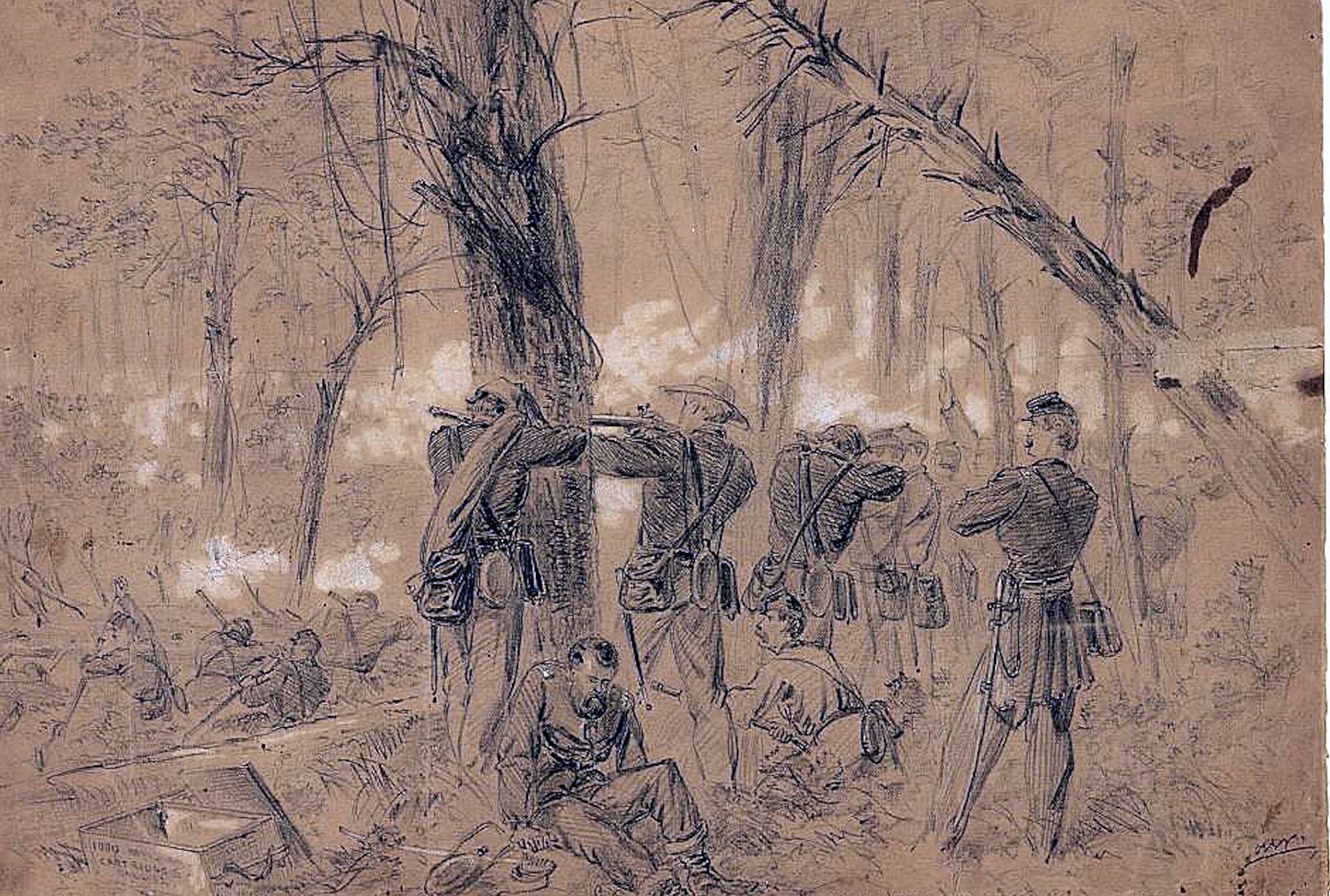
On the … we give a picture of KEARNEY’S DIVISION AT WORK, on Monday, June 30. Mr. Waud says:
“In a fight, such as is represented in the picture, it is impossible to get a view of an extended line of battle from any one point. A majority of the battles so far have been of this description, usually termed bushwhacking—very deadly, but hardly affording a chance for a display of tactics. For the rest, the picture describes itself, and gives a good idea of what our soldiers have to stand up to in the Virginia swamps and woods.”
From Library of Congress:
Title: Fighting in the woods Kearneys divison repulsing the enemy Monday June 30th 1862
- Signed lower right: A.R. Waud.
- Title inscribed below image.
- Published in: Harper’s Weekly, August 9, 1862, p. 500.
- Inscribed on box in image: 1000 … Cartridges Call 52.
Part of Morgan collection of Civil War drawings.. Library of Congress Prints and Photographs Division Washington, D.C.
Record page for this image: http://www.loc.gov/pictures/item/2004660376/
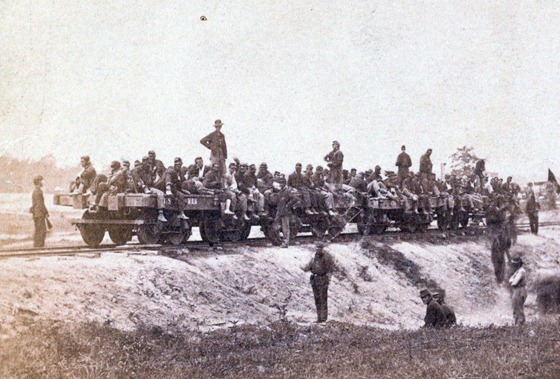
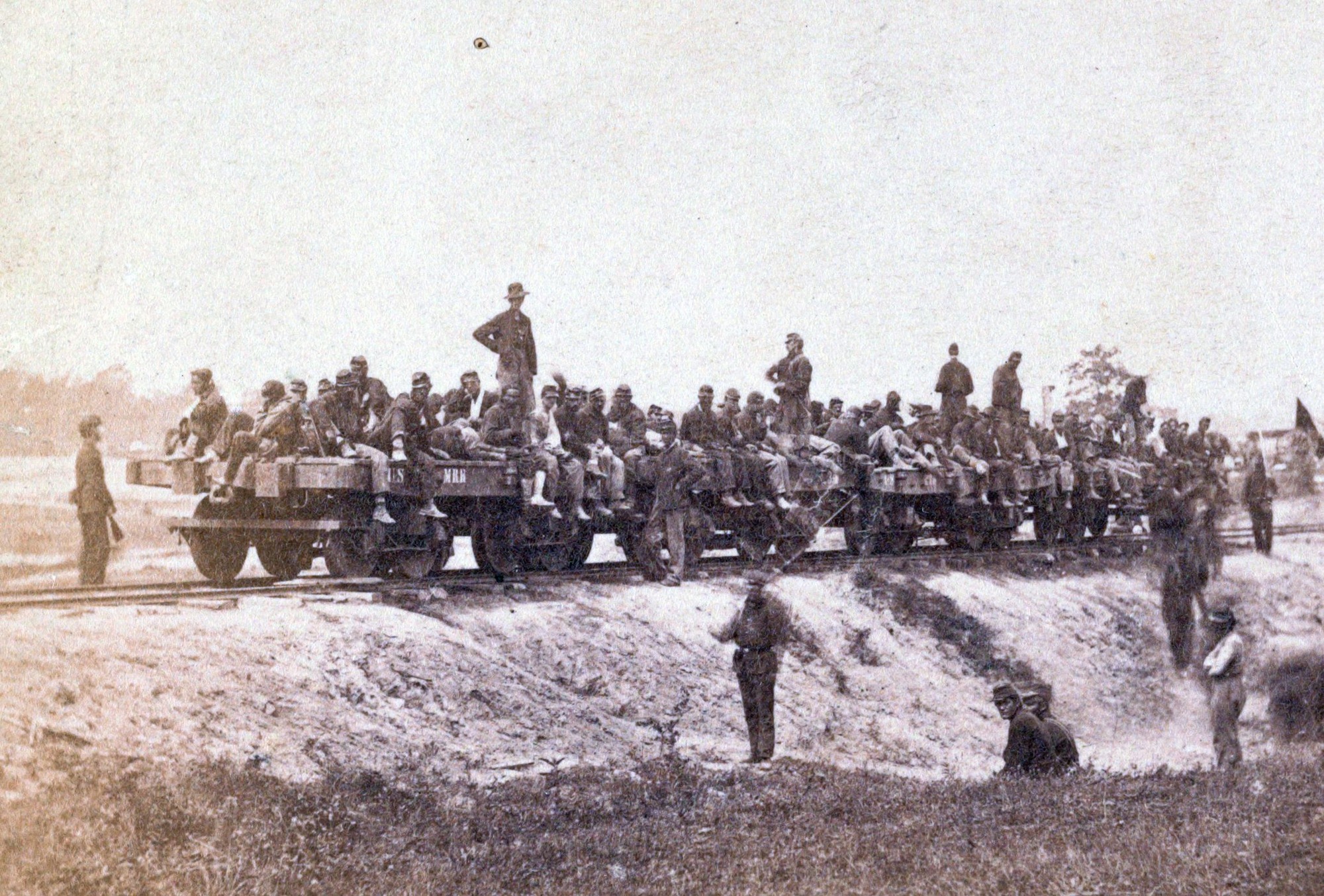
From Library of Congress:
Title from back of card.
Summary: Stereograph showing wounded soldiers on railroad cars at Savage’s Station, Virginia.
Photographed by Brady & Co. (Washington, D.C.),
Part of the series, Photographic History. The War for the Union. War Views. Library of Congress Prints and Photographs Division Washington, D.C.
Record page for this image: http://www.loc.gov/pictures/item/2010648600/
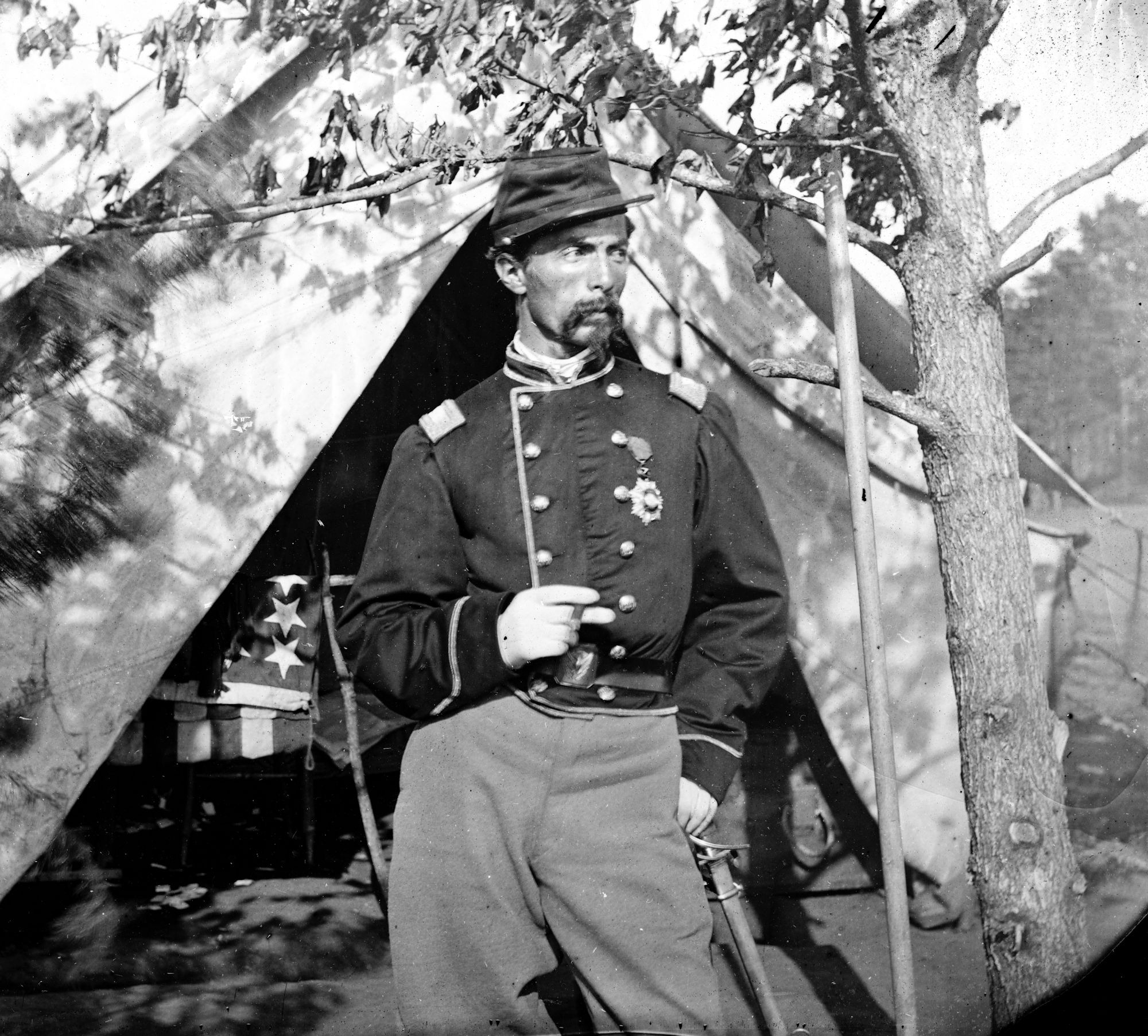
 One of two images of Duffié in the Library of Congress online catalog.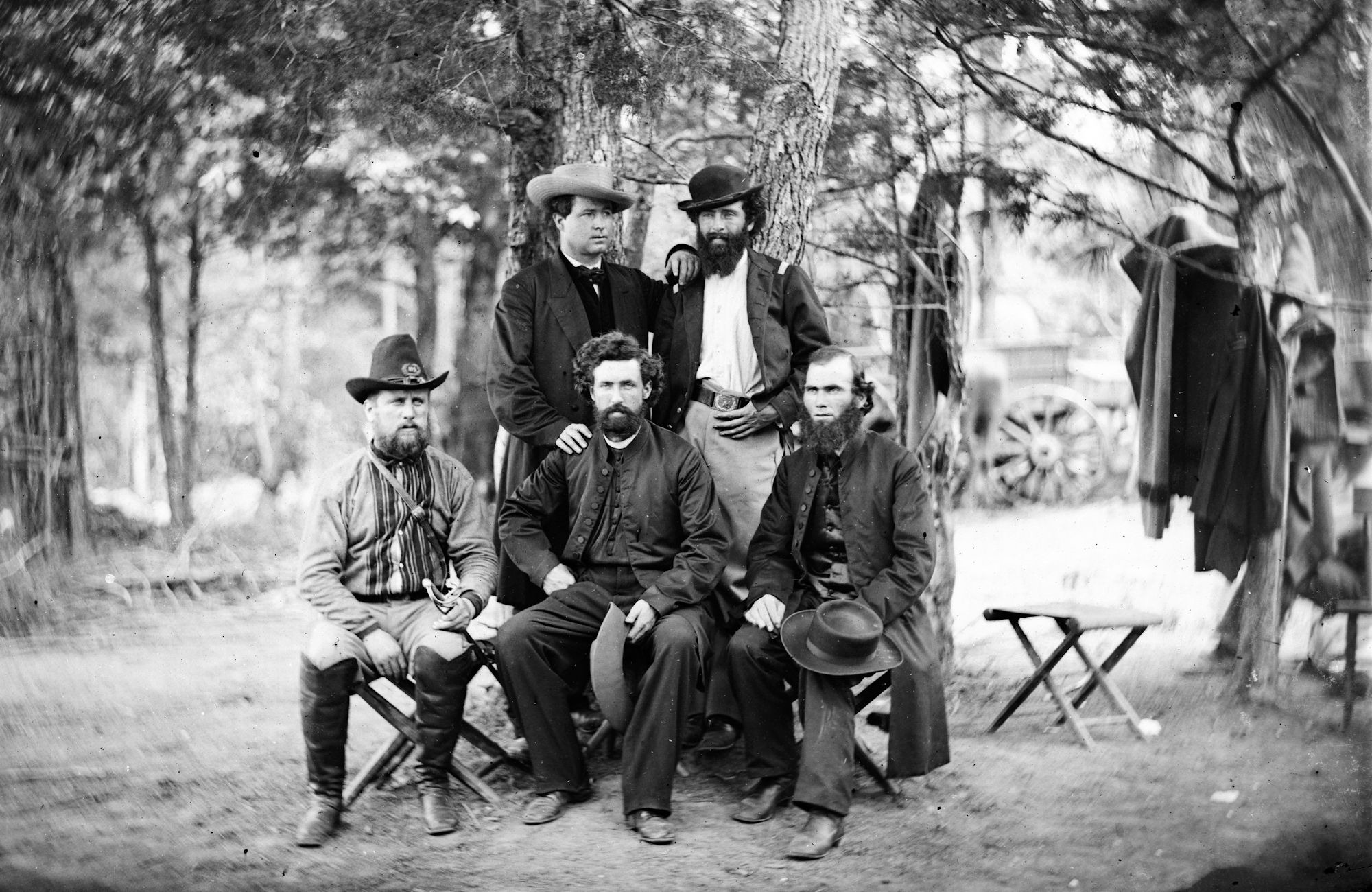
![Battle of Malvern hills fou[ght] on Tuesday July 1st in which the federal forces gained a complete victory over the rebel army](https://dotcw.com/wp-content/uploads/2012/07/Battle-of-Malvern-hills-fought-on-Tuesday-July-1st-in-which-the-federal-forces-gained-a-complete.jpg "Battle of Malvern hills fou[ght] on Tuesday July 1st in which the federal forces gained a complete victory over the rebel army")