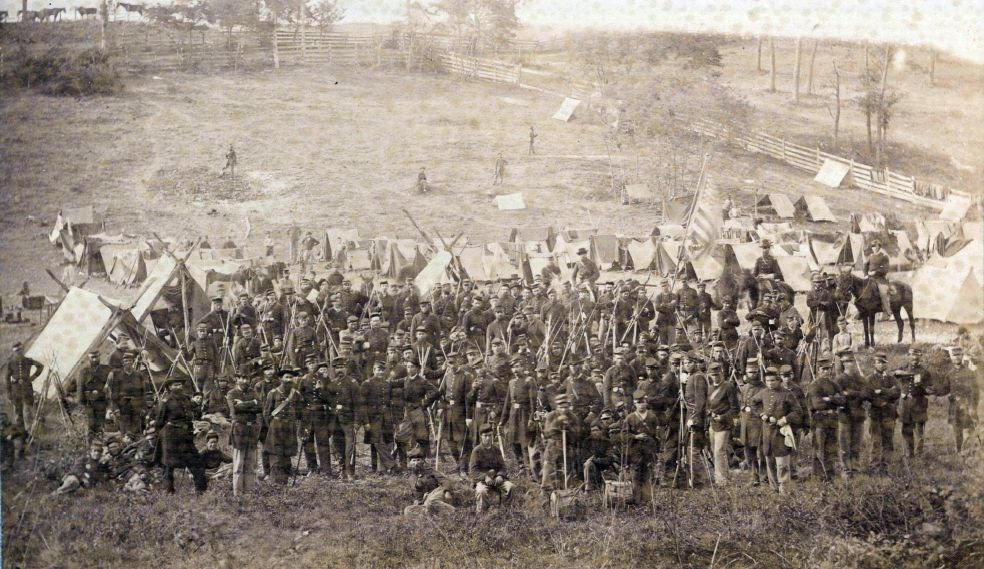
93rd N.Y. Infantry at Headquarters, Army of the Potomac, Antietam, Md. Sept., 1862. (U.S. Army Heritage Collections Online)
93rd N.Y. Infantry at Headquarters, Army of the Potomac, Antietam, Md. Sept., 1862. (U.S. Army Heritage Collections Online)
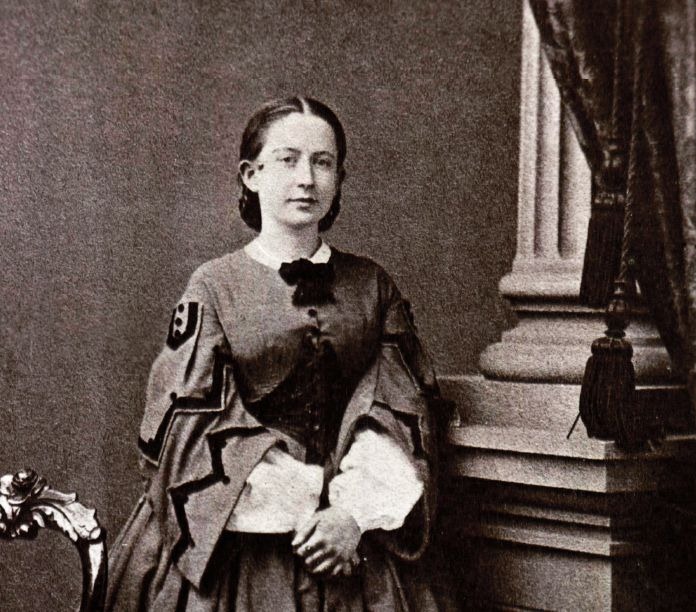
Immediately upon receipt of news of the battle of Antietam, a call was made in behalf of the wounded who needed nurses and supplies of food and raiment. Among the first to respond from Montgomery county to the call were Mrs. Rachel P. Evans, of Bridgeport; Mrs. Alice H. Holstein, Mrs. Anna Carver, and Miss Sallie L. Roberts, of Upper Merion; Miss Sarah Priest, of Bridgeport; and Miss Lizzie J. Brower, of Norristown. These patriotic and humane ladies freely gave their services to the sick and wounded men who fell in battle or were stricken with disease resulting from exhaustion and exposure. Many of the men of the 51st Regiment of Pennsylvania Volunteers received attention from the ladies named, who remained on the field of battle and near Sharpsburg for some two weeks. – Clifton Swenk Hunsicker; Montgomery County, Pennsylvania; a history (Volume 1), pub. 1923
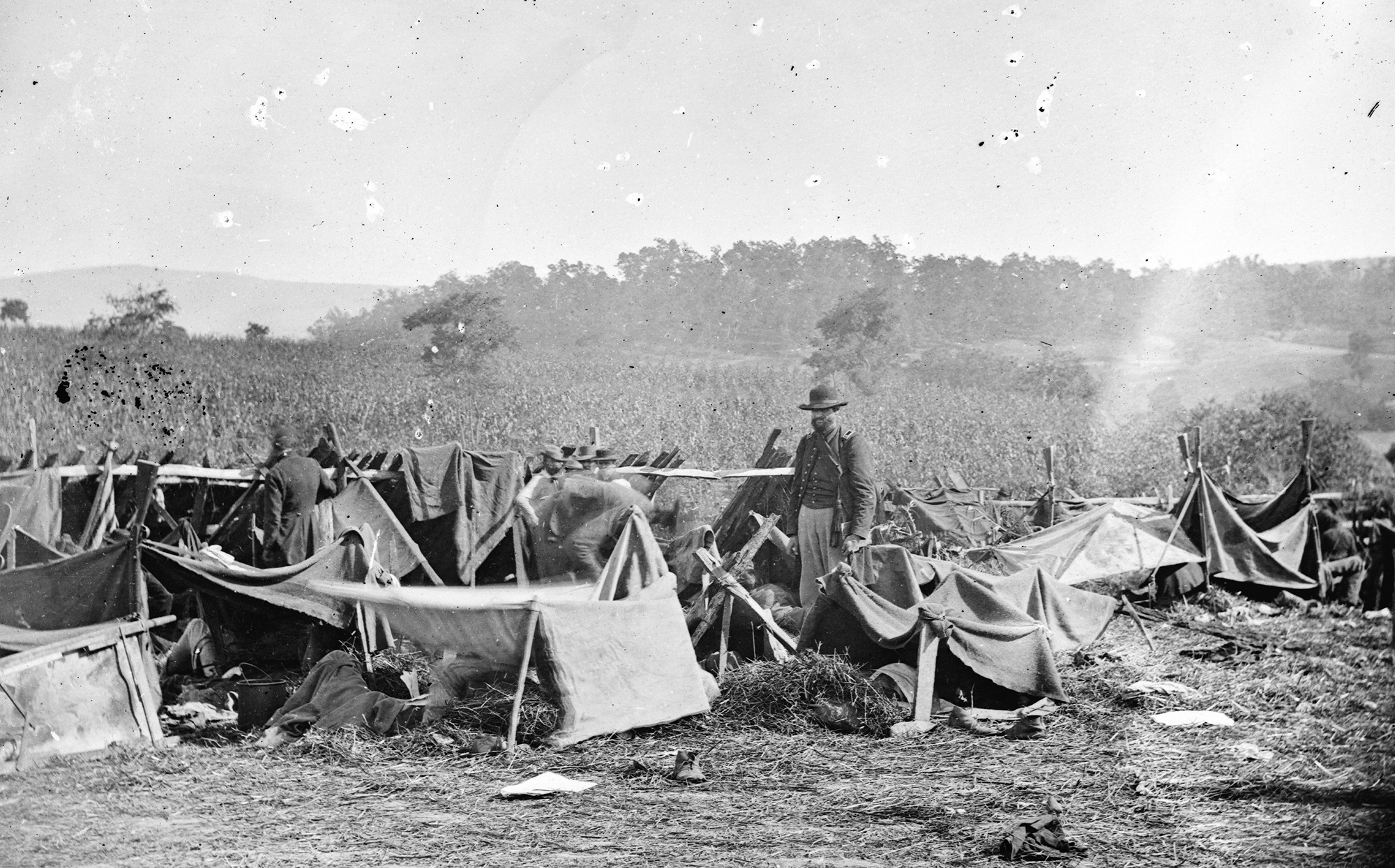
Keedysville, Md., vicinity. Confederate wounded at Smith’s Barn, with Dr. Anson Hurd, 14th Indiana Volunteers, in attendance.
Photo by photographer Alexander Gardner.
Library of Congress image.
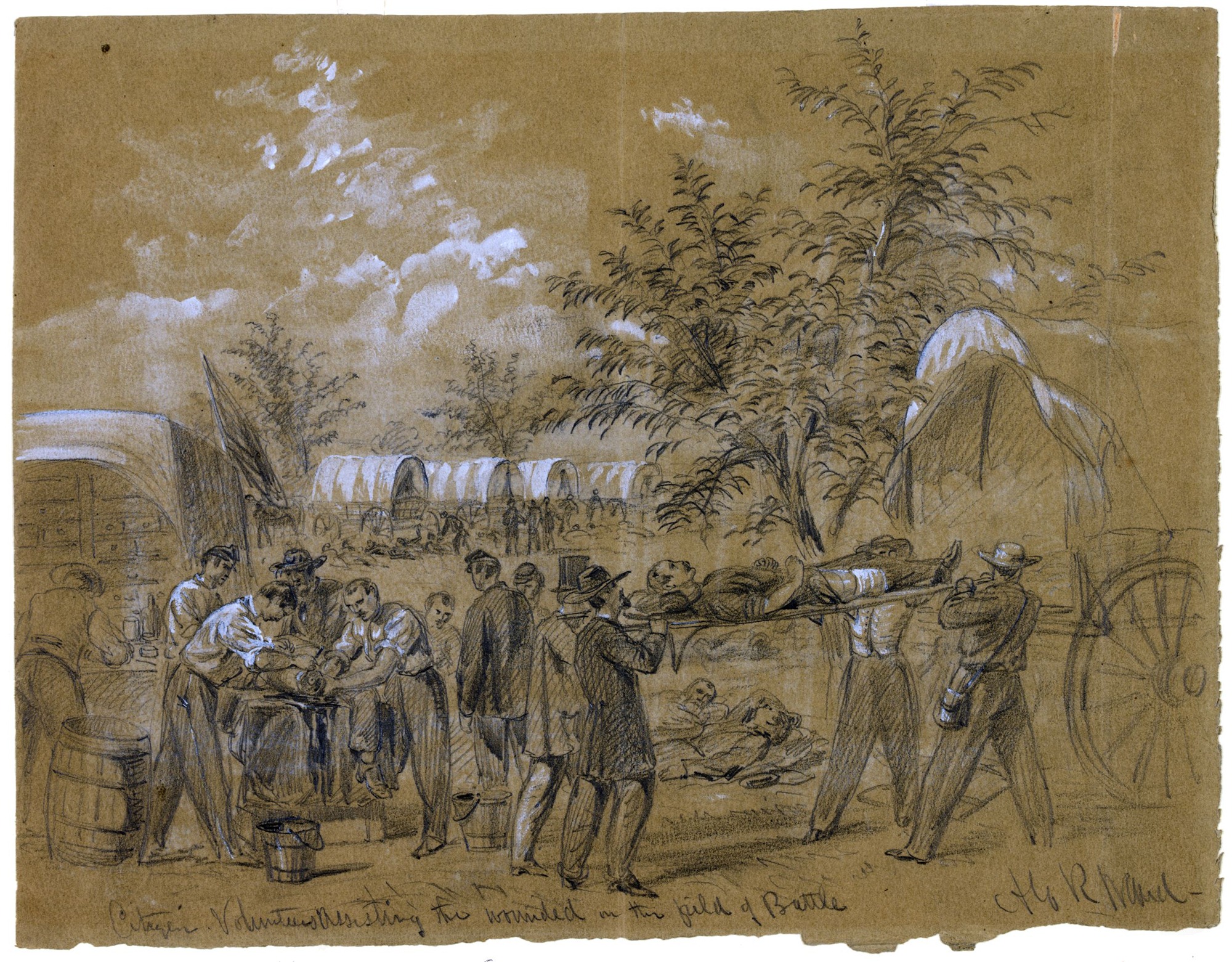
September 17, 1862 at Antietam.
1 drawing on olive paper : pencil and Chinese white.
Signed lower right: Alf R Waud.
Library of Congress image.
Title inscribed below image.
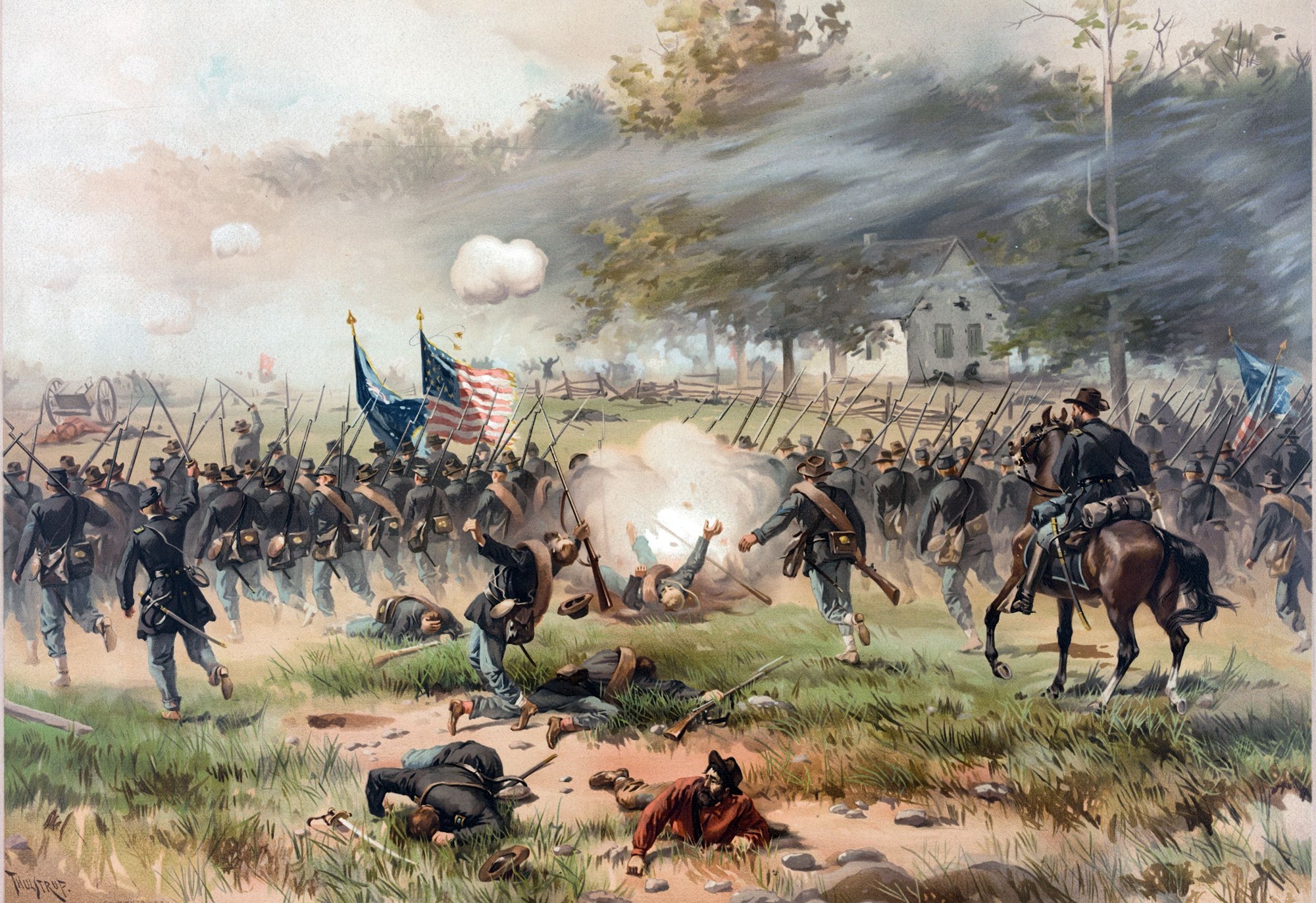
Facsimile print by Prang & Co., © 1887 (Library of Congress copyright stamped Dec. 19, 1887) from painting by Thure de Thulstrup.
Library of Congress image.
______
(more Thulstrup images)
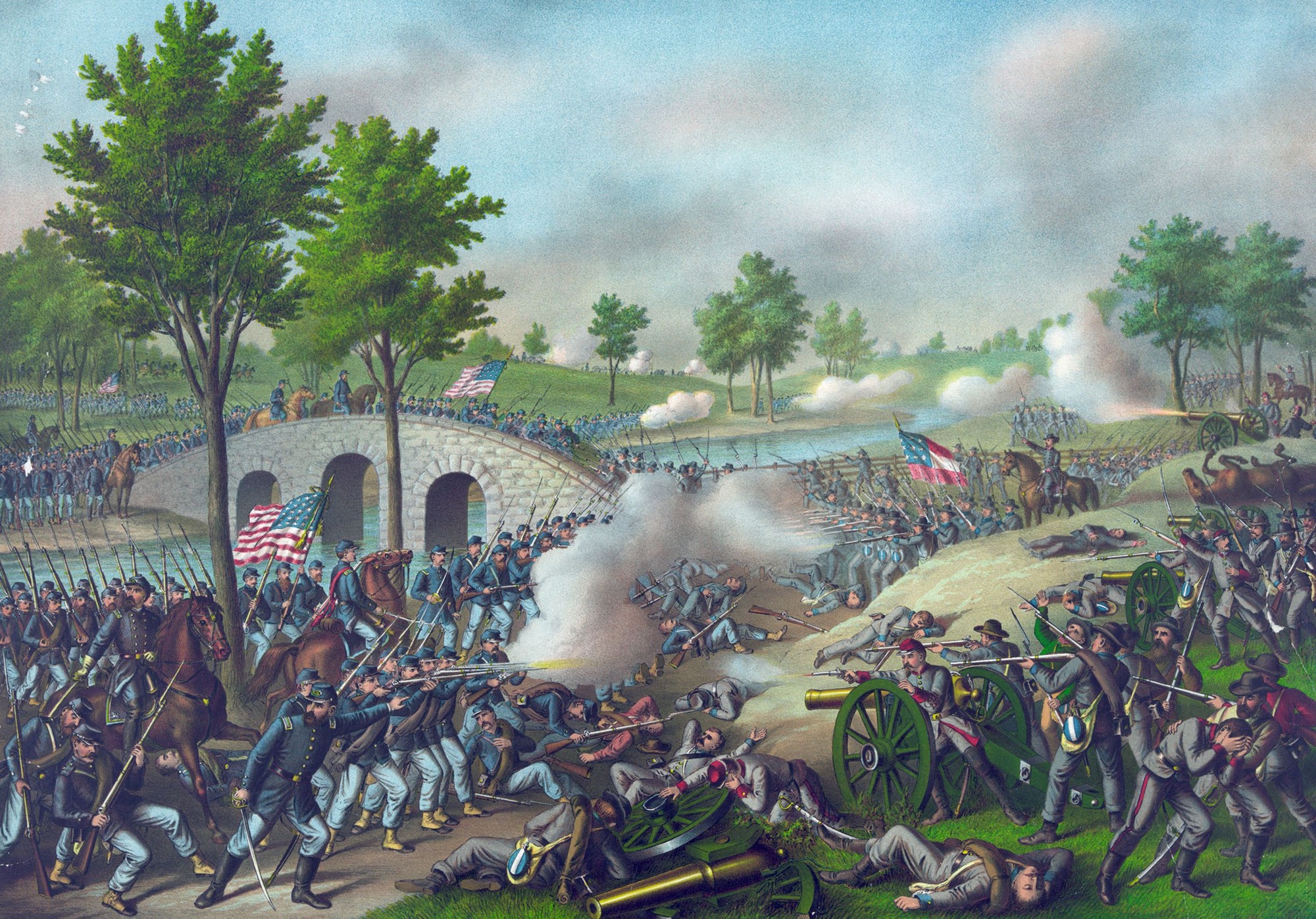
Battle of Antietam – Army of the Potomac: Gen. Geo. B. McClellan, comm., Sept. 17, 1862 …
Kurz & Allison., print : lithograph, color. (© 1888)
Library of Congress image.
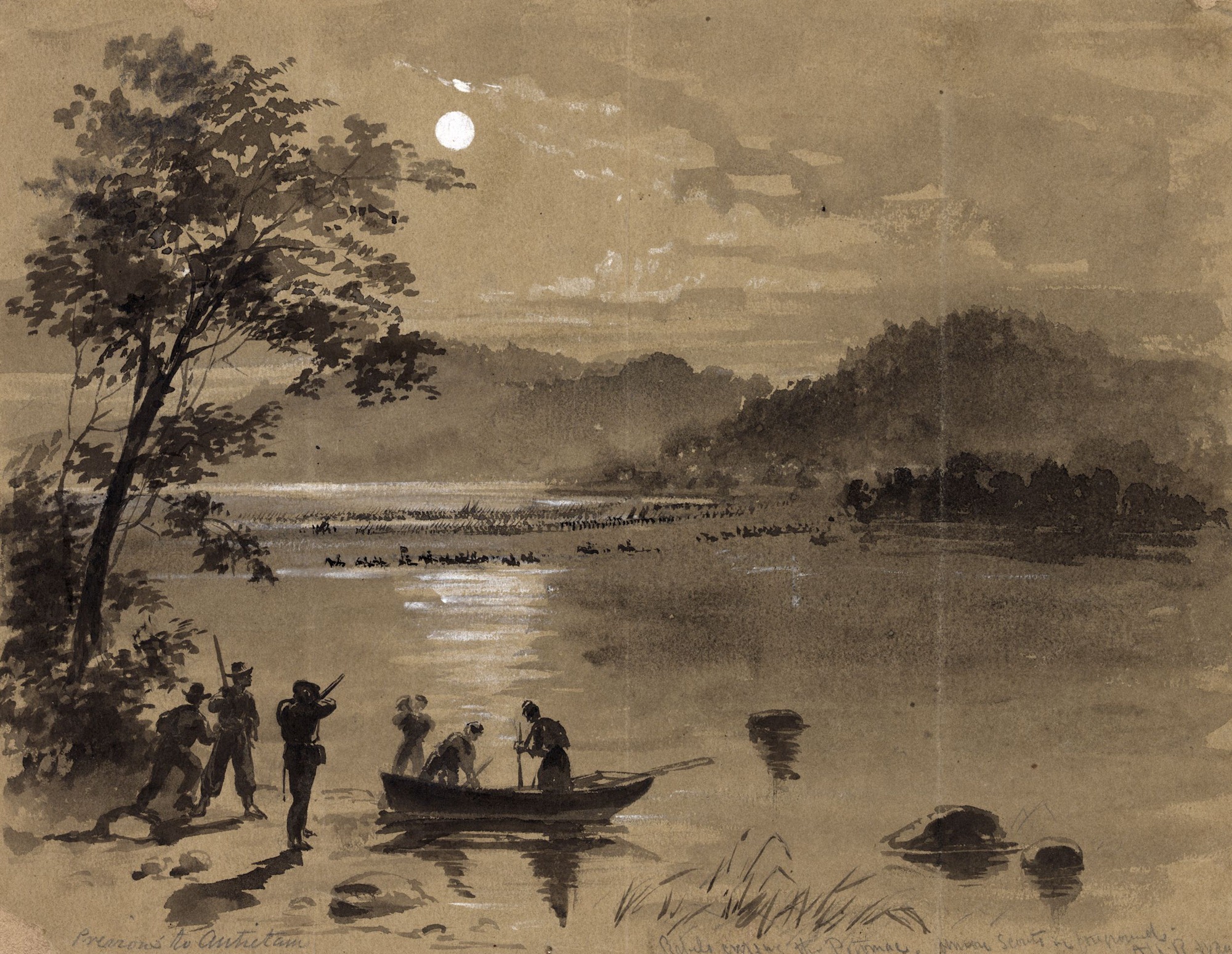
Title: Previous to Antietam. Rebels crossing the Potomac. Union scouts in foreground.
Signed lower right: Alf. R. Waud.
Title inscribed below image.
Library of Congress image.
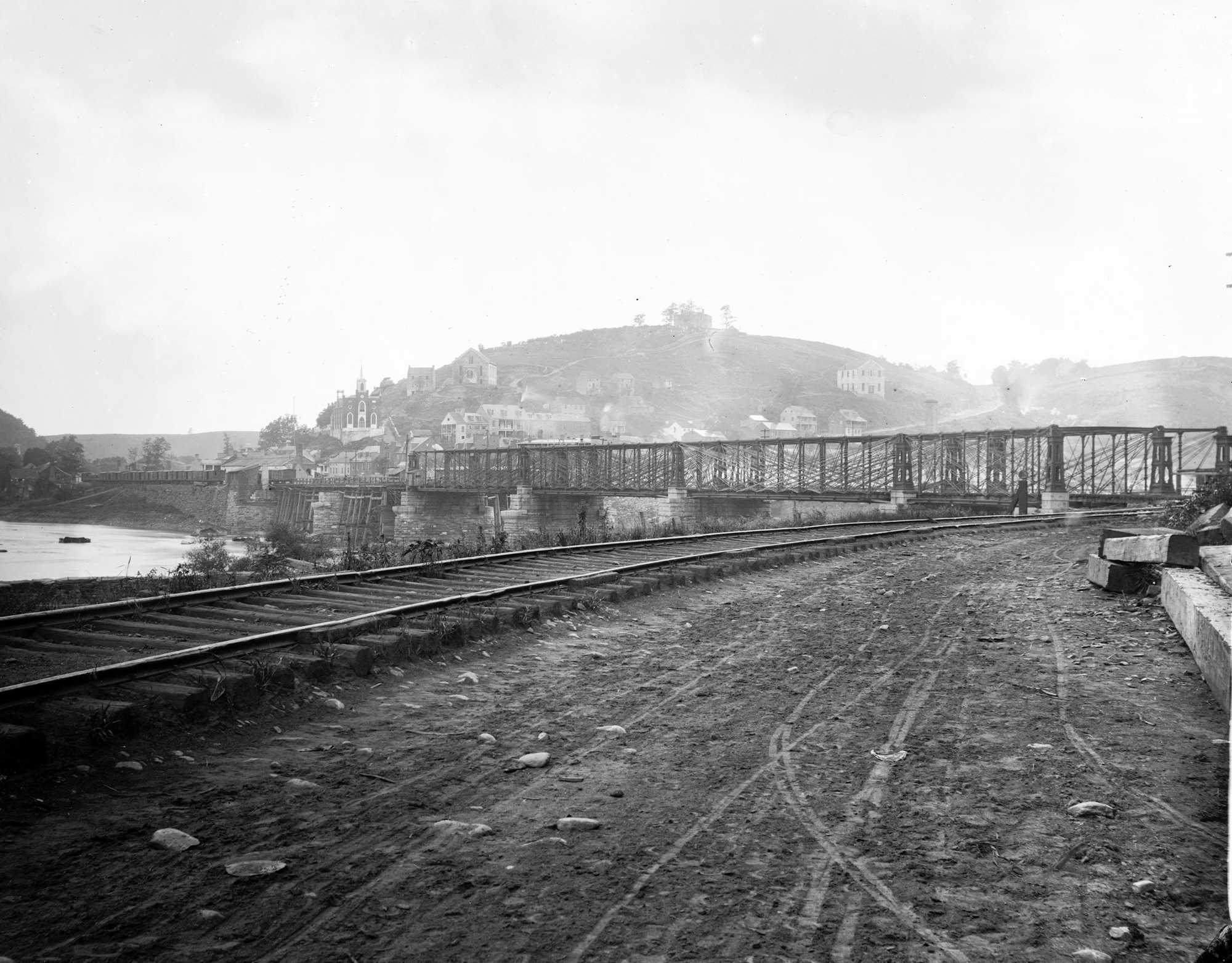
The Baltimore & Ohio (B & O) railroad bridge was once a majestic wood covered bridge that spanned the Potomac River and carried train traffic on the B & O Railroad for 23 years prior to the outbreak of the Civil War…. With the secession of Virginia in April, 1861, the bridge became a tenuous connector between the Confederacy and the Union. The bridge was over an important border, the Potomac River, and constantly had to worry about attacks from both sides of the war. During four years of Civil War, the bridge would be built and destroyed nine times – four times by war, five times by floods.
On June 14, 1861, as the Confederates were leaving Harpers Ferry, Brig. Gen. Joseph Johnston ordered the burning of all bridges on the Potomac under Southern control. The bridges that were destroyed were Point of Rocks, Shepherdstown, and Berlin. The Berlin Bridge is called Brunswick today. The Harpers Ferry region was a dangerous border area for the next eight months, disallowing rebuilding of the bridge. When the Union army occupied Harpers Ferry in February of 1862 and B & O bridge builders accompanied them. A new iron trestle was completed atop the original piers in less than three weeks, which allowed for supplies to be sent to the Union forces in Harpers Ferry and further south.
The Confederates regained Harpers Ferry on September 15, 1862 but just a few days later they would abandon that post. On September 18, 1862, the bridge was destroyed for a second time by Confederates when they left Harpers Ferry due to the outcome of the Battle of Antietam in Shepherdstown. B & O bridge builders returned with the Union army a few weeks later and had the bridge operational once again by early October.
_______
Information from National Park Service (link).
Library of Congress image.
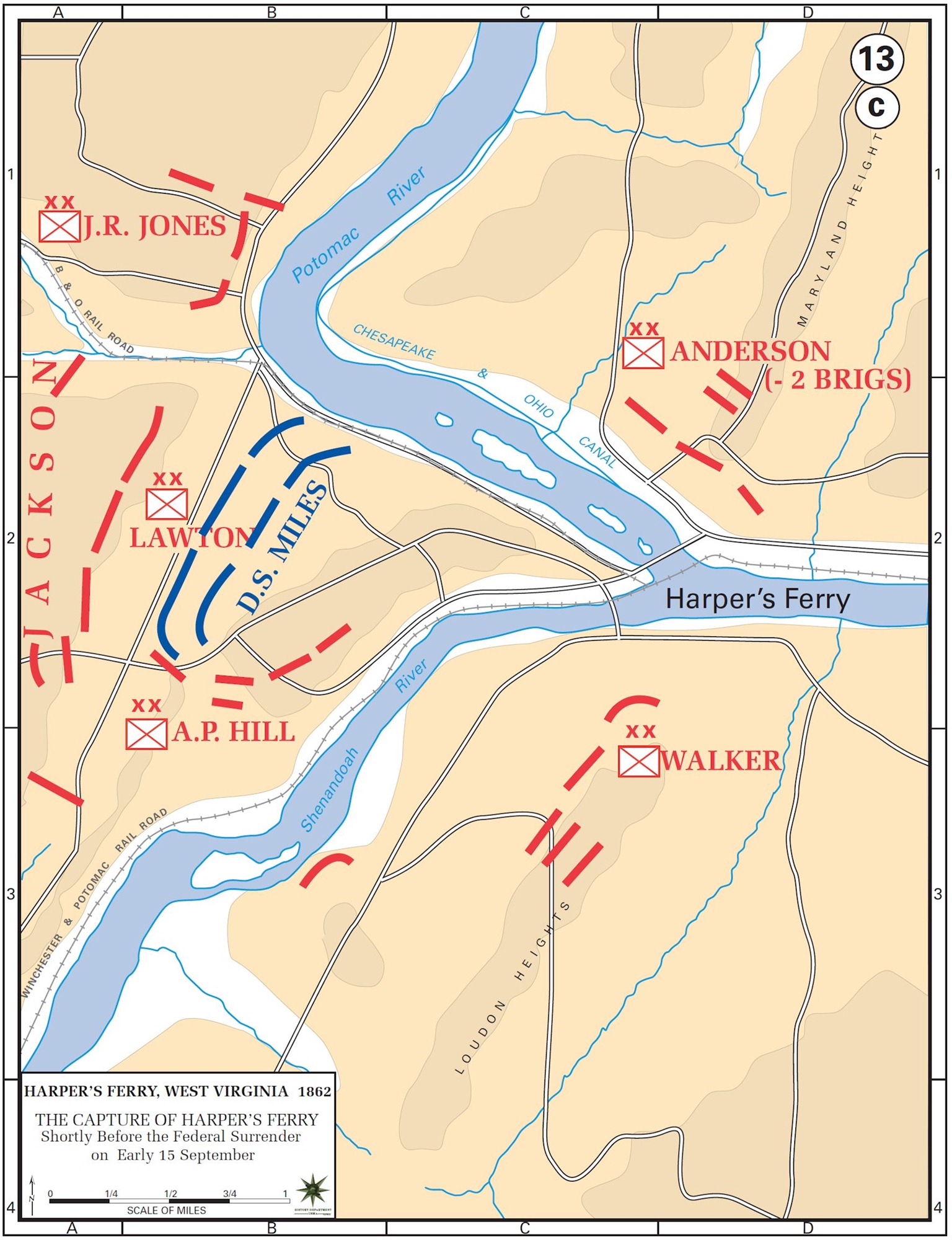
Historical Map of the American Civil War: the Battle of Harpers Ferry – September 15, 1862.
United States Military Academy, Department of History map.
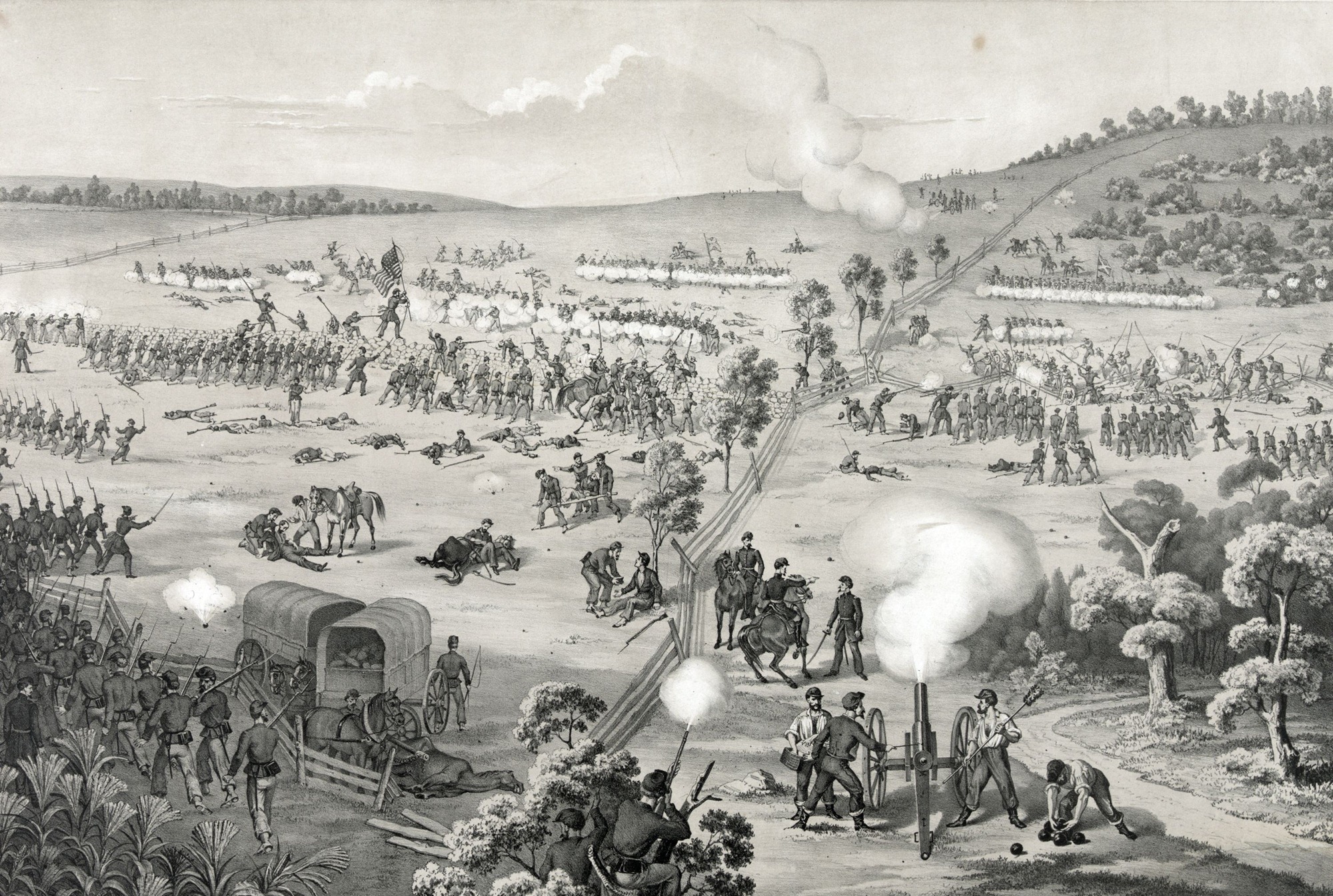
“The glorious charge of the 23rd & 12th Ohio Volunteers (Col. Scammon) against the 23rd and 12th North Carolina under the rebel Gen. Garland, who was killed in the charge.”
Library of Congress image.
The Battle of South Mountain — known in several early Southern accounts as the Battle of Boonsboro Gap — was fought September 14, 1862, as part of the Maryland Campaign of the American Civil War. Three pitched battles were fought for possession of three South Mountain passes: Crampton’s, Turner’s, and Fox’s Gaps. Maj. Gen. George B. McClellan, commanding the Union Army of the Potomac, needed to pass through these gaps in his pursuit of Confederate General Robert E. Lee’s Army of Northern Virginia. Despite being significantly outnumbered, Lee’s army delayed McClellan’s advance for a day before withdrawing.
Samuel Garland, Jr., (December 16, 1830 – September 14, 1862) was an American attorney from Virginia and Confederate general during the American Civil War. He was killed in action during the Maryland Campaign while defending Fox’s Gap at the Battle of South Mountain.
 Follow on facebook
 RSS
RSS email
email
